IB ESS 3.3 Conservation and Regeneration Topic Practice

EduNinja

Question 1

Question 1(c)

(a)
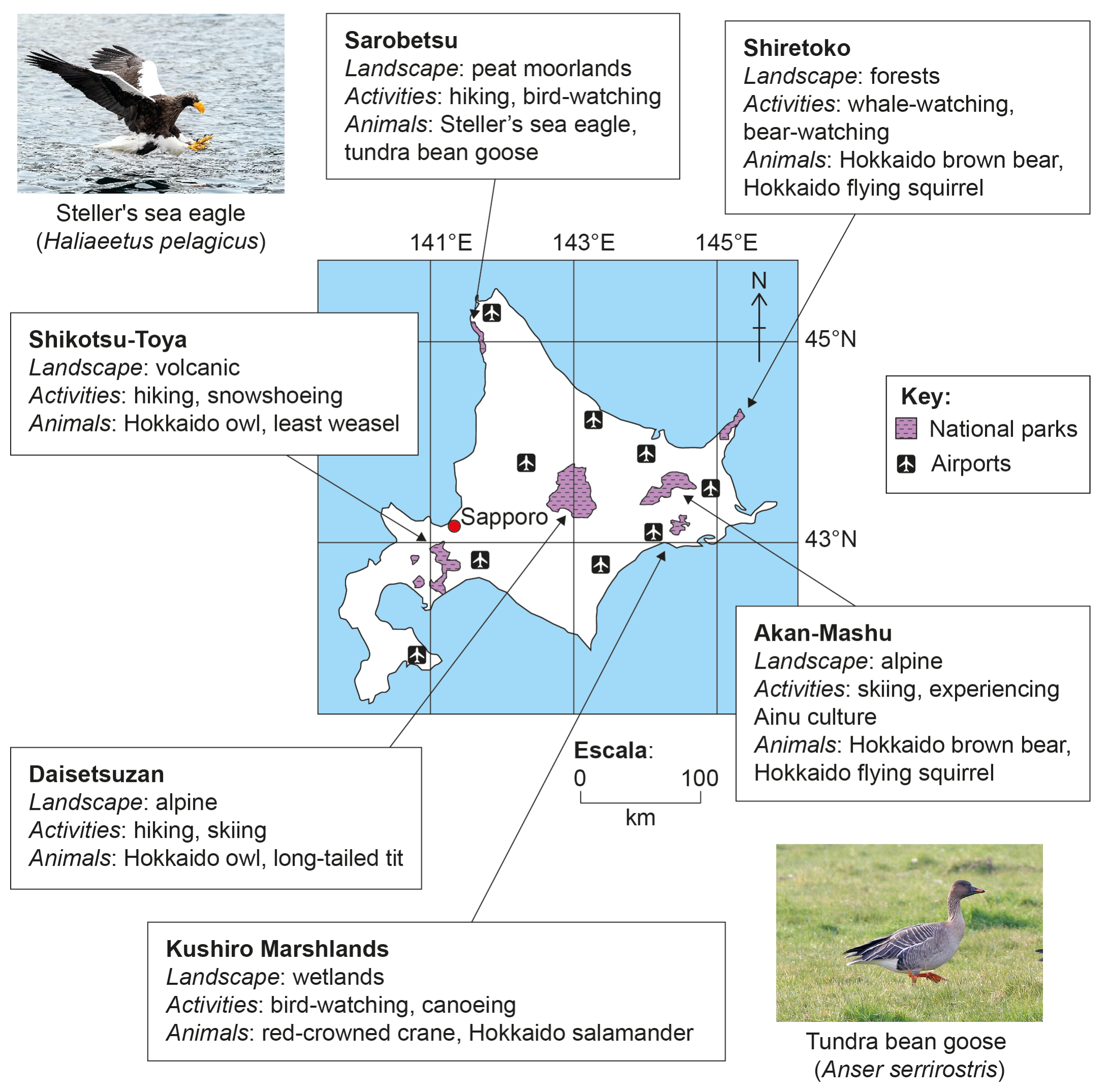
Figure 3(b): Hokkaido's national parks and airports

Figure 3(b): Hokkaido's national parks and airports

Using Figures 2(c) and 3(b), outline one relationship between the location of Hokkaido's national parks and their elevation.

[ 1 ]

Question 1(d)

(b)

Figure 3(a): Fact file on Hokkaido's national parks
Hokkaido has six of Japan's 34 national parks and 10% of its land area is protected.
Many birds, amphibians, butterflies and mammals are endemic subspecies.
About 25% of hiking trails in Shikotsu-Toya and Daisetsuzan have been heavily degraded due to intensive use.

With reference to Figure 3(b), evaluate the design of Hokkaido's national parks as protected areas.

[ 4 ]
Question 3(b)

[Maximum number: 3]

protected areas and biodiversity
- Over 25% of land is protected forest and reserves with over 190 protected sites.
- Ecosystems range from coral reefs and mangroves to tropical rainforests and provide goods and environmental services.

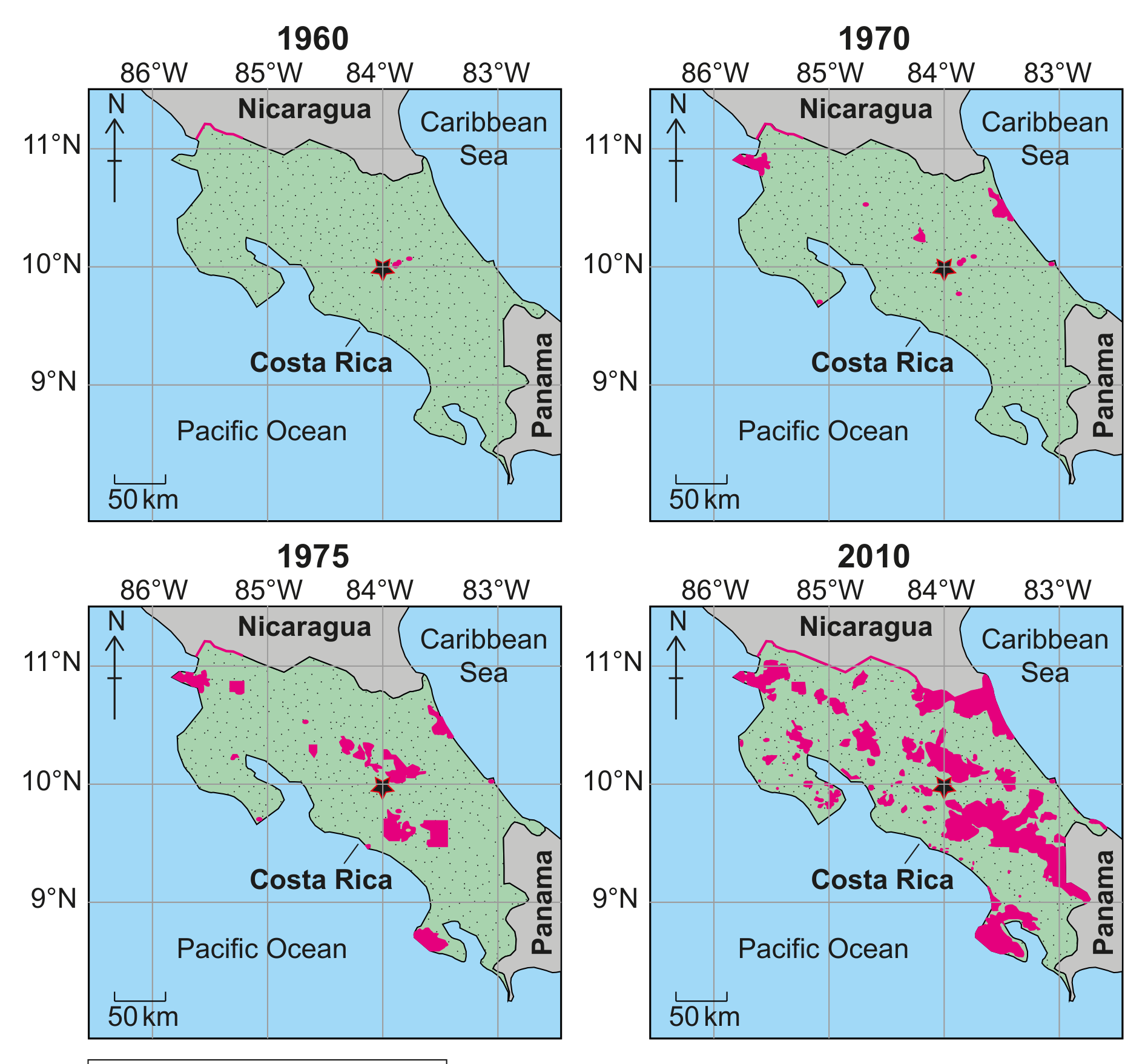
Figure 5(c): Development of protected areas in Costa Rica

Figure 5(c): Development of protected areas in Costa Rica

Total number of speciesmore than 500000
Flowering plants9000
Ferns800
Mammals250
Birds850
Reptiles220
Amphibians200
Insectsmore than 300000<br>(including more than 1200 butterflies and 8000 moths)

Figure 5(b): Estimated number of species in Costa Rica

Explain three ways in which the development of protected areas shown in Figure 5(c) has improved the conservation of species.

Question 4

Question 4(b)

(a)

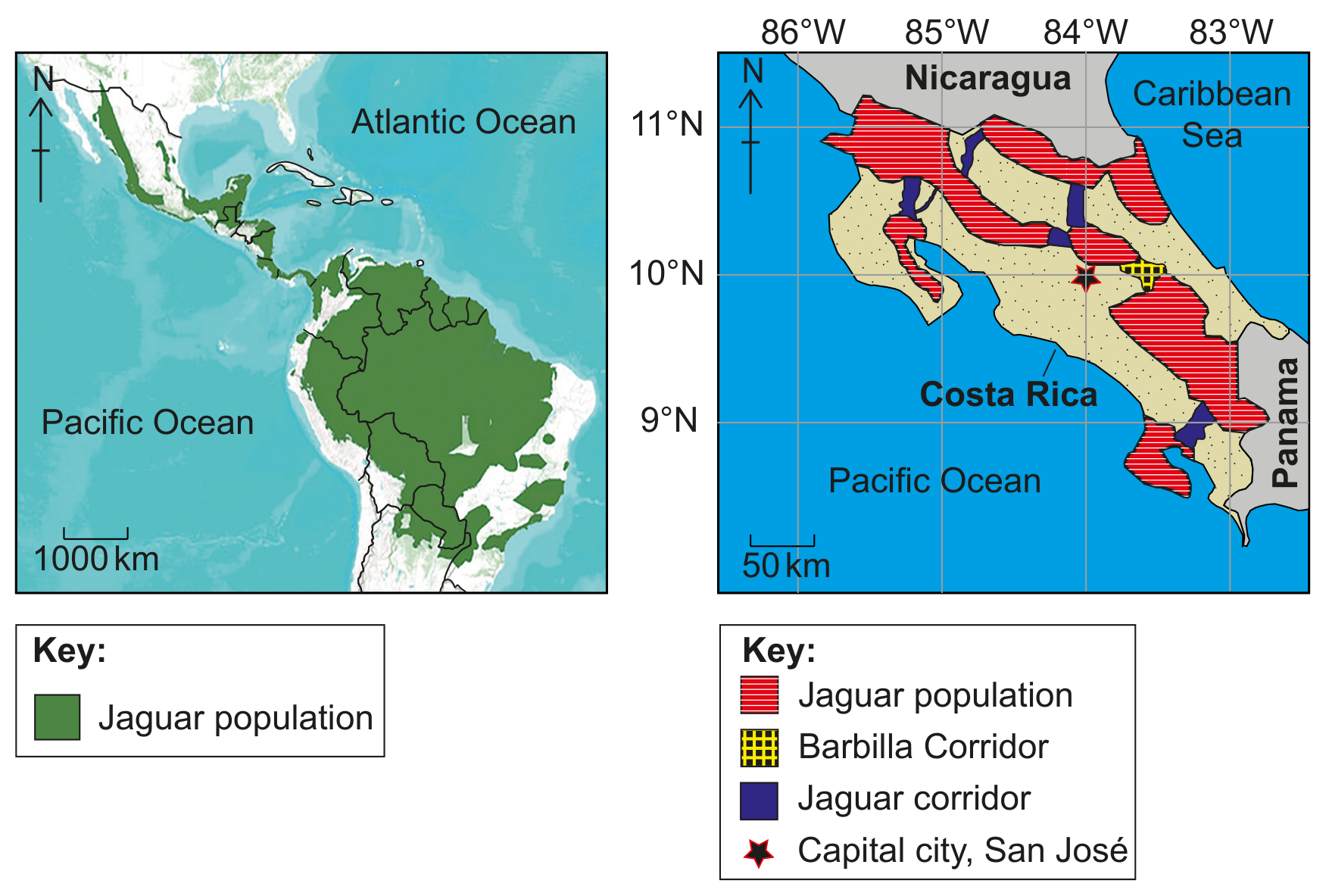
Distinguish between the role of the jaguar as a keystone species and as a flagship species.

[ 2 ]

Question 4(c)

(b)
Figure 6(d): The Barbilla Corridor within the larger international network connecting jaguar populations

Figure 6(d): The Barbilla Corridor within the larger international network connecting jaguar populations

Identify two difficulties associated with establishing and maintaining wildlife corridors such as those shown in Figure 6(d).

[ 2 ]

Question 7

[Maximum number: 1]
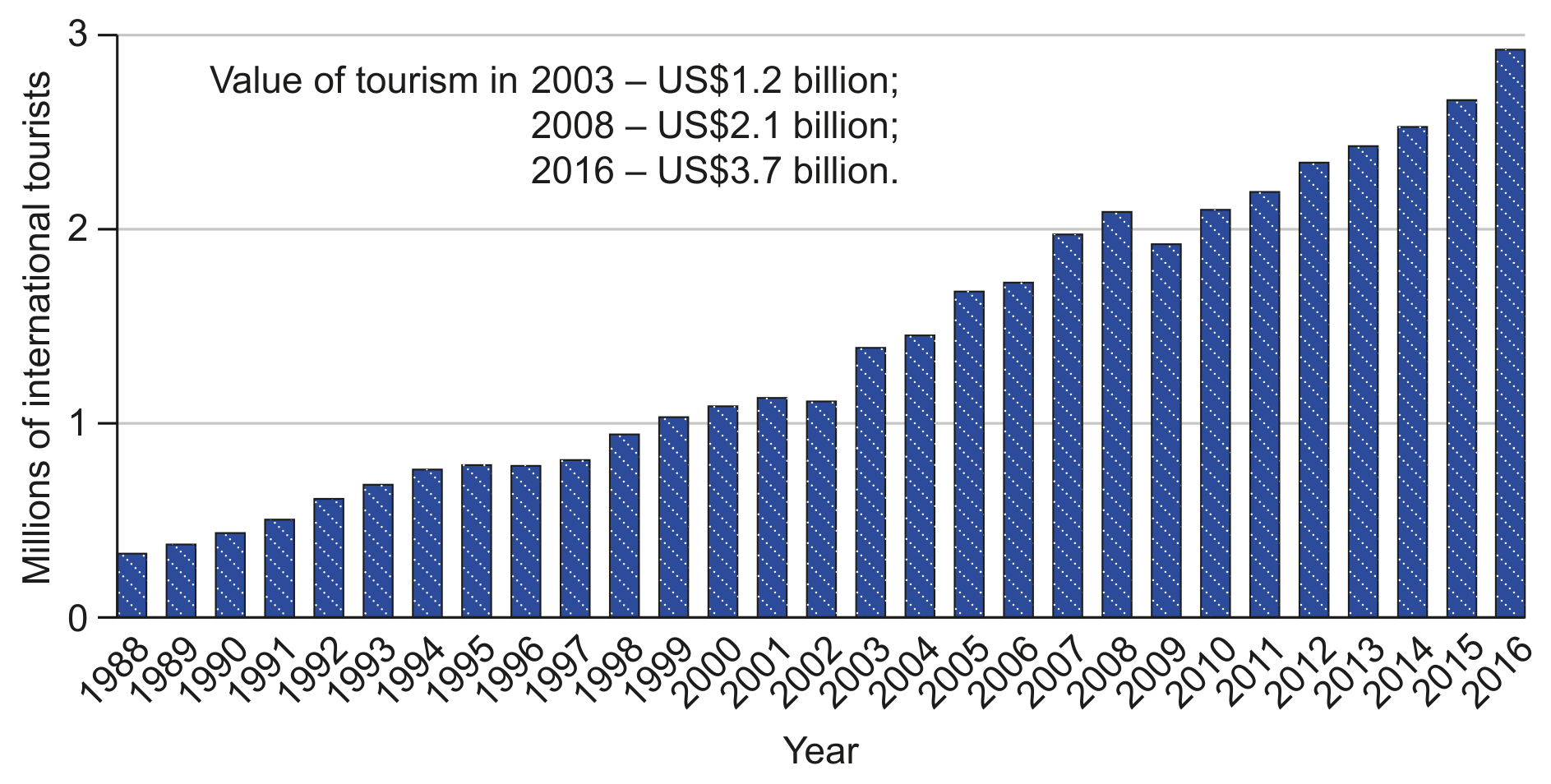
Figure 8(d): Growth in international tourism in Costa Rica (1988-2016)

Figure 8(d): Growth in international tourism in Costa Rica (1988-2016)

Outline one way in which the trend in tourism shown in Figure 8(d) may affect conservation efforts in Costa Rica.

Question 8

[Maximum number: 3]

Figure 8(a): Fact file on Siberian tiger
- Historically found in Korea, Eastern China and Siberia; now mainly within Sikhote-Alin mountain range.
- Reduction in tiger population has occurred due to habitat loss from logging/mining, poaching and loss of prey.
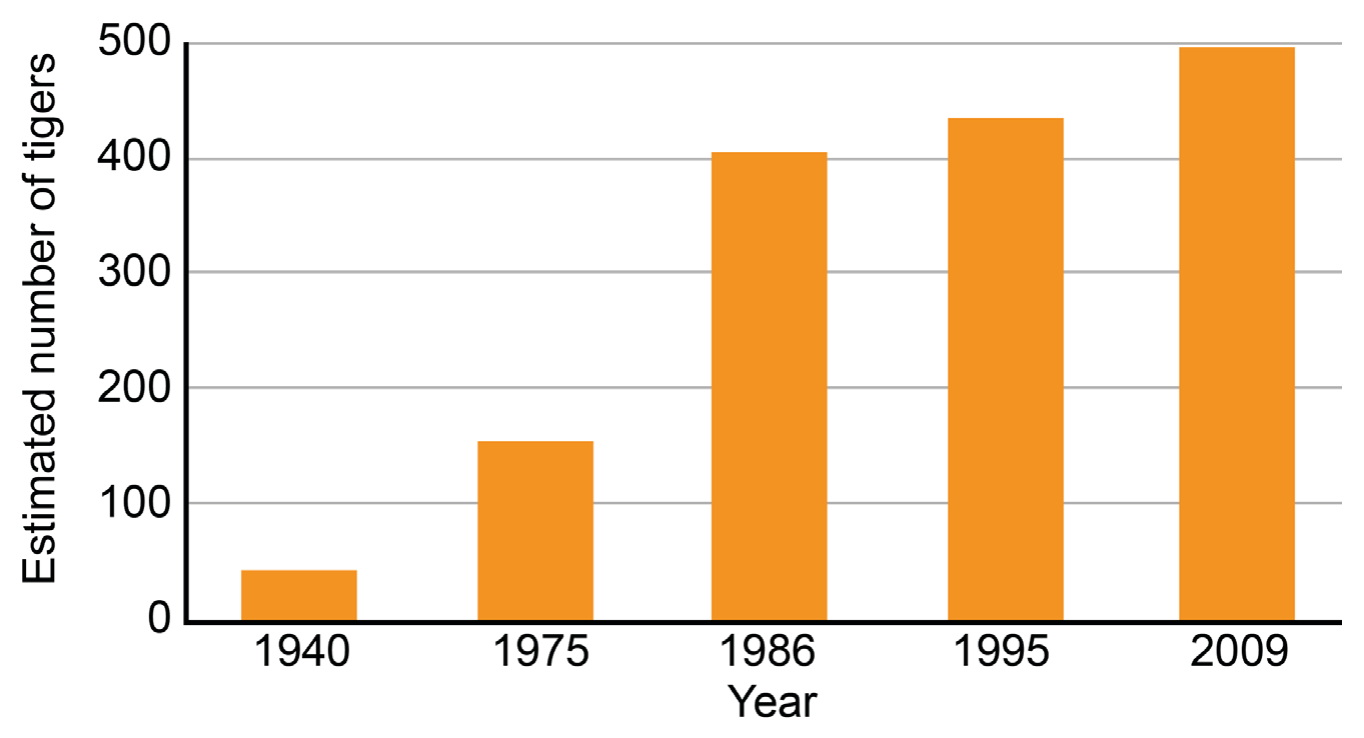
- Fewer than 50 individuals remained in the wild in the 1940s; by 2010 this increased to about 500.
- Conservation measures include hunting bans, CITES trade bans, radio-collaring, national parks, policing and enforcement.

1947Russia banned hunting of tigers
1975International trade in tigers and tiger parts banned through the Convention on International
Trade of Endangered Species of Wild Fauna and Flora (CITES)
1992The Siberian Tiger Project began attaching radio-collars to wild tigers to improve
understanding of tiger ecology
2007Udege National Park and Zov Tigra National Park were created
2010Tiger protection was increased through policing and enforcement

Figure 8(a): Siberian tiger conservation measures

Figure 8(d): Siberian tiger population in Russia

Figure 8(d): Siberian tiger population in Russia

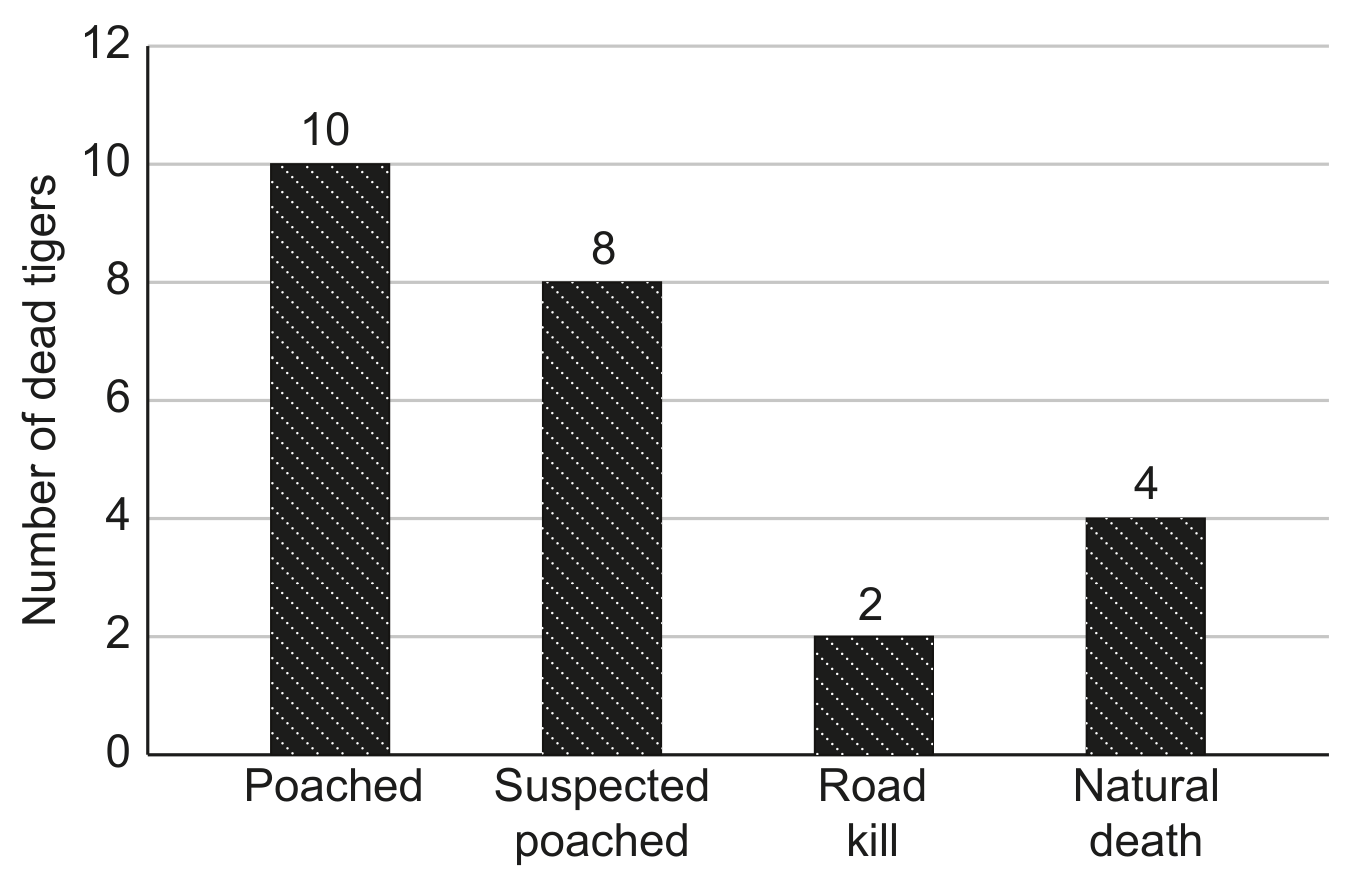
Figure 8(e): Causes of tiger mortality in and near Sikhote-Alin Biosphere Reserve, 1992-2005

Figure 8(e): Causes of tiger mortality in and near Sikhote-Alin Biosphere Reserve, 1992-2005

Conservation measures for the Siberian tiger between 1940-2010 involved tagging, setting up reserves, and bans on hunting and trade.

With reference to Figures 8(a), 8(d) and 8(e), evaluate the relative success of these measures.

Question 10

[Maximum number: 2]
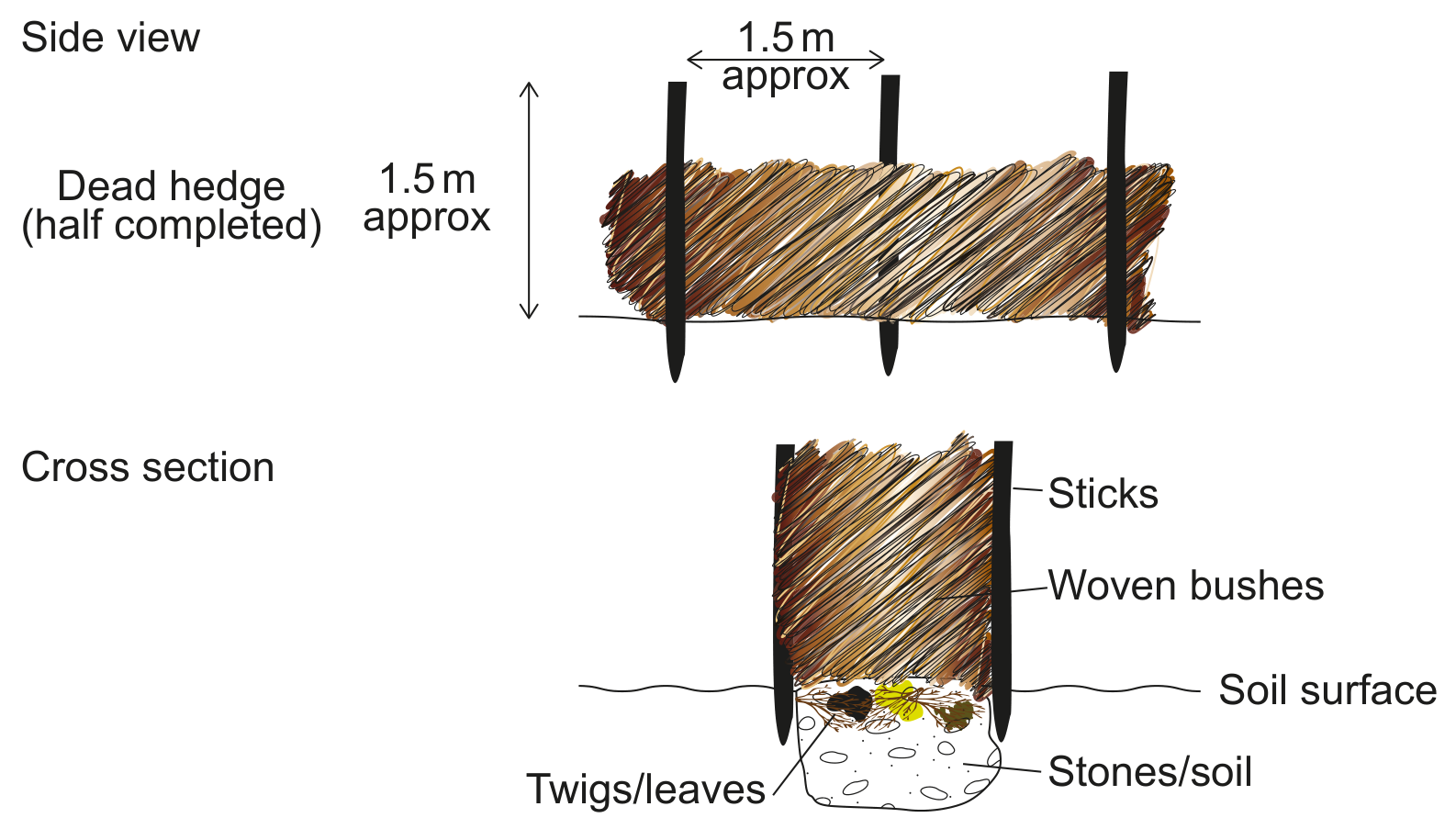
Figure 11(b): Construction of a dead hedge

Figure 11(b): Construction of a dead hedge

Figure 11(a): Conservation in Beijing
Figure 11(a): Beijing Zoo maintains an active breeding programme that recently produced over 1000 surviving offspring of nearly 100 species in one year, including critically endangered species and giant panda.
The Beijing Gardening and Greening Bureau plans to plant at least one dead hedge in each city park; dead hedges use pruning/forestry waste and provide habitat for small mammals and reptiles.

Question 10(a)

(a)

With reference to Figures 11(a) and (b), outline one advantage of Beijing Zoo's approach to conservation compared with that of Beijing Gardening and Greening Bureau.

[ 1 ]

Question 10(b)

(b)

With reference to Figures 11(a) and (b), outline one advantage of Beijing Gardening and Greening Bureau's approach to conservation compared with that of Beijing Zoo.

[ 1 ]

Question 6(c)

[Maximum number: 9]

Justify the role of different environmental value systems (EVSs) in deciding between species based and habitat based conservation strategies.

0 selected