Q BankQuestion BankDocsDocuments

D3.1.8—Sexual reproduction in flowering plants

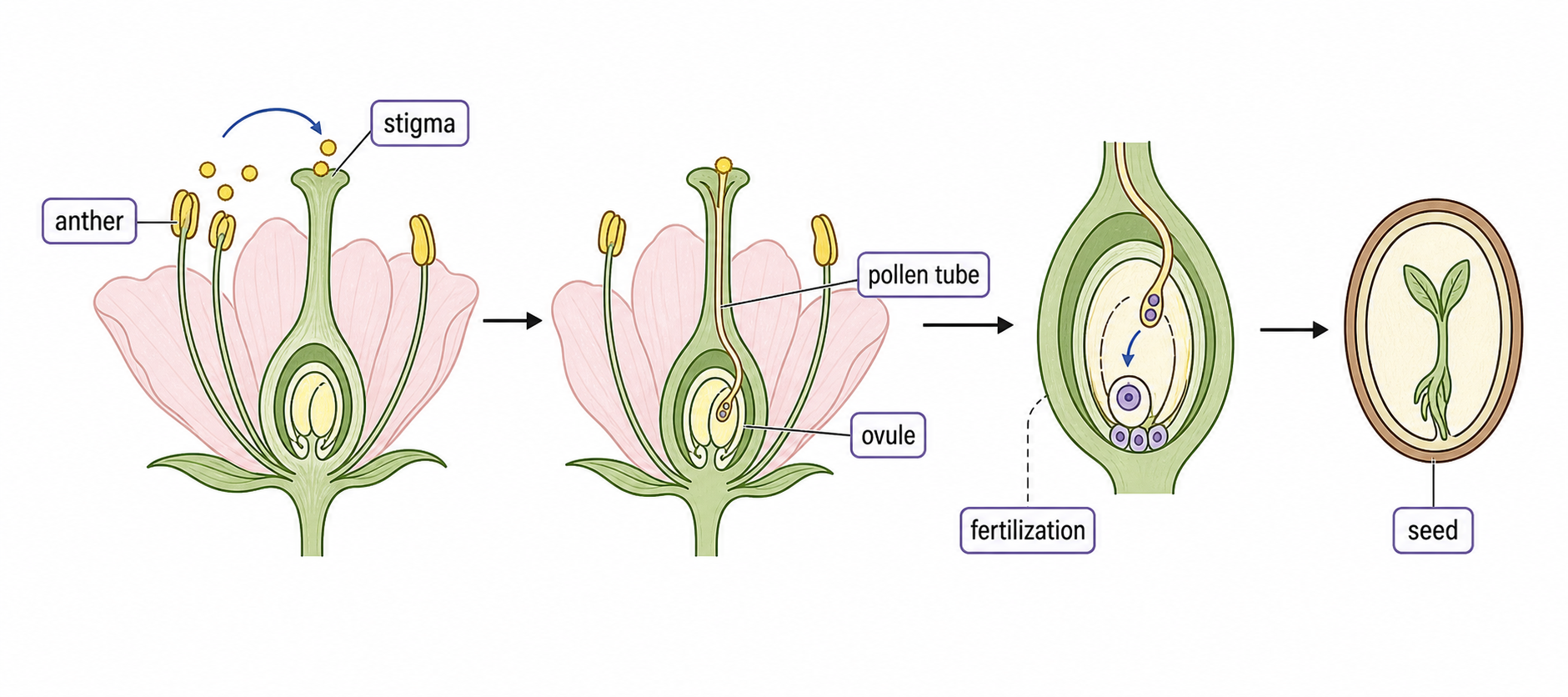
Flowering plant reproduction uses flower structures for gamete production, pollination, fertilization, fruit formation and seed dispersal in sexual life cycles.

Syllabus
First assessment 2025
Objective
D3.1.8
Level
HL

Exam analysis

Chance of appearing13%of analysed past papers
Latest appearanceMay 2025
Most common paperPaper1
Typical marks1–2

Common command terms

  • Outline
  • Identify
  • State
  • Distinguish
  • Define

Scoring notes

Common mistake
Confusing pollination with fertilization or seed dispersal.

Recent exam appearances

May 2025Paper1A ["HL"] · TZ129[ 1 ]D3.1.8—Sexual reproduction in flowering plants
November 2024Paper1 ["HL"] · TZ032[ 1 ]D3.1.8—Sexual reproduction in flowering plants
May 2024Paper2 ["HL"] · TZ13(b)[ 2 ]D3.1.8—Sexual reproduction in flowering plants
May 2024Paper2 ["HL"] · TZ13(a)(ii)[ 1 ]D3.1.8—Sexual reproduction in flowering plants
May 2023Paper2 ["HL"] · TZ23(b)[ 2 ]D3.1.8—Sexual reproduction in flowering plants
Practice this objective

Coverage 2012–2025 · Updated 16 Jul 2026

Concept essentials

  • Pollination is transfer of pollen from anther to stigma.
  • Fertilization is fusion of male and female gametes, usually after pollen tube growth.
  • The ovary can develop into fruit and fertilized ovules can become seeds.
ConceptIB Biology HL