D3.1.12—Seed dispersal and germination
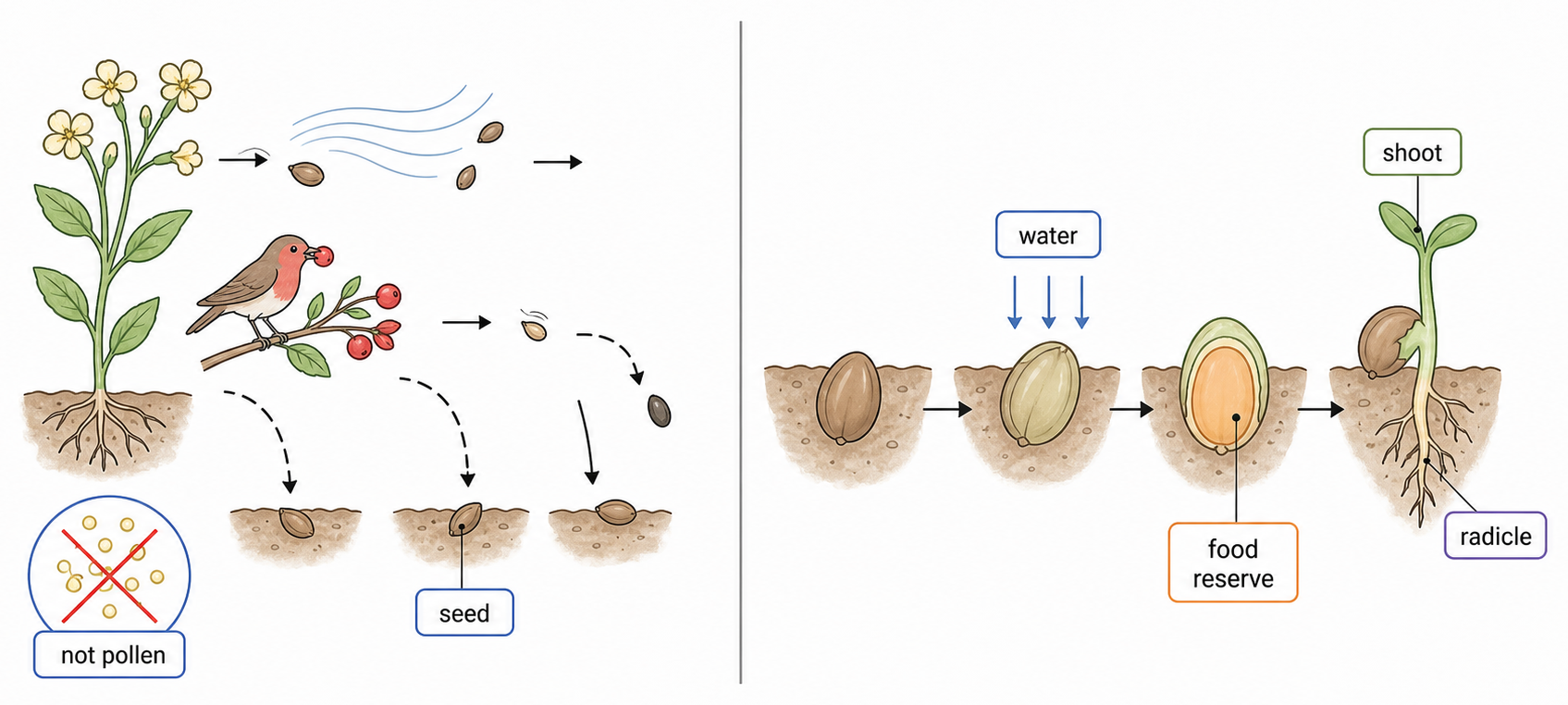
Seed dispersal moves offspring away from parents, while germination requires water, oxygen and suitable temperature to mobilize stored food reserves.
- Syllabus
- First assessment 2025
- Objective
- D3.1.12
- Level
- HL
Seed dispersal moves offspring away from parents, while germination requires water, oxygen and suitable temperature to mobilize stored food reserves.

Coverage 2013–2024 · Updated 16 Jul 2026
Seed dispersal separates offspring from the parent, and germination begins when water, oxygen and a suitable temperature allow metabolism and growth.
Dispersal reduces crowding and competition. During germination, water activates enzymes, oxygen supports respiration, and the embryo uses stored food until photosynthesis begins.
Check each condition before deciding whether a seed can germinate.
A bean seed kept dry does not germinate; after water and warmth are supplied, respiration rises and the radicle emerges.
A seed can be viable but remain dormant; failure to germinate does not prove it is dead.
This objective is assessed through structured response, commonly using Identify / Outline.
Identify / Outline
Build the answer around this relationship: Water uptake is the first step that reactivates metabolism in a dry seed.
Listing water, oxygen and temperature without explaining their biological roles.
Representative question
Outline the metabolic processes that occur in starchy seeds during germination.
water absorbed by the seed / seed rehydrated;
water activates metabolism;
gibberellin synthesized/produced/secreted;
gibberellin stimulates the production of amylase;
amylase digests/hydrolyses starch to maltose;
maltose converted/hydrolysed to glucose (by maltase);
glucose used in aerobic respiration;
glucose used in synthesis/production of cellulose;
Core D3.1 route: reproduction creates offspring, gametes or pollen move, fertilization or germination follows, and the consequence is variation, embryo formation, seed production, or successful early growth.
Core D3.1 exam questions usually combine reproduction strategy with gamete formation, fertilization, human cycles, IVF, plant pollination, or seed germination. Treat each answer as a route: name the process, say what moves or changes, then give the biological consequence.