C4.2.12—Energy reductions
Energy reductions explains how energy flow, matter cycling, trophic transfer or carbon movement is represented, measured or limited within ecosystems.
- Syllabus
- First assessment 2025
- Objective
- C4.2.12
- Level
- HL
Energy reductions explains how energy flow, matter cycling, trophic transfer or carbon movement is represented, measured or limited within ecosystems.
Coverage 2012–2023 · Updated 16 Jul 2026
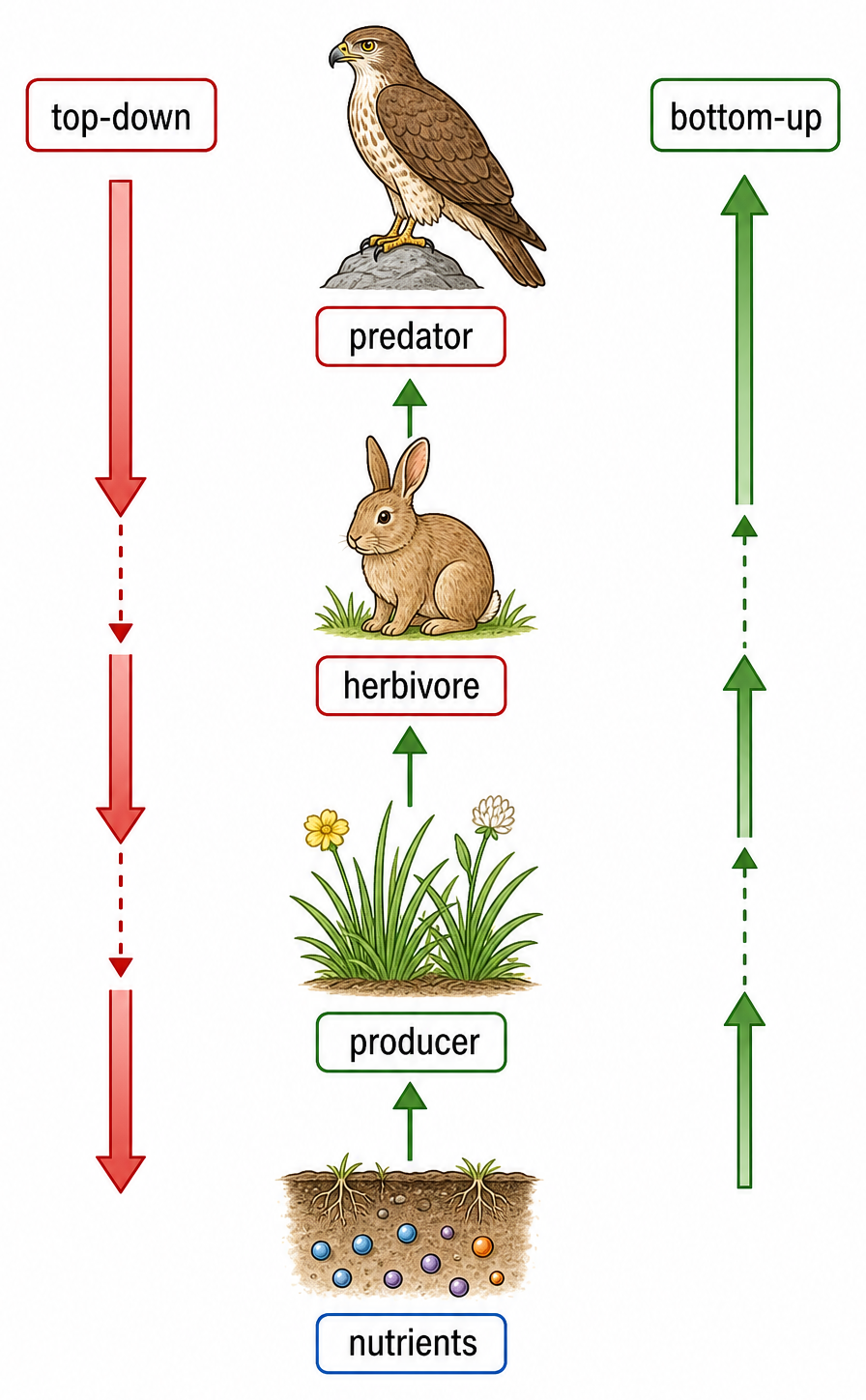
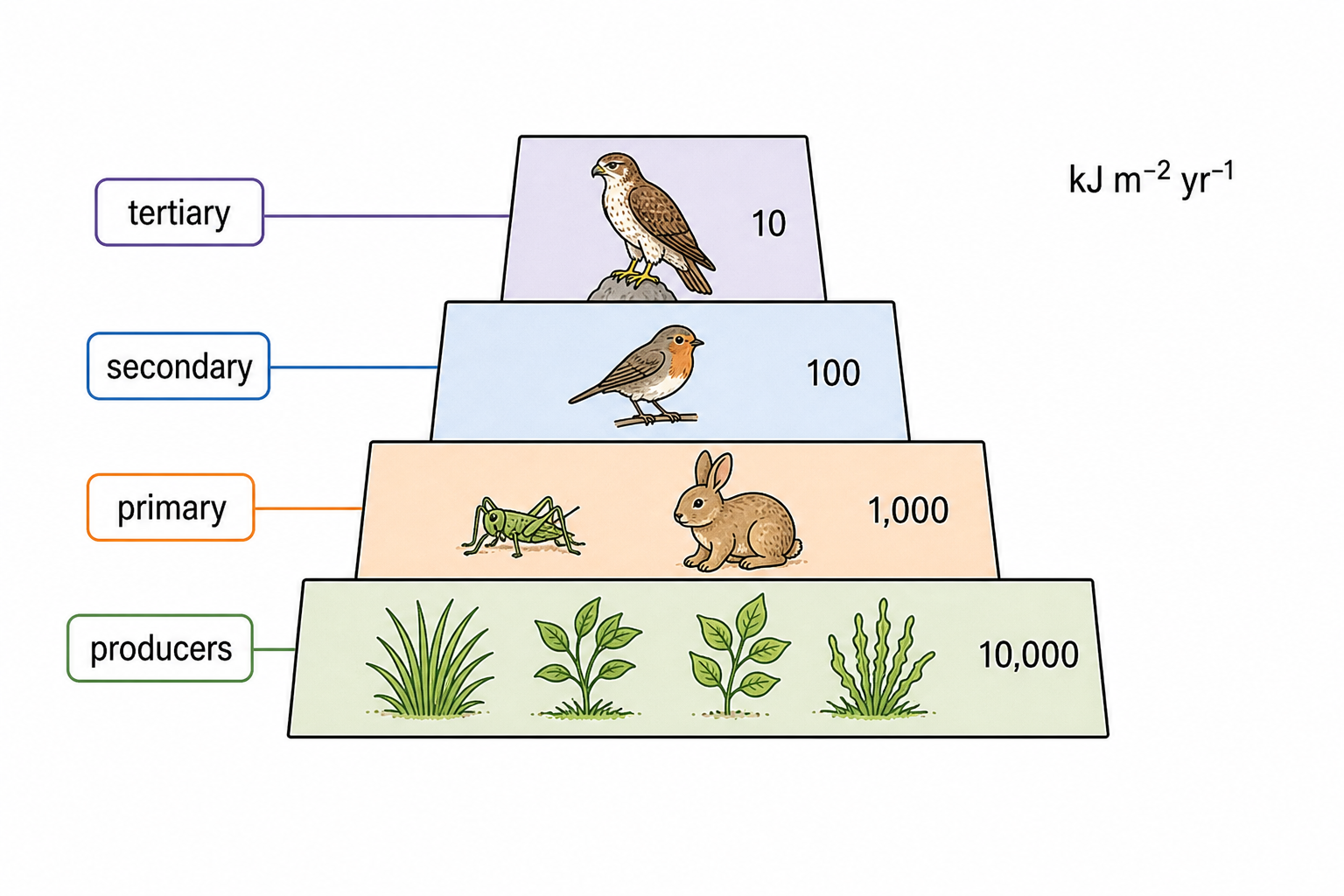
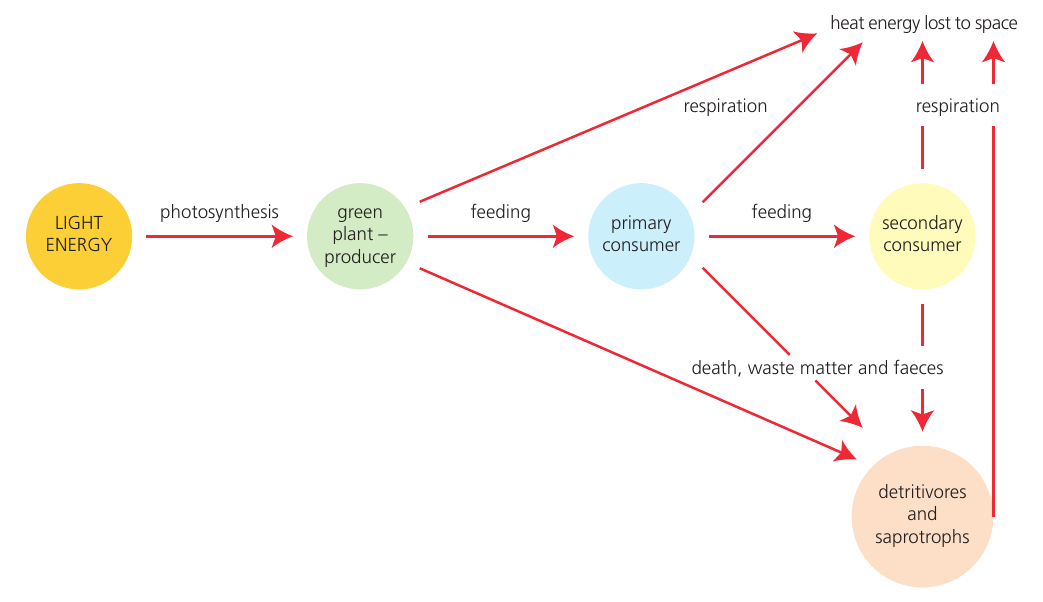
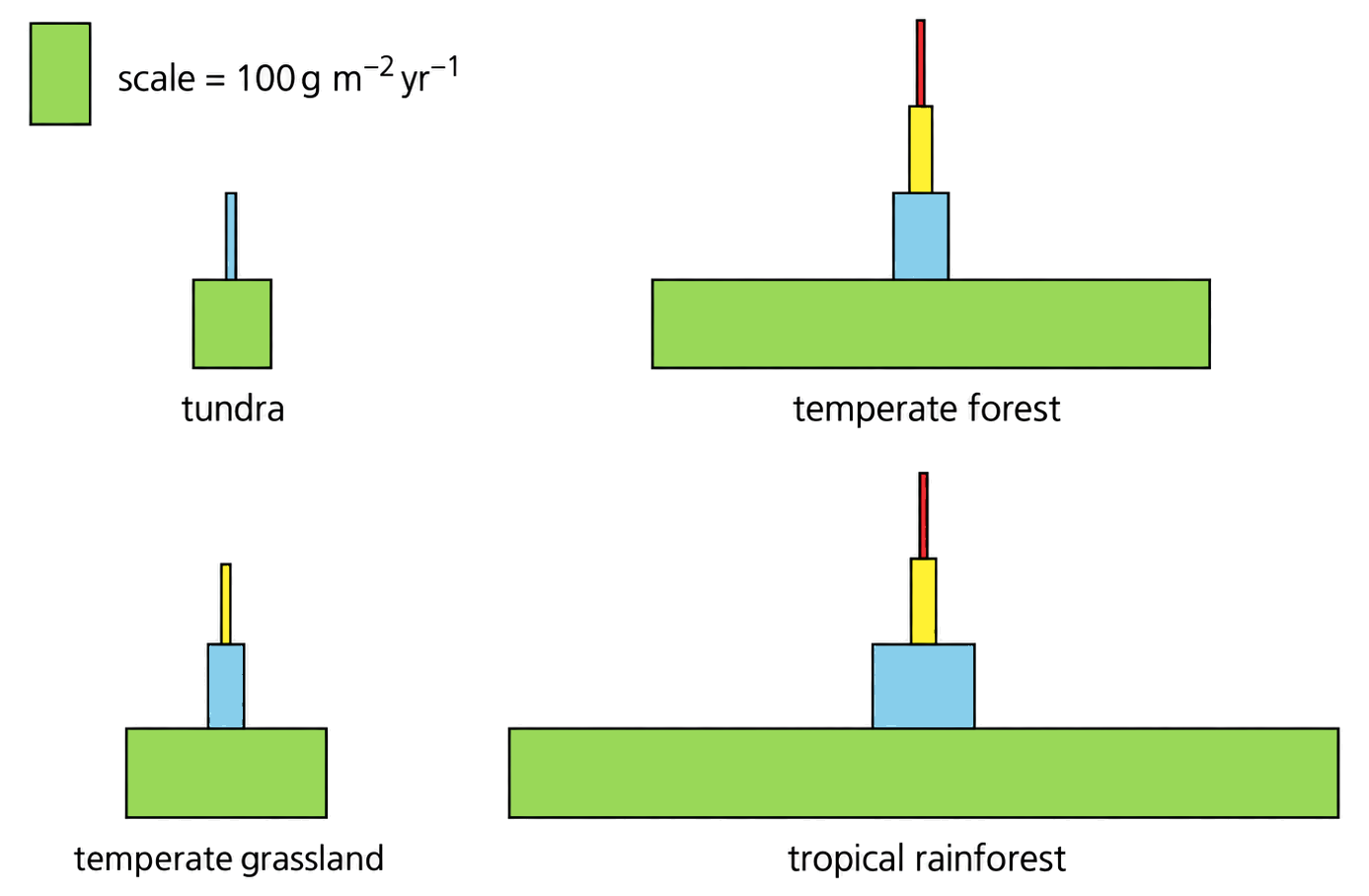
Energy availability decreases at successive trophic levels because only part of one level's chemical energy becomes biomass eaten and assimilated by the next.
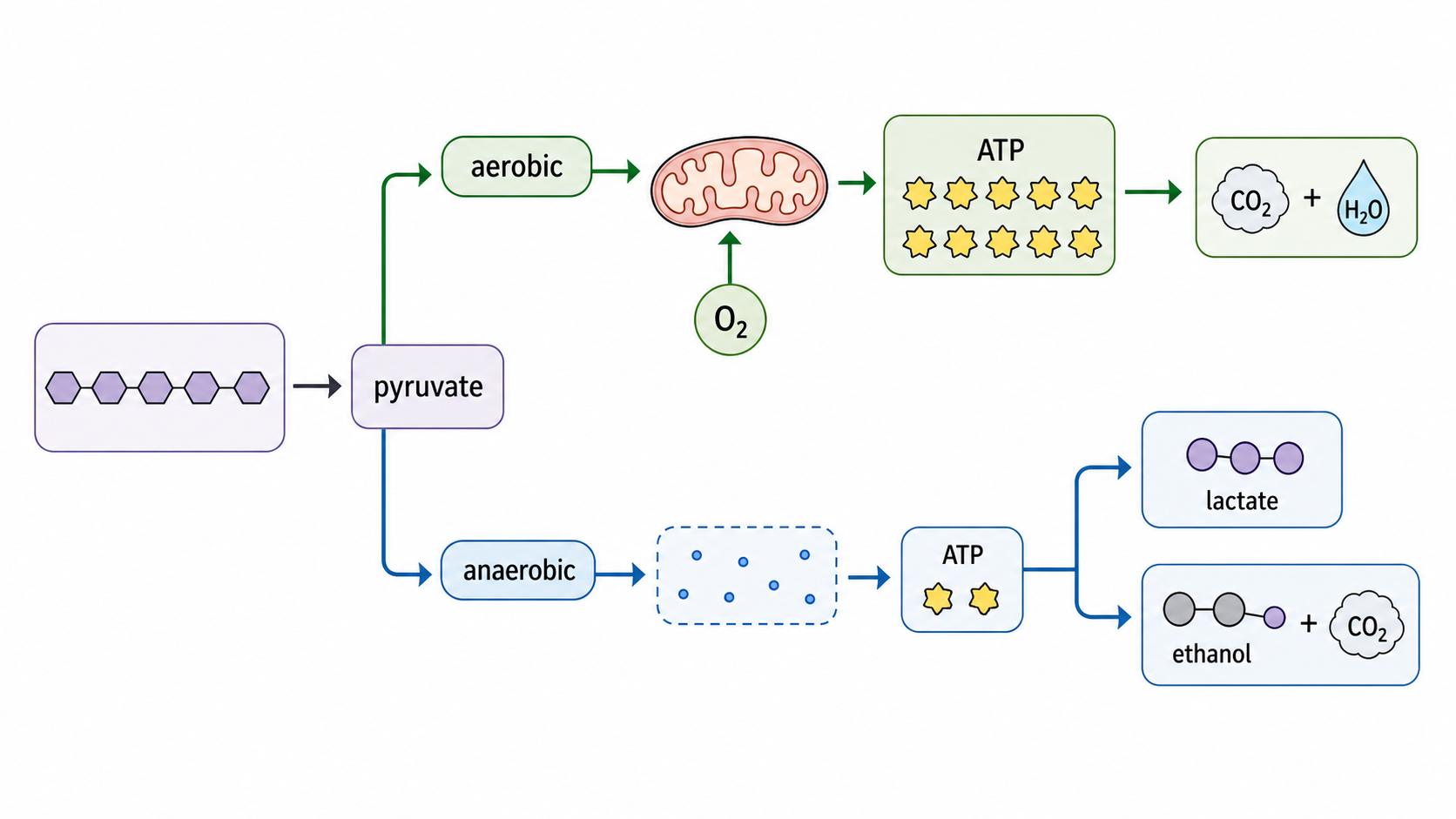
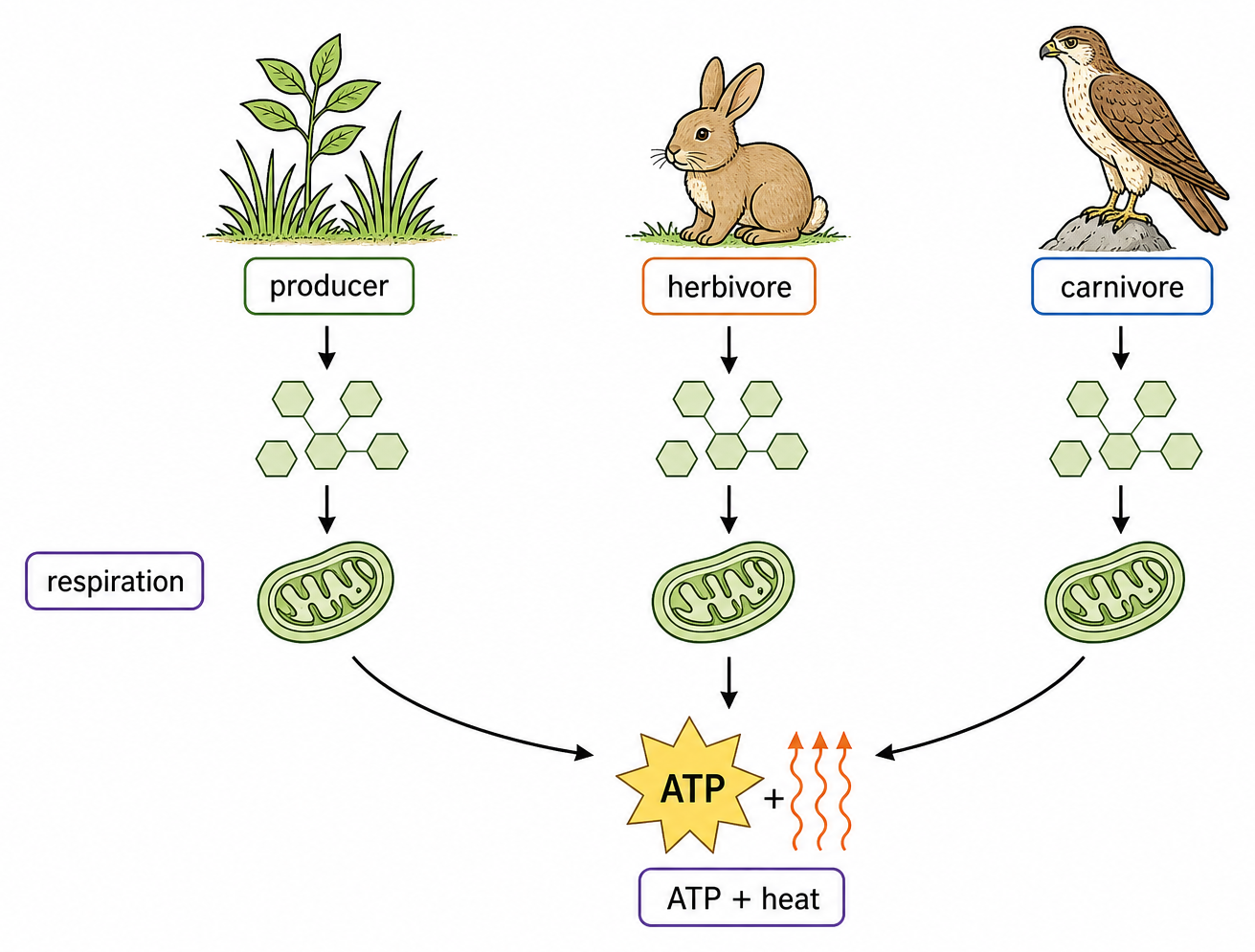
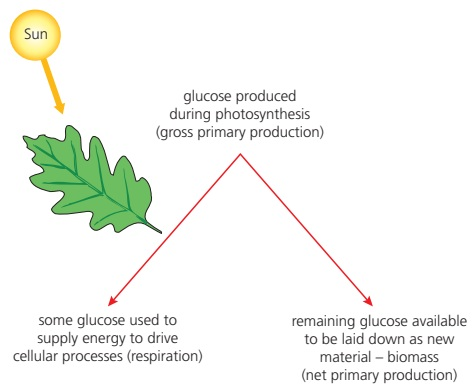
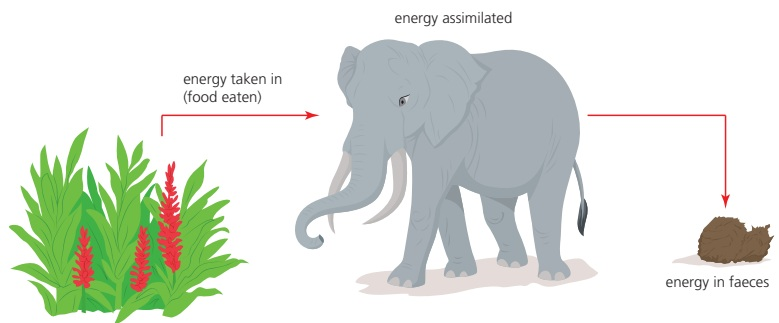
Losses include uneaten material, indigestible material egested as faeces, carbon compounds used in respiration, and heat from metabolism. Movement, maintenance and other work reduce energy stored as new biomass.
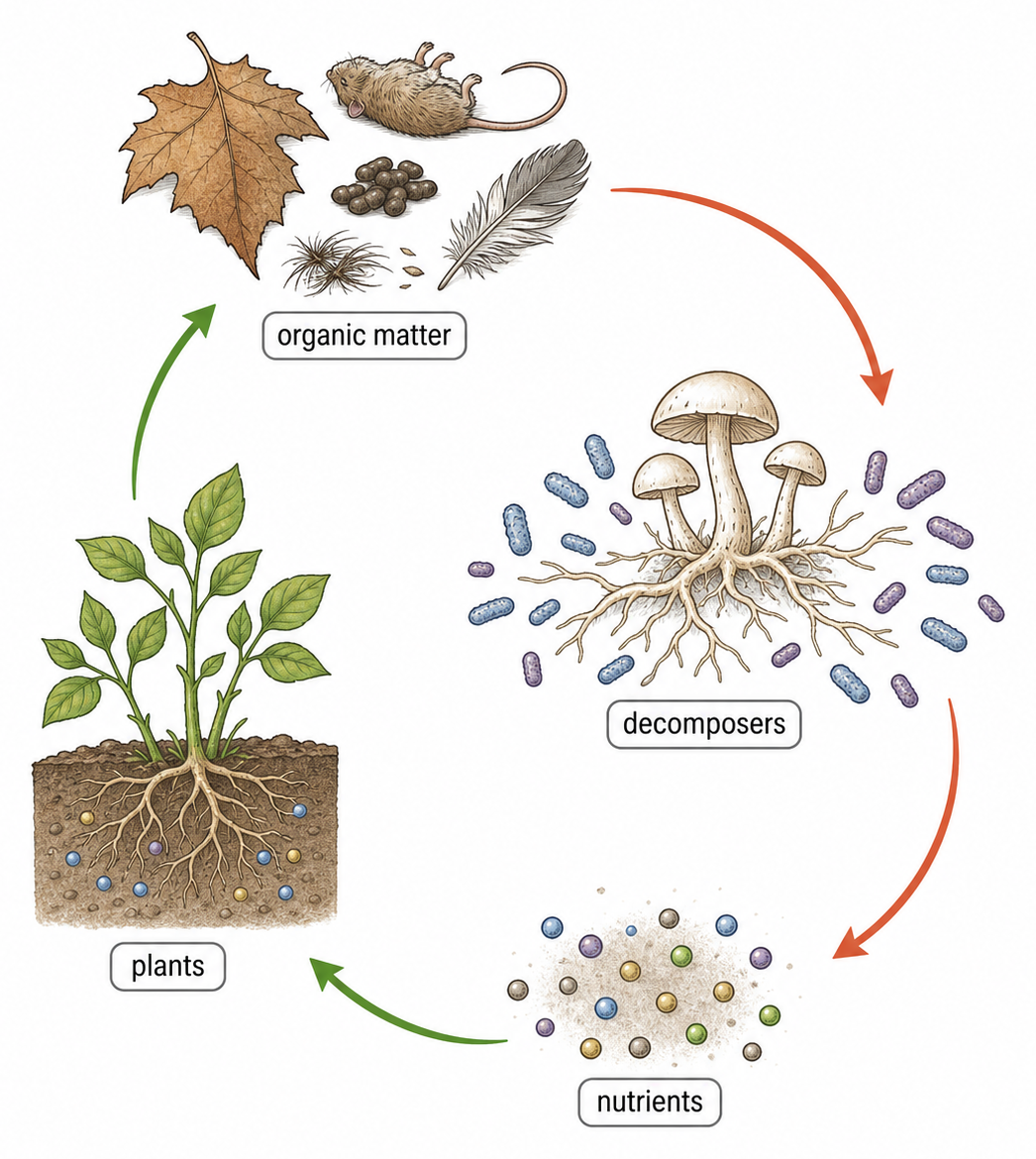
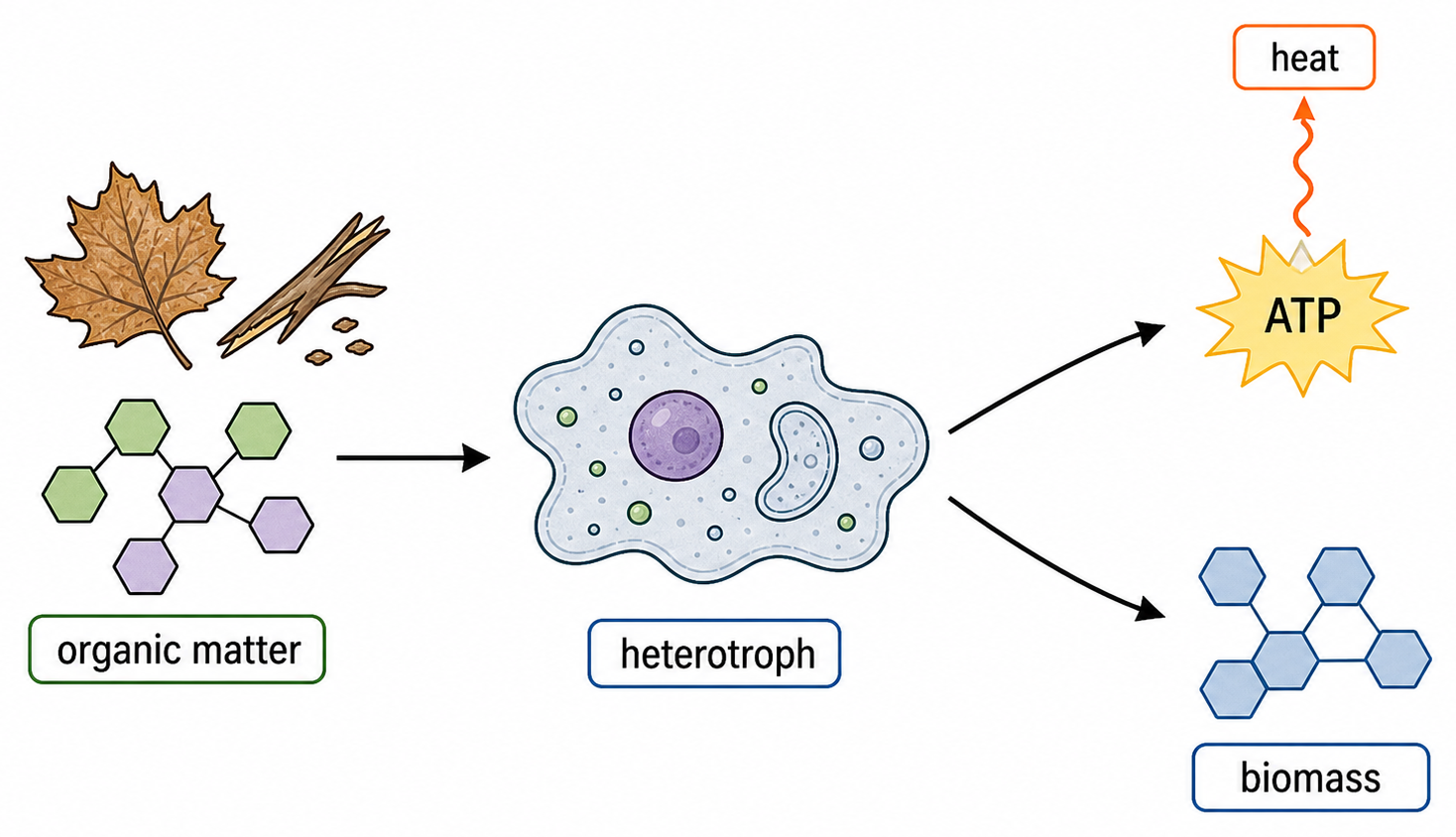
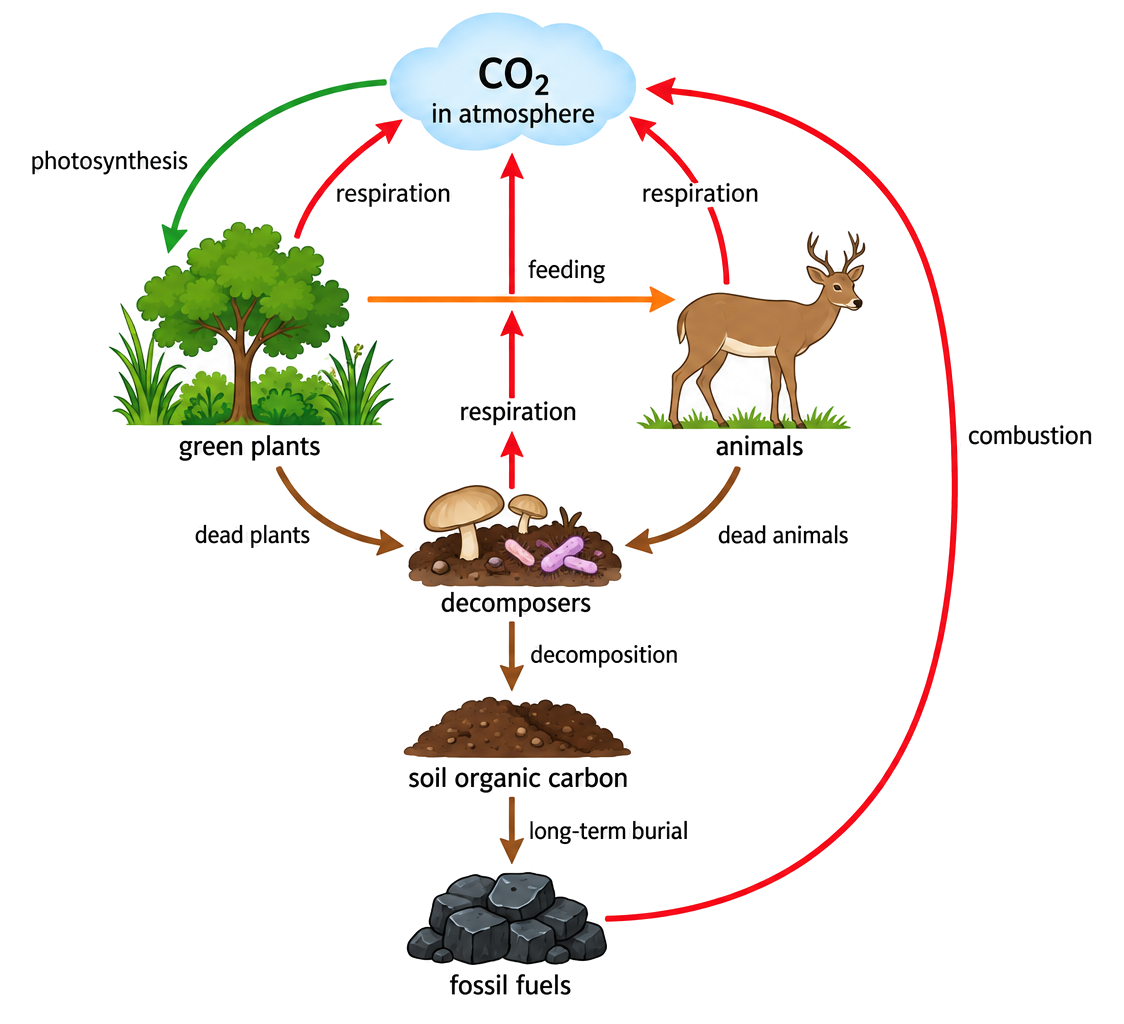
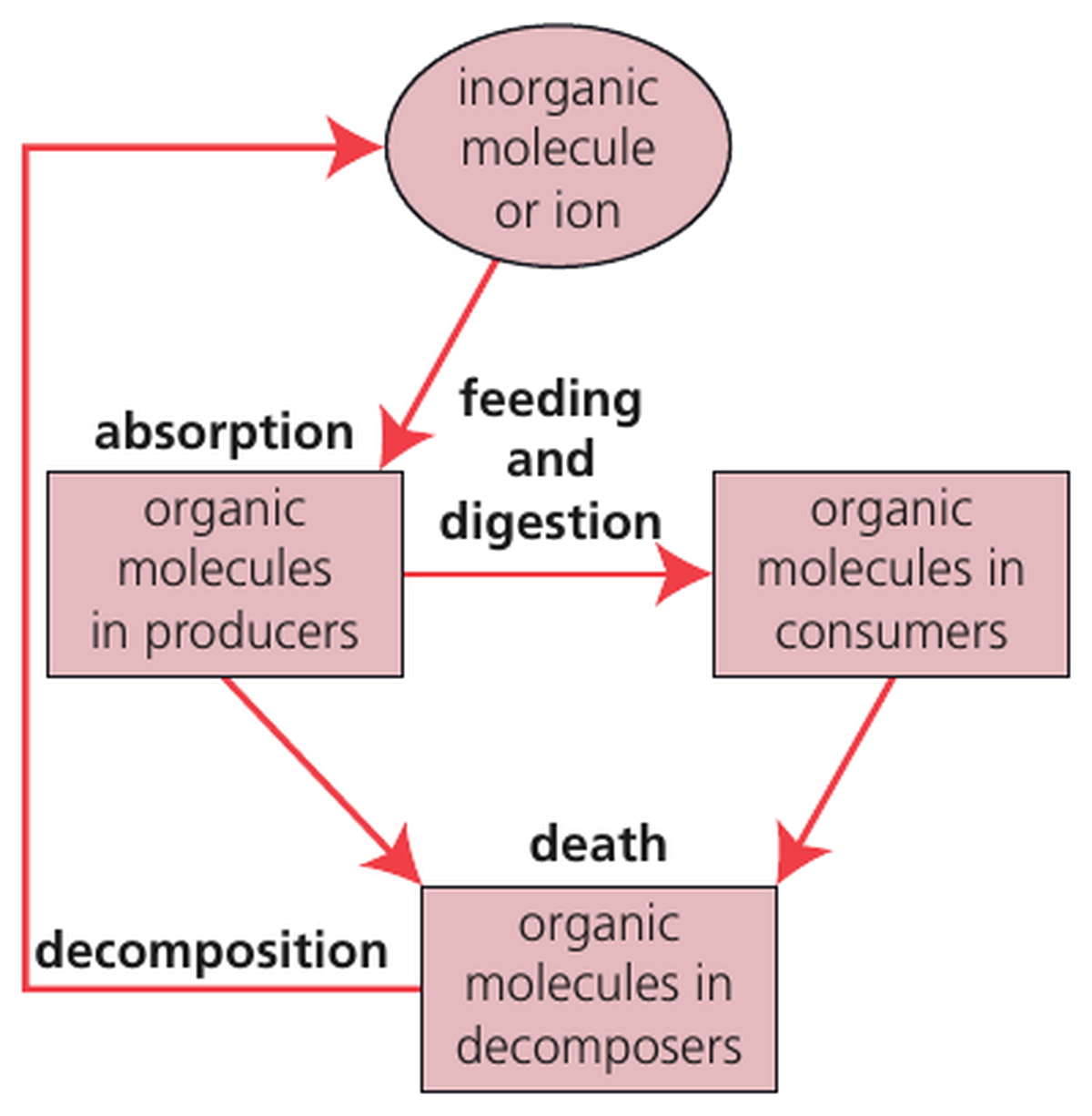
Decomposers and detritus feeders are not usually drawn as one step in a food chain, but they receive uneaten, egested and dead organic matter and transform its chemical energy through feeding and respiration.
Plant roots left uneaten and herbivore faeces can supply detrital pathways, while only new herbivore biomass remains available to a predator.
Transfer efficiency is not a universal ten-percent rule. Species, tissues, temperature and ecological conditions alter the size of each loss.
This objective is assessed through structured response, commonly using Identify / Explain / Outline.
Identify / Explain / Outline / Calculate / State / Deduce / Distinguish / Suggest / Discuss
Build the answer around this relationship: Energy reductions must be linked to the correct source, store, transfer or loss process.
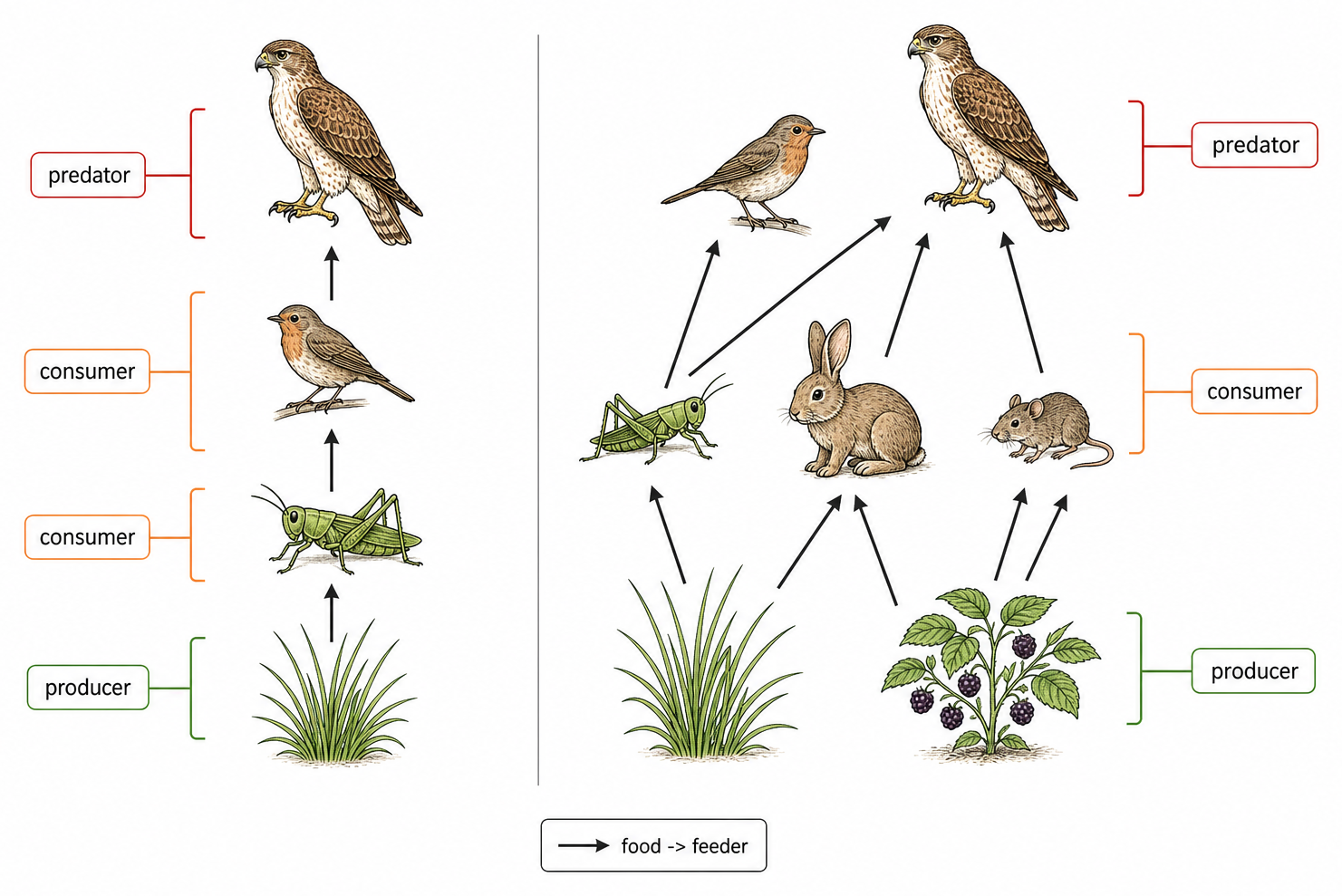
Reversing food-web arrows instead of showing energy transfer direction.
Representative question
The efficiency of energy transfer along the various food chains in a food web varies. Suggest reasons for the differences.
a. energy is lost between trophic levels as heat/metabolism/10\% (or less) is transferred (accept converse);
b. length of food chains varies / number of trophic levels in the food chains vary;
c. some animals / herbivores may be able to digest (more) plant material/ cellulose/ parts of their food such as skin or bones than other animals;
d. some animals are different in size / are more active;
e. use more energy (to keep warm or cool) than others/are warm or cold blooded;
3
Marking guidance:
max