EduNinja
(a)

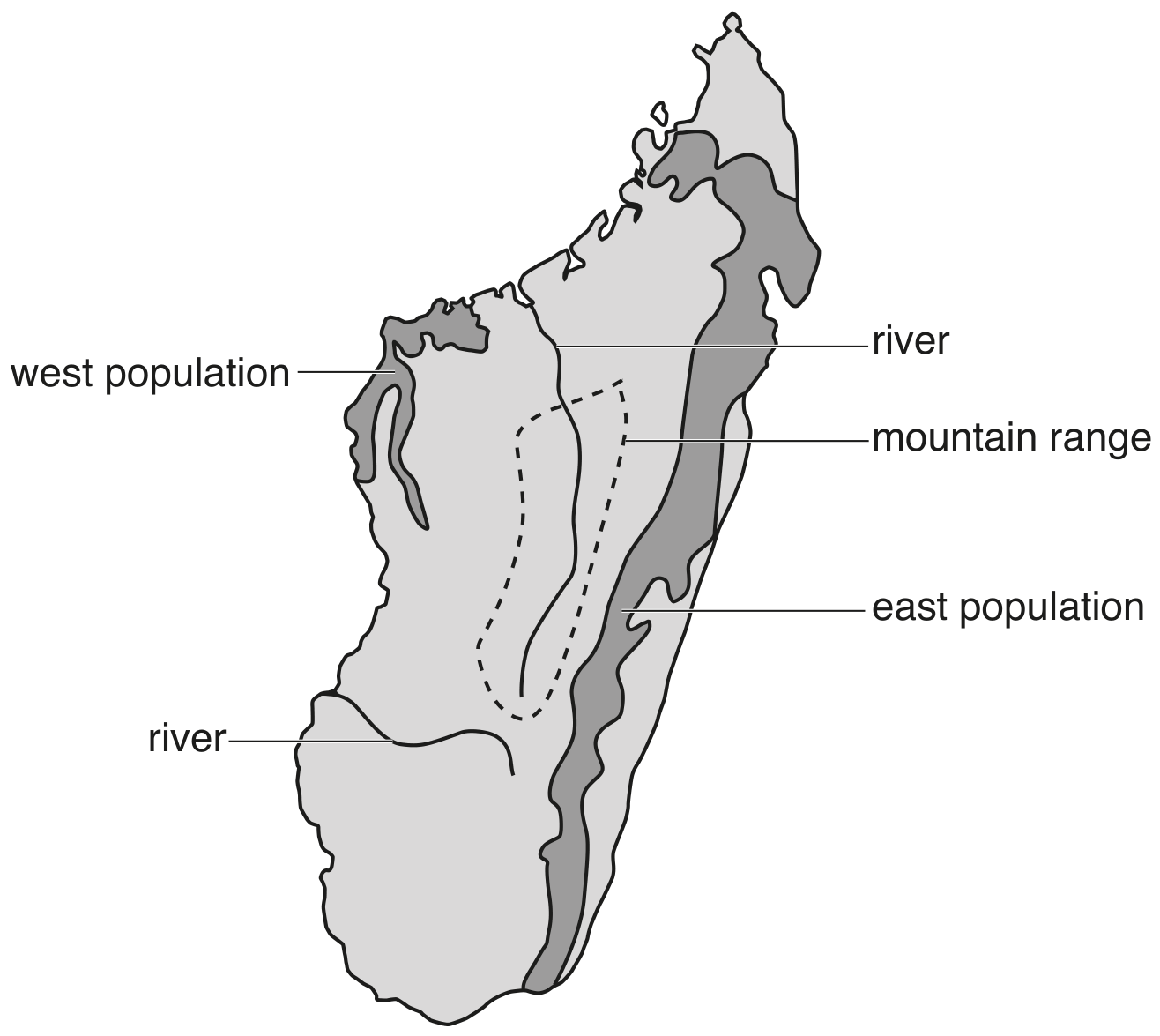
There are two main aye-aye populations on the island of Madagascar, one in the west and one in the east.

Fig. 1.2 is a map of Madagascar showing the location of the two main populations.
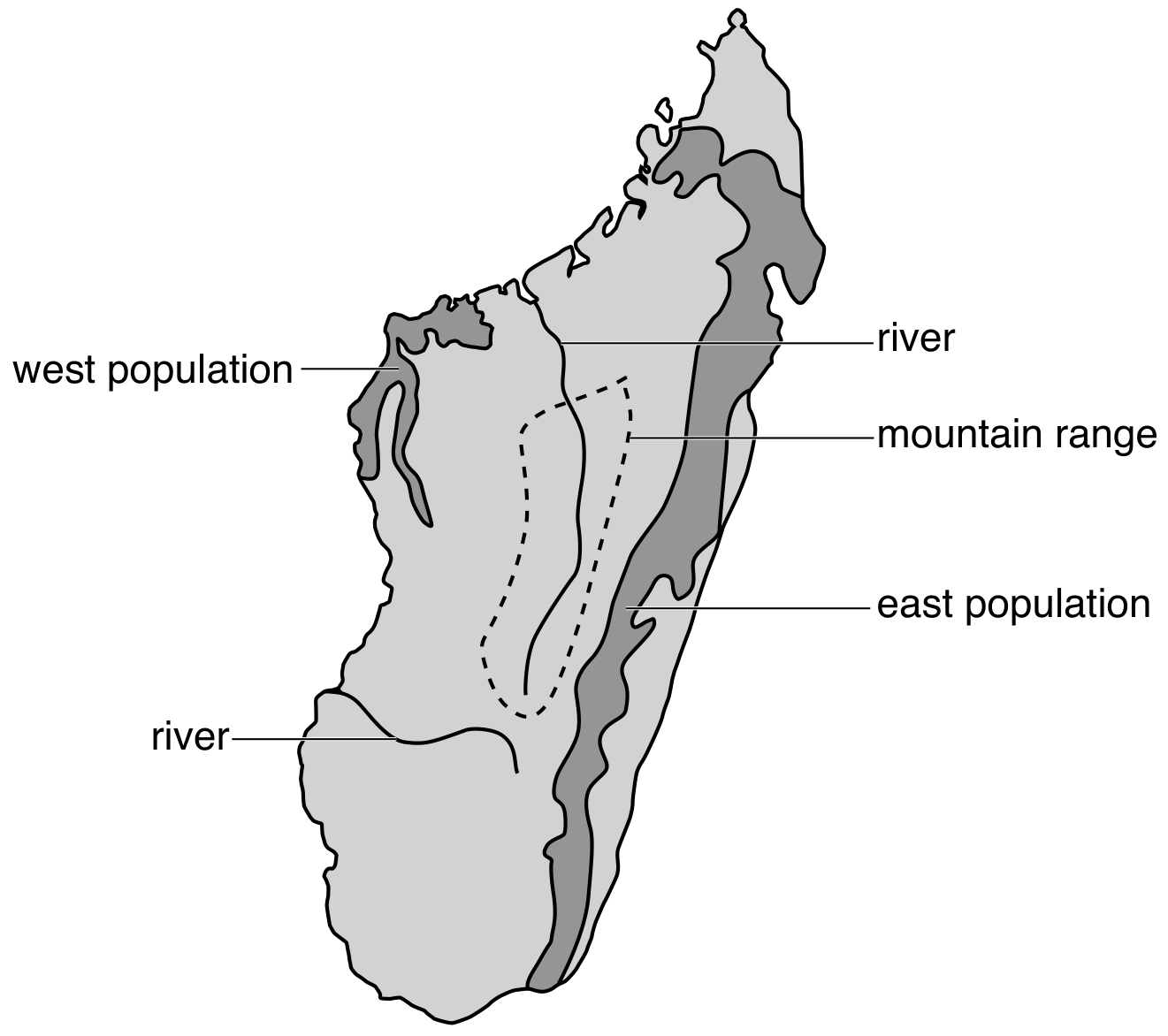
Fig. 1.2

Fig. 1.2

A study into the variation in the DNA nucleotide sequence of aye-ayes showed that there is a large genetic difference between the west population and east population. The two populations of aye-ayes may be evolving into separate species.

[ 6 ]
(i)

With reference to Fig. 1.2, suggest why there is a large genetic difference between the two populations.

[ 5 ]
(ii)

Name the type of speciation that is most likely to occur.

[ 1 ]
[Maximum number: 1]

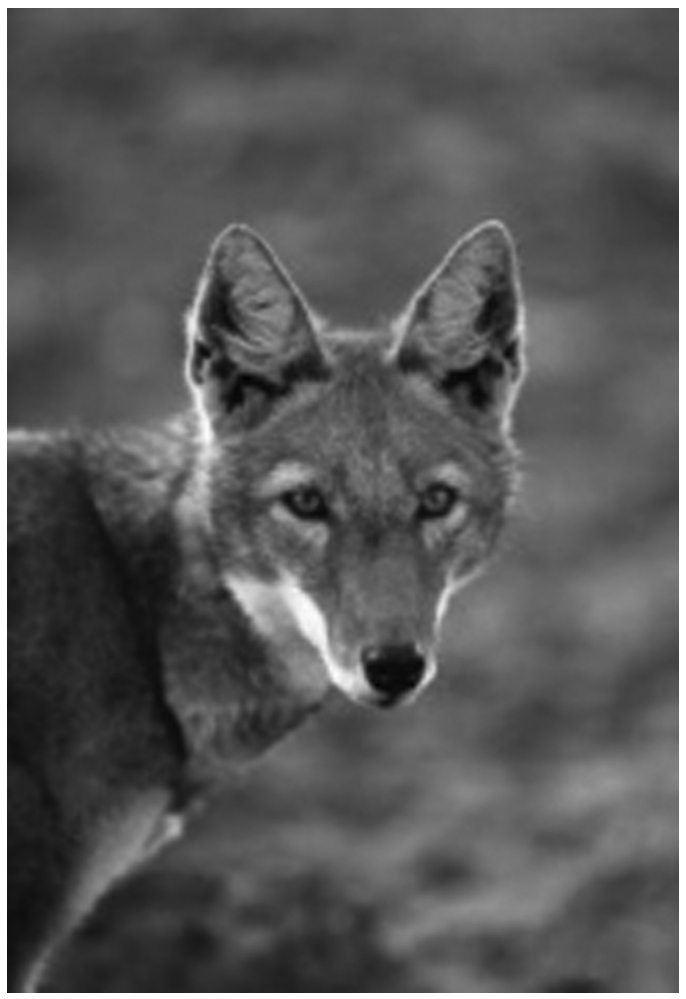
The Ethiopian wolf, Canis simensis, is a member of the Canidae family of carnivores.
Fig. 1.1 shows an Ethiopian wolf.

Fig. 1.1

Fig. 1.1

(a)

Ethiopian wolves evolved from an ancestor similar to the grey wolf that crossed into Northern Africa from Europe about 100000 years ago.

They live in the alpine grasslands and heathlands at, or above, 3000 m altitude in Ethiopia.

State the most likely type of speciation that led to the evolution of the Ethiopian wolf.

[ 1 ]
[Maximum number: 6]

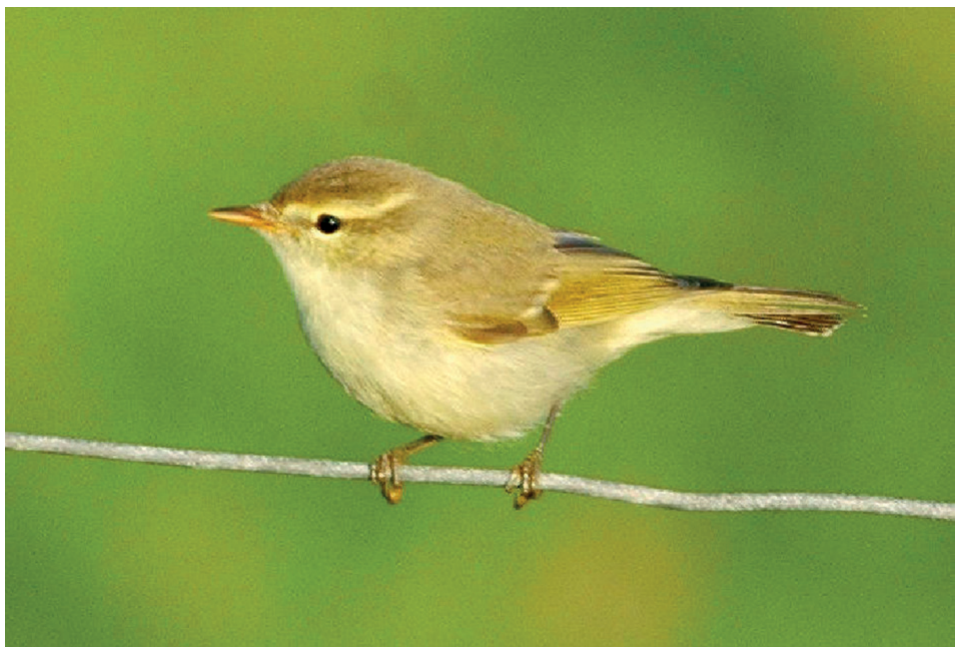
The greenish warbler, Phylloscopus trochiloides, is a species of small bird that originated in northern India, on the southern edge of the Himalayan mountain range.

Fig. 1.1 shows a greenish warbler.

Fig. 1.1

Fig. 1.1

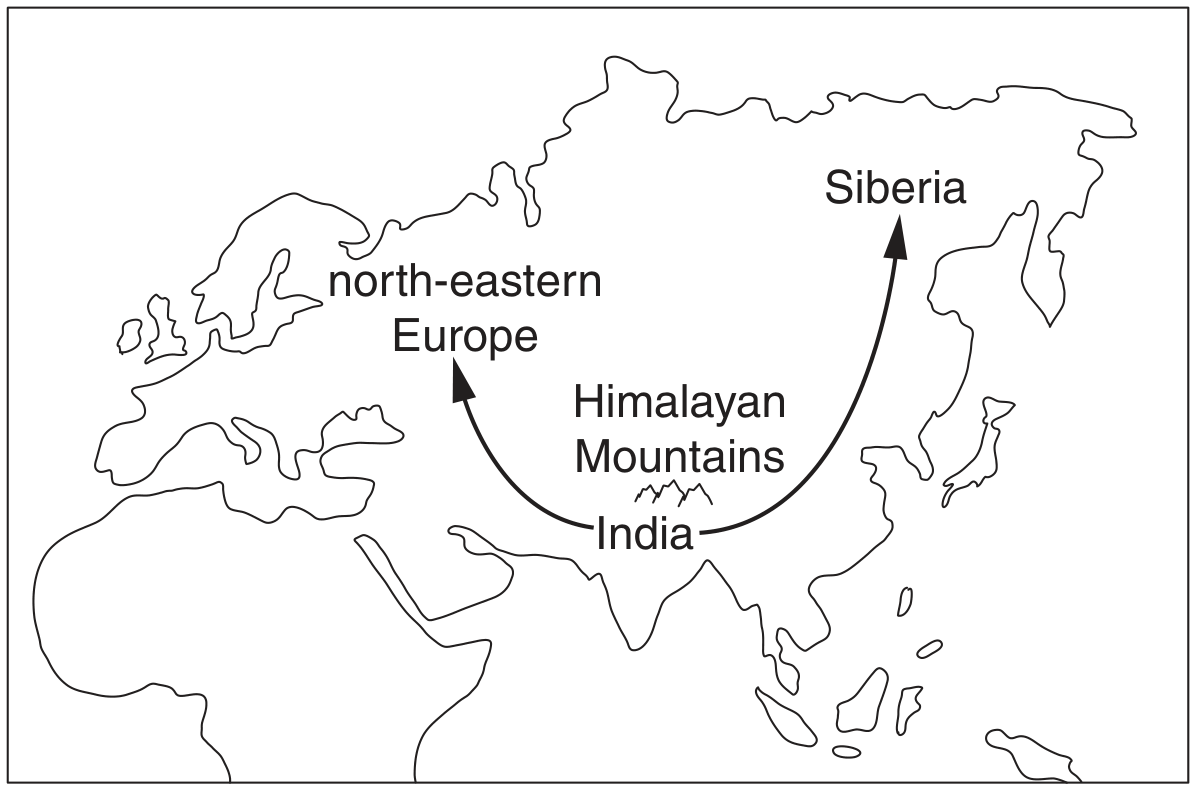
Thousands of years ago, populations of the greenish warbler spread around the western and eastern edges of the Himalayan mountain range to establish themselves in north-eastern Europe and Siberia.
- A gradual change in characteristics occurred in these populations, leading to different forms of the greenish warbler.
- One example of gradual change is in the song of the male warbler, which is very distinctive and is used in mating behaviour.
- When greenish warblers from north-eastern Europe meet those from Siberia no mating takes place.
- The greenish warblers from north-eastern Europe and Siberia are now considered to be two separate species.

Fig. 1.2 shows the spread of the greenish warbler.

Fig. 1.2 shows the spread of the greenish warbler.

(a)

State the likely isolating mechanism taking place in populations of the greenish warbler.

[ 1 ]
(b)

Explain how the process of speciation occurred in the greenish warbler populations.

[ 5 ]
(a)

The domestic dog, Canis familiaris, is found worldwide. It is able to breed with all other members of the genus to form fertile hybrids.

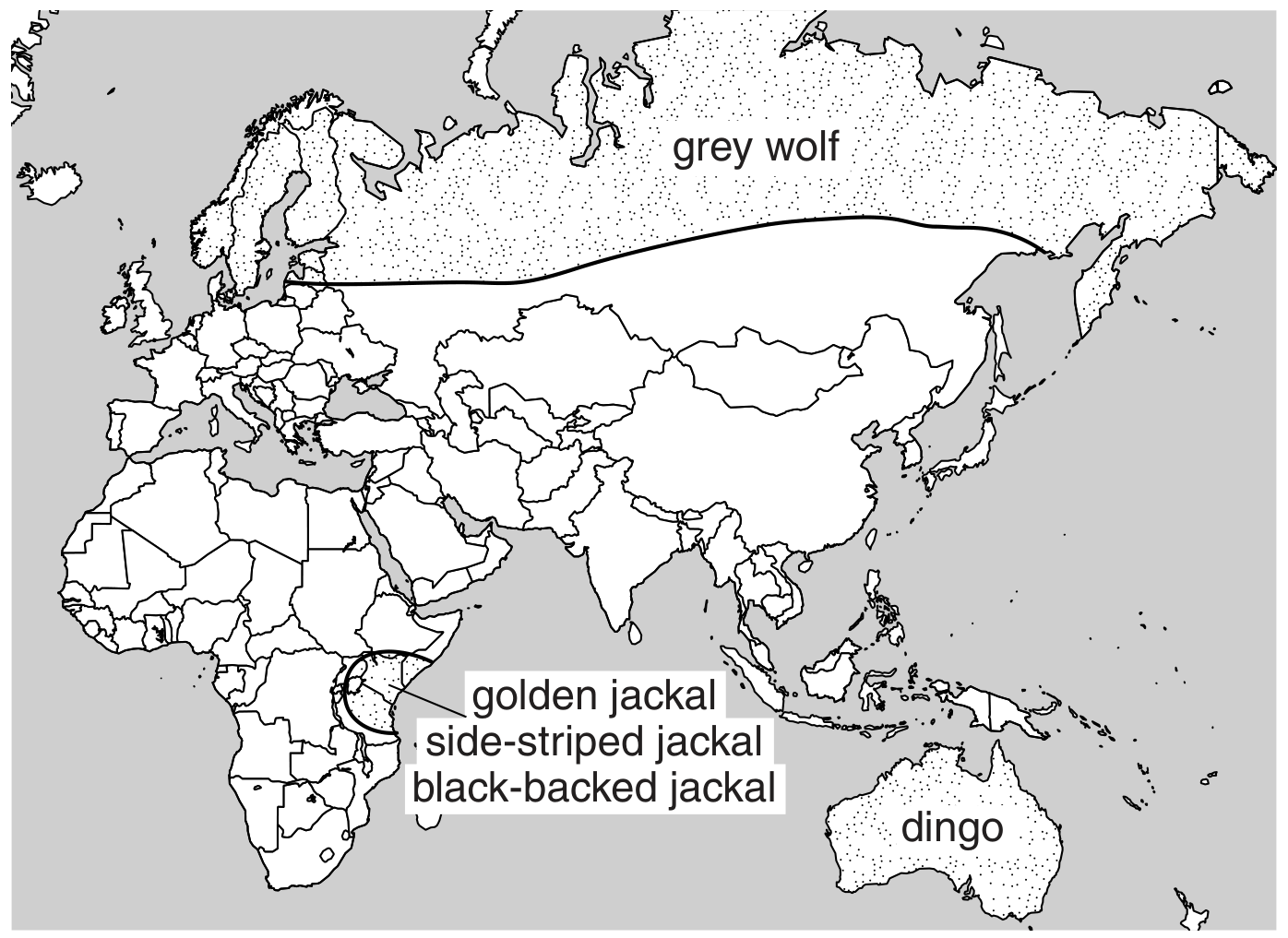
The distribution of some of the species belonging to the genus Canis is shown in Fig. 1.2.
The dingo and the grey wolf species have distinct ranges but the ranges of three species of jackal overlap in East Africa.

Fig. 1.2

Fig. 1.2

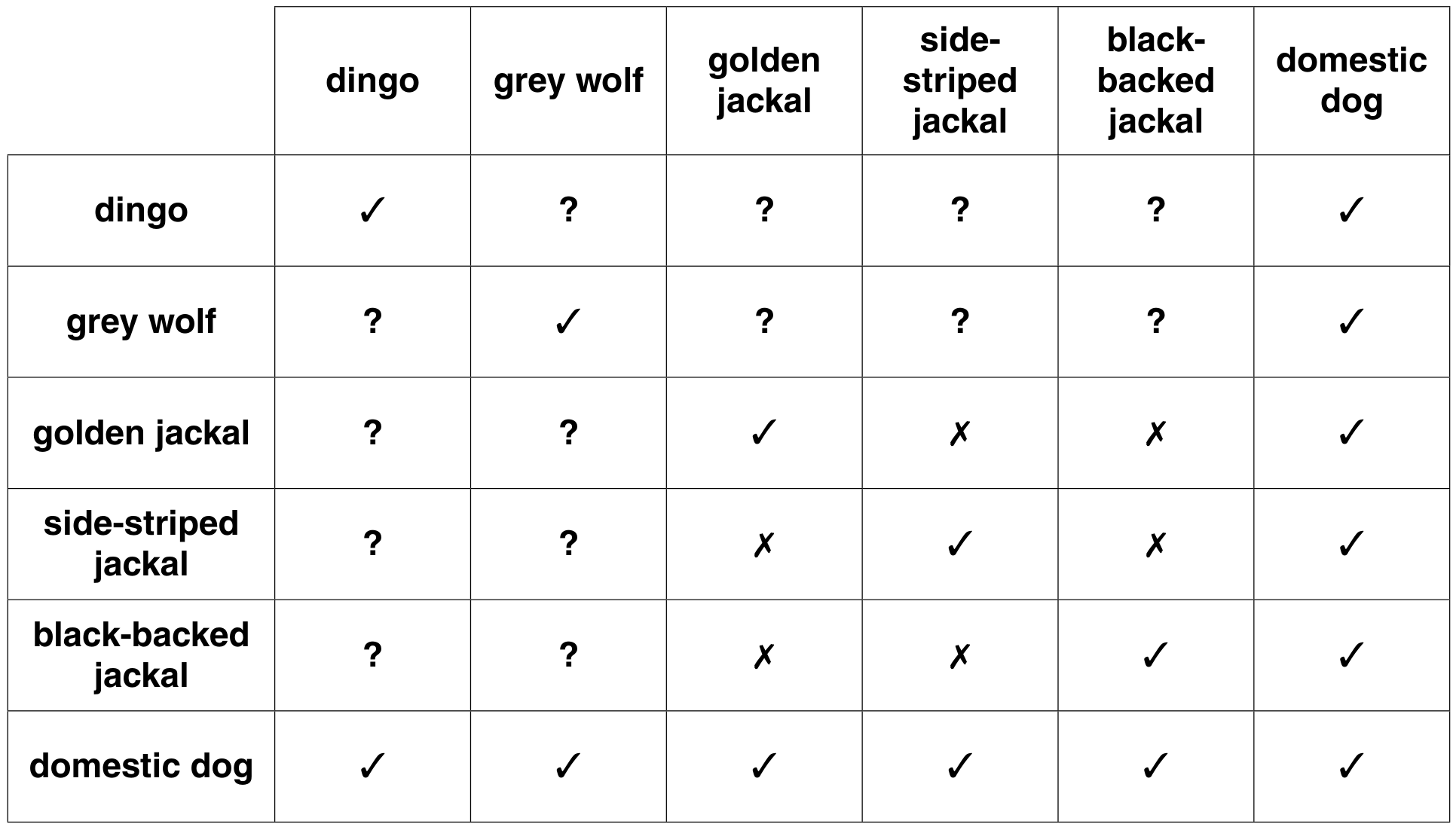
Table 1.1 shows whether members of different species of the genus Canis are able to breed with each other.

Table 1.1
key: \(\checkmark=\) able to interbreed \(\quad \boldsymbol{X

Table 1.1 key: \(\checkmark=\) able to interbreed \(\quad \boldsymbol{X

[ 2 ]
(i)

Suggest the type of isolating mechanism preventing:
- the three species of jackal interbreeding
- the dingo mating with all the other members of the genus Canis apart from the domestic dog.

[ 2 ]
(a)

There are two main aye-aye populations on the island of Madagascar, one in the west and one in the east.

Fig. 1.2 is a map of Madagascar showing the location of the two main populations.

Fig. 1.2

Fig. 1.2

A study into the variation in the DNA nucleotide sequence of aye-ayes showed that there is a large genetic difference between the west and east populations. The two populations of aye-ayes may be evolving into separate species.

[ 3 ]
(i)

Name the type of speciation that may be occurring.

[ 1 ]
(ii)

Suggest and explain a pre-zygotic isolating mechanism that could prevent successful reproduction between aye-ayes of the two populations.

[ 2 ]

The evolutionary origin of the four-legged amphibians (such as frogs and toads) from fish has been the subject of much debate for many years.

Among living fish, the rarely-caught coelacanth and the lungfish are thought to be most closely related to these amphibians.

Samples of blood were taken from two coelacanths that were captured recently near Comoros.

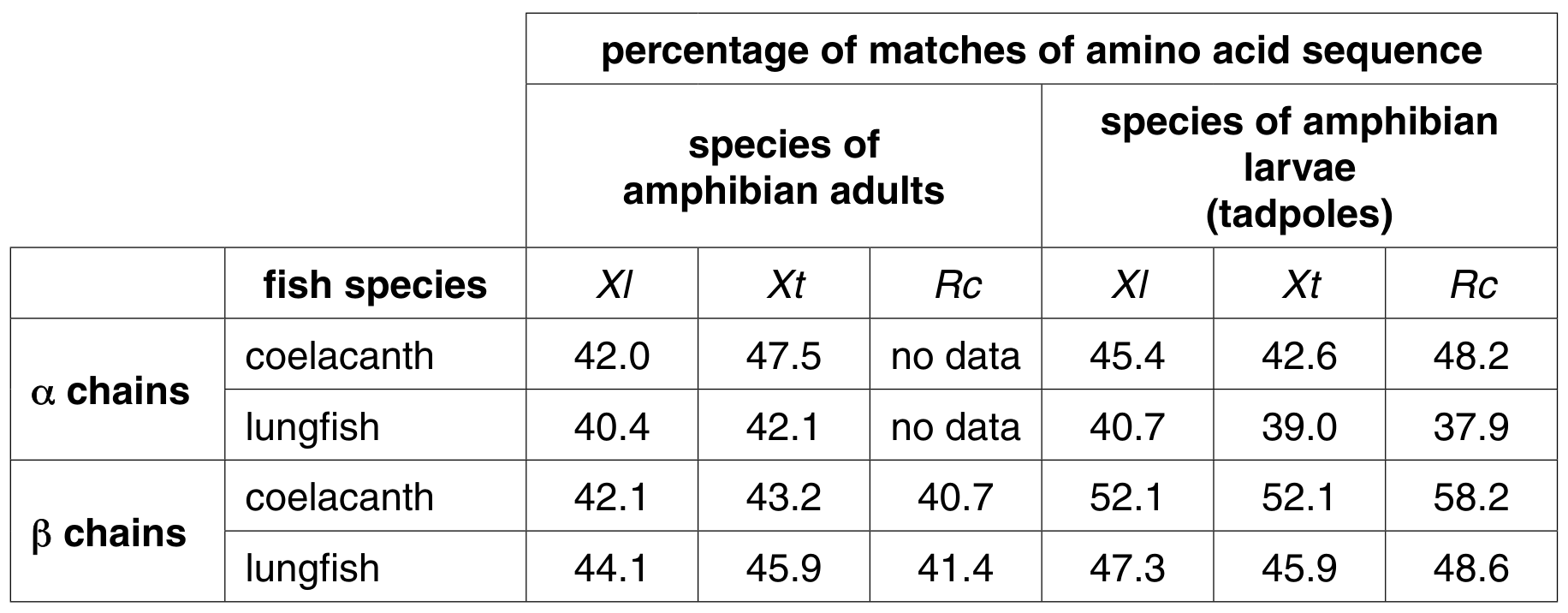
The amino acid sequences of the α\alpha and β\beta chains of coelacanth and lungfish haemoglobin were compared with the known sequences of amphibian adults and their aquatic larvae (tadpoles). Organisms with more matches in the amino acid sequence of a polypeptide chain share a more recent common ancestor than those with fewer matches.

The comparisons with three species of amphibians, Xenopus laevis (XI), X. tropicana (Xt) and Rana catesbeiana (Rc) are shown in Table 2.1.

Table 2.1

Table 2.1

(a)

Explain the role of isolating mechanisms in the evolution of new species.

(a)

The collared flycatcher, Ficedula albicollis, and the pied flycatcher, F. hypoleuca are two closely related species of bird. DNA analysis has shown that speciation from a common ancestor occurred approximately 1 million years ago.

A study was carried out on the island of Öland, Sweden. In Öland, the breeding areas of the two bird species overlap and small numbers of hybrid flycatchers are produced.
- Birds were captured and their DNA was analysed to identify whether each bird was F. albicollis, F. hypoleuca or a hybrid.
- Sperm samples were taken from the male birds.

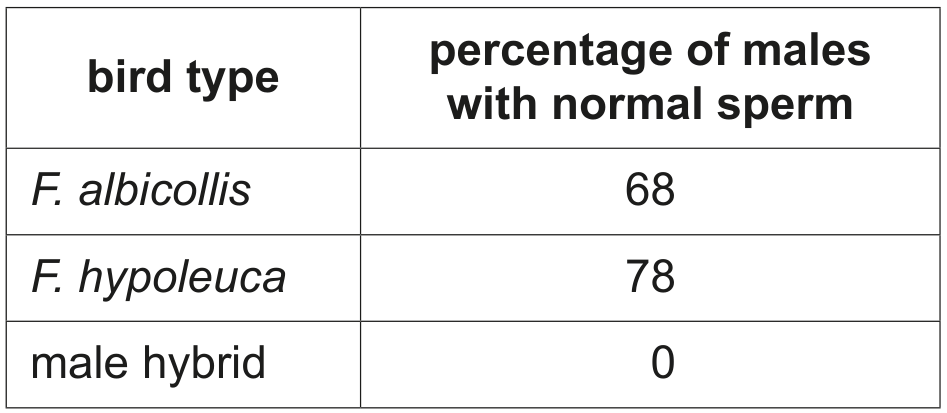
Table 3.1 shows the percentage of males of each bird type with normal sperm.

Table 3.1

Table 3.1

- The researchers observed that female birds mostly choose mates of their own species based on plumage (feathers) and song.
- Hybrid flycatchers are produced when female F. albicollis mate with male F. hypoleuca that have a song that is similar to F. albicollis.
- Analysis showed that all female hybrids were sterile.

The group of eggs a female bird lays at a single time in its nest is called a clutch. The offspring in the nest are looked after by a male-female pair. Sometimes the male in the male-female pair does not provide the sperm that fertilise the eggs of the female.

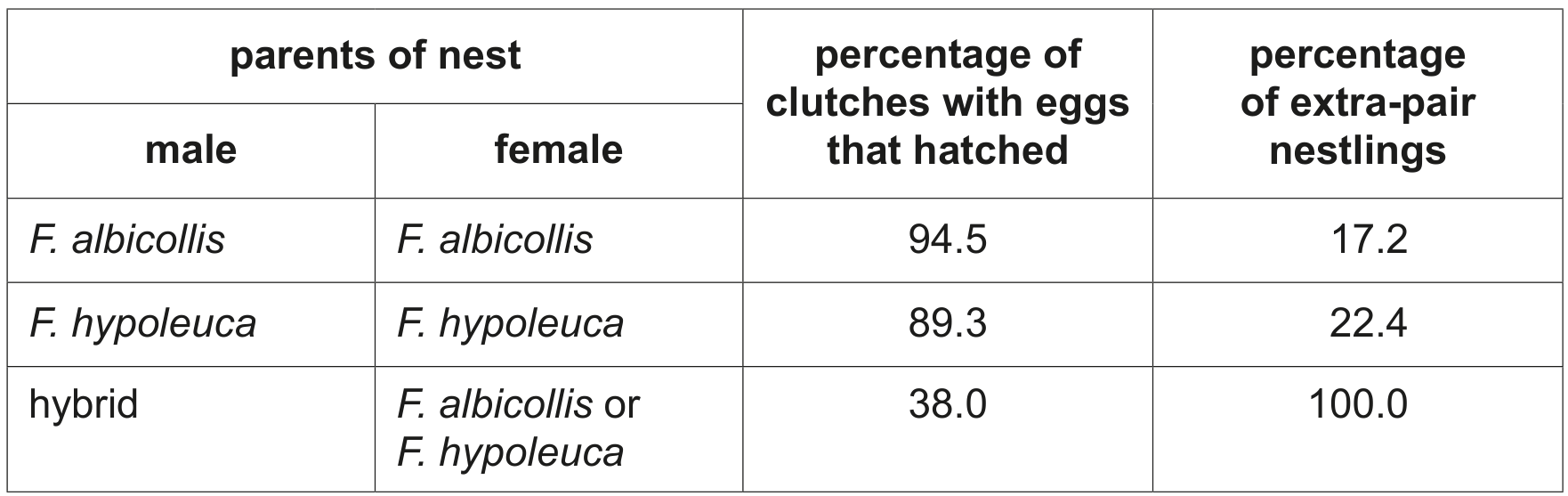
Table 3.2 shows:
- the percentage of clutches with eggs that hatched
- the percentage of extra-pair nestlings (offspring in the nest fathered by a male that was different from the male of the male-female pair).

Table 3.2

Table 3.2

[ 9 ]
(i)

Discuss the pre-zygotic and post-zygotic isolating mechanisms that maintain F. albicollis and F. hypoleuca as separate species.

[ 4 ]
(ii)

Explain how the two species F. albicollis and F. hypoleuca could have evolved from one original ancestral population.

[ 5 ]
[Maximum number: 5]

Cats are members of the Felidae family. Two genera of Felidae are Leopardus and Panthera.

(a)

The genus Leopardus consists of species of wild cats that are small and spotted. In 2013, biologists investigated the evolution of Leopardus tigrinus in South America.

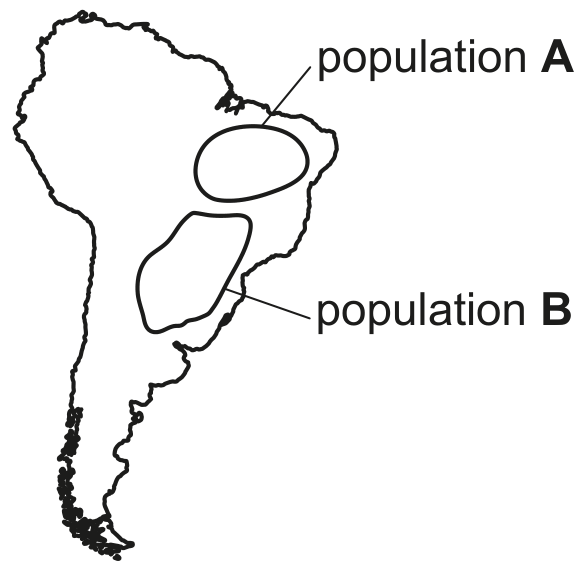
Fig. 3.1 shows the locations in South America of two populations of. L. tigrinus, population A and population B.

Fig. 3.1

Fig. 3.1

- Population A lives in grassland and desert habitats and population B lives in forest habitats.
- The cats in population A have a lighter coat colour and a different pattern of spots from the cats in population B.
- Genetic analysis shows that population A is genetically distinct from population B.
- Population B has now been reclassified as a new species, L. guttulus.

[ 5 ]
(i)

Explain how the two species, L. tigrinus and L. guttulus, have evolved from one original population in South America.

[ 5 ]
[Maximum number: 3]

A subspecies is a genetically distinct population of a species that has some phenotypic differences but is not yet reproductively isolated.

500000 years ago, the European house mouse, Mus musculus, evolved into two subspecies, Mus musculus domesticus and Mus musculus musculus.

(a)

Today, M. m. domesticus populations are separated from M. m. musculus populations by a large hybrid zone. The hybrid zone formed 5000-1000 years ago when populations of the two subspecies overlapped and interbreeding occurred between the two subspecies, resulting in hybrids.

Researchers investigated the populations in the hybrid zone.
It was observed that:
- hybrid mice were infected by more intestinal worms than M. m. domesticus and M. m. musculus
- M. m. domesticus and M. m. musculus individuals frequently mate together
- hybrid male mice had a very low fertility score based on testis weight and total sperm production, whereas M. m. domesticus and M. m. musculus males had a very high fertility score
- some female hybrids were sterile
- crosses between a fertile female hybrid and a male from either subspecies produced a very low number of offspring.
M. m. domesticus and M. m. musculus usually have the same diploid number ( 2 n=40 ). Some individuals of M. m. domesticus have a different diploid number ( 2 n=34 ).

Discuss the extent to which pre-zygotic and post-zygotic isolating mechanisms maintain M. m. domesticus and M. m. musculus as two separate subspecies within the hybrid zone.

[ 3 ]
0