Cultivated rice, Oryza sativa, is often grown in fields flooded with water.
Some varieties of cultivated rice are able to grow long internodes when they are submerged in water, keeping the leaves and flowers above water level (an internode is a length of stem between leaves). These varieties are known as deepwater rice.
The snorkel genes SK1 and SK2, thought to be responsible for this response, were identified in a variety of deepwater rice, C9285. A non-deepwater variety, T65, did not have these genes.
When submerged, rice plants produce the gaseous plant hormone ethene. This has a very low solubility in water, so it accumulates in the aerenchyma tissue in the rice stems.
Fig. 4.1 shows the concentration of ethene in the aerenchyma of T65 and C9285 when the plants are submerged in water for 18 hours.
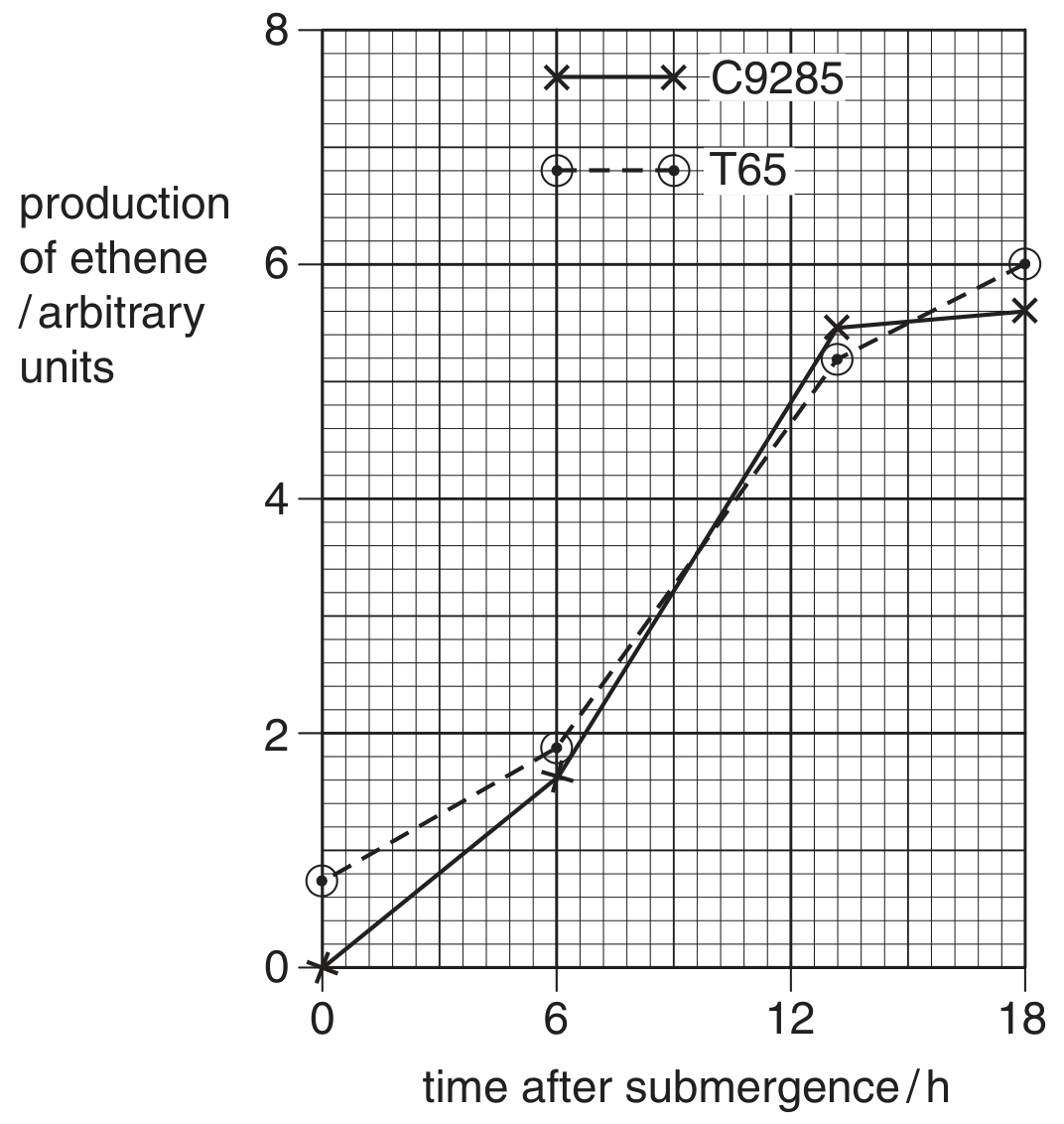
Fig. 4.1
Fig. 4.2 shows the results of exposing T65 and C9285 to different concentrations of ethene in dry conditions.
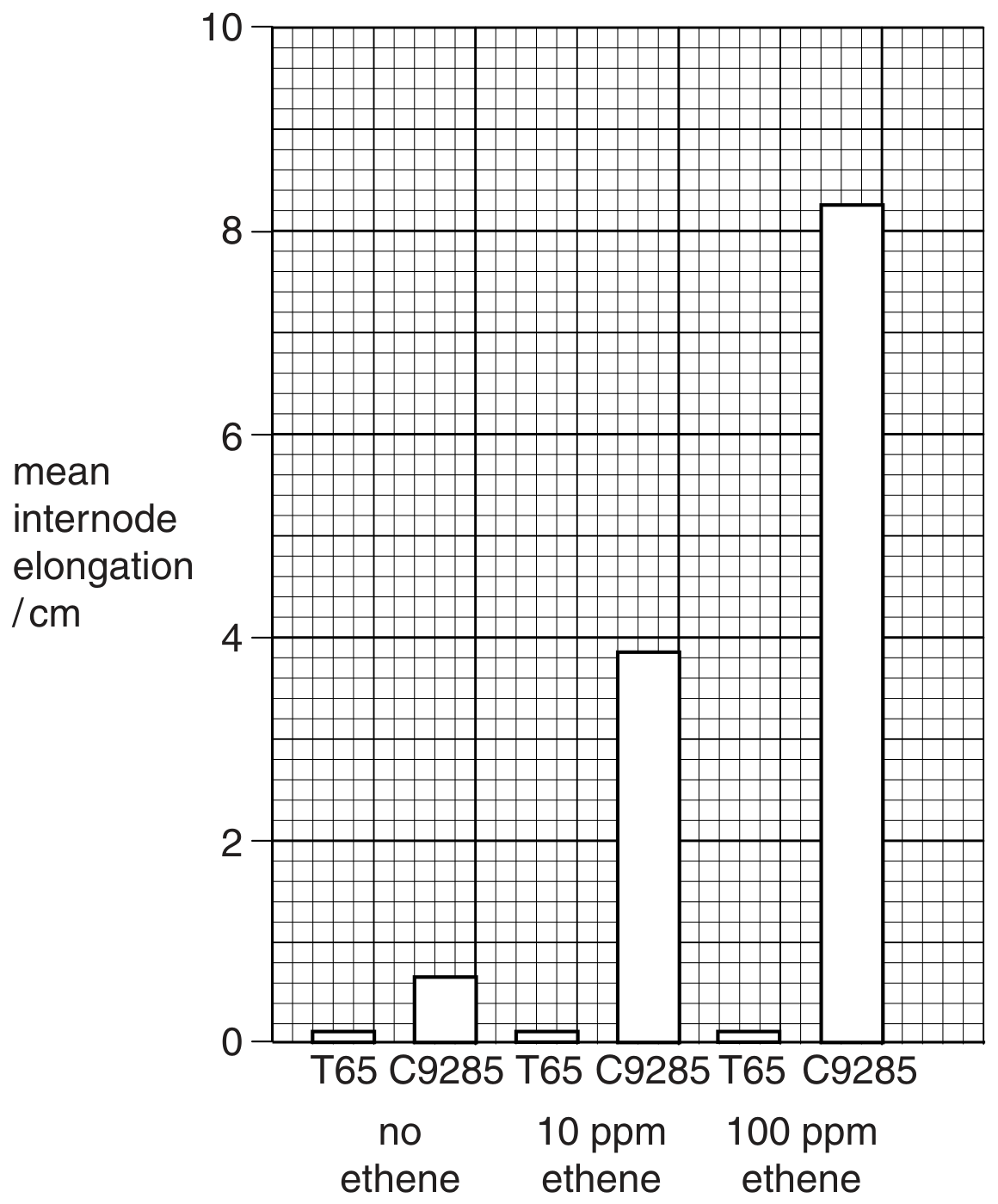
Fig. 4.2
With reference to Fig. 4.1, describe the effect of submergence in water on the production of ethene in rice.