EduNinja
(a)

The rate of photosynthesis is affected by many environmental factors.

A student carried out an experiment to investigate the relationship between the concentration of carbon dioxide available to an aquatic plant, Cabomba caroliniana, and its rate of photosynthesis.
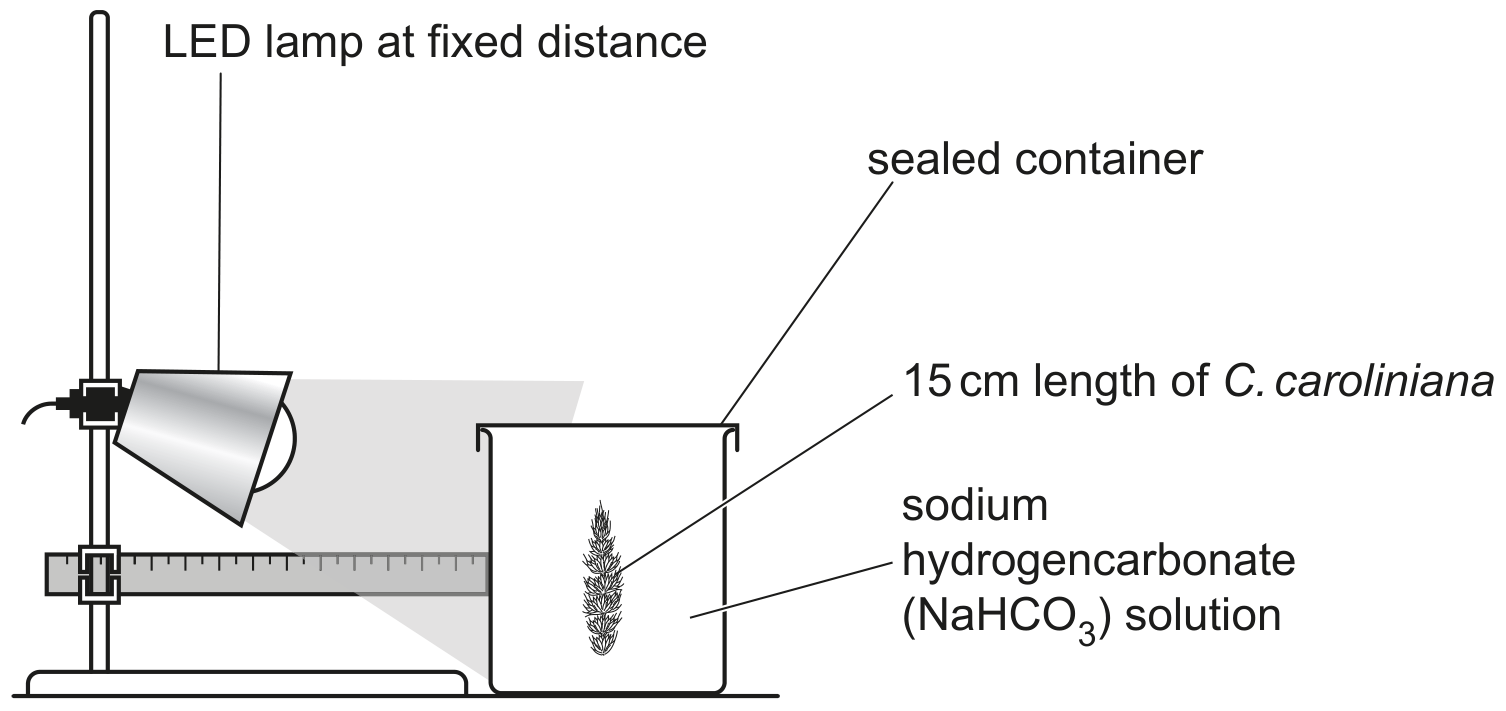
Fig. 1.1 shows the experimental set-up for this investigation.

Fig. 1.1 shows the experimental set-up for this investigation.

- Sodium hydrogencarbonate solution was used as a source of carbon dioxide.
- The concentration of carbon dioxide was varied using six different concentrations of sodium hydrogencarbonate solution.
- All C. caroliniana plants were kept in the dark before the light was switched on at the start of the experiment.
- Five replicates were carried out at each concentration.
- The rate of photosynthesis was obtained by calculating the percentage change in dissolved oxygen concentration in the solution over five minutes.

Fig. 1.2 shows the results of the investigation.
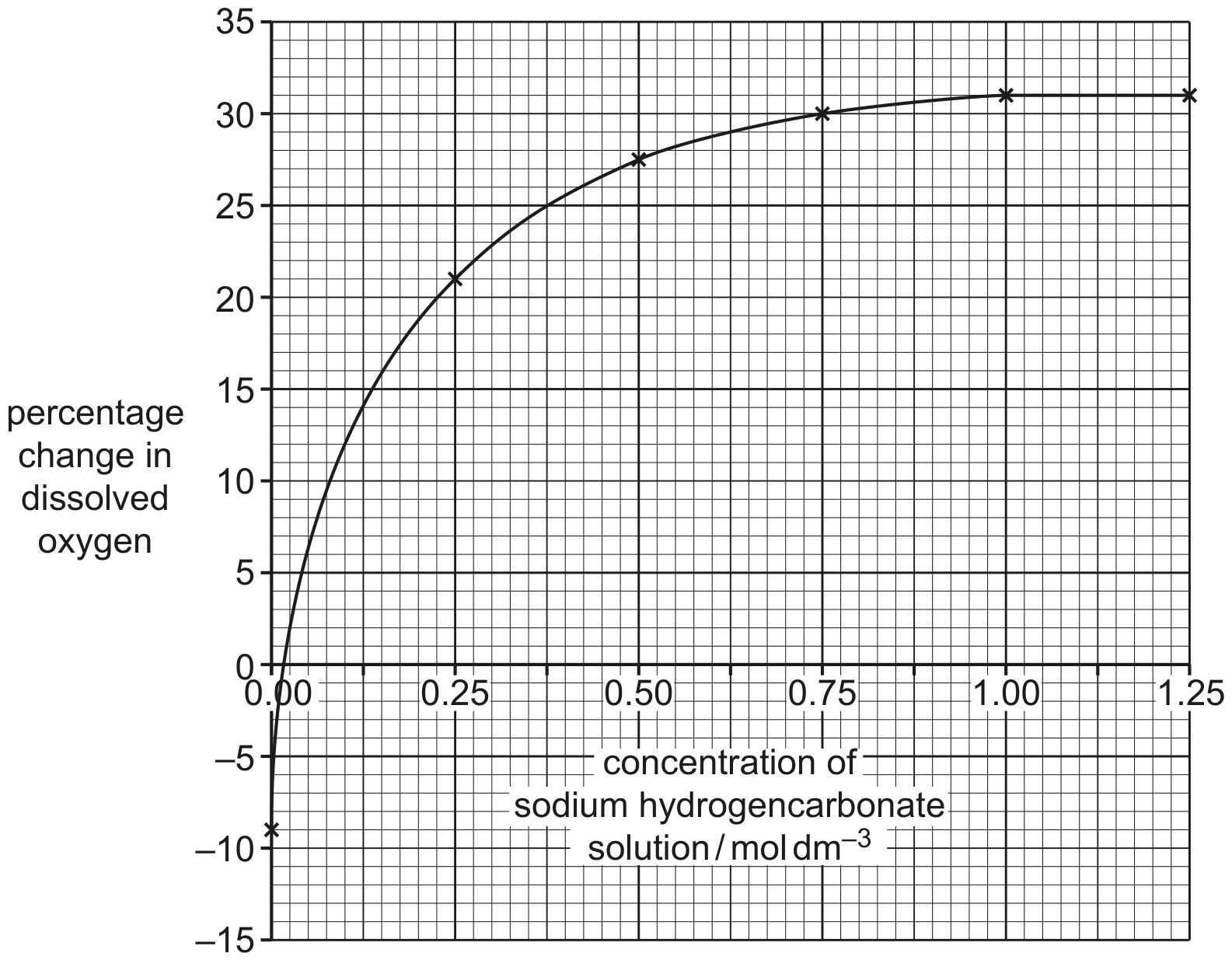
Fig. 1.2

Fig. 1.2

[ 2 ]
(i)

The percentage change in dissolved oxygen for C. caroliniana at 0.00moldm30.00 \mathrm{moldm}^{-3} of sodium hydrogencarbonate solution is negative.

Suggest reasons for this negative value.
[ 2 ]
[Maximum number: 3]

Scientists are researching new ways to reduce the global atmospheric carbon dioxide ( CO2\mathrm{CO}_{2} ) concentration. There are concerns that an increasing atmospheric CO2\mathrm{CO}_{2} concentration may lead to effects that decrease biodiversity.

(a)

With reference to Fig. 2.1, describe the differences between the results for the two cultures.

[ 3 ]
[Maximum number: 2]

The concentration of carbon dioxide in the atmosphere and the light intensity often limit the rate of photosynthesis.

(a)

Investigations were carried out in Florida, USA, into the effect of different concentrations of atmospheric carbon dioxide and of light intensity on the rate of photosynthesis of soybean plants.

Plants were grown from seed in outdoor, computer-controlled growth chambers at different concentrations of carbon dioxide. The upper parts of the chambers were transparent so that the plants received natural sunlight.

After the seedlings emerged, the air in the soil was separated from the air around the leaves by a gas-tight seal in each chamber.

Suggest why the air in the soil and the air around the leaves of the plants were separated.

[ 2 ]
[Maximum number: 5]

The light dependent stage of photosynthesis in a suspension of isolated chloroplasts can be investigated using the Hill reaction.

Dichlorophenolindophenol (DCPIP) can be used to follow the process. DCPIP is a blue dye which turns colourless when it is reduced by accepting hydrogen and electrons.

 oxidised DCPIP  reduced DCPIP  blue  colourless \begin{array}{clc} \text { oxidised DCPIP } & \rightarrow & \text { reduced DCPIP } \\ \text { blue } & \rightarrow & \text { colourless } \end{array}
(a)

Explain the reasons for:
the colour standard tube A
covering the beaker containing the chloroplast-DCPIP mixture with foil.

[ 4 ]
(b)

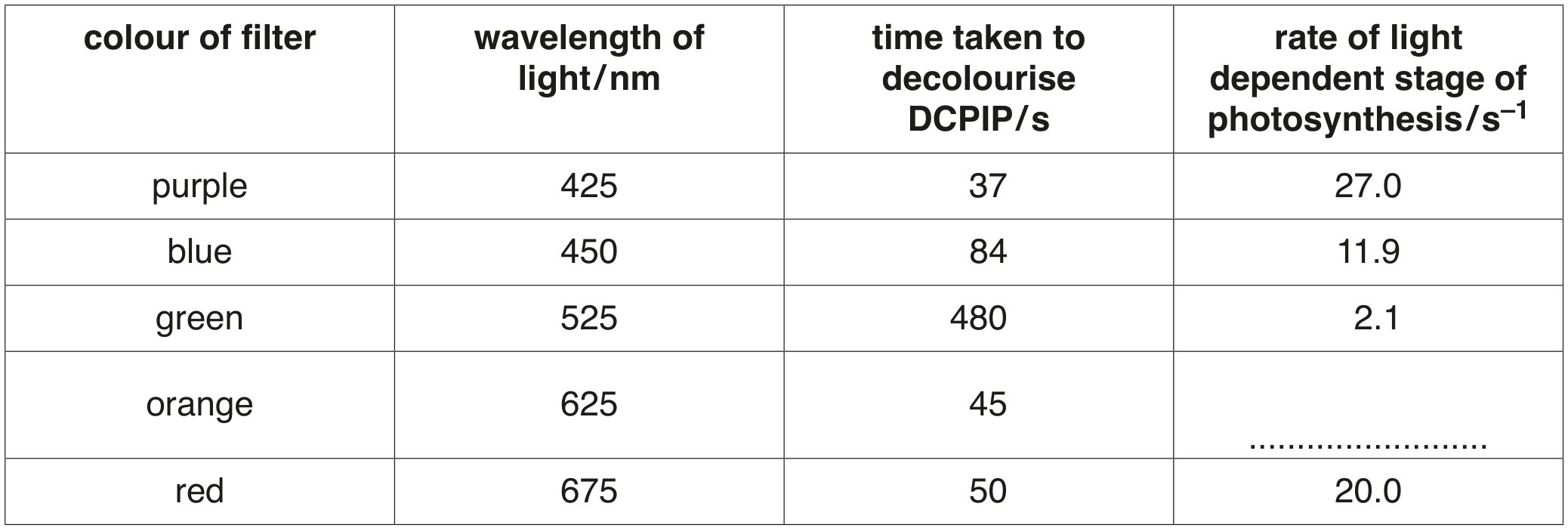
Table 2.1 shows the results of the experiment.

Table 2.1

Table 2.1

[ 1 ]
(i)

Complete Table 2.1 by calculating the rate of the light dependent stage of photosynthesis for the orange wavelength, using the formula:

 rate =1000t where t= time in seconds. \text { rate }=\frac{1000}{t} \text { where } t=\text { time in seconds. }
[ 1 ]
[Maximum number: 4]

During the germination of barley seeds, amylase is produced.

(a)

Malting is a process involved in the production of a drink called beer. During malting, barley seed germination is controlled so that the sugars produced during germination can be used in the production of beer.

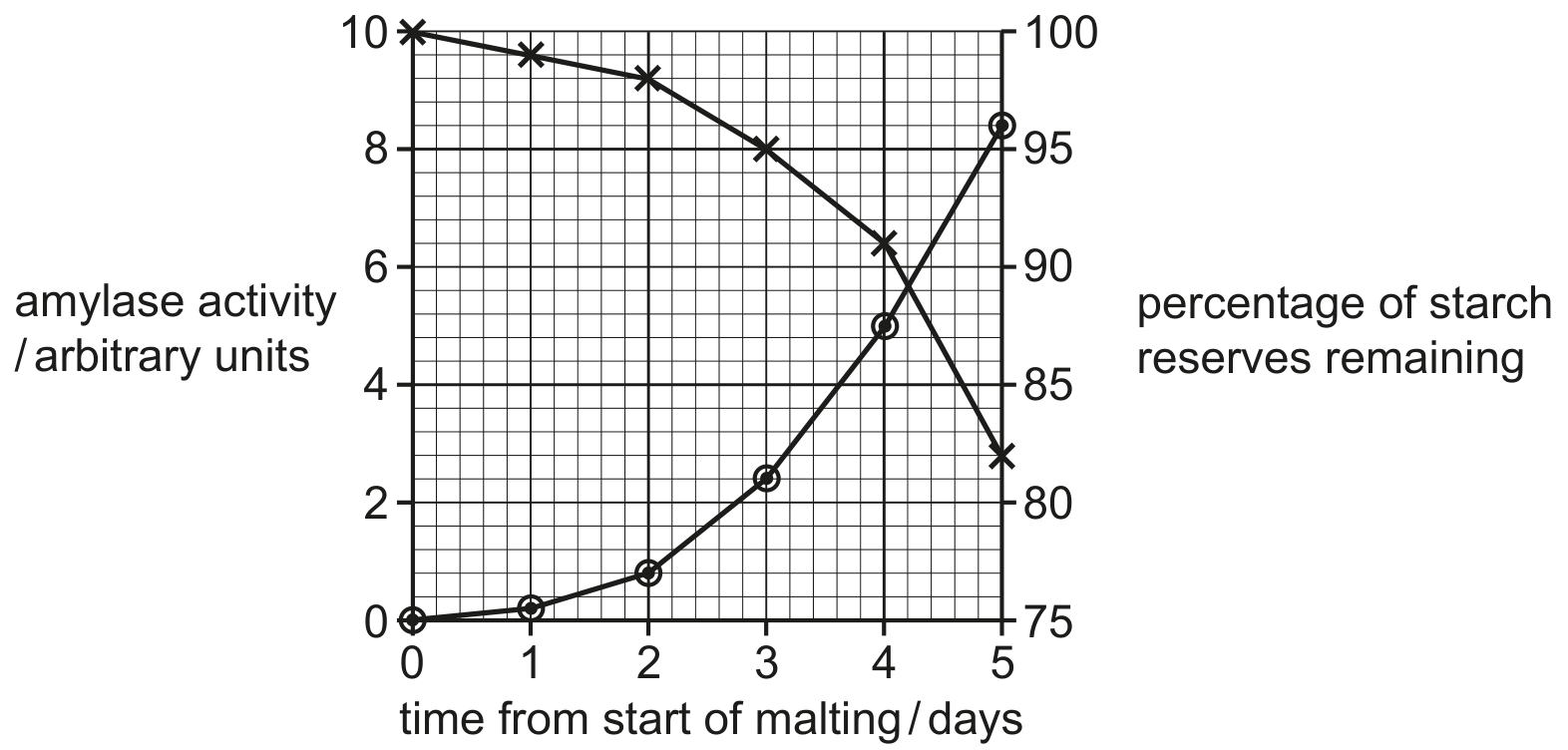
Fig. 3.1 shows two features of a germinating barley seed during the first five days of malting:
- activity of the amylase enzyme
- the percentage of starch reserves remaining in the barley seed.

Key
starch reserves
amylase activity

Fig. 3.1

Fig. 3.1

[ 4 ]
(i)

With reference to Fig. 3.1, describe and explain the effect of malting on amylase activity and the percentage of starch reserves remaining in the germinated barley seed.

[ 4 ]
[Maximum number: 2]

Maize, Zea mays, is a major cereal food crop. Unlike most crop plants, maize seed is produced by hybridisation between two different inbred parental strains.

(a)

It is expected that the carbon dioxide concentration in the atmosphere will increase in the future, which would be expected to increase rates of photosynthesis in many crop plants.

Investigations were carried out into the effect of increased carbon dioxide concentration on the rate of photosynthesis in maize.
- Maize plants were grown in open-air trials, in the same field and were exposed to the same changes in the weather.
- 50 % of the plants were exposed to a normal carbon dioxide concentration.
- 50 % of the plants were exposed to an increased carbon dioxide concentration.
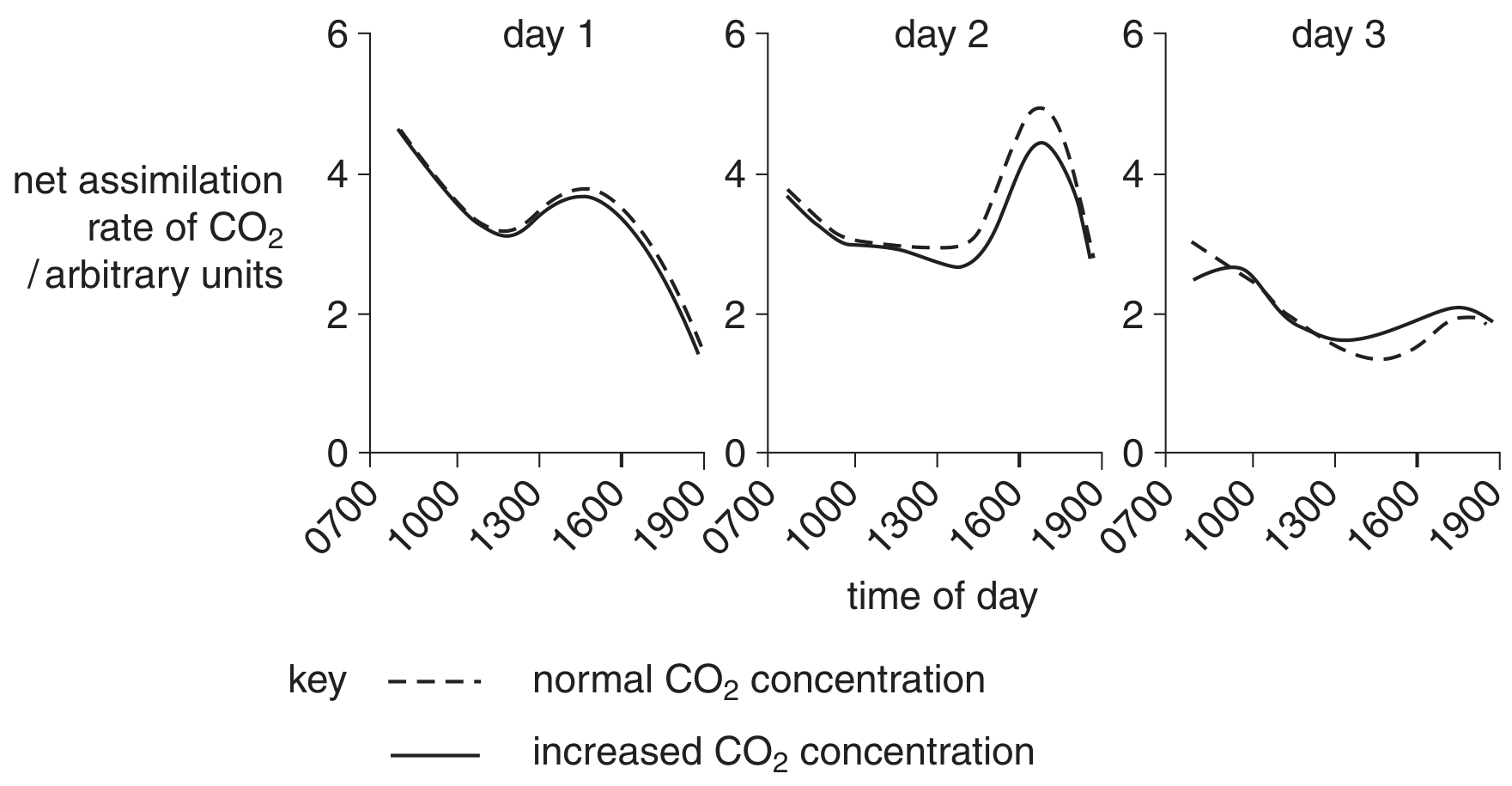
- The rate of photosynthesis was measured as the net assimilation rate of carbon dioxide.
- Measurements were made at three-hourly intervals between 0700 hours and 1900 hours on three different days.

The results are shown in Fig. 4.1.

Fig. 4.1

Fig. 4.1

[ 2 ]
(i)

Suggest one explanation for the changes in the rate of photosynthesis between 0700 hours and 1900 hours on day 1.

[ 2 ]
[Maximum number: 7]

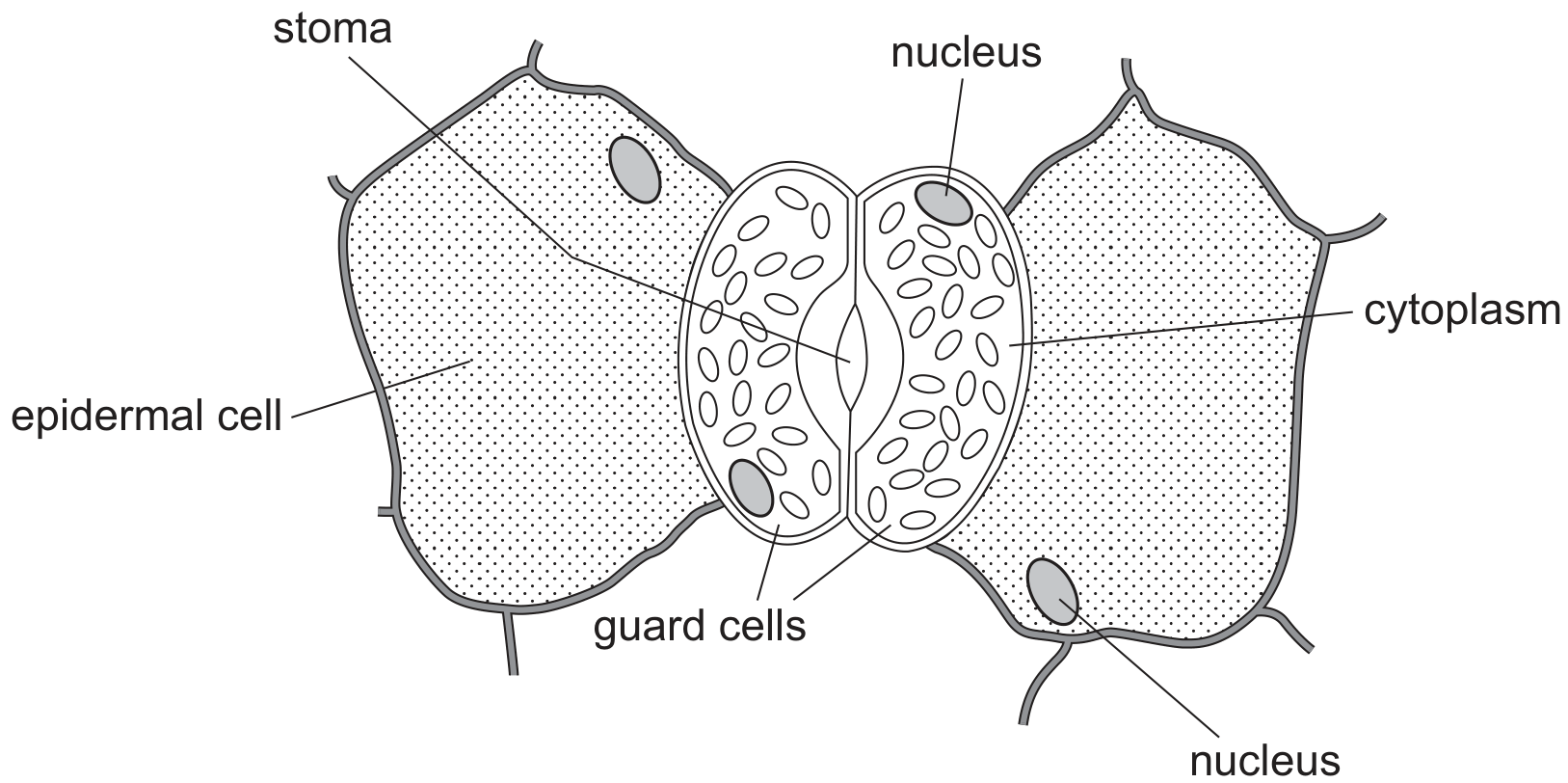
Fig. 4.1 shows a diagram of a stoma, its guard cells and adjacent epidermal cells.

Fig. 4.1

Fig. 4.1

(a)

The following experiment was carried out to investigate the effect of light intensity on the rate of photosynthesis of a water plant, Elodea.
- Elodea was cut into three pieces, each 10 cm long.
- Each piece of Elodea was placed in a glass tube, containing 0.5 % sodium hydrogen carbonate solution, which was then sealed with a bung.
- Tube A was placed 10 cm away from a lamp.
- Tube B was placed 5 cm away from a lamp.
- Tube C was placed in a dark room.
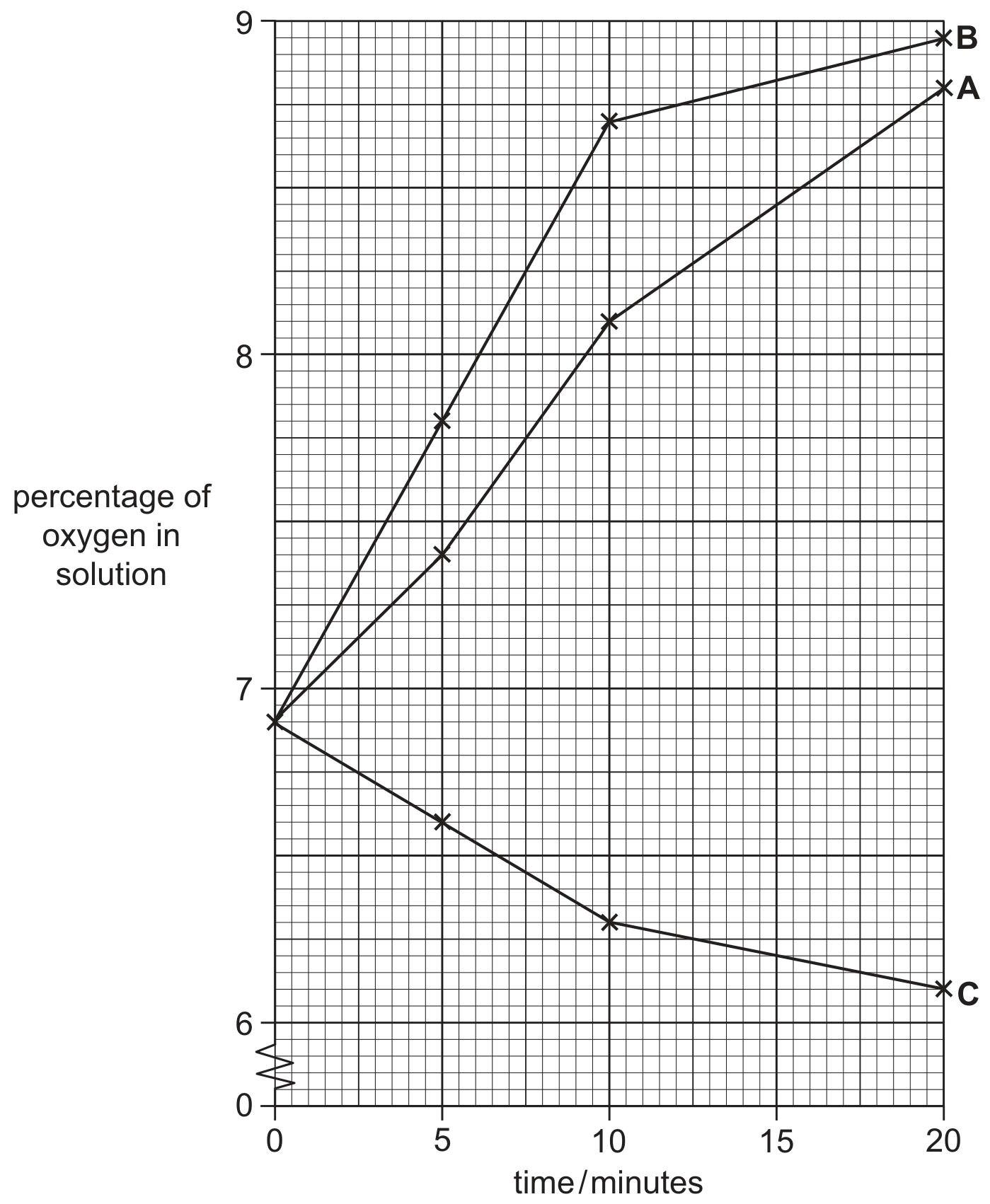
- An oxygen sensor was used to measure the percentage of oxygen in the solutions at the start of the experiment and again at 5,10 and 20 minutes.

The results are shown in Fig. 4.2.

Fig. 4.2

Fig. 4.2

[ 7 ]
(i)

State why sodium hydrogencarbonate solution was used.

[ 1 ]
(ii)

Calculate the mean rate of oxygen production for tube A for the 20 minutes of the experiment.

Give your answer to two decimal places.
Show your working.
answer

[ 2 ]
(iii)

Compare the results for tubes A and B.

[ 2 ]
(iv)

Explain the results for tube C.

[ 2 ]
(a)

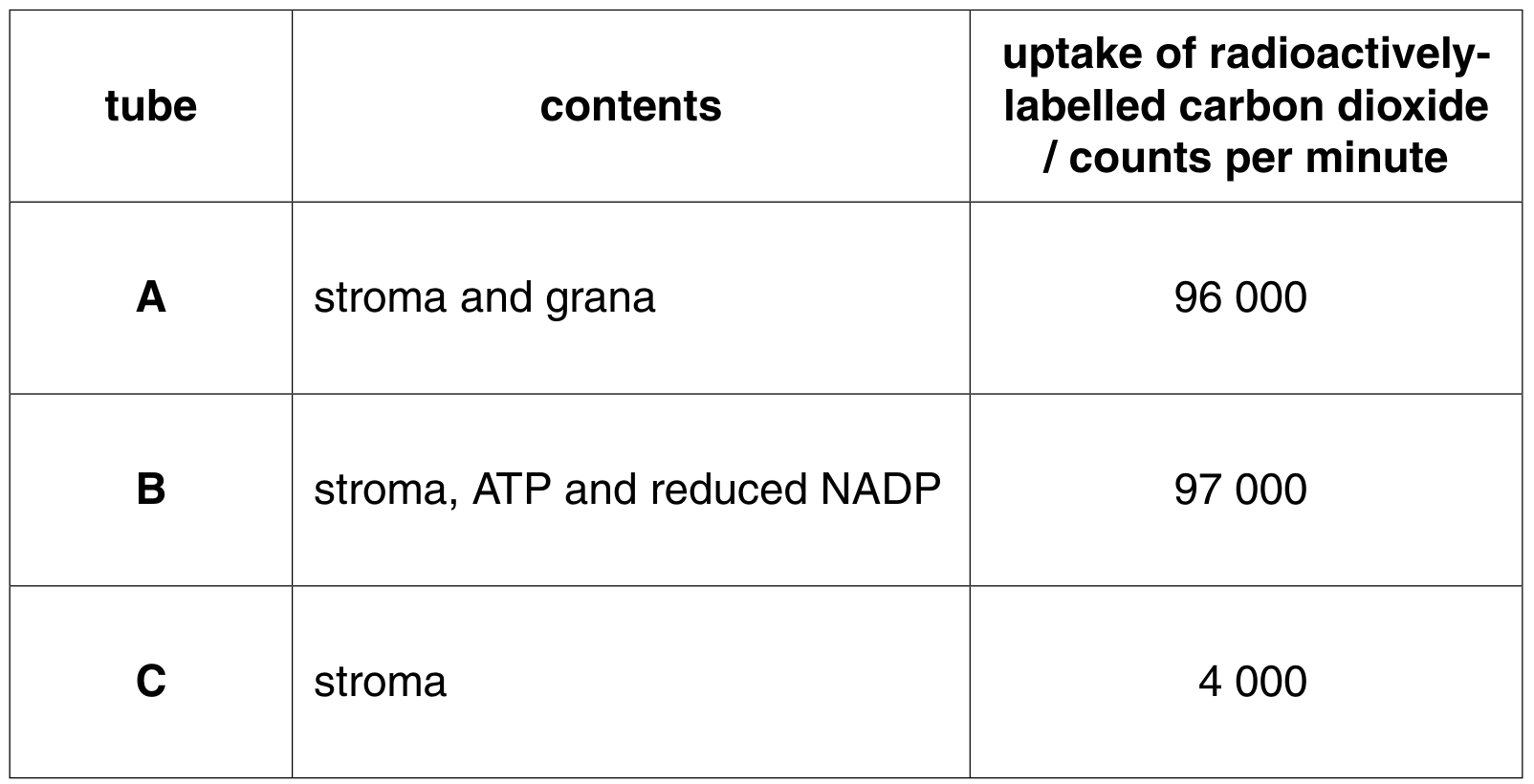
The uptake of radioactively-labelled carbon dioxide in chloroplasts was investigated.

Three tubes, each containing different components of chloroplasts, were exposed to light.
The results of the investigation are shown in Table 7.1.

Table 7.1

Table 7.1

[ 4 ]
(i)

Explain why the results in tube B are similar to those in tube A.

[ 2 ]
(ii)

Explain why the uptake in tube C was less than the uptake in tube B.

[ 2 ]
(a)

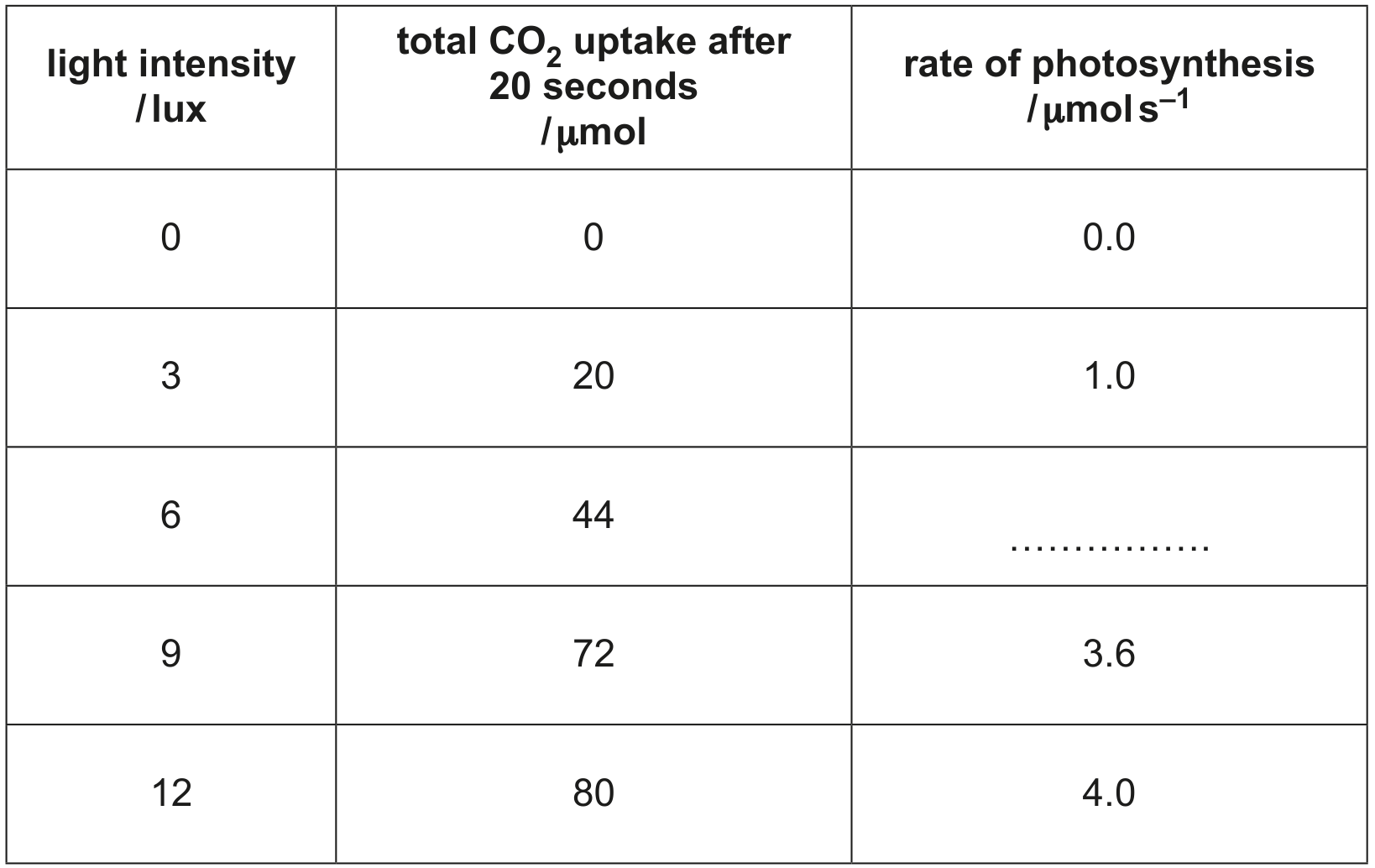
Experiments were carried out to determine the effect of light intensity on the rate of photosynthesis of a species of the unicellular protoctist, Chlorella. A cell suspension of Chlorella was used.

Carbon dioxide uptake was used as a measure of the rate of photosynthesis.
- The suspension of Chlorella was illuminated at a light intensity of 3 lux for 20 seconds.
- The carbon dioxide uptake by Chlorella was measured at the end of the 20 second period of illumination.
- The experiment was repeated at 6 lux, 9 lux, 12 lux and in a dark room.
- The suspension was maintained at a temperature of 20C20^{\circ} \mathrm{C}.

Table 7.1 shows the results of the experiments.

Table 7.1

Table 7.1

[ 4 ]
(i)

Use Table 7.1 to calculate the rate of photosynthesis at a light intensity of 6 lux.

Complete Table 7.1 by writing your calculated value in the space provided.

[ 1 ]
(ii)

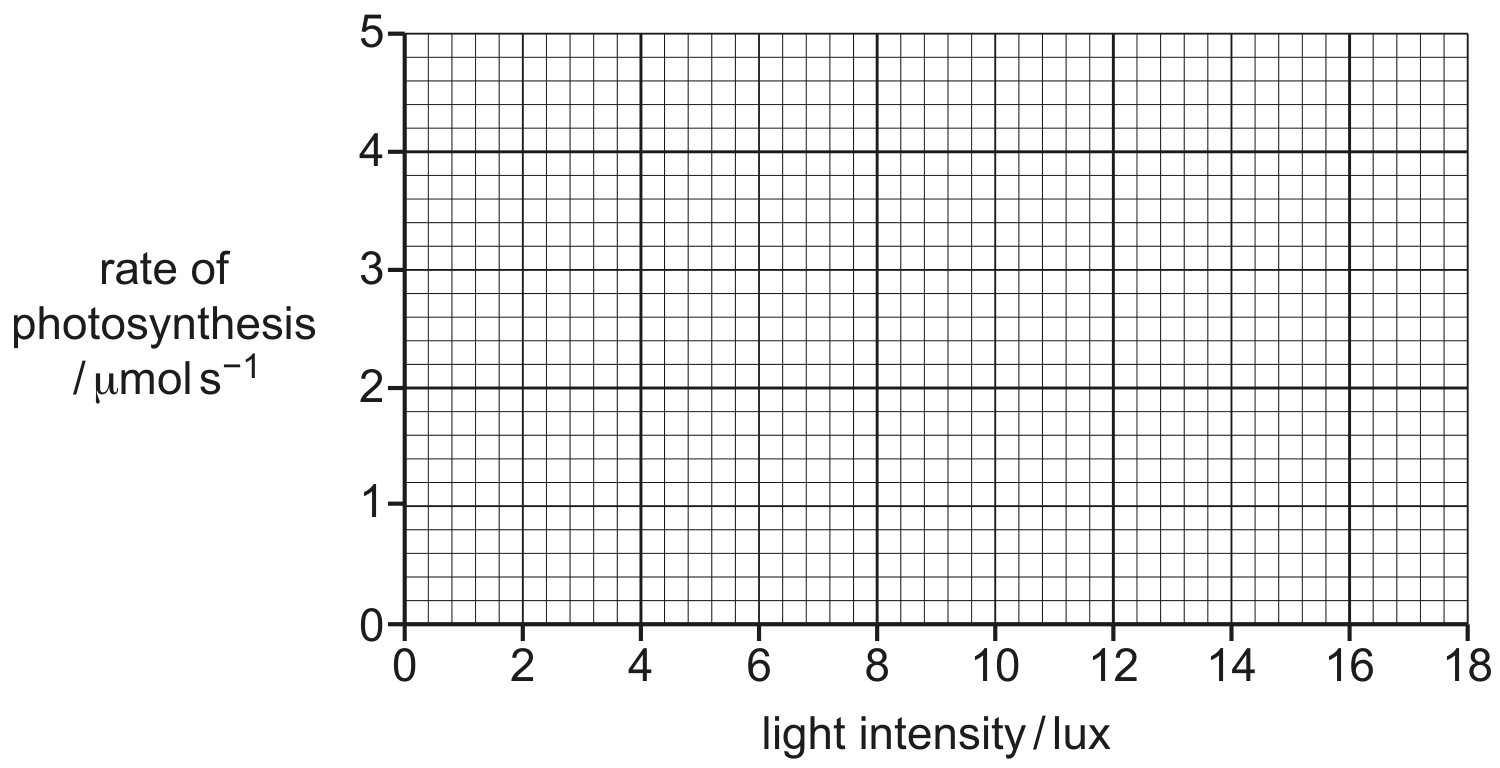
Plot a graph of the data in Table 7.1 on the grid in Fig. 7.1 to show the effect of light intensity on the rate of photosynthesis.

Draw a curve and extend your curve to show what would happen to the rate of photosynthesis if the experiment is carried out at 18 lux.

Fig. 7.1

Fig. 7.1

[ 3 ]
(a)

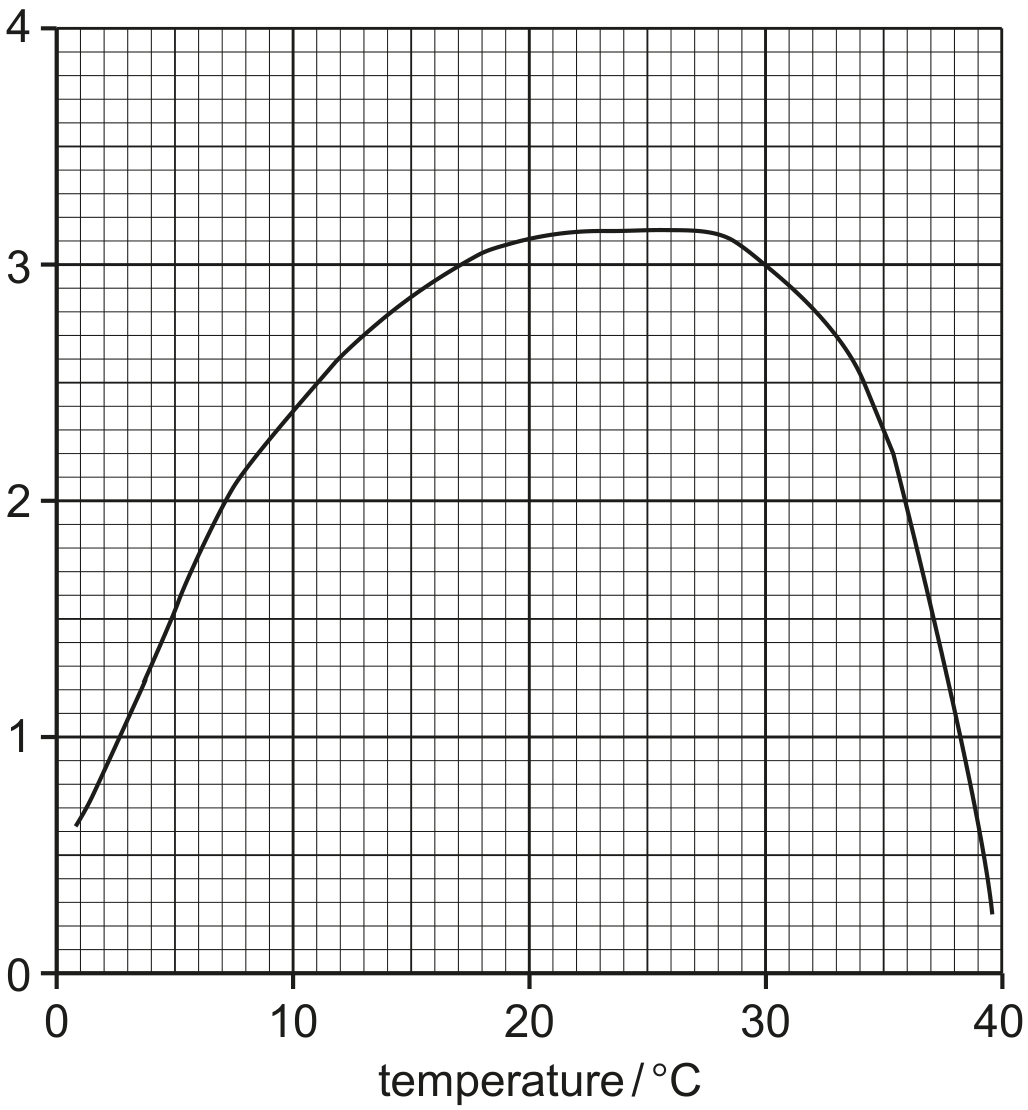
Fig. 8.1 shows how the rate of uptake of carbon dioxide by a plant varies with temperature, at an optimum intensity of light on a clear day.
rate of uptake of carbon dioxide / arbitrary units (au)

Fig. 8.1

Fig. 8.1

(i)

Calculate the mean increase in rate of uptake of carbon dioxide as the temperature increases from 5C5^{\circ} \mathrm{C} to 20C20^{\circ} \mathrm{C}.

Show your working.
Give your answer to two decimal places.

auC1a u^{\circ} C^{-1}
0