EduNinja
[Maximum number: 13]

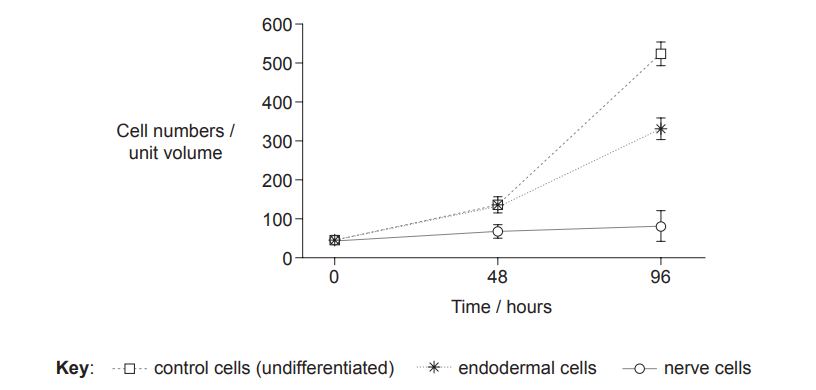
During the development of multicellular organisms, cells differentiate into specific cell lines. A study was carried out on the early stages of differentiation in cells from mouse embryos that were grown in cultures. Two differentiated cell lines were studied, one of inner embryonic tissue (endodermal cells) and the other of external embryonic tissue (nerve cells) after 48 and 96 hours of incubation in cell cultures. A culture of undifferentiated cells was used as a control group. Cell population growth was measured by changes in cell density in all three cell lines.
Question image
(a)

Distinguish between the changes in cell numbers in the three cell lines that occur during the 96 hour period.

[ 2 ]
(b)

Using the data in the graph, deduce the relationship between cell differentiation and population growth.

[ 1 ]
(c)

There are three phases of interphase in the cell cycle:
- the growth phase with the synthesis of RNA and proteins (G1)
- the phase of DNA replication (S)
- and the pre-mitotic phase of rapid growth (G2).

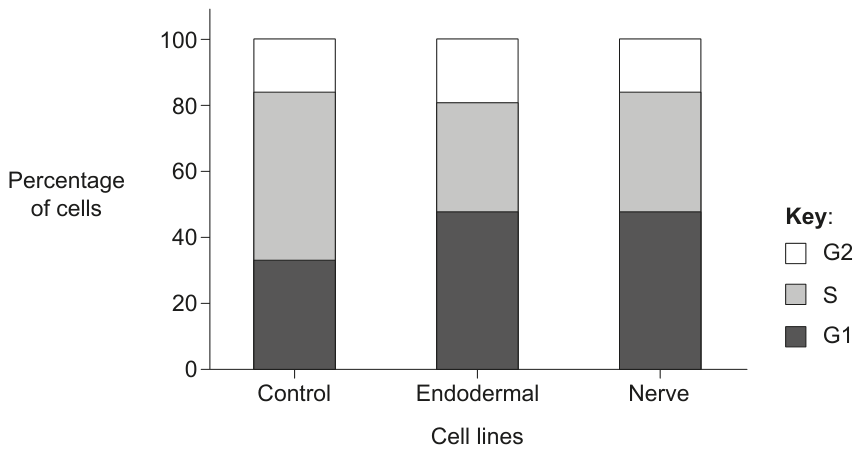
The graph shows the percentage distribution of the three cell lines in the different stages of interphase after 96 hours of incubation.
Question image

Compare and contrast the percentage of control and nerve cells in each of the three phases after 96 hours of incubation.

[ 2 ]
(d)

Using the data of both graphs, deduce the relationship between the percentage of cells in each cell cycle phase and the population growth.

[ 2 ]
(e)

Interphase is followed by mitosis. State the final product of the mitotic cell cycle.

[ 1 ]
(f)

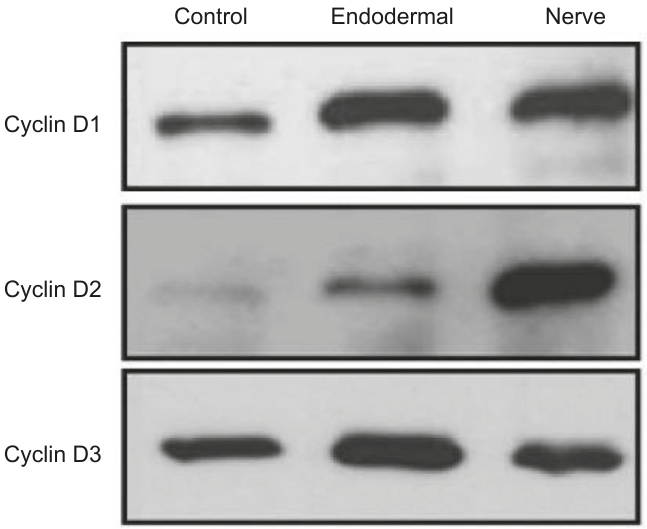
The role of regulators in the different stages of differentiation was also studied. After 96 hours of incubation a sample was taken of each cell line and the cyclins separated by gel electrophoresis. The presence of different cyclins D1, D2 and D3 was analysed in the three cell lines. The image shows the results. The size and the intensity of the band is an indicator of the quantity of cyclins.
Question image

Compare and contrast the amounts of the different cyclins in nerve cells and control cells.

[ 2 ]
(g)

Using the data, discuss the possible roles of the three cyclins in the differentiation of nerve and endodermal cell lines.
[ 3 ]
[Maximum number: 5]

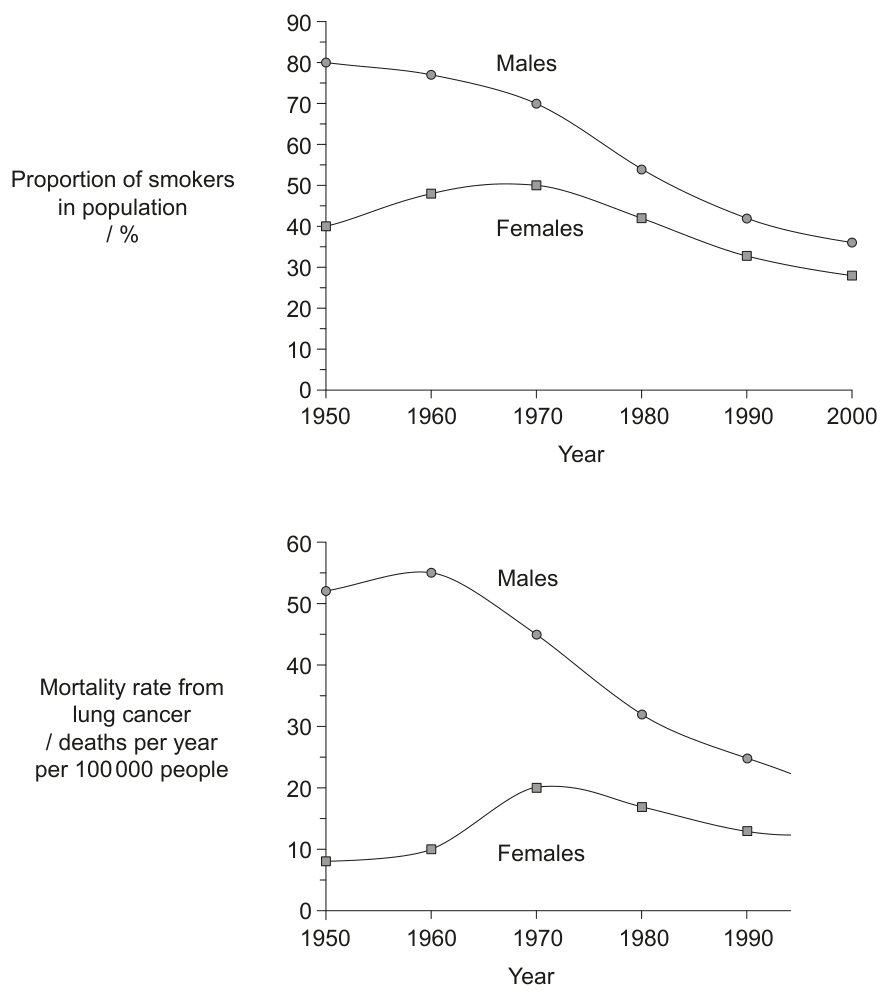
Trends in tobacco smoking and mortality due to lung cancer were measured in male and female smokers aged 35 to 59 living in the United Kingdom from 1950 to 2000. The first graph represents the proportion of smokers in the population. The second graph represents the mortality rate (deaths per year per 100000 people) from lung cancer.

Question image
(a)

Describe the relationship between the incidence of lung cancer and stopping smoking.

[ 2 ]
(b)

Explain evidence from the data in the table that could be used to persuade a smoker to give up smoking.

[ 2 ]
(c)

Among 75-year-old lifelong non-smokers the percentage incidence of lung cancer was 0.01 %. Suggest one possible cause of lung cancer in non-smokers.

[ 1 ]
[Maximum number: 1]

Tobacco smoke contains a number of mutagens that are known to induce lung tumours in rodents, including NNK, a nitrosamine. The graph shows the relationship between NNK and lung tumour incidence in male rats. NNK was administered by subcutaneous injection for 20 weeks. Data points on the graph show percentage incidence of lung cancer in treatment groups of between 20 and 80 rats.

Graph removed for copyright reasons

(a)

State the relationship between the dose of NNK and lung tumour incidence.

[ 1 ]
[Maximum number: 11]

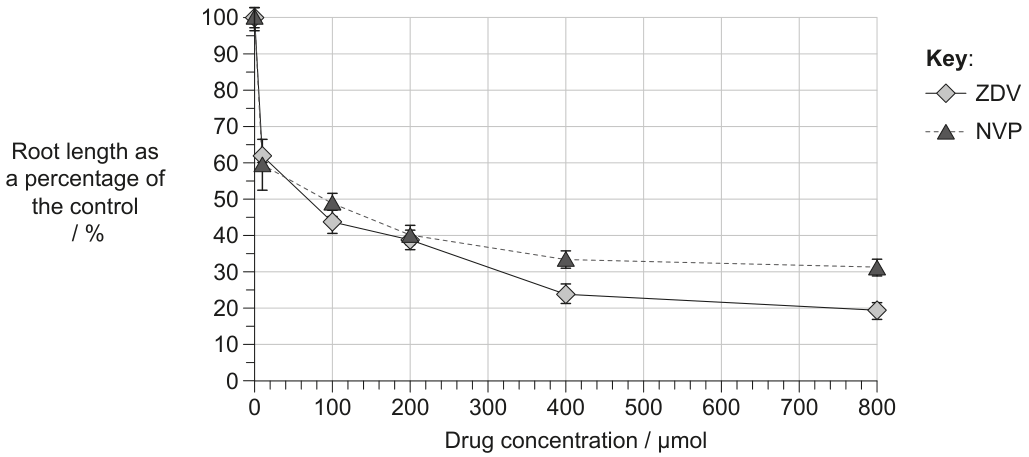
Antiretroviral drugs are used to treat Human Immunodeficiency Virus (HIV) infections. Zidovudine (ZDV) and nevirapine (NVP) are examples of antiretroviral drugs. There are concerns that these drugs may be toxic to body cells in mitosis. In a study using Allium cepa, root tips were exposed to the drugs for 96 hours at a range of concentrations. The control treatment was a drug concentration of 0μ mol0 \mu \mathrm{~mol}. In the graph, root lengths after the 96-hour treatment period are expressed as a percentage of the length of the control.

Question image
(a)
(i)

Deduce the concentration of ZDV that would cause a 50 % reduction in root growth compared to the control.

[ 1 ]
(ii)

Identify the root length, as a percentage of the control, resulting from a ZDV concentration of 400μ mol400 \mu \mathrm{~mol}.

[ 1 ]
(b)

Compare and contrast the effect of ZDV and NVP on the growth of Allium roots.

[ 2 ]
(c)

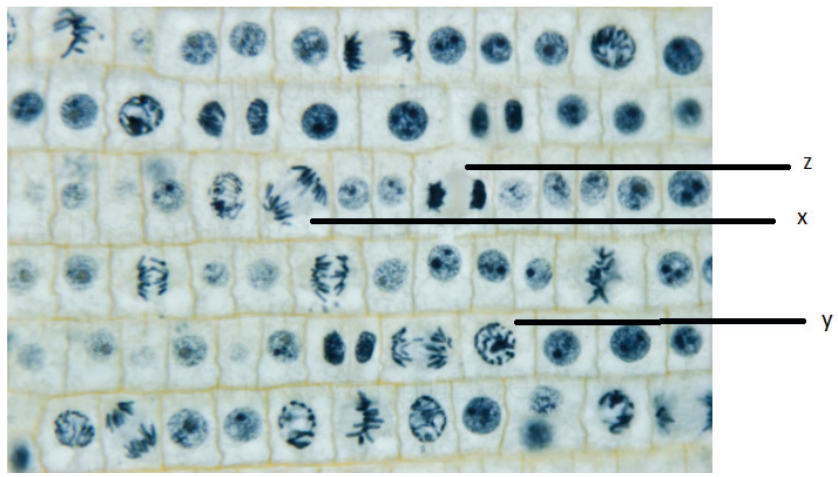
Both ZDV and NVP are believed to have a damaging effect on the process of mitosis but ZDV in particular is believed to block the formation of the spindle.

Question image

Based on this information, suggest with a reason which of the labelled cell types will become more common in Allium root tips treated with ZDV.

[ 2 ]
(d)

Allium root tips continue to show some growth even at high concentrations of NVP. Suggest a possible reason for the growth seen in root tips with 800μ mol800 \mu \mathrm{~mol} NVP.

[ 1 ]
(e)

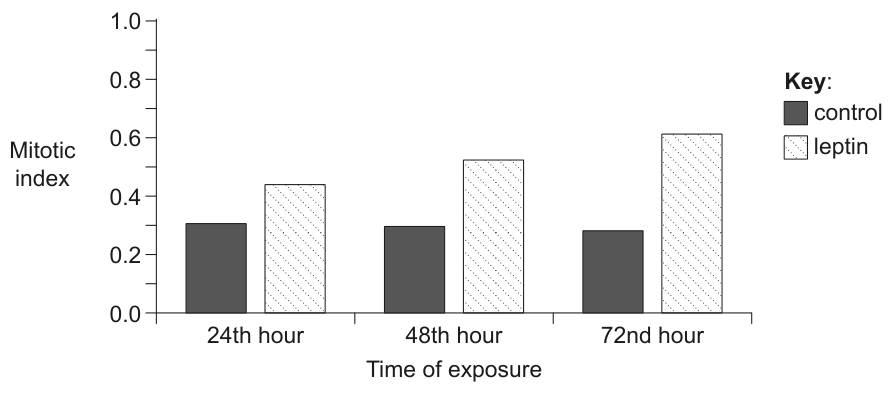
Mitosis plays an important role in tissue regeneration and can be an important factor in recovery from surgery. The hormone leptin has been shown to promote mitosis in certain circumstances. The bar chart shows the mitotic indices of liver tissue exposed to leptin and control tissue during 72 hours after surgery.

Question image

Deduce the change in mitotic index after 72 hours compared to the control.

[ 1 ]
(f)

Based on the data, evaluate the evidence for leptin promoting regeneration of liver tissue.

[ 3 ]
[Maximum number: 14]

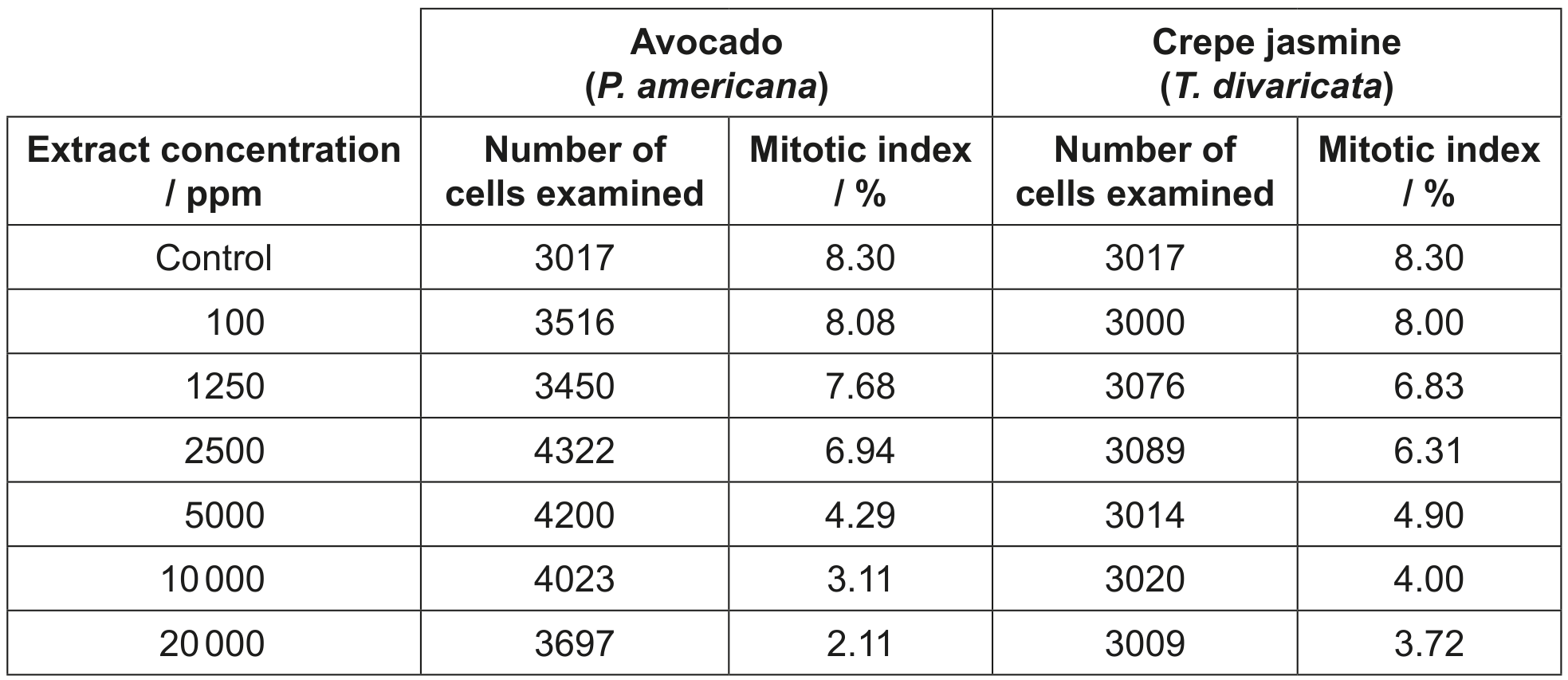
Mitosis in cancerous tissues is uncontrolled and the number of cells undergoing mitosis increases exponentially. Rapidly dividing cells in root tips can be used as a model for studying the effects of anticancer drugs. Aqueous extracts of the fruit of avocado (Persea americana) and the leaves of crepe jasmine (Tabernaemontana divaricata) have been shown to be toxic to some human cancer cell lines. Root tips of the broad bean (Vicia faba) were exposed to these aqueous plant extracts over a range of concentrations.

The mitotic index is the percentage of cells examined undergoing mitosis. The table shows the numbers of broad bean root cells examined and the mitotic indices over a range of plant extract concentrations.

Table
(a)
(i)

Calculate the number of cells undergoing mitosis using 100 ppm of crepe jasmine extract.

[ 1 ]
(ii)

Describe the effect of avocado extract on mitotic index.

[ 1 ]
(b)

Compare and contrast the effect of increasing extract concentration on the mitotic indices for the two plant extracts.

[ 3 ]
(c)

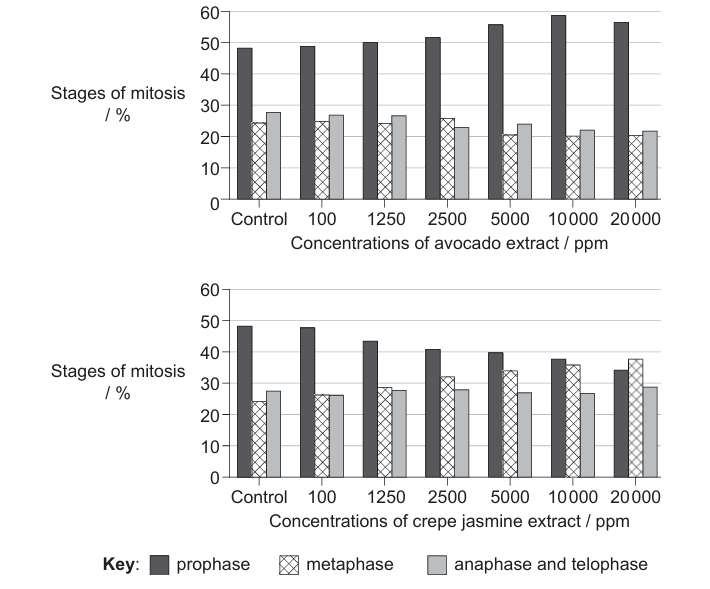
The percentage of cells in different stages of mitosis in the root tips was also recorded.

Question image

Outline the effect of avocado extract concentration on the percentage of cells in the different stages of mitosis.

[ 2 ]
(d)

Using both the table of mitotic indices and the bar charts, deduce whether these extracts contain chemicals that block mitosis in broad bean root tips.

[ 3 ]
(e)

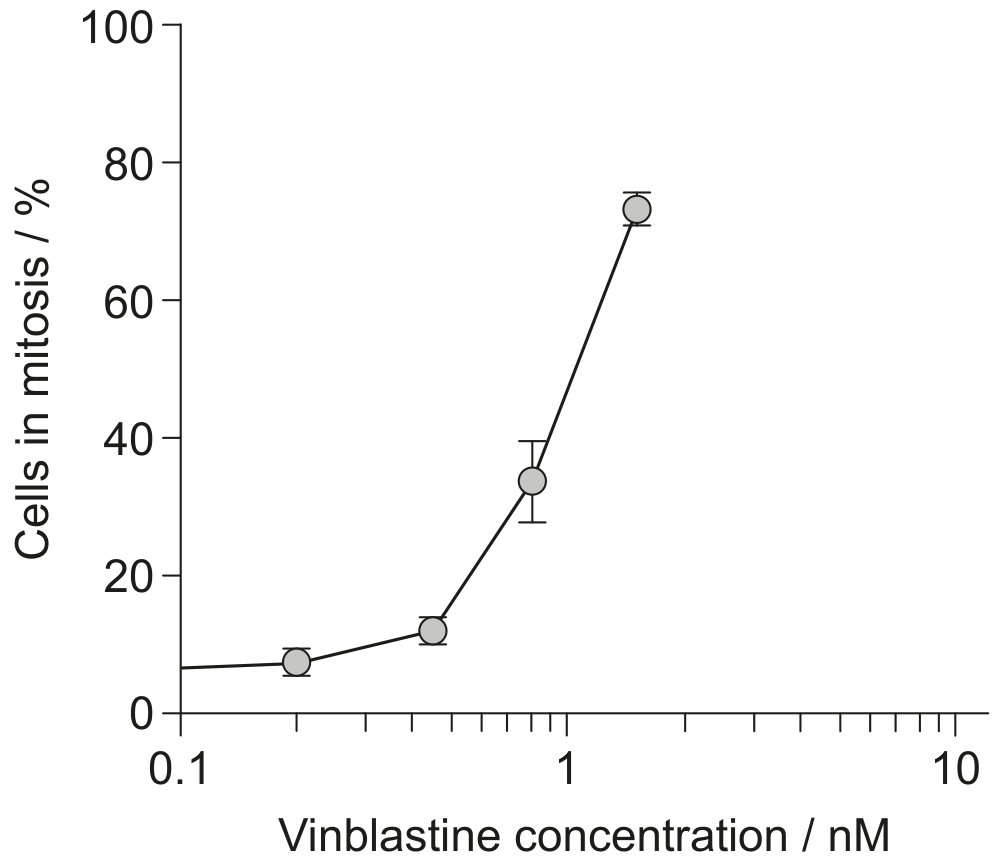
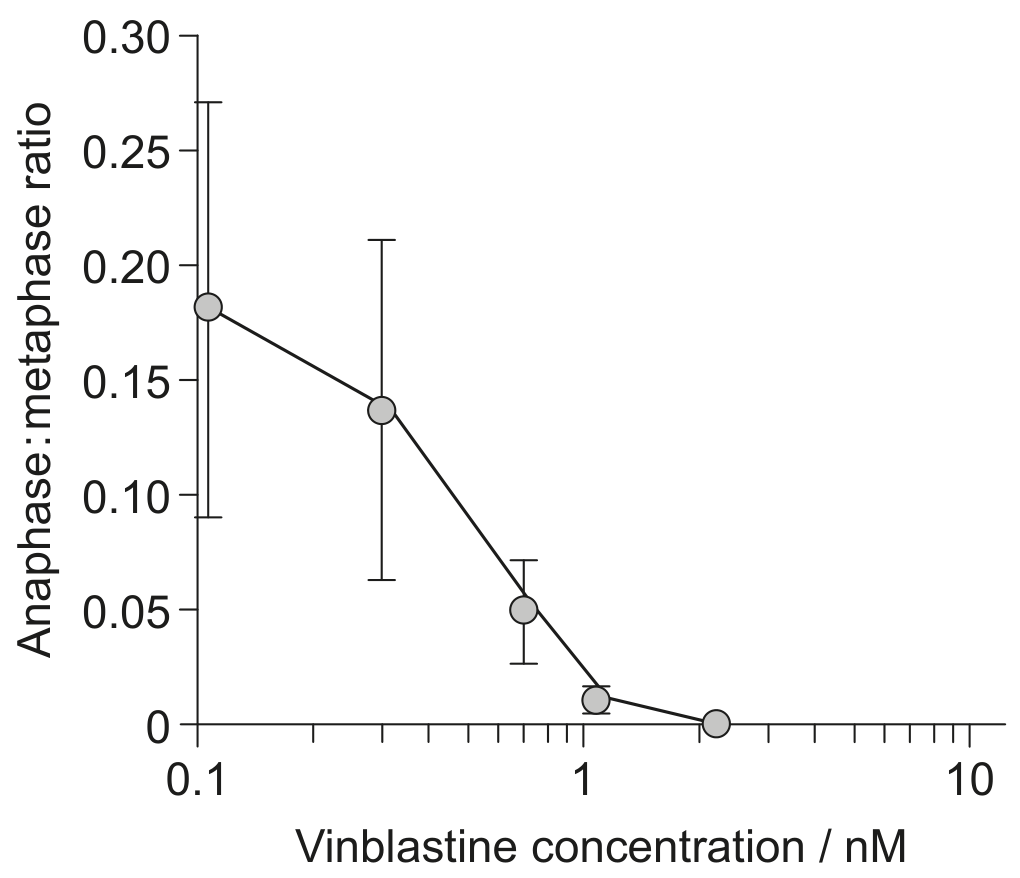
The mechanism of action of vinblastine, an anticancer drug, was investigated over a range of concentrations. Vinblastine is an alkaloid isolated from the periwinkle plant (Catharansus roseus). The percentage of cells in mitosis and ratio of anaphase to metaphase in cells exposed to this drug in vitro for a fixed time were recorded. The data are displayed in two graphs.

Question image
Question image

By referring to both graphs, evaluate the hypothesis that vinblastine targets cells in mitosis and prevents them from completing the process.

[ 3 ]
(f)

Some anticancer drugs inhibit mitosis by blocking the formation of the spindle. Suggest one other way in which vinblastine could block mitosis.

[ 1 ]
(a)

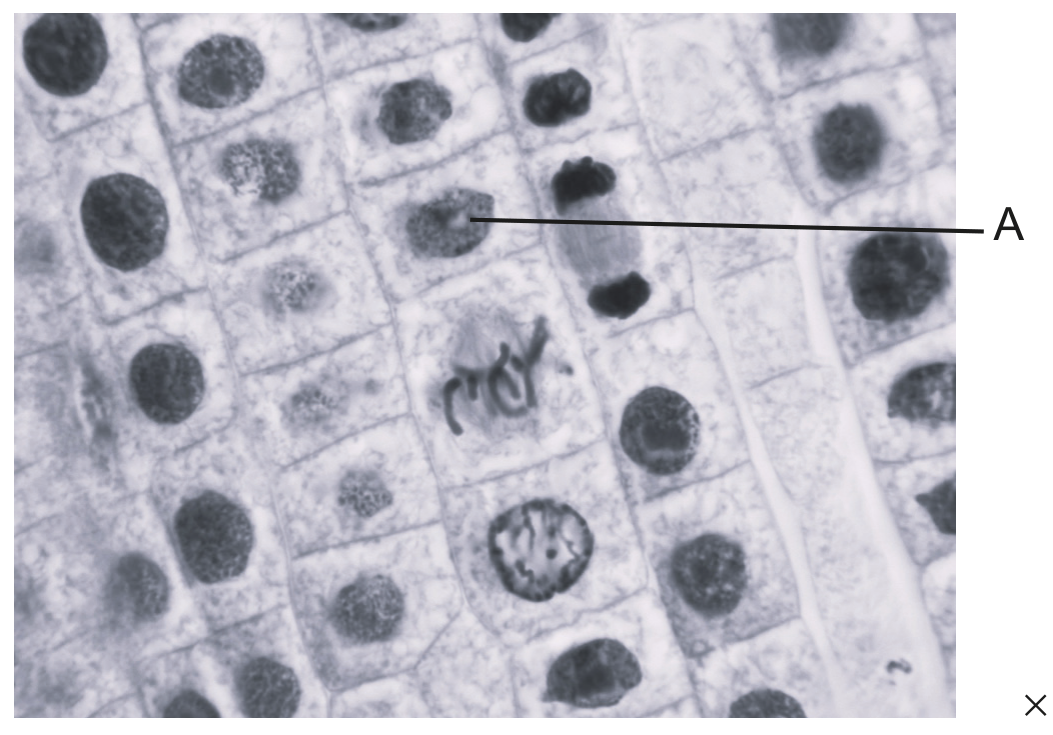
The photomicrograph shows a section of onion (Allium cepa) root tip cells.

× 1000

× 1000

[ 2 ]
(i)

Describe how a mitotic index could be obtained from this image.

[ 2 ]
(b)

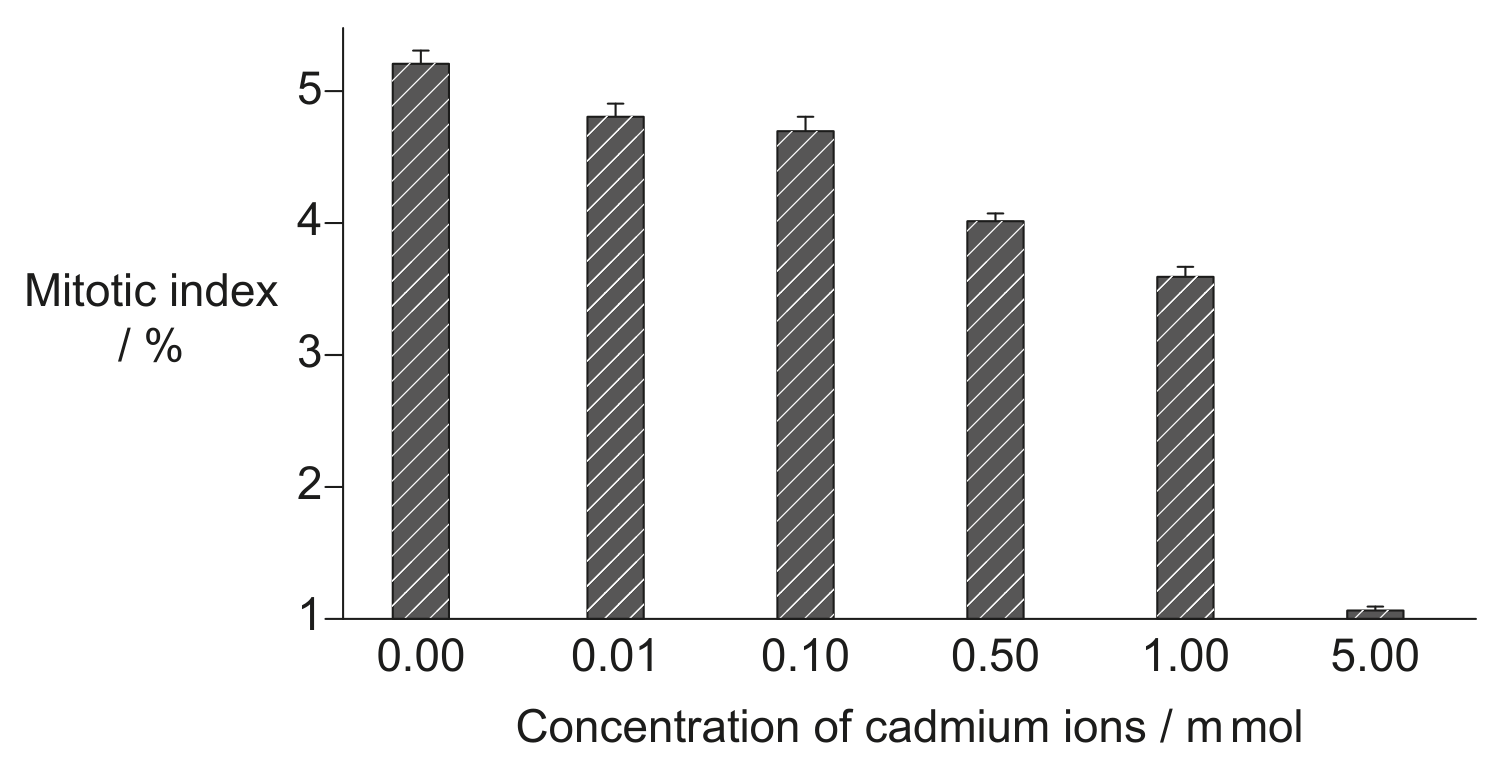
Cadmium is a heavy metal that can cause environmental problems. Cadmium ions are released from various human activities such as the release of sewage sludge, mining and industrial processes. Plants take up cadmium ions and they enter food chains.

A study was carried out to look at the effect of various concentrations of cadmium ions on the mitotic index of the apical meristem of root cells from 4-day-old wheat (Triticum aestivum) seedlings.

Question image
[ 2 ]
(i)

State the effect of cadmium ion concentration on the mitotic index of root cells from wheat seedlings.

[ 1 ]
(ii)

Suggest the effect the change in mitotic index would have on the wheat plant.

[ 1 ]
[Maximum number: 1]

What is the sequence of stages during the cell cycle?

A

G1 SG2\mathrm{G}_{1} \rightarrow \mathrm{~S} \rightarrow \mathrm{G}_{2} \rightarrow mitosis \rightarrow cytokinesis

B

mitosis G1G2\rightarrow \mathrm{G}_{1} \rightarrow \mathrm{G}_{2} \rightarrow cytokinesis S\rightarrow \mathrm{S}

C

G1G2 S\mathrm{G}_{1} \rightarrow \mathrm{G}_{2} \rightarrow \mathrm{~S} \rightarrow mitosis \rightarrow cytokinesis

D

G1G2\mathrm{G}_{1} \rightarrow \mathrm{G}_{2} \rightarrow mitosis \rightarrow cytokinesis S\rightarrow \mathrm{S}

[Maximum number: 1]

Which of the following does not occur during interphase?

A

Replication

B

Translation

C

Cytokinesis

D

An increase in the number of mitochondria

[Maximum number: 1]

The cell theory states that cells come from pre-existing cells. What biological process allows this to occur?

A

Ovulation

B

Differentiation

C

Cytokinesis

D

Exocytosis

[Maximum number: 1]

Which processes are involved in the development of cancer?
I. Mutations occur in oncogenes.
II. Oncogenes prevent cancer.
III. Oncogenes affect cell cycle regulatory proteins.

A

I and II only

B

I and III only

C

II and III only

D

I, II and III

0