EduNinja
[Maximum number: 11]

Exposure to organophosphorus pesticides (OP) is a cause of serious nerve damage. It disrupts synaptic transmission by inhibiting the enzyme acetylcholinesterase, causing death due to cardiovascular and respiratory failure.

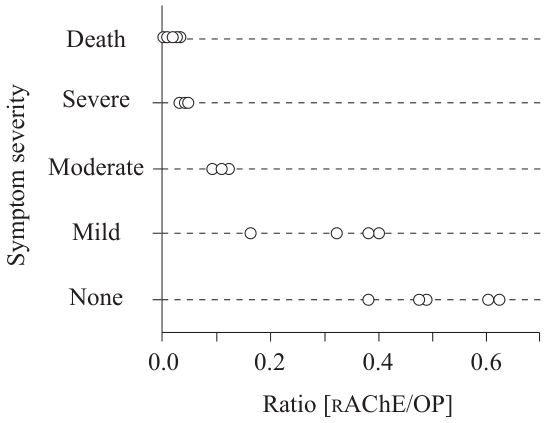
Recombinant human acetylcholinesterase ( RAChE ) was obtained by genetic engineering and produced in Nicotiana benthamiana plants. It was tested as a new therapeutic treatment in mice that were exposed to OP. The following graph shows the severity of the symptoms shown by each mouse at different ratios of RAChE to OP.
Question image
(a)

State the minimum ratio at which some mice showed no symptoms.

[ 1 ]
(b)

Analyse the effect of increasing the ratio of RAChE to OP on the symptoms in mice.

[ 3 ]
(c)

Predict what would happen if a mouse received 300 mg of RAChE and 600 mg of OP.

[ 2 ]
(d)

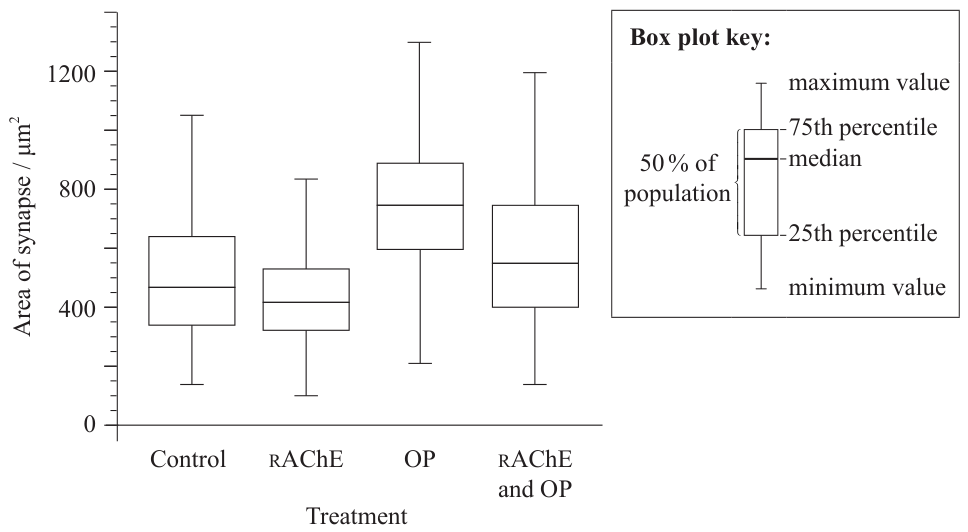
To test the effect of OP damage on synapses, mice were treated with RAChE, OP or both. Their diaphragms were dissected 10 days after treatment. The area of the synapse between axons and the diaphragm was measured. When the synapses are damaged by OP there is a greater area. The box plot shows the effect of different treatments on the area of the synapse.
Question image

Calculate the difference in median area of synapse between the control mice and mice treated with rAChE and OP, giving the units.

[ 1 ]
(e)

Describe the evidence for damage to synapses by OP provided by data in the box plot.

[ 2 ]
(f)

Using the data from both graphs, evaluate the hypothesis that plant-produced RAChE could be used to protect humans or other mammals from damage caused by exposure to OP .
[ 2 ]
[Maximum number: 3]

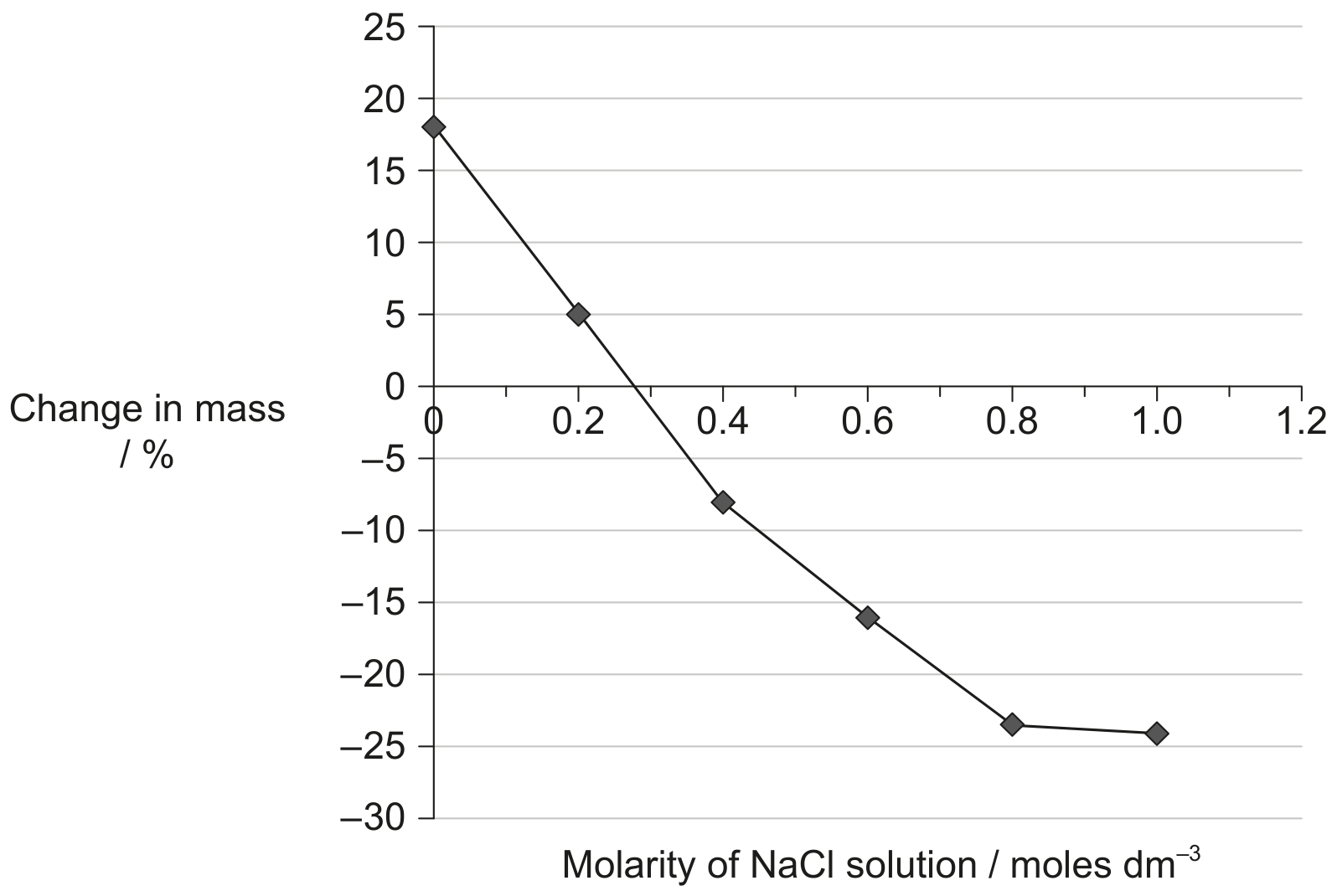
Solutions of ions, for example NaCl dissolved in water, can be used to investigate the concentration of solutes in plant tissues. After immersion in solutions of varying concentration, the percentage changes in mass of potato samples were measured. The graph shows the results.

Question image
(a)

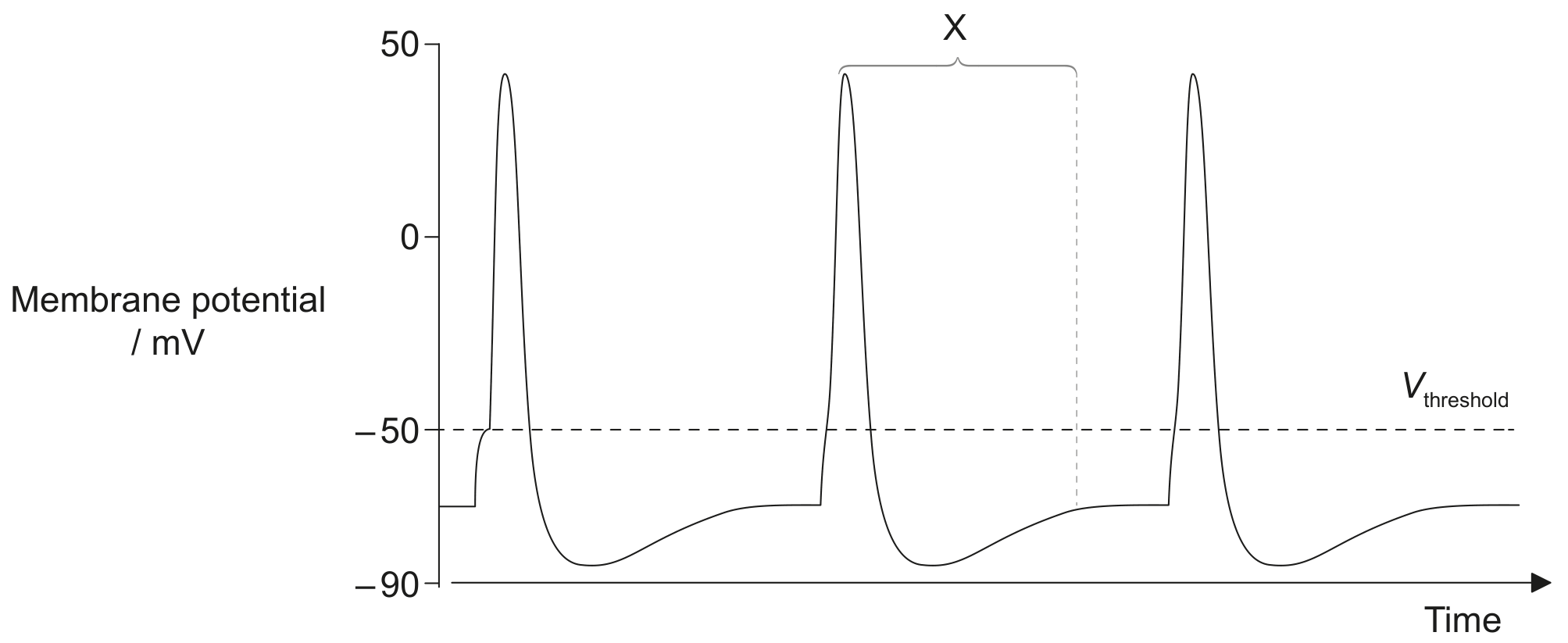
Ions move across the plasma membrane of a neuron during an action potential. The oscilloscope trace shows voltage changes generated in a neuron during three action potentials.

Question image

Explain the movement of ions which causes the voltage changes observed during the interval labelled X on the graph.

[ 3 ]
[Maximum number: 1]

Common pesticides used by gardeners contain neonicotinoids.

Question image

What is the effect of a neonicotinoid pesticide on the transmission of a nerve impulse between neurons in an insect?

A

It prevents the release of acetylcholine from the presynaptic membrane.

B

It widens the synaptic cleft so diffusion of acetylcholine across the gap is slower.

C

It irreversibly binds with acetylcholine receptors on the postsynaptic membrane.

D

It interferes with the enzymatic breakdown of acetylcholine by acetylcholinesterase.

[Maximum number: 8]

Mice (Mus musculus) have various defence systems against predators such as foxes (Vulpus vulpus) or stoats (Mustela erminea). The mice release specific alarm compounds when under threat that serve as danger signals for other mice. Predators also release scents that the mice can detect.

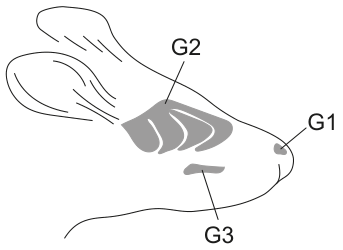
In one study, mice were exposed to paper soaked in compounds taken from other mice, foxes or stoats in a test chamber. The scientists then measured the reaction of three different groups of neurons used in smelling: G1, G2 and G3, as shown in the diagram.

Question image

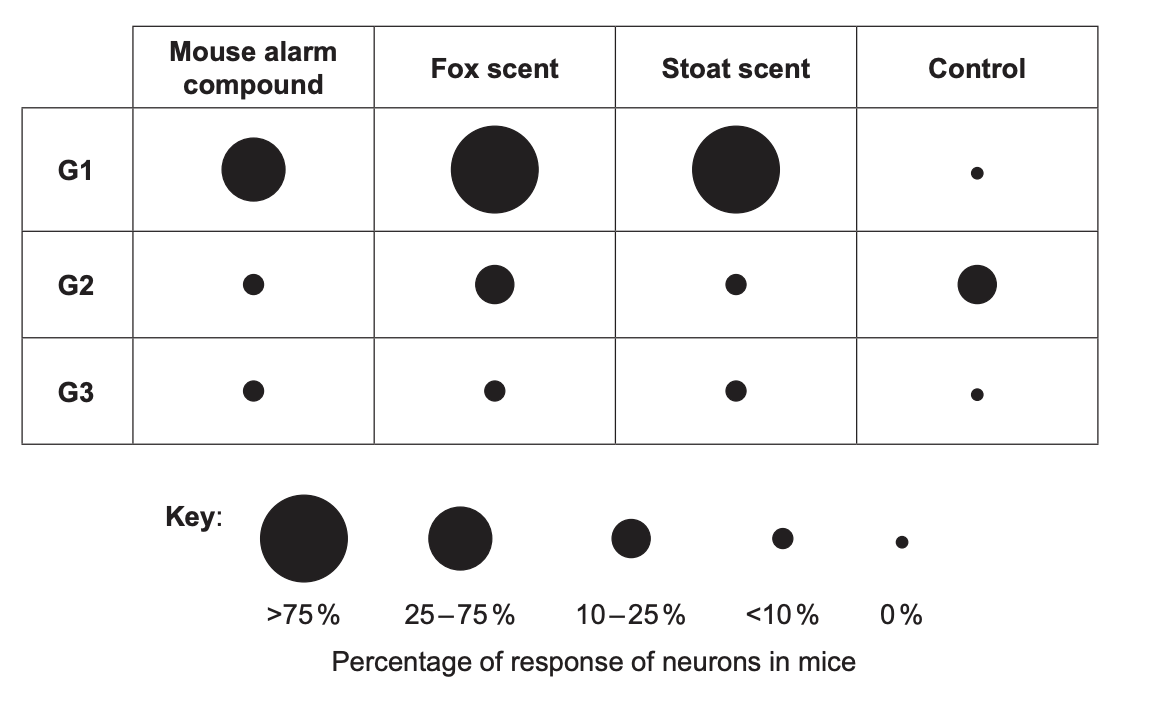
The percentage of G1, G2 and G3 neurons responding to the mouse, fox and stoat compounds, as well as a control compound, are shown in the chart.

Question image
(a)

State the percentage of G2 neurons in the mice that respond to the fox scent.

[ 1 ]
(b)

Using evidence from the chart, identify, giving a reason, which group of neurons responded most to the chemicals.

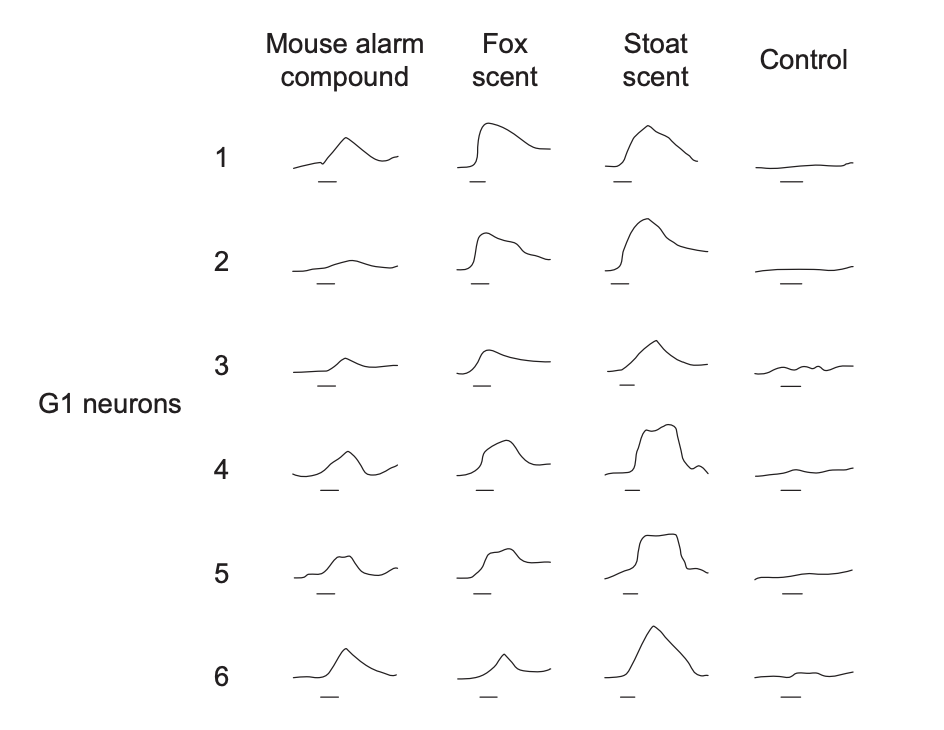
The scientists recorded the neural traces (action and resting potentials) of six G1 neurons exposed to the compounds from the different animals. The horizontal bar beneath each trace corresponds to the time of exposure to the test compound.

Question image
[ 1 ]
(c)

State the name of the instrument used to make these traces.

[ 1 ]
(d)

Distinguish between the effects of the mouse alarm compound and the effects of the control compound on the G1 neurons.

[ 1 ]
(e)

Compare and contrast the effects of the mouse alarm compound and stoat scent on the G1 neurons.

[ 2 ]
(f)

Deduce whether there is a correlation between the neural traces and the percentage of responding G1 neurons.

[ 2 ]
[Maximum number: 8]

Honeybees (Apis mellifera) are key pollinators in most ecosystems. The worldwide use of neonicotinoid pesticides has caused concern because they may be contributing to the decline of honeybee populations.

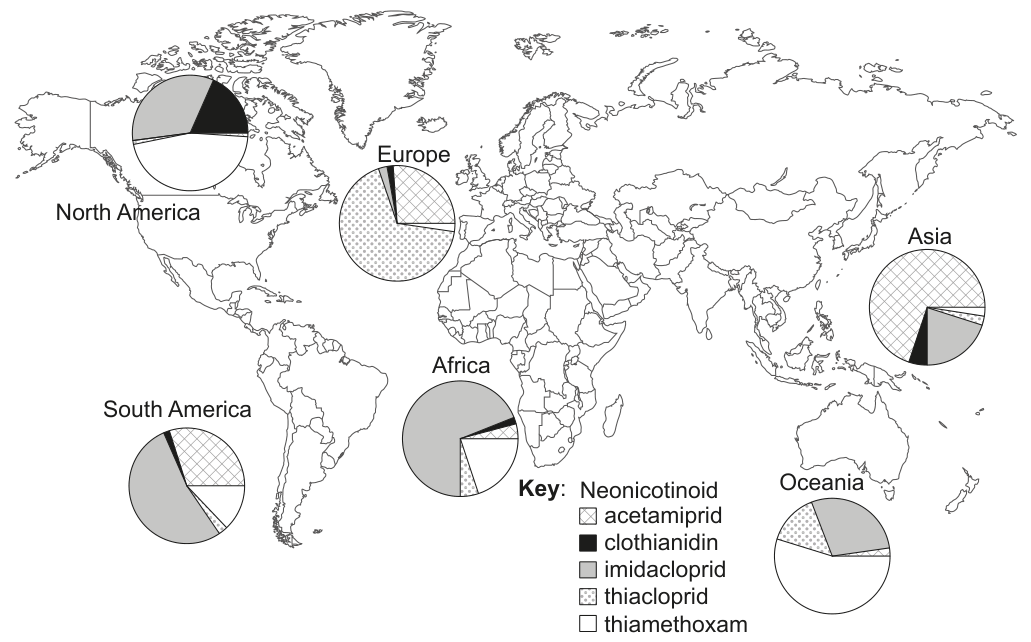
Scientists measured the concentration of five neonicotinoids (acetamiprid, clothianidin, imidacloprid, thiacloprid and thiamethoxam) in honey samples from 198 different locations across the world. Each pie chart shows the relative frequency of neonicotinoids in honey samples from a continent.

Question image
(a)

In order to grow, honeybee larvae are fed royal jelly, a high energy food with very high acetylcholine concentrations.

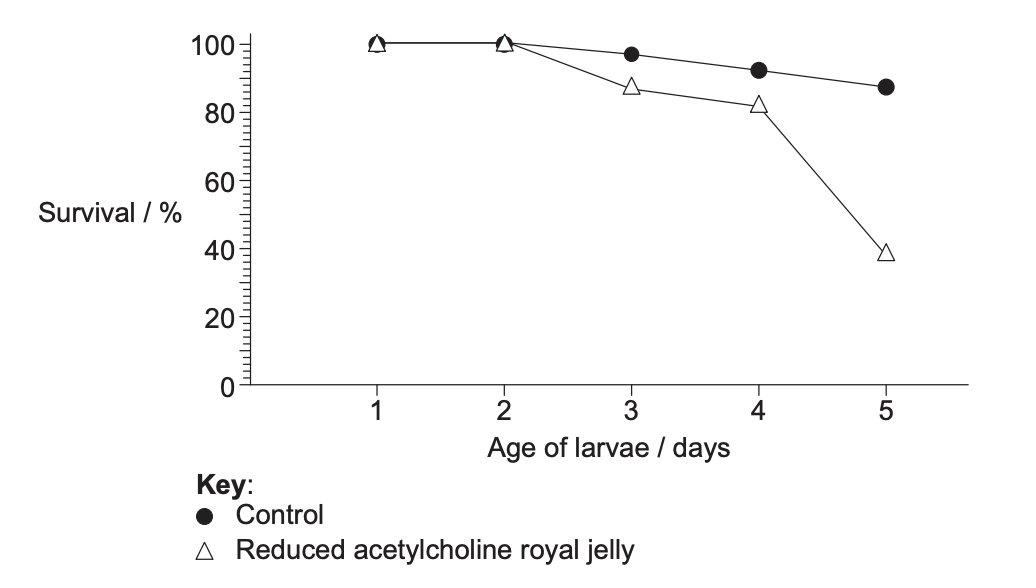
In an experiment, larvae were bred artificially on a diet with reduced acetylcholine content in the royal jelly. The graph shows the mean survival rate of these larvae compared to control larvae fed on a normal diet.

Question image

Deduce the conclusions that can be drawn from the data in the graph.

[ 2 ]
(b)

Suggest a reason for the effect of a diet reduced in acetylcholine on the larval survival rate.

[ 1 ]
(c)

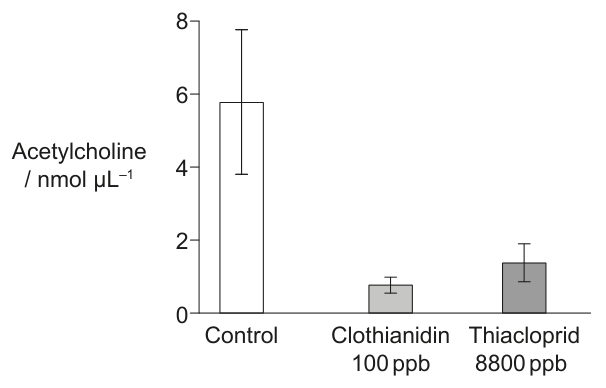
The concentration of acetylcholine was measured in royal jelly produced by honeybees that had never been exposed to neonicotinoids (control) and honeybees that had been exposed for three weeks to two neonicotinoids; clothianidin and thiacloprid.

Question image

Compare and contrast the effect of clothianidin and thiacloprid treatments on the concentration of acetylcholine in royal jelly.

[ 2 ]
(d)

Explain how neonicotinoids affect synaptic transmission in insects.
(h) Companies that manufacture neonicotinoid pesticides have argued that they do not

[ 3 ]
[Maximum number: 2]

There is growing evidence of a decrease in bee populations. This decrease is a serious problem because of their valuable role as pollinators in the ecosystems where they live. Neonicotinoid pesticides have been implicated in this decrease because they have been found at trace levels in the nectar and pollen of crop plants and in the bee colonies.
Scientists placed colonies of a species of bumblebee, Bombus terrestris, in the laboratory to test the effects of different levels of a neonicotinoid on their development. They divided the colonies into three groups:
- The control colonies were given a solution of water and sugar that resembled nectar produced by flowers.
- A second group of colonies was given the same sugar solution containing a neonicotinoid dissolved in it at low concentrations, similar to those found in nature.
- A third group of colonies was given the same sugar solution containing a neonicotinoid dissolved in it at high concentrations, similar to those found in nature.

After two weeks, all colonies were placed in the field to allow the bumblebees to feed naturally.

(a)
(i)

Describe the effect of neonicotinoid pesticides on the nervous system of insects.

[ 1 ]
(b)

Deduce, based on the data presented, whether the levels of neonicotinoids used in agriculture cause direct harm to B. terrestris.

[ 1 ]
[Maximum number: 1]
Question image

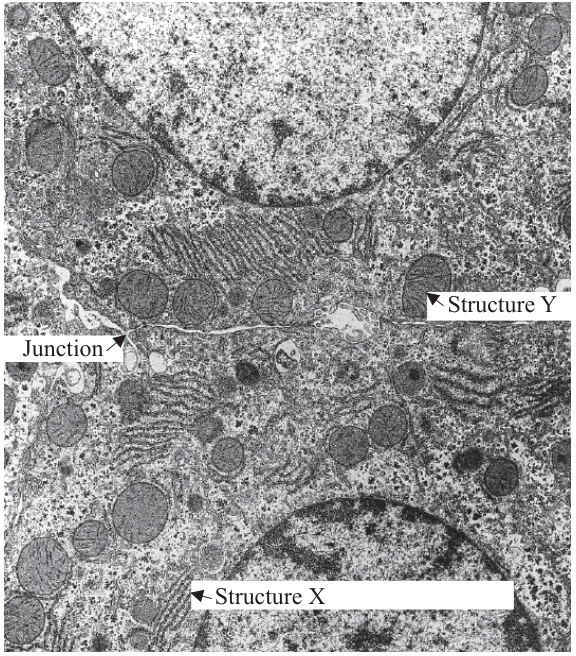
What is happening at the structure labelled X ?

A

Synthesis of proteins

B

Transport of proteins to the nucleus

C

Modification of proteins prior to export

D

Secretion of proteins through the plasma membrane

[Maximum number: 1]

How does potassium move across the membrane of a neuron during repolarization?

A

Simple diffusion

B

Facilitated diffusion

C

Endocytosis

D

Active transport

[Maximum number: 5]

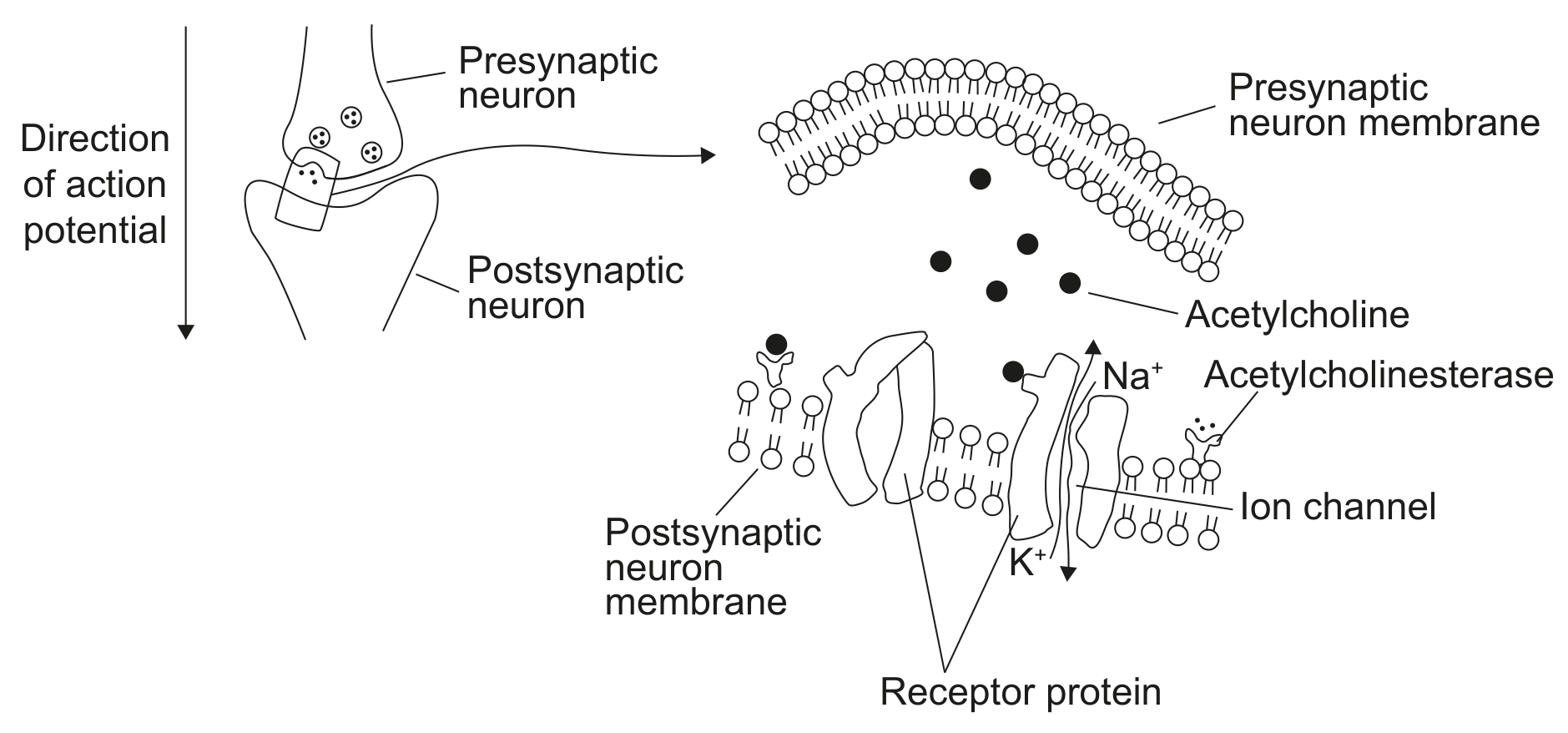
Cholinergic synapses use acetylcholine as their neurotransmitter. They are widespread in the body, passing on signals to muscle cells. These synapses are affected by neonicotinoid pesticides.

The diagrams, which are not drawn to scale, show the synapse between two neurons and a detail of the synaptic cleft.

Question image
(a)

On the diagrams, label:

[ 1 ]
(i)

with a letter P a location where a neonicotinoid pesticide could bind.

[ 1 ]
(b)

Outline how depolarization of the membrane of an axon occurs.

[ 2 ]
(c)

Explain how acetylcholine initiates an action potential in a postsynaptic membrane.

[ 2 ]
[Maximum number: 1]

Which element or ion is required for transmission of a nerve impulse?

A

Phosphorous

B

Sodium

C

Sulfur

D

Iron

0