[Maximum number: 1]
The micrograph shows a buttercup (Ranunculus bulbosus) stem in transverse section. Region T has been highlighted to show more detail.
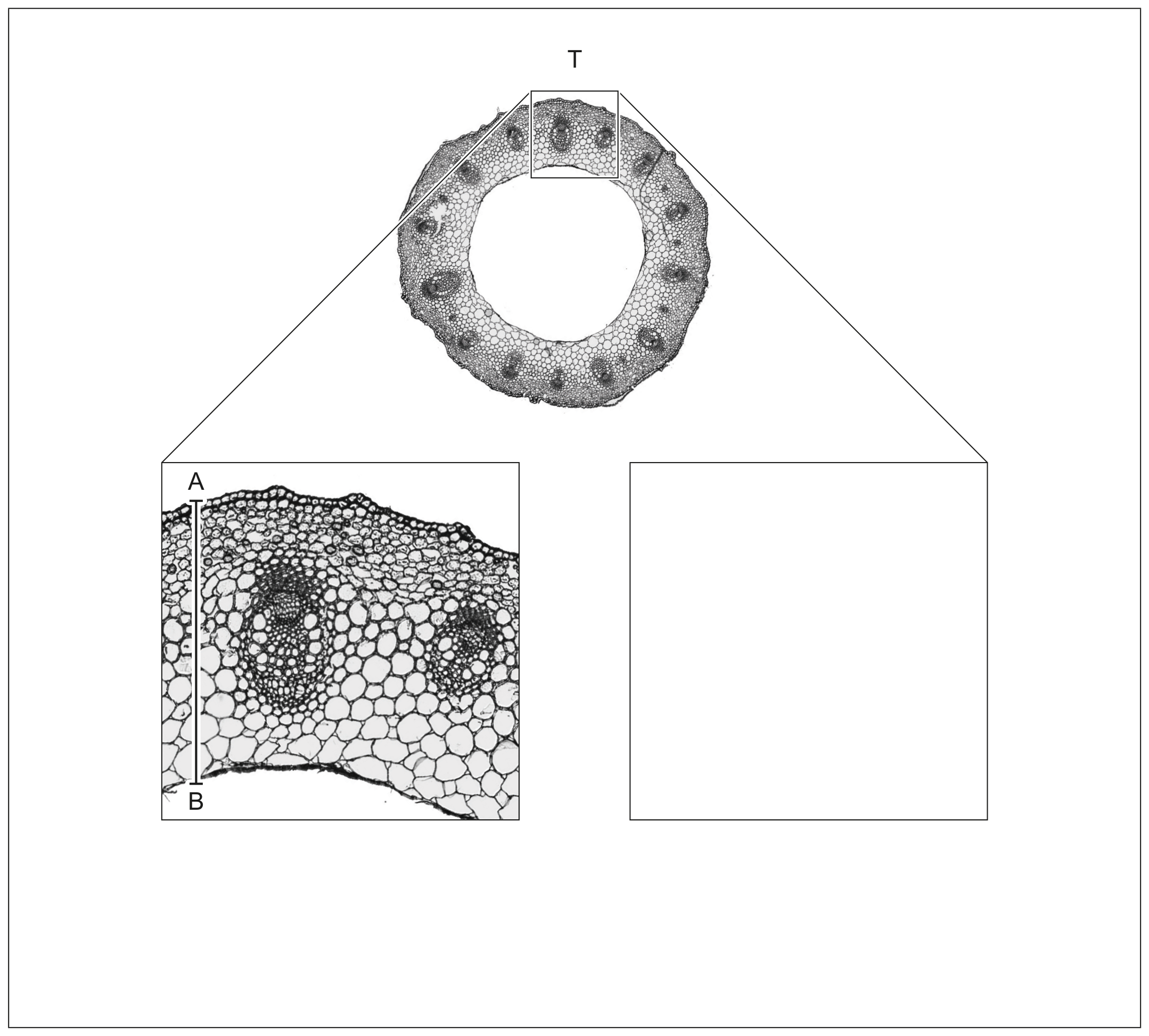
(a)
State one way in which plants can protect themselves from herbivores.
[ 1 ]
 EduNinja
The micrograph shows a buttercup (Ranunculus bulbosus) stem in transverse section. Region T has been highlighted to show more detail.
State one way in which plants can protect themselves from herbivores.
Bottlenose dolphins (Tursiops truncatus) inhabit almost all tropical and temperate oceans between and . Over a two-year period, aerial surveys were carried out to investigate the seasonal distribution of these animals along the mid-Atlantic and eastern coastal waters of the USA. Sightings were recorded using a global positioning system (GPS) while flying parallel to the coast approximately 500 m offshore. The diagram below shows a map of the section of coast surveyed. The bar graph shows the seasonal data for summer and winter at the corresponding latitudes ( ). A total of 5431 bottlenose dolphins were sighted during these surveys.
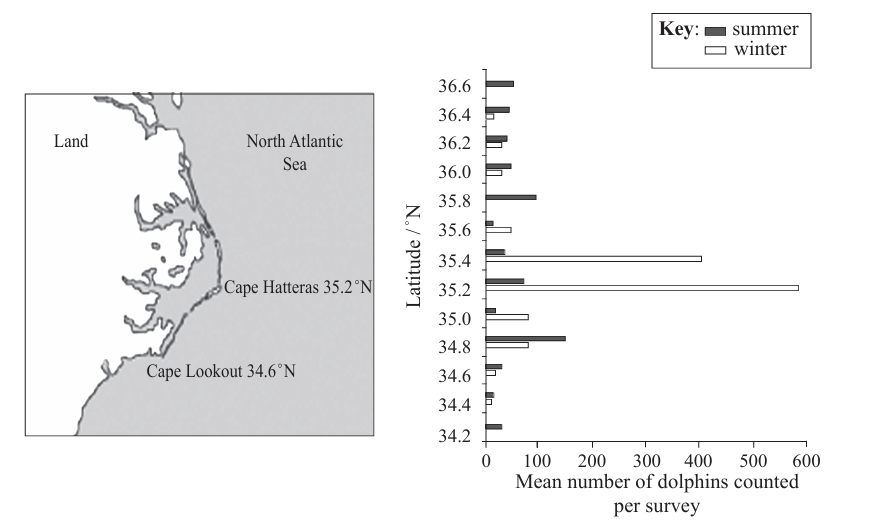
Suggest how research into the range and distribution of bottlenose dolphins could benefit from international cooperation.
A student set up a 20 -metre transect line along a rocky shore and measured the abundance of seven species of seaweeds (A-G) at 21 different sampling stations at fixed distances. The kite diagram represents the species abundance data across the 20 metres.
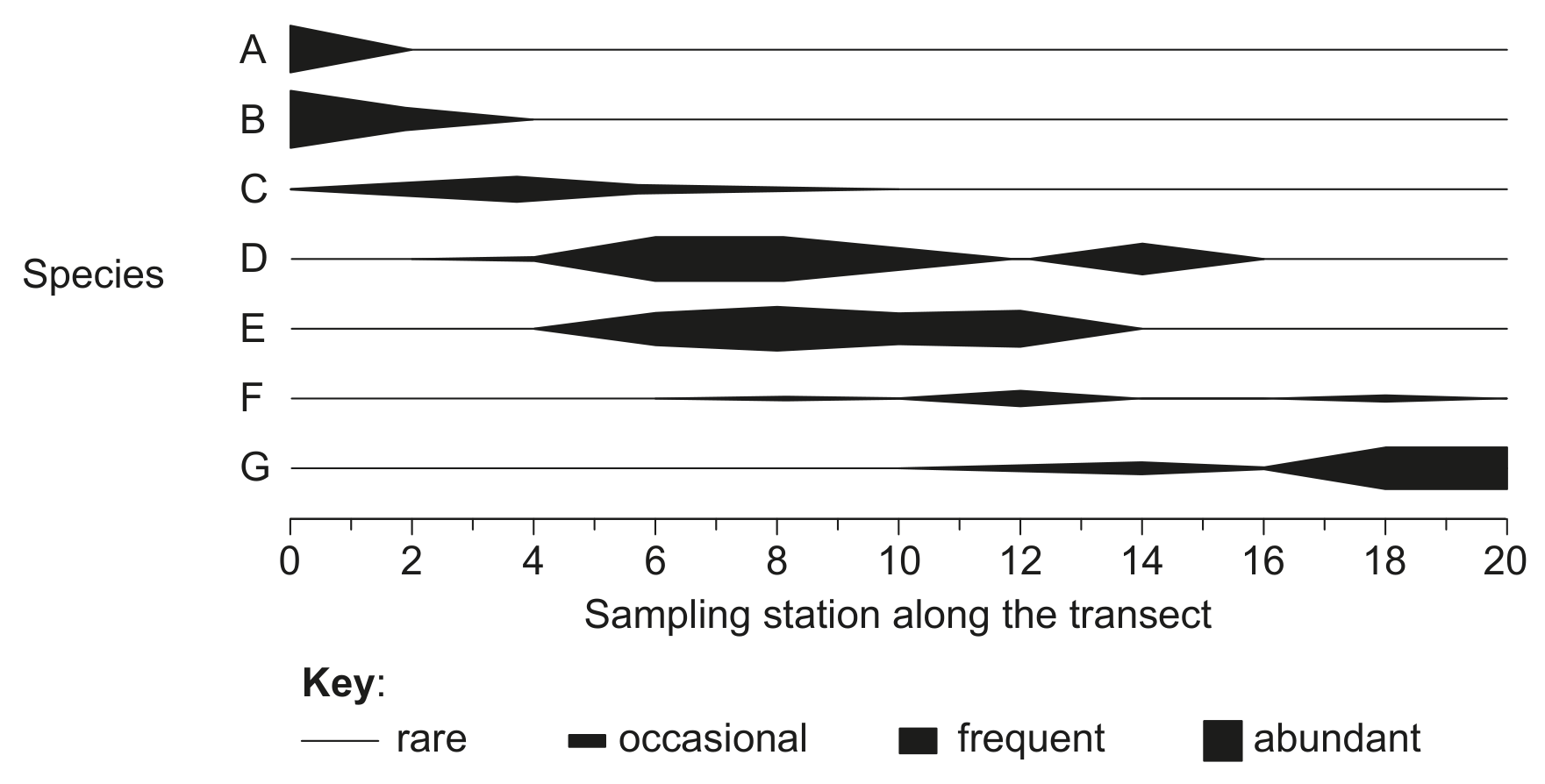
Identify two species that are best adapted to the same abiotic conditions.
1.
2.
Seaweeds are obligate aerobes. Describe an environmental condition required for seaweed survival.
Psammonobiotus balticus belongs to a group of protists (unicellular eukaryotic organisms) that have a shell surrounding most of the cell, which provides shelter from predators. The graph shows the frequency of varying shell lengths in a population of P. balticus.
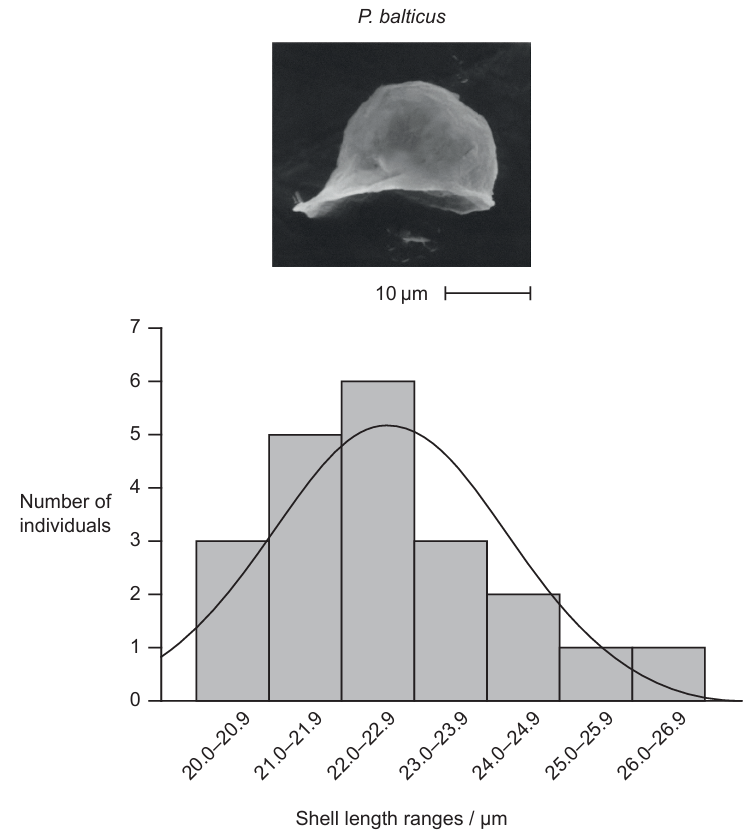
Outline the reason that some species of protists are classified as mixotrophs.
Outline the method of nutrition carried out by P. caudatum.
Hummingbirds eat flower nectar and small insects. To which nutritional group do they belong?
Autotrophs
Consumers
Detritivores
Saprotrophs
The pie chart shows the modes of nutrition of fungi in Huahu Lake wetland in China.
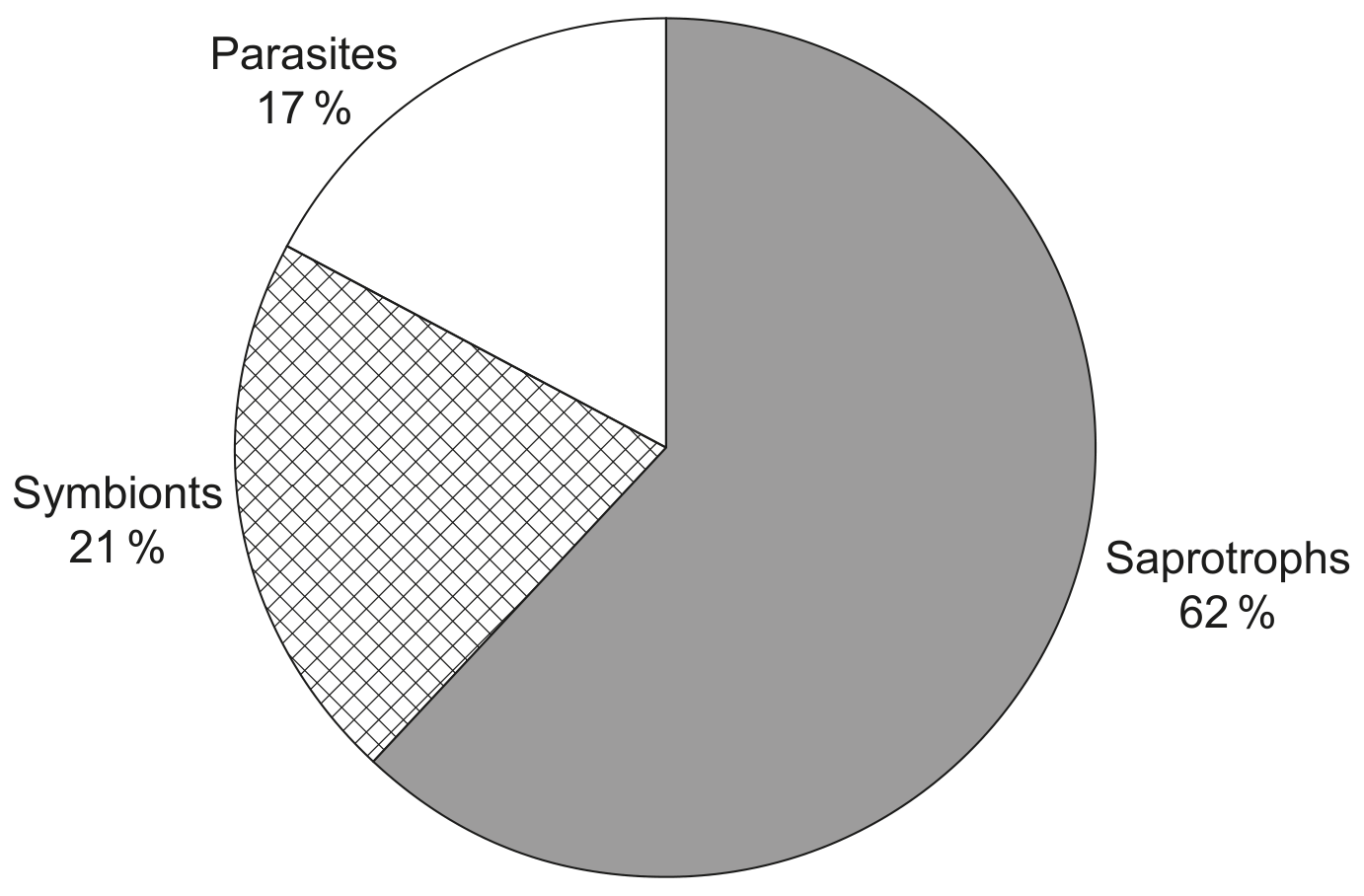
What is the most common mode of nutrition of fungi in this wetland?
Heterotrophic fungi that feed on living organisms by ingestion
Autotrophic fungi that obtain organic nutrients from detritus by internal digestion
Fungi that have either an autotrophic or heterotrophic method of nutrition
Heterotrophic fungi obtaining nutrients from dead organisms by external digestion
How do methanogenic archaeans living in peat bogs obtain energy to survive?
They oxidize methane produced by peat to produce carbon dioxide and water.
They synthesize methane from carbon dioxide released by decomposing peat.
They convert organic compounds in fully decomposed vegetation into methane.
They produce methane while converting peat to coal.
Which category of organisms is correctly described by its method of nutrition and site of digestion?
Category of organism
Method of nutrition
Site of digestion
consumer
heterotrophic
internal
saprotroph
autotrophic
external
producer
autotrophic
internal
detritivore
heterotrophic
external
Euglena is a unicellular organism that feeds on bacteria and uses as a carbon source. Which describes the nutrition of this organism?
Autotrophic only
Heterotrophic only
Saprotrophic only
Autotrophic and heterotrophic