[Maximum number: 1]
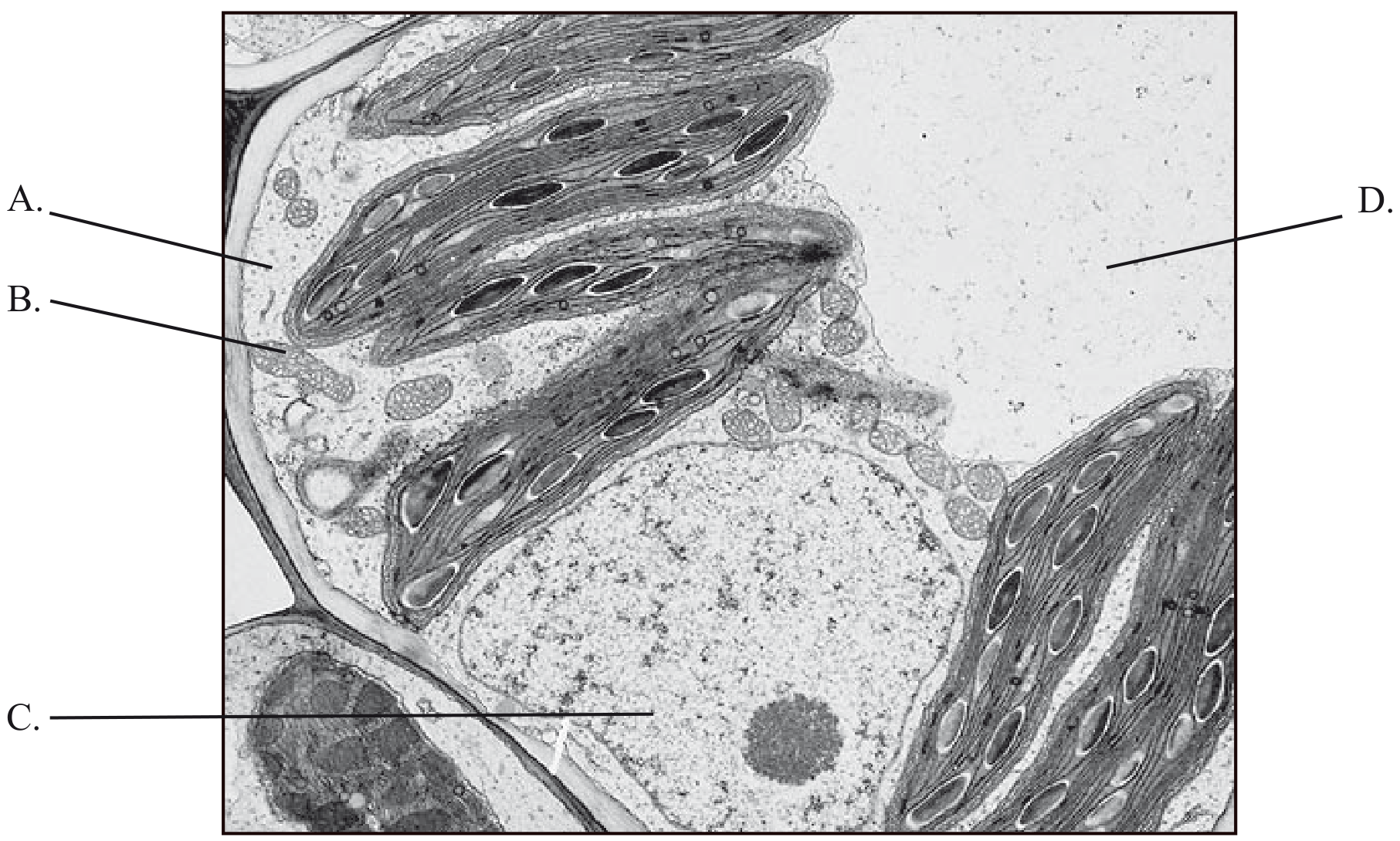
Which labelled structure on the electron micrograph below identifies this as a plant cell and not an animal cell?
 EduNinja
Which labelled structure on the electron micrograph below identifies this as a plant cell and not an animal cell?
Which feature of striated muscle cells allows them to be considered as a possible exception to the cell theory?
They are found in multicellular organisms.
They contain more than one nucleus.
They are specialized for movement.
They do not carry out mitosis.
The giant alga Acetabularia has a feature that suggests it is an exception to the cell theory. What feature is this?
It lacks a nucleus.
It lacks a cell wall.
It has only one mitochondrion.
It lacks subdivision into separate cells.
Which structure found in eukaryotes has a single membrane?
Nucleus
Lysosome
Chloroplast
Mitochondrion
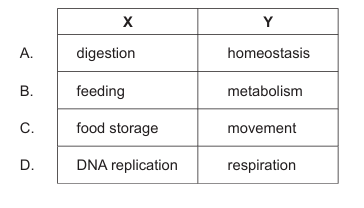
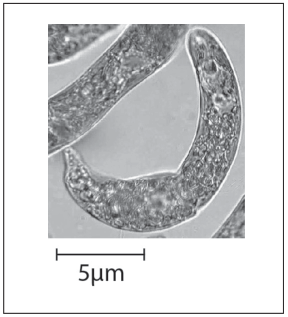
Which function is accomplished by structures X and Y in the Paramecium?
If cells of a multicellular organism have the same genes, how can there be many different cell types in a body?
Some genes but not others are expressed in each cell type.
Cells lose some genes as development occurs.
Genes do not determine the structure of a cell.
Cells must practice division of labour in order to survive.
The image shows an electron micrograph of a fungus, Candida albicans.
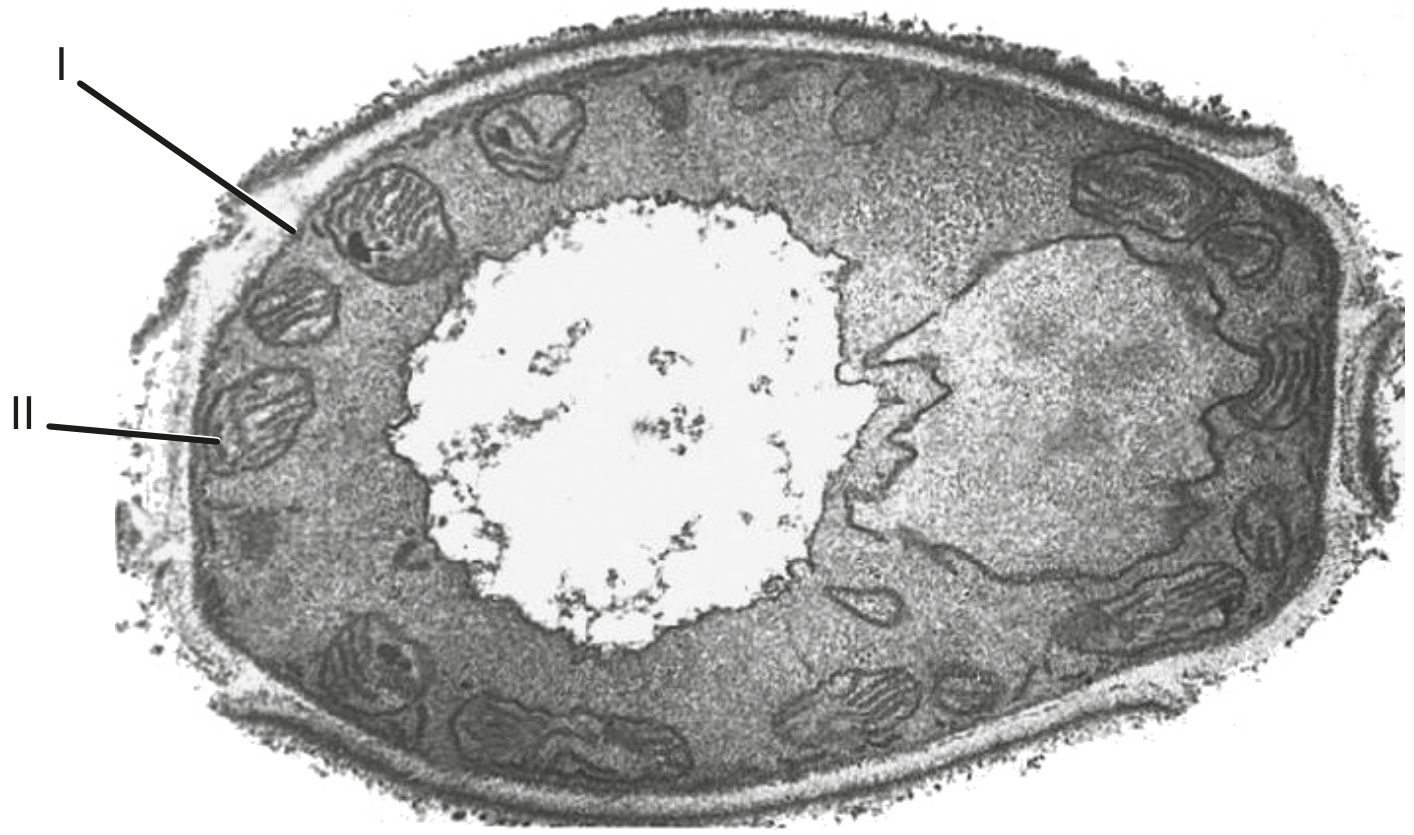
Which terms identify the structures labelled I and II in the image?
I
II
cell membrane
vesicle
cell wall
chloroplast
plasma membrane
mitochondrion
cell wall
mitochondrion
What feature of both striated muscle and aseptate fungal hyphae is different from typical cell structure?
They have multiple nuclei within a structural unit.
They have a cell wall that is not made of cellulose.
They have plasmids.
They have an absence of cholesterol in the plasma membrane.
The magnification of the micrograph is .
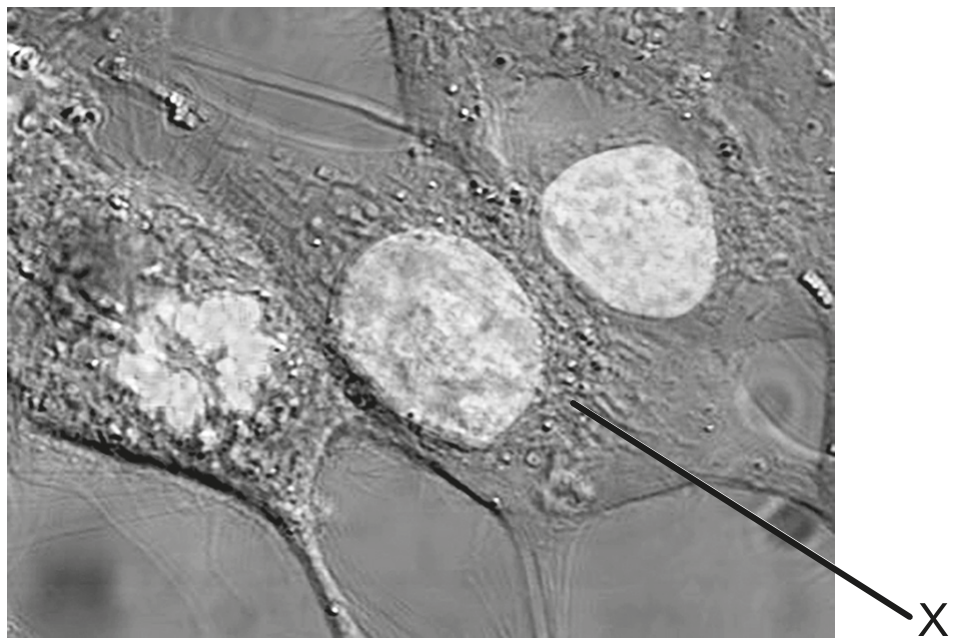
What is the maximum diameter of the nucleus in the cell labelled X ?
10 nm
20 nm
The electron micrograph shows a thin section through a plant mesophyll cell.
What is the magnification of the image?