C3.1.5—Spinal cord
Spinal cord links named stimuli, coordinating structures and effectors so body systems or plant tissues produce an integrated biological response.
- Syllabus
- First assessment 2025
- Objective
- C3.1.5
- Level
- SL
Spinal cord links named stimuli, coordinating structures and effectors so body systems or plant tissues produce an integrated biological response.

Coverage 2025–2025 · Updated 16 Jul 2026
The spinal cord can integrate a rapid response.
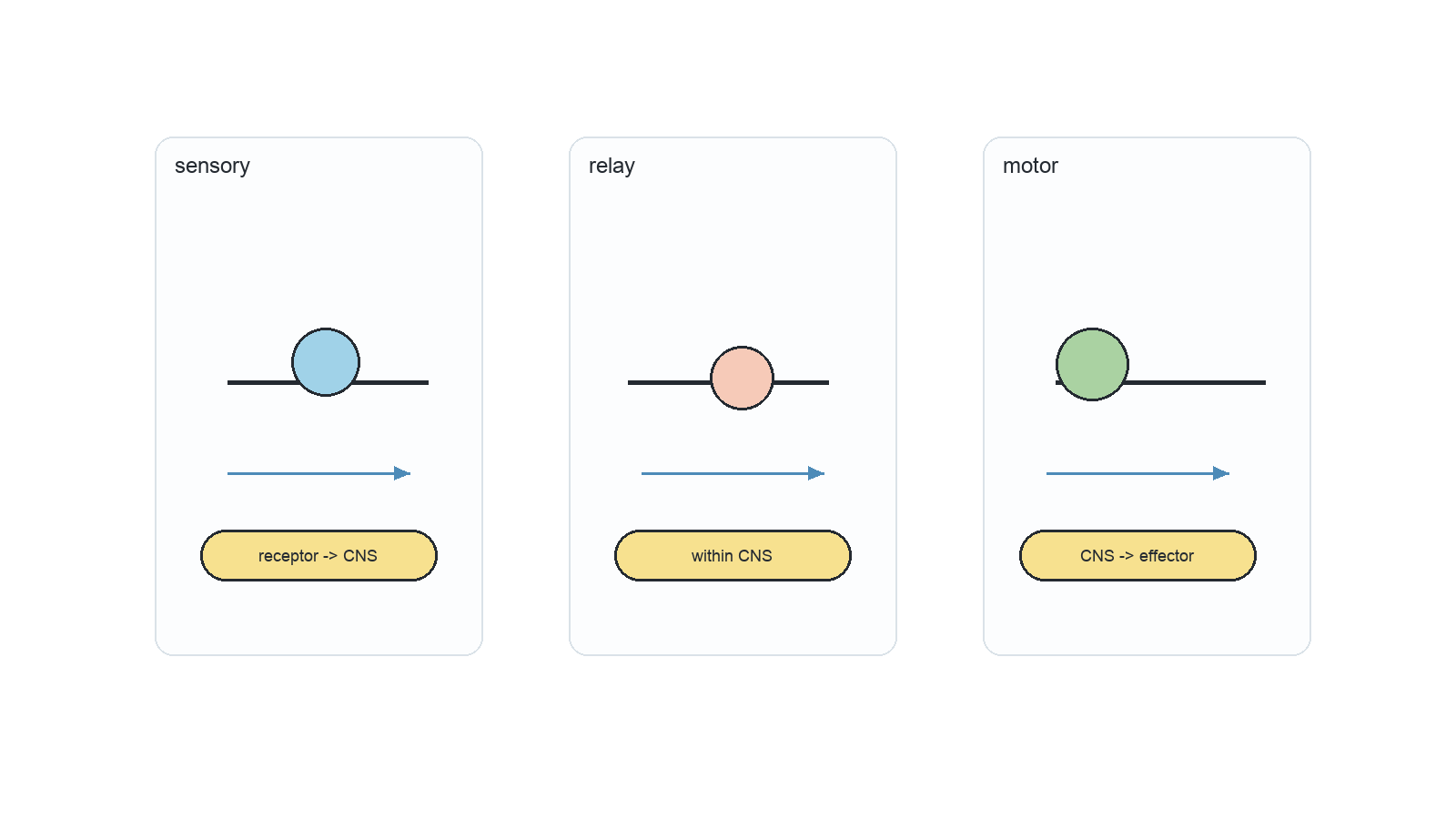
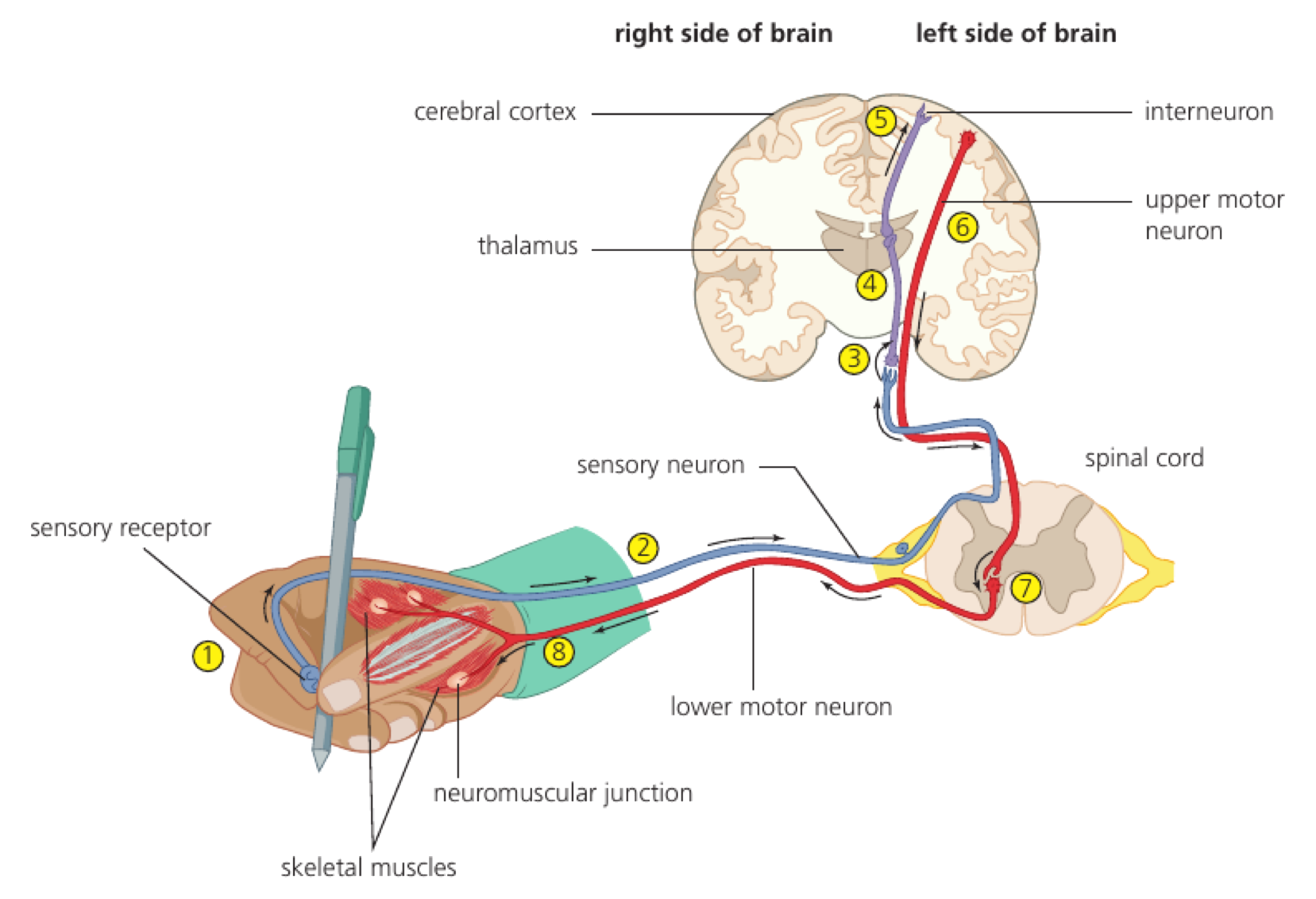
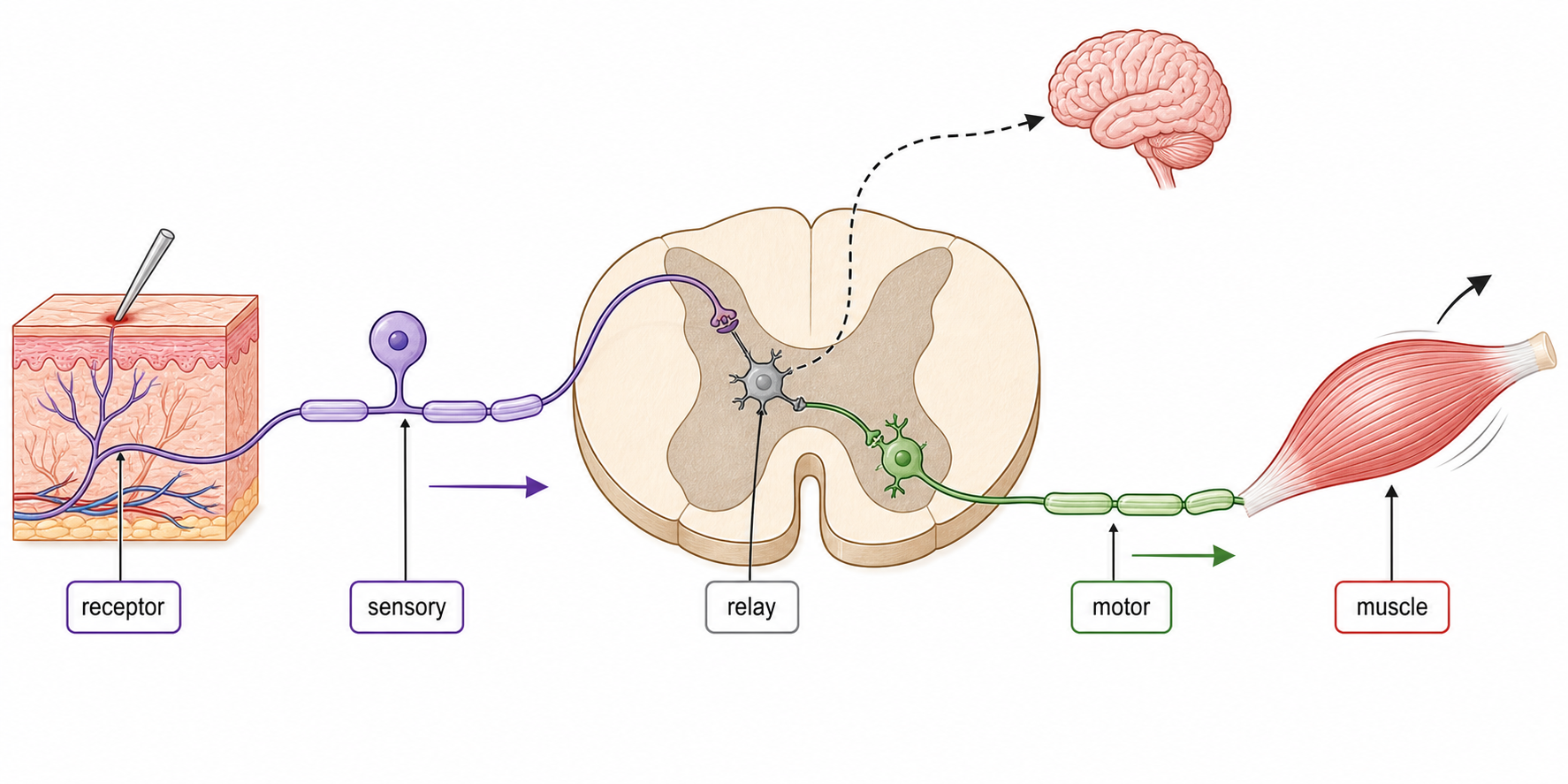
The spinal cord links body and brain, but grey matter can connect sensory input to motor output without waiting for conscious brain processing. White matter carries impulses along longer pathways.
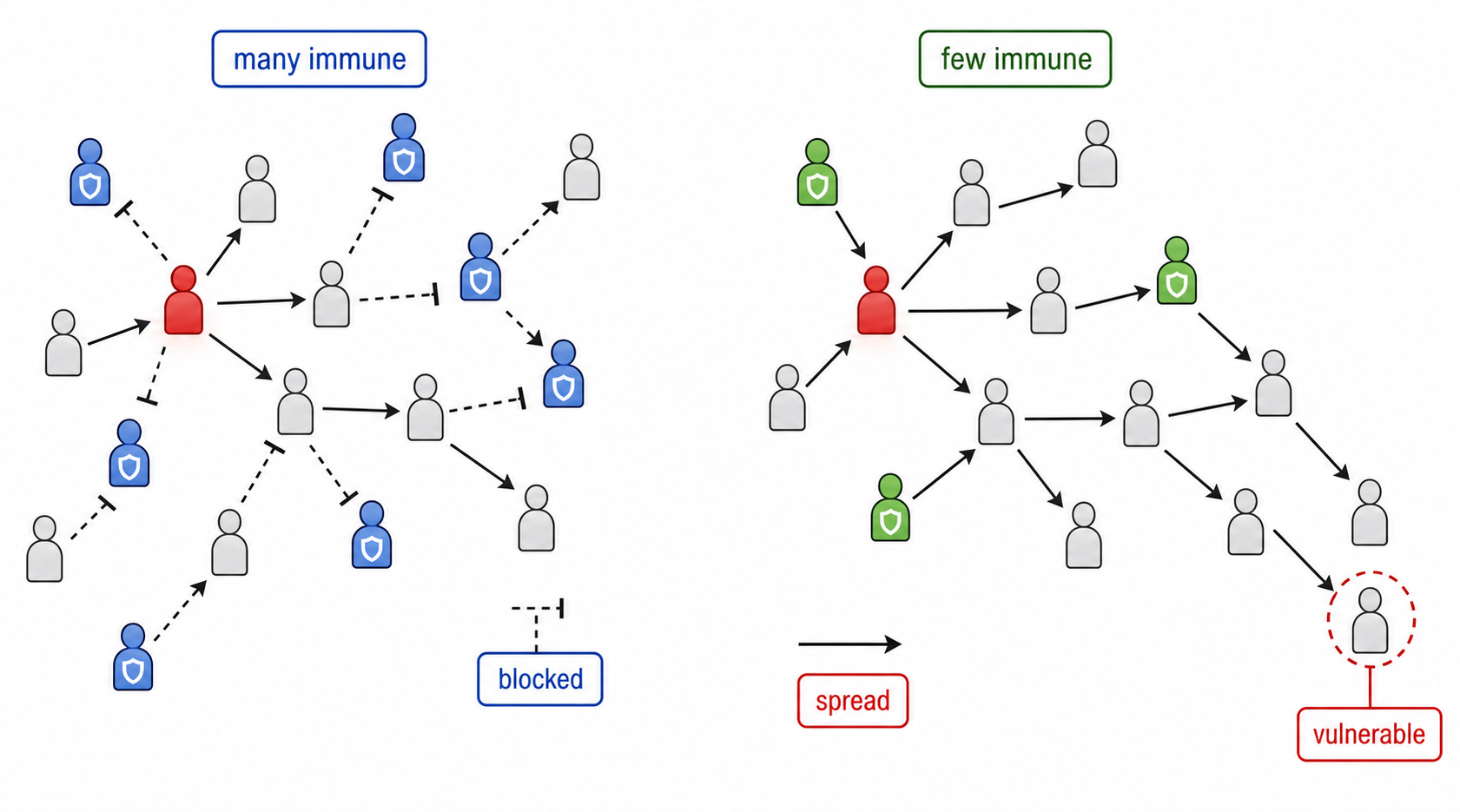
receptor → sensory neurone → spinal integration → motor neurone → effector.
Touching a hot surface triggers a withdrawal through a spinal reflex; the brain receives information as the movement is already beginning.
A reflex is not brain-free information: the spinal cord handles the immediate response, while the brain can receive the signal afterwards.
This objective is assessed through structured response, commonly using State.
State
Mark schemes reward named structures, correct direction of information flow and explanations that keep the sequence causal.
Representative question
The spinal cord is involved in the coordination of involuntary actions such as the pain reflex.
Where are synapses between sensory neurons and interneurons found?
C