D4.2.8—Eutrophication
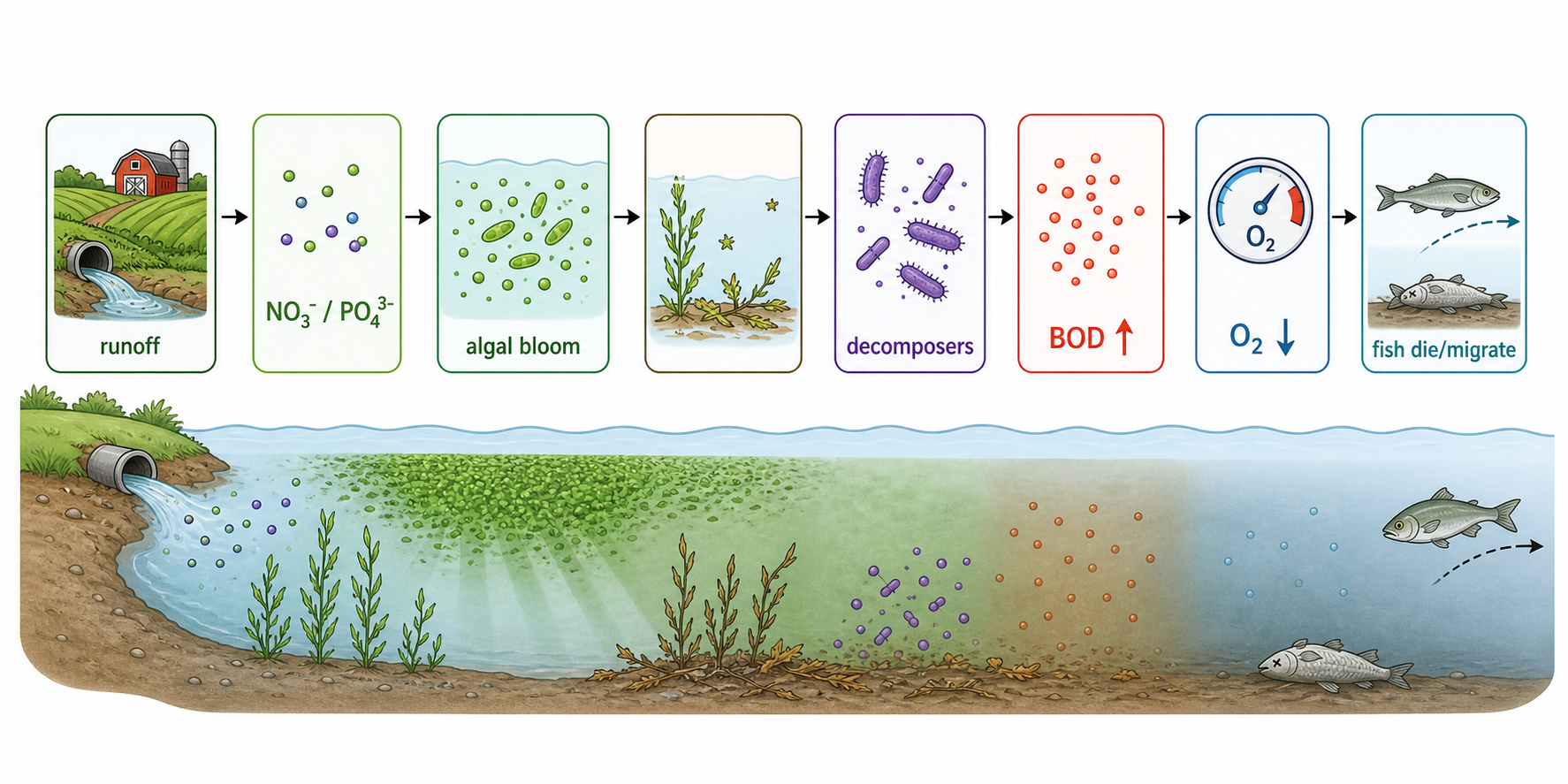
Eutrophication occurs when nitrate or phosphate enrichment drives algal blooms, decomposition, increased oxygen demand, hypoxia, and major aquatic biodiversity loss.
- Syllabus
- First assessment 2025
- Objective
- D4.2.8
- Level
- HL
Eutrophication occurs when nitrate or phosphate enrichment drives algal blooms, decomposition, increased oxygen demand, hypoxia, and major aquatic biodiversity loss.

Coverage 2017–2025 · Updated 16 Jul 2026
Eutrophication is enrichment by nutrients that stimulates algal growth and can deplete oxygen when biomass decomposes.
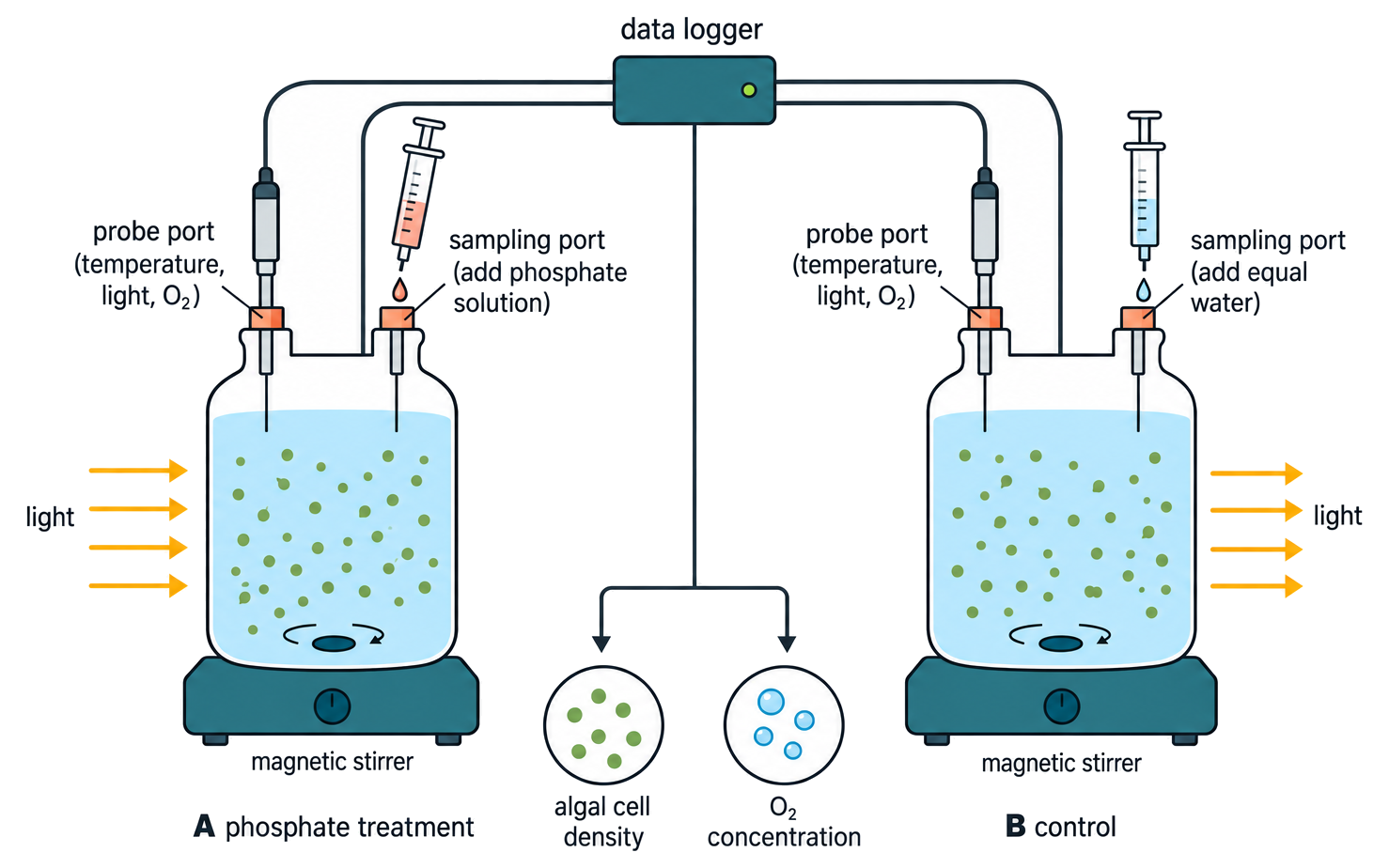
Nitrate or phosphate runoff increases primary production; decomposition consumes dissolved oxygen; hypoxia stresses or kills aquatic organisms and changes the food web.
Trace nutrient input, algal response, decomposition and oxygen before naming the ecological effect.; separate state, pressure, control loop and time
Fertilizer runoff causes an algal bloom; after algae die, bacteria respire intensely and fish suffocate in the oxygen-poor water. This gives a concrete prediction from the stated ecosystem.
Not every algal bloom is nutrient-driven, and oxygen recovery depends on flow, depth and further inputs. Interpret the result within the stated model and evidence limits.
This objective is assessed through essay response, commonly using Explain / Discuss.
Explain / Discuss
Build the answer around this relationship: Nitrate and phosphate enrichment commonly starts eutrophication in aquatic ecosystems.
Saying algae directly use up all oxygen, instead of linking oxygen loss mainly to aerobic decomposition of dead organic matter.
Representative question
Discuss the causes and consequences of eutrophication.
causes:
a. excess nutrients/nitrates/phosphates in an aquatic system
b. natural runoff from soil/erosion/weathering of rocks
c. runoff of fertilizers «from agricultural land/golf courses»
d. partially treated sewage/animal waste discharged into waterways consequences: [4 max]
e. algal blooms
f. blocks light for photosynthetic organisms
g. dead organisms sink to bottom of water and decompose
h. decomposers/microorganisms increase BOD/use oxygen
i. oxygen/DO availability for other organisms decreases
j. decrease in biodiversity/disappearance of organisms
OWTTE
6 max
Core D4.2 is secure when students can judge whether a system is being stabilized or pushed toward change. The route is: identify the stability support or disturbance, explain the mechanism, and state the ecosystem consequence using evidence.
Core transfer questions ask students to explain why an ecosystem remains stable or why a disturbance pushes it toward change. Strong answers do not list threats; they explain mechanisms such as lost rainfall recycling, trophic cascade, overharvest, nutrient enrichment, toxin biomagnification, plastic movement, or restoration through rewilding.