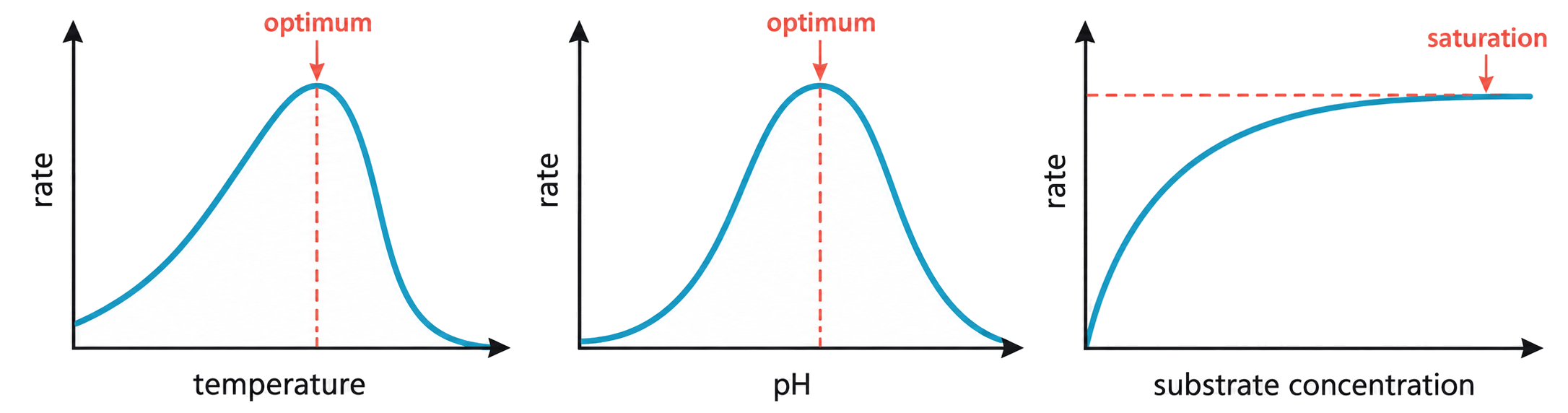
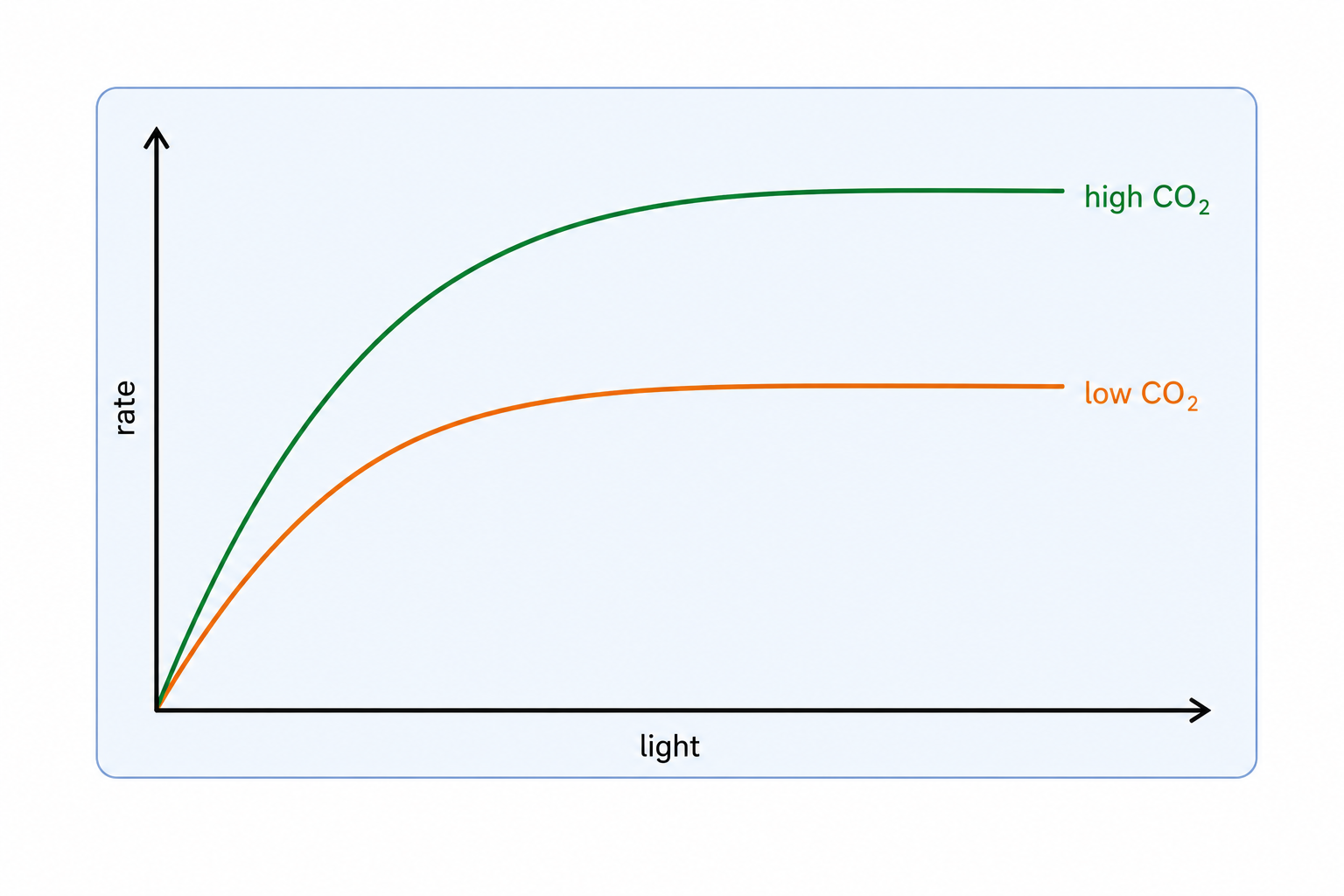
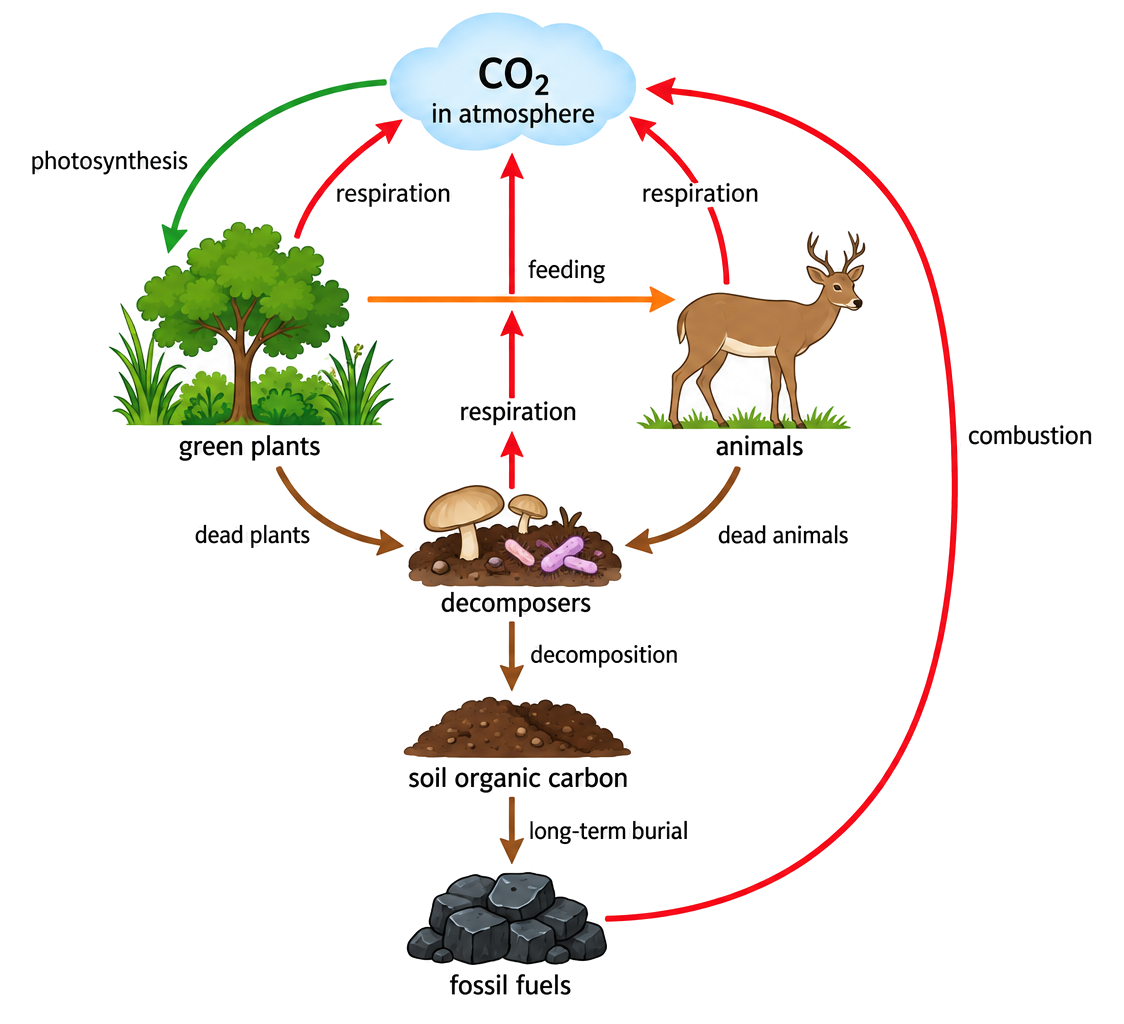
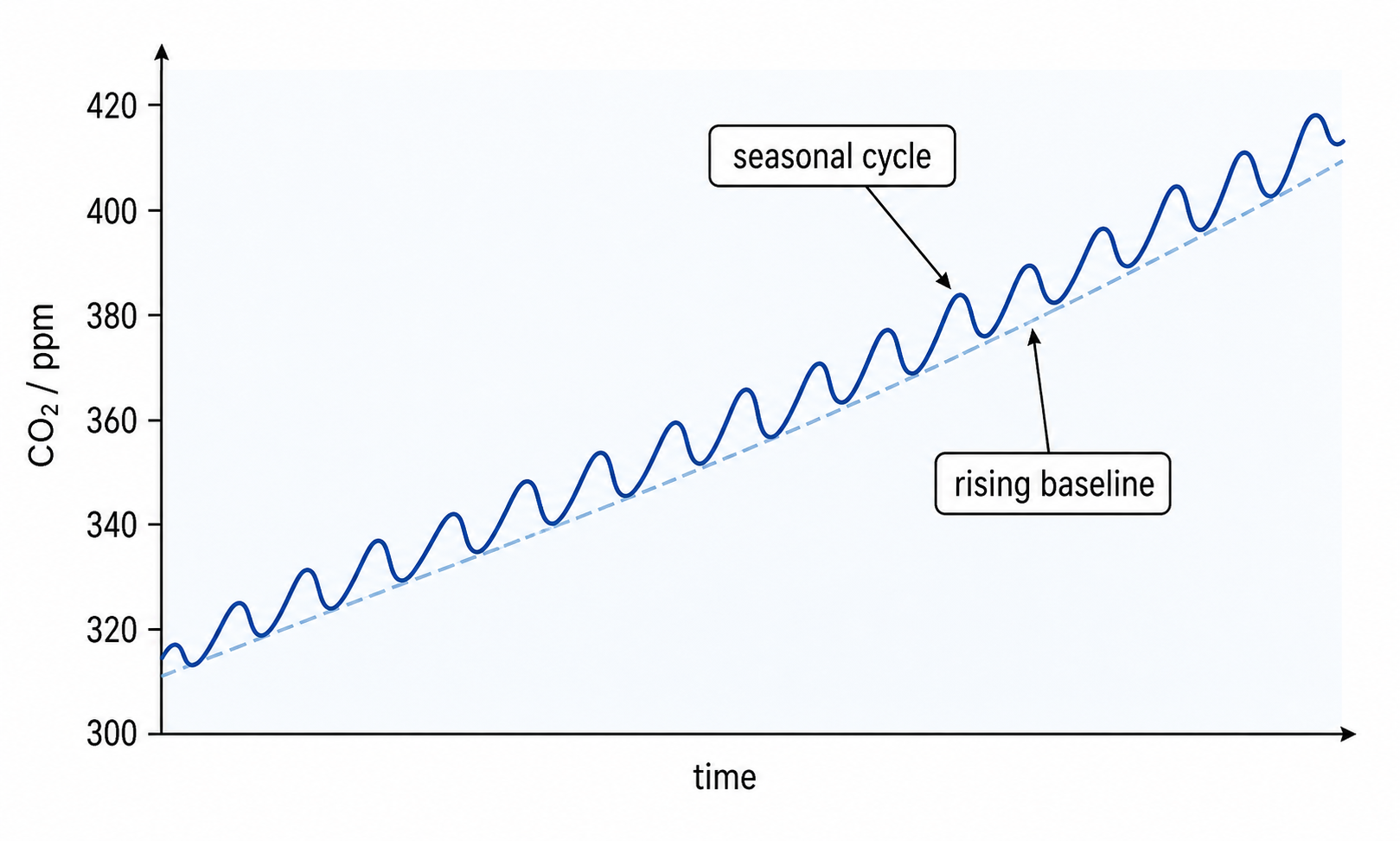
Global atmospheric carbon dioxide levels are rising. A study was carried out to test if the temperature dependence of photosynthesis was altered by elevated atmospheric CO2. Maize plants were grown in natural sunlight in controlled environmental chambers at different temperatures using current atmospheric and doubled CO2 levels.
The graph below shows daily patterns of CO2 exchange at three different temperatures. Open shapes ( o,Δ,v ) represent current atmospheric CO2 levels and closed shapes ( ∙,Δ,m ) represent elevated CO2 levels.