C3.1.23 (HL)—Ethylene and fruit ripening

Ethylene and fruit ripening links named stimuli, coordinating structures and effectors so body systems or plant tissues produce an integrated biological response.

Syllabus
First assessment 2025
Objective
C3.1.23
Level
HL

Exam analysis

Chance of appearing2%of analysed past papers
Latest appearanceMay 2025
Most common paperPaper1A
Typical marks1

Common command terms

  • Identify

Scoring notes

Common mistake
Treating low oxygen as the only trigger and omitting carbon-dioxide-driven pH change.

Recent exam appearances

May 2025Paper1A ["HL"] · TZ128[ 1 ]C3.1.23 (HL)—Ethylene and fruit ripening
May 2025Paper1A ["HL"] · TZ226[ 1 ]C3.1.23 (HL)—Ethylene and fruit ripening
Practice this objective

Coverage 2025–2025 · Updated 16 Jul 2026

Ethylene coordinates ripening as a feedback process

HL only

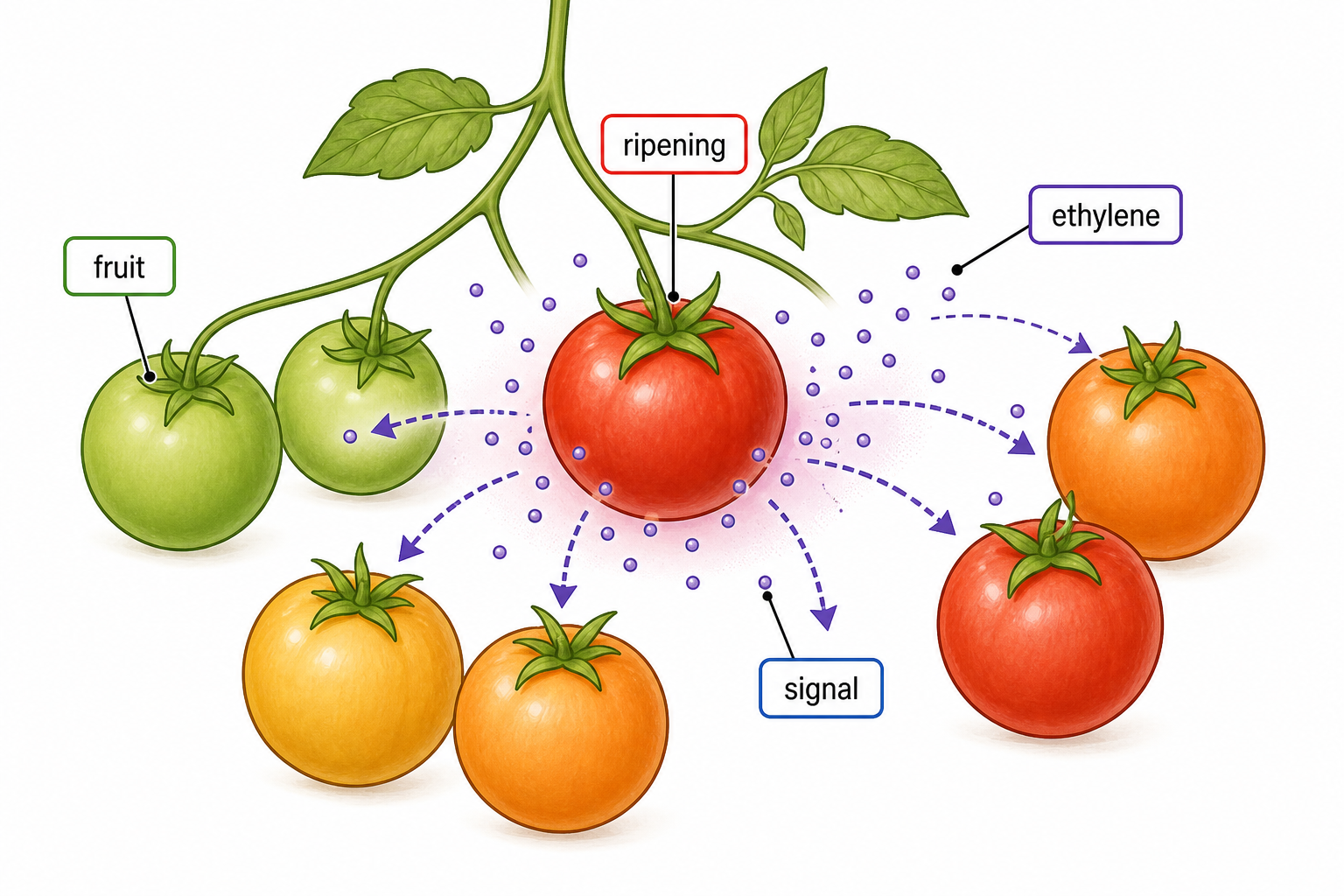
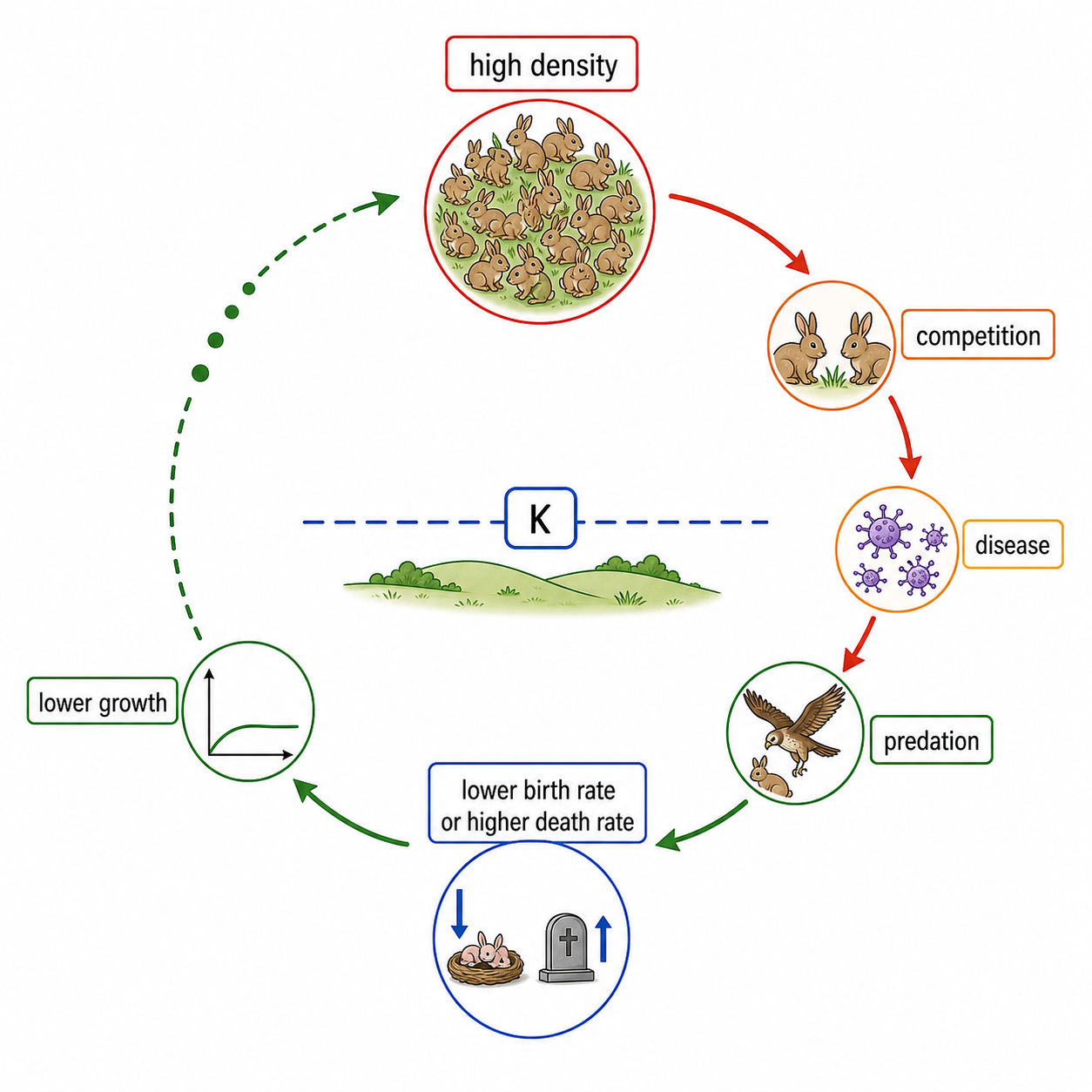
Ethylene—whose IUPAC name is ethene—drives positive feedback that makes fruit ripening rapid and synchronized.

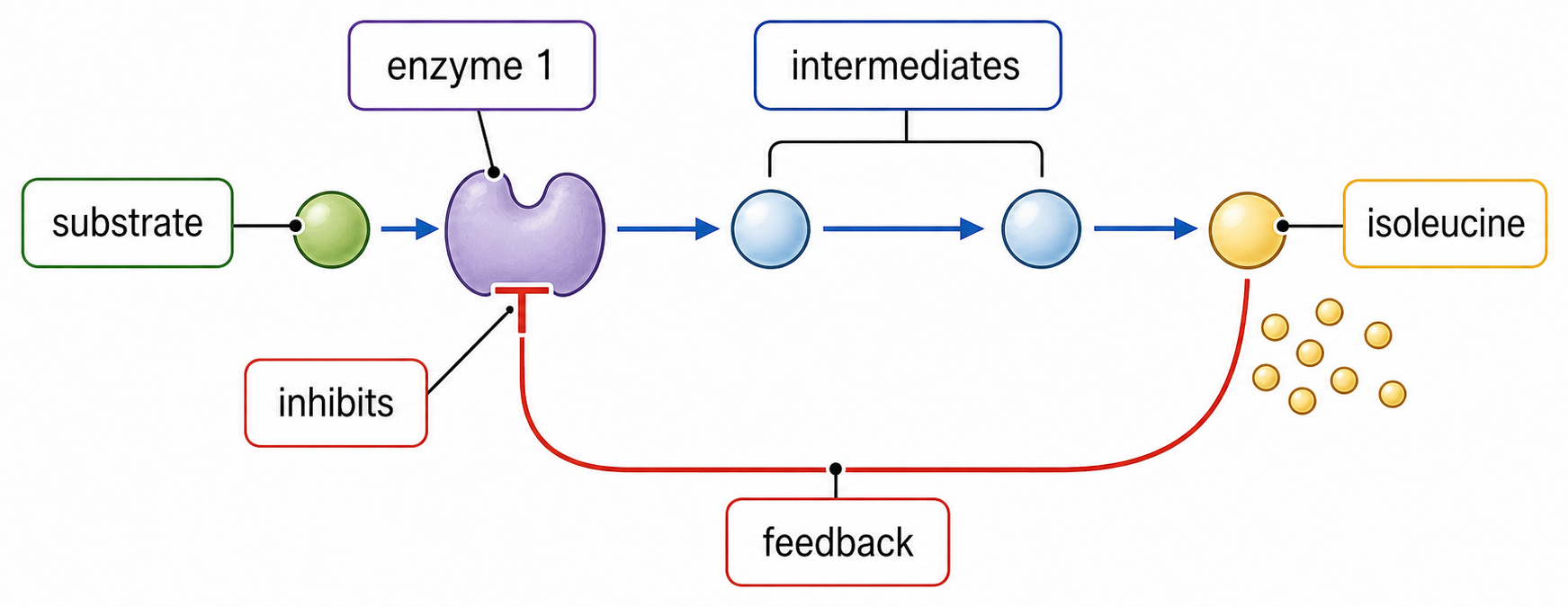
Ethylene stimulates ripening changes such as softening, colour change and aroma production. Ripening then stimulates further ethylene production, which accelerates ripening in the same fruit and nearby responsive fruits.
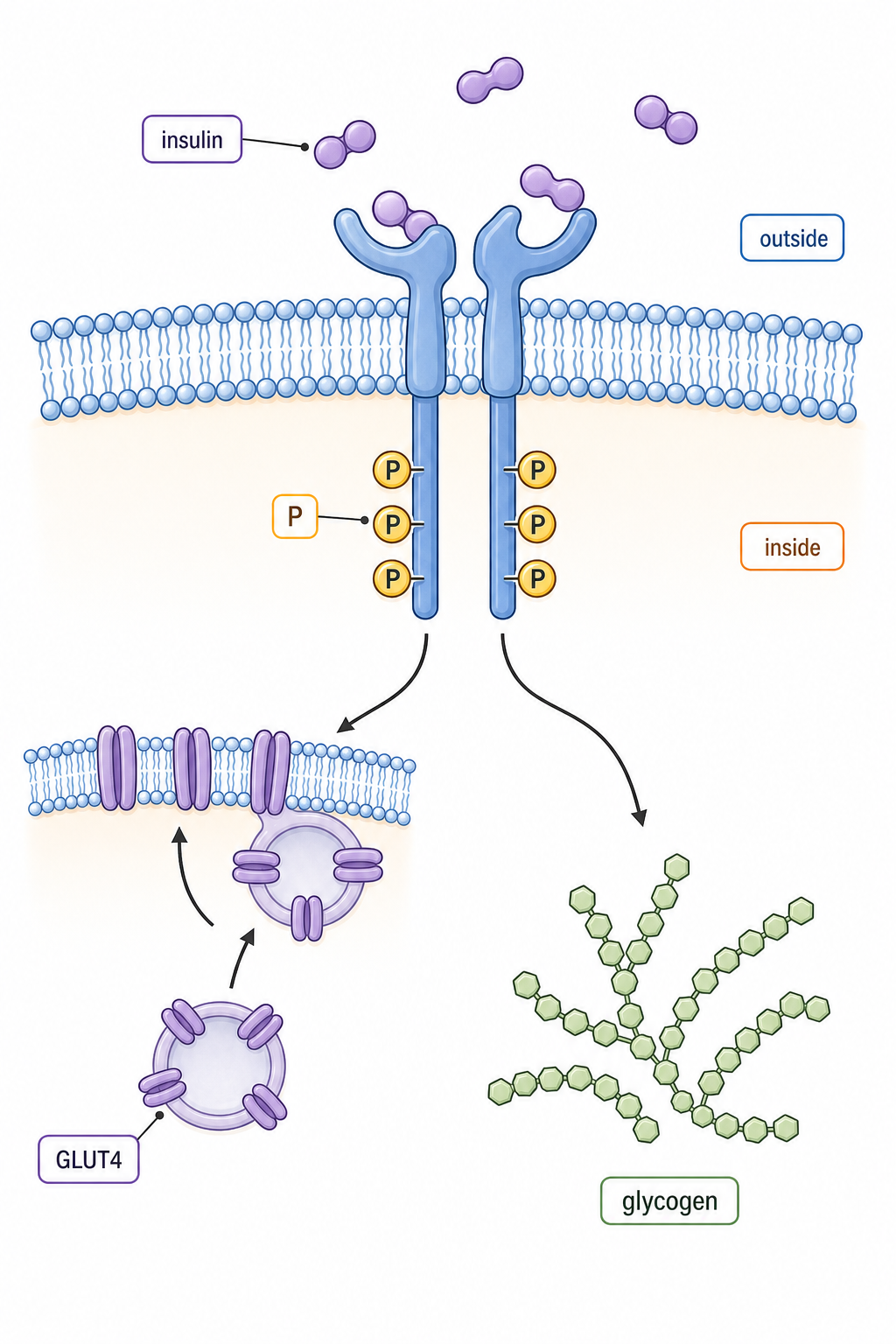
Ethylene rises → ripening responses increase → ripening tissue releases more ethylene → response amplifies. Rapid synchronization can make fruits attractive to dispersers at the same time.
A ripe apple can accelerate ripening of nearby climacteric fruit in a closed container because accumulated ethylene reinforces the feedback loop.

Positive feedback amplifies change until ripening is complete or conditions limit it; it does not restore a set point. Fruit type, temperature and oxygen availability affect responsiveness.

Ethylene and fruit ripening

HL only

Assessment in practice

1 marks
How it is assessed

This objective is assessed through multiple choice, commonly using Identify.

Command terms

Identify

What earns marks

Mark schemes reward named structures, correct direction of information flow and explanations that keep the sequence causal.

Watch for

Treating low oxygen as the only trigger and omitting carbon-dioxide-driven pH change.

Representative question

Question 1

[Maximum number: 1]

Which chemical causes positive feedback to ensure rapid ripening of fruit?

A

Auxin

B

Cytokinin

C

Epinephrine

D

Ethylene

Plant Signalling Integration

HL only

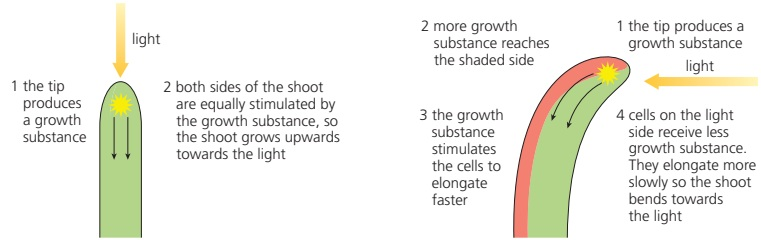
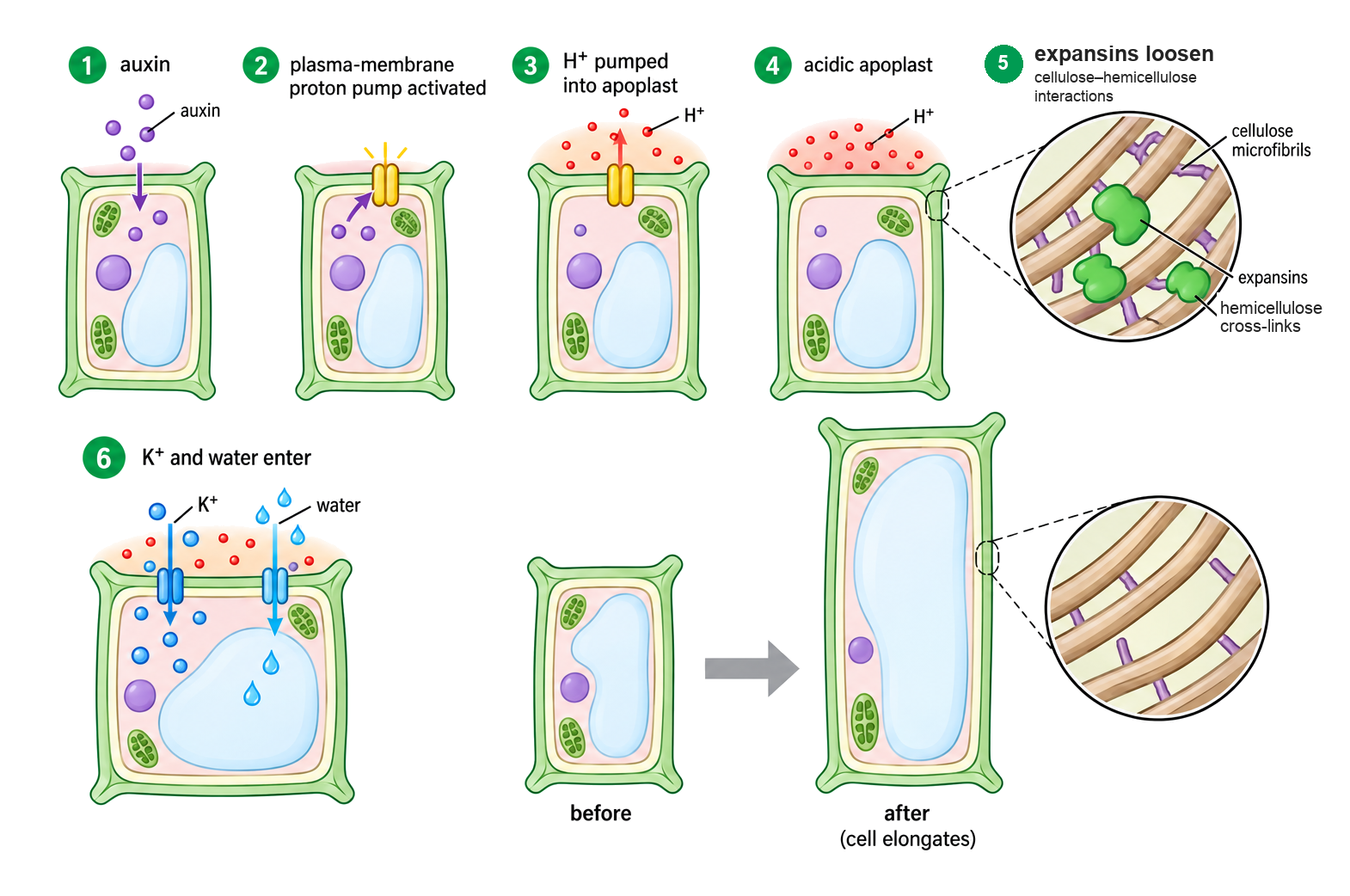
Plant signalling integrates directional growth, phytohormones, and responses to stimuli. Tropisms are directional growth responses in seedlings; experiments compare shoot or root growth under lateral light or gravity stimuli. Shoots show positive phototropism toward lateral light; auxin redistribution causes greater elongation on the shaded side. Phytohormones are plant signalling chemicals controlling growth and development; auxin, cytokinin, and ethylene coordinate responses to stimuli and internal state. PIN auxin efflux carriers actively move auxin between plant cells; asymmetric carrier placement maintains auxin gradients during tropic responses. Auxin activates proton pumping into the apoplast; acidified cell walls loosen, allowing water uptake, elongation, and bending. Auxin generally promotes root formation; cytokinin promotes shoot formation and division; their ratio coordinates root-shoot growth and plant tissue culture outcomes. Ethylene is a gaseous phytohormone that promotes fruit ripening; ripening fruit releases more ethylene, creating positive feedback in nearby fruit.

Concept essentials

  • Ethylene and fruit ripening depends on linking the stimulus to the coordinating structure or signal.
  • The pathway for ethylene and fruit ripening must keep information flow and response direction clear.
  • Named tissues, hormones, neurons or effectors give ethylene and fruit ripening its biological specificity.
  • Evidence about ethylene and fruit ripening is strongest when structure, mechanism and outcome are connected.