C3.1.16—Peristalsis control
Peristalsis control links named stimuli, coordinating structures and effectors so body systems or plant tissues produce an integrated biological response.
- Syllabus
- First assessment 2025
- Objective
- C3.1.16
- Level
- HL
Peristalsis control links named stimuli, coordinating structures and effectors so body systems or plant tissues produce an integrated biological response.

Coverage 2023–2023 · Updated 16 Jul 2026
Control of movement through the digestive tract shifts between voluntary CNS actions at the endpoints and involuntary enteric control between them.
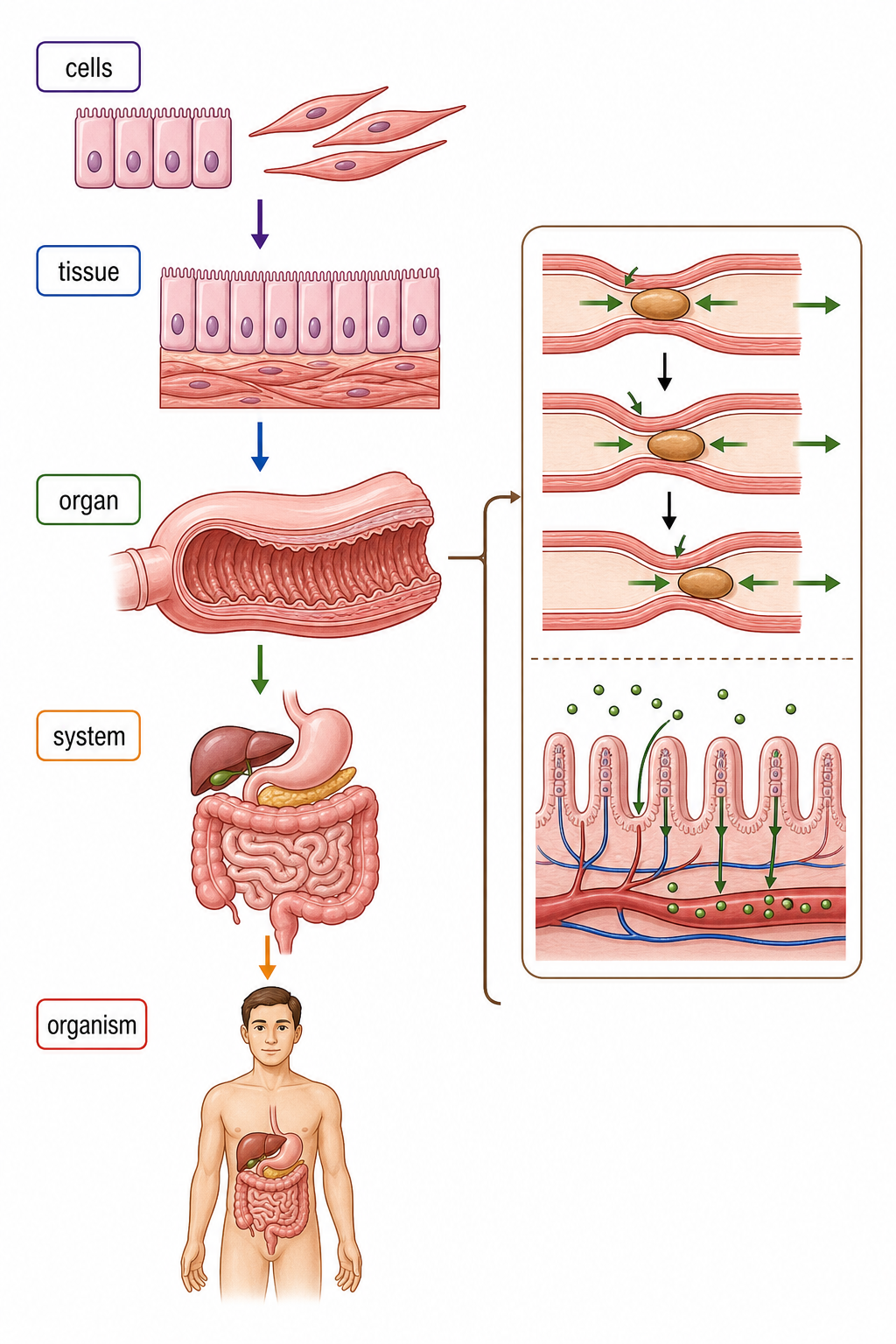
The central nervous system voluntarily initiates swallowing and participates in voluntary control of faecal egestion. Between these points, the enteric nervous system coordinates circular and longitudinal smooth-muscle contractions that move contents by peristalsis.
Voluntary initiation of swallowing → involuntary ENS-coordinated peristalsis through gut → voluntary component of egestion. Local stretch and chemical signals help the ENS coordinate contraction behind and relaxation ahead.
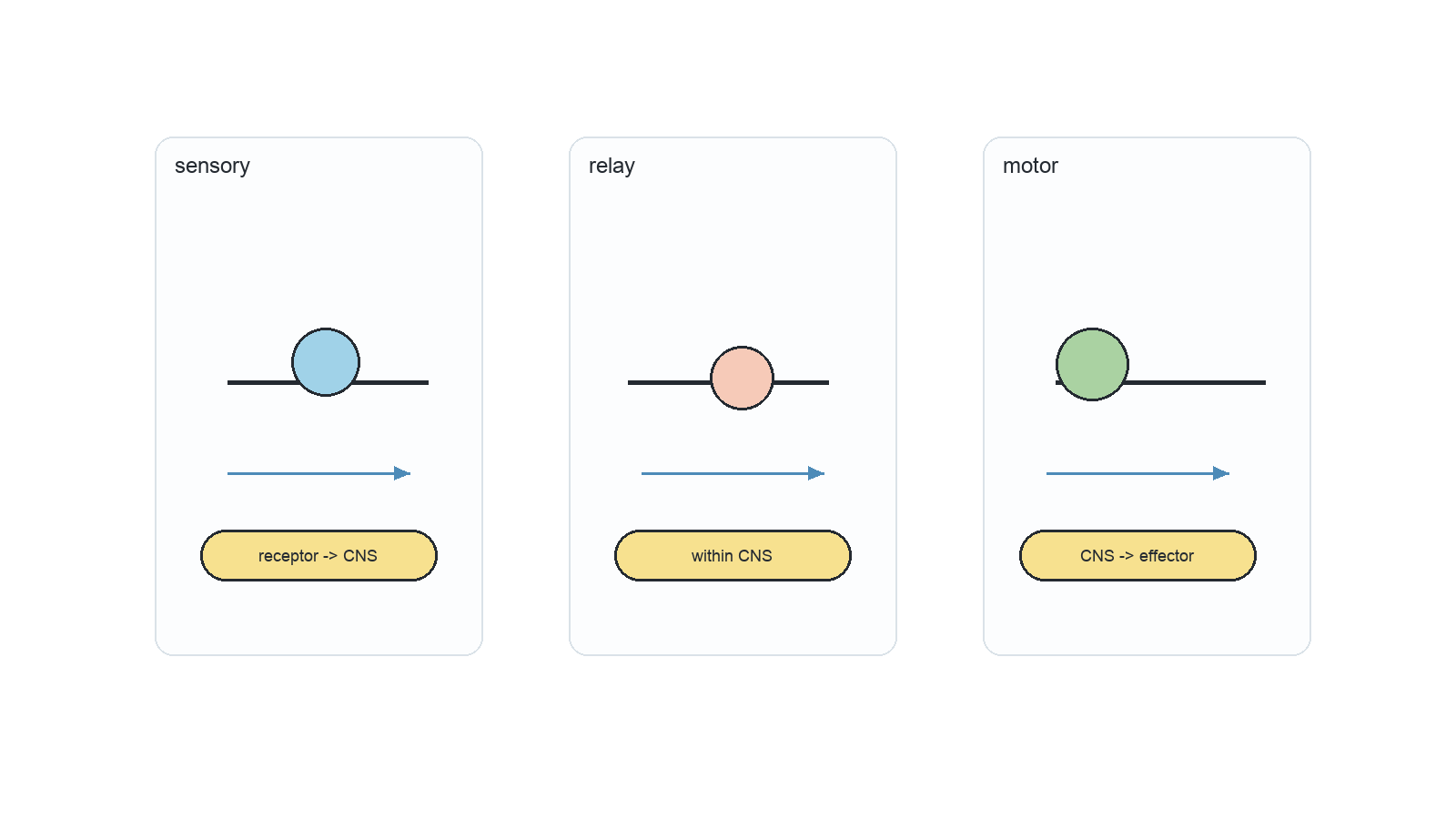
After a person chooses to swallow, an oesophageal peristaltic wave moves the bolus to the stomach without conscious control.
Peristalsis is not one simultaneous squeeze and is not consciously directed along the whole gut; the ENS coordinates the travelling pattern between voluntary endpoints.
This objective is assessed through structured response, commonly using Outline / Identify.
Outline / Identify
Mark schemes reward named structures, correct direction of information flow and explanations that keep the sequence causal.
Giving a general body-system answer without the specific pathway step for peristalsis control in the gut.
Representative question
Outline how food is moved from the stomach to the large intestine.
by muscles (contracting);
peristalsis/waves of muscle contraction followed by relaxation;
longitudinal muscle pushes food along the intestine when it contracts;
circular muscle constricts the intestine to ensure movement only onwards/not back to stomach;
movement (from stomach to large intestine) via the small intestine/duodenum/ileum;