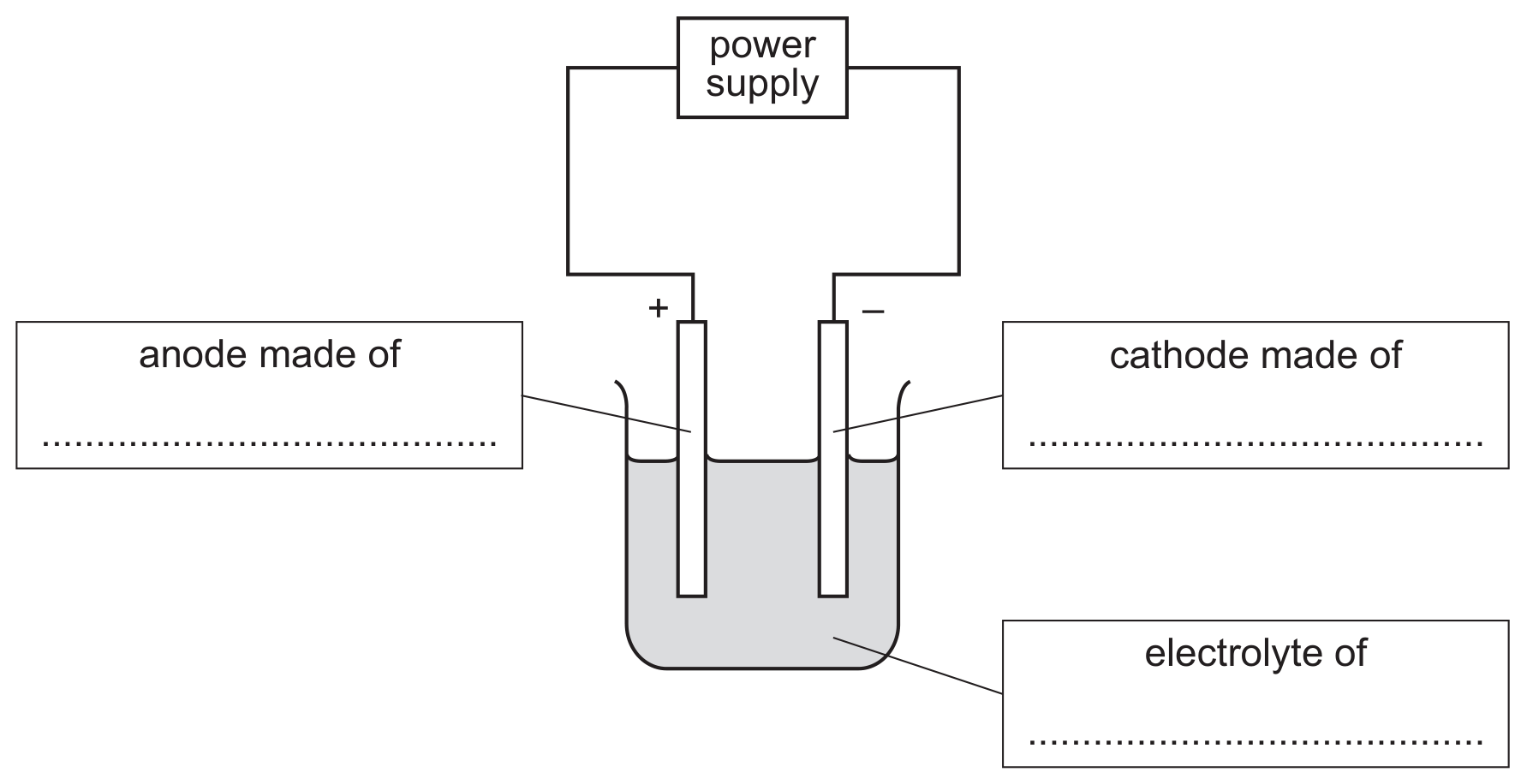
Question 2(a)
[Maximum number: 2]
This question is about electrolysis.
State the meaning of the term electrolyte.
 EduNinja
• Identify in simple electrolytic cells: (a) the anode as the positive electrode (b) the cathode as the negative electrode (c) the electrolyte as the molten or aqueous substance that undergoes electrolysis
This question is about electrolysis.
State the meaning of the term electrolyte.
Potassium reacts with bromine at room temperature to form potassium bromide.
Concentrated aqueous potassium bromide is an electrolyte.
What is meant by the term electrolyte?
A student carries out an electrolysis experiment using the apparatus shown.
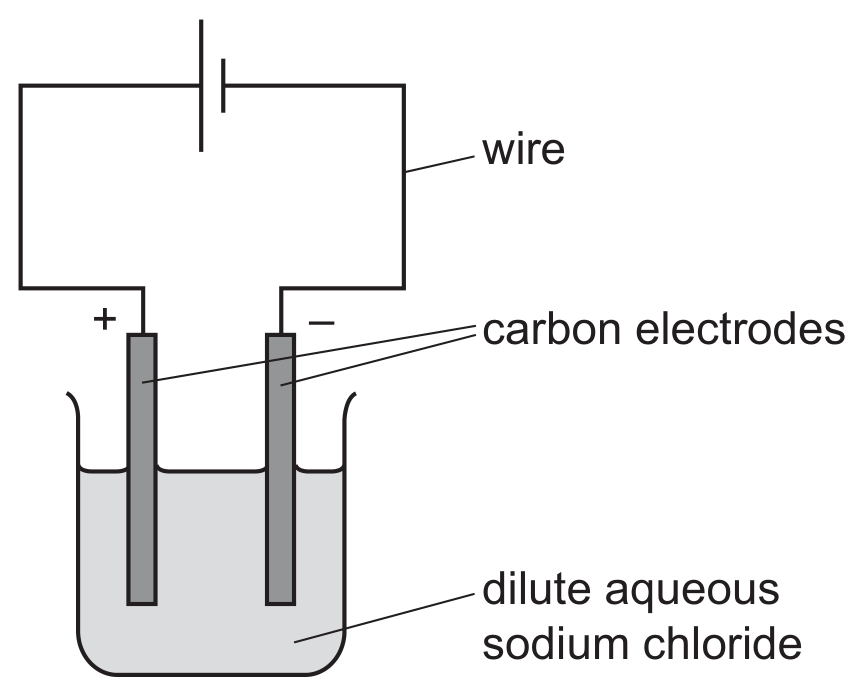
The student uses dilute aqueous sodium chloride.
State the name given to any solution which undergoes electrolysis.
A student sets up the following electrolysis experiment.
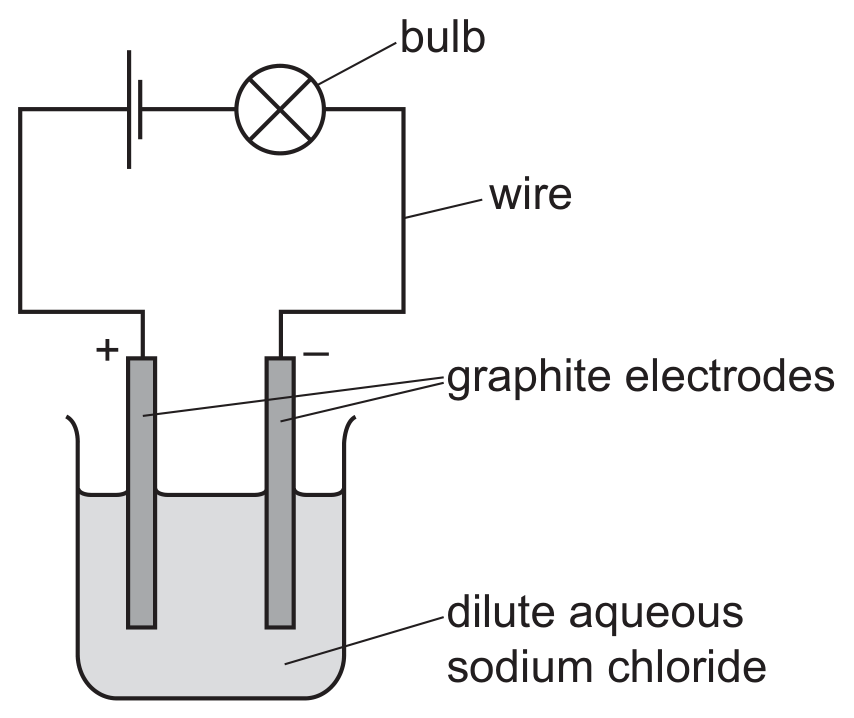
The student has a small piece of impure copper. The main impurities in the copper are small quantities of silver and zinc.
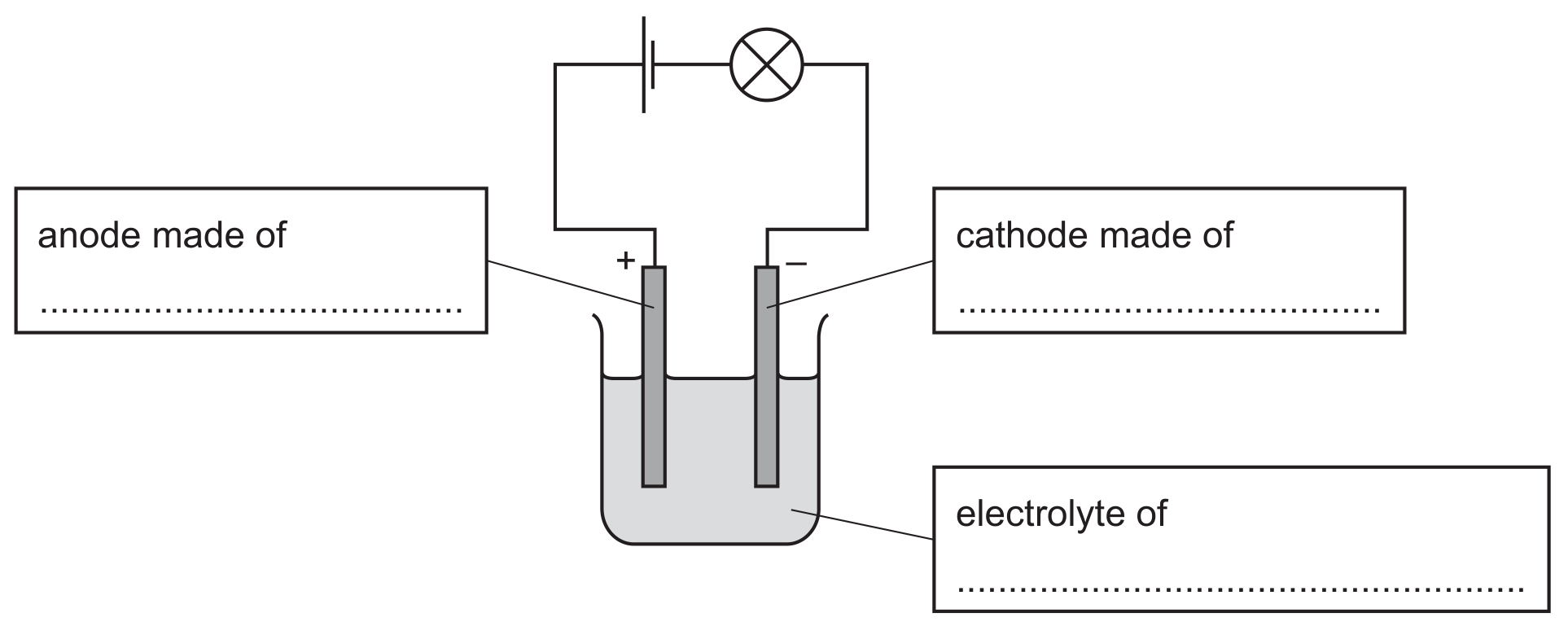
The student uses electrolysis to extract pure copper from the small piece of impure copper.
Complete the labels on the diagram of the student's electrolysis experiment.
This question is about electricity and chemical reactions.
Aqueous copper(II) sulfate is an electrolyte.
The electrolysis of aqueous copper(II) sulfate using inert electrodes forms:
- copper at the cathode
- oxygen at the anode.
State what is meant by the term electrolyte.
Copper is refined (purified) by electrolysis. Nickel can be refined using a similar method.
The diagram shows the refining of nickel by electrolysis.
Complete the labels in the boxes.