Question 1(f)
Period 3 of the Periodic Table is shown.

Answer the following questions using only these elements.
Each element may be used once, more than once or not at all.
State which element:
forms an oxide which has a macromolecular structure
CAIE IGCSE Chemistry Extended 2.6 Giant covalent structures question practice helps you revise this syllabus point with the course map in view. Use this page to focus on one topic, check the style of questions available, and connect each attempt back to the knowledge area it is testing.
EduNinja keeps Chemistry practice aligned to CAIE at Extended level, so you can move from topic review into exam-style question bank work without losing the syllabus structure. Start with a small set, mark the weak steps, then return to nearby topic links when a definition, graph, calculation, or explanation needs repair.
Period 3 of the Periodic Table is shown.

Answer the following questions using only these elements.
Each element may be used once, more than once or not at all.
State which element:
forms an oxide which has a macromolecular structure

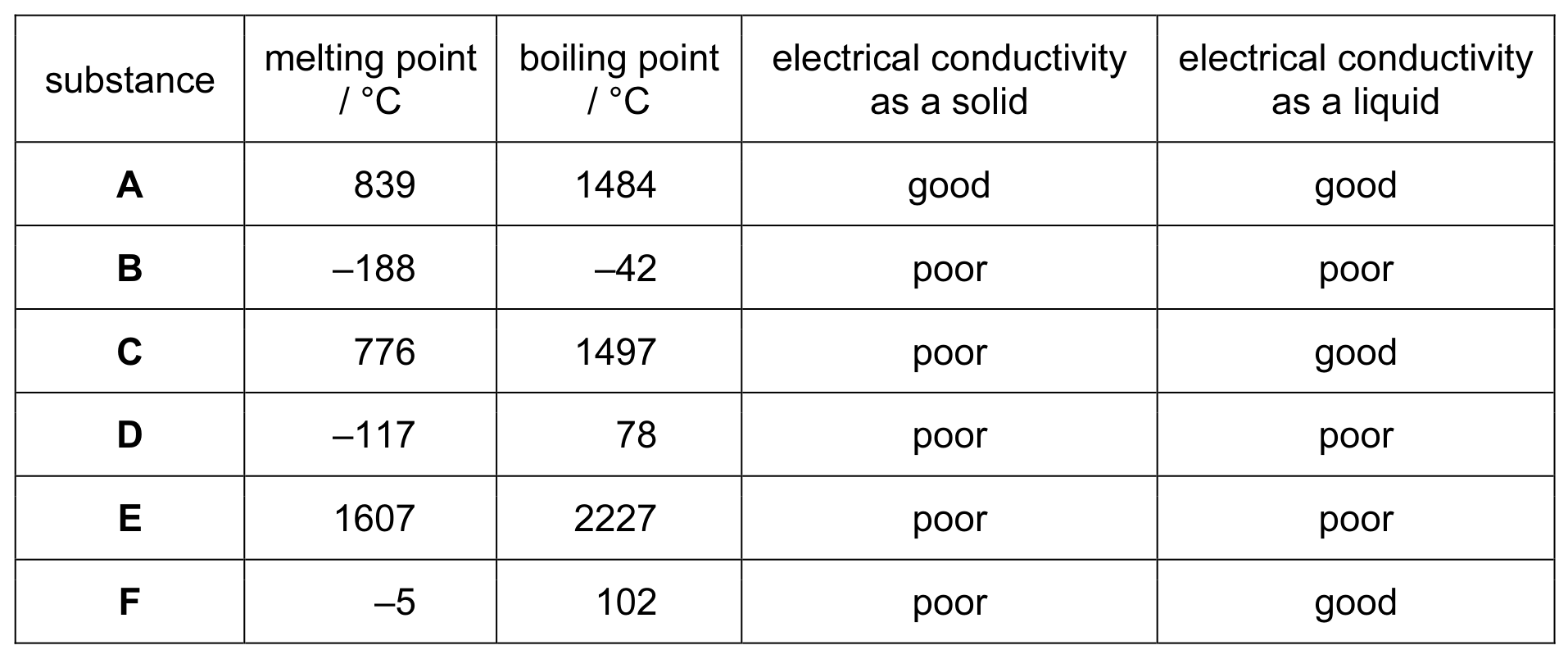
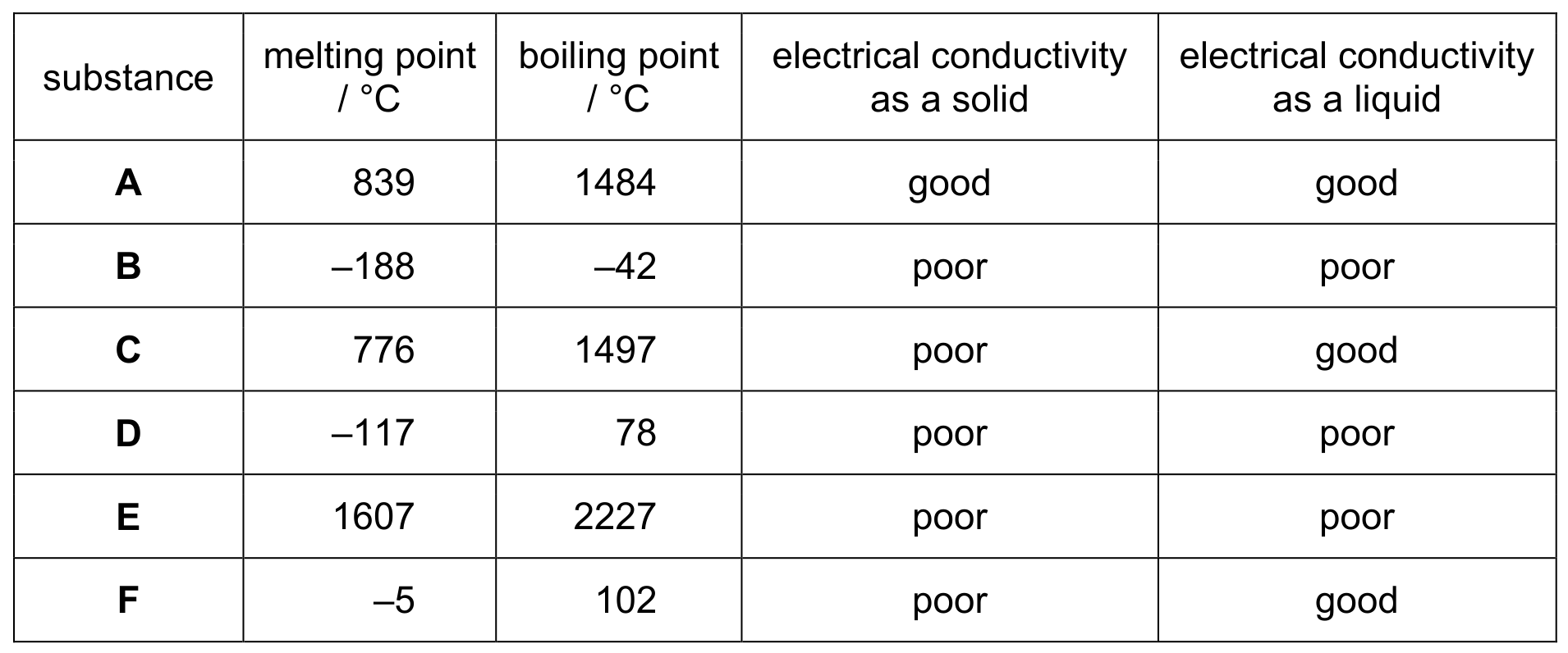
The following table gives information about six substances.

Which substance could have a macromolecular structure similar to that of silicon(IV) oxide?
This question is about elements.
> aluminium
> carbon iron hydrogen oxygen silicon sodium sulfur
Answer the following questions about these elements.
Each element may be used once, more than once or not at all.
Name the element that forms an oxide with a similar structure to diamond.
The symbols of the elements of Period 3 of the Periodic Table are shown.

Answer the following questions about these elements.
Each element may be used once, more than once or not at all.
Write the symbol of an element which:
forms an oxide with a macromolecular structure
The names of eight substances are given.

Answer the following questions about these substances.
Each substance may be used once, more than once or not at all.
State which substance is:
a macromolecular solid.
This question is about the first 30 elements in the Periodic Table.
Name the element which:
forms an oxide with a giant covalent structure
Diamond and graphite are different solid forms of carbon. The carbon atoms in diamond and graphite are arranged in different ways.
State the number of covalent bonds each carbon atom has in diamond.
State the term used to describe the structure of diamond.
Name an oxide that has a similar structure to diamond.
Describe the arrangement of atoms in graphite.
Explain how graphite conducts electricity.
A list of oxides, A to H, is shown.
A calcium oxide
B aluminium oxide
C silicon(IV) oxide
D sulfur dioxide
E carbon dioxide
F iron(III) oxide
G silver oxide
H carbon monoxide
Answer the following questions about the oxides, A to H. Each letter may be used once, more than once or not at all.
State which of the oxides, A to H:
has a giant covalent structure
The following table gives information about six substances.

Which substance could have a macromolecular structure similar to that of silicon(IV) oxide?
For each of the following, give the name of an element from Period 2 (lithium to neon), which matches the description.
Elements may be used once, more than once or not at all.
an element which exists as both diamond and graphite