Question 1(d)
[Maximum number: 1]
The following table gives information about six substances.
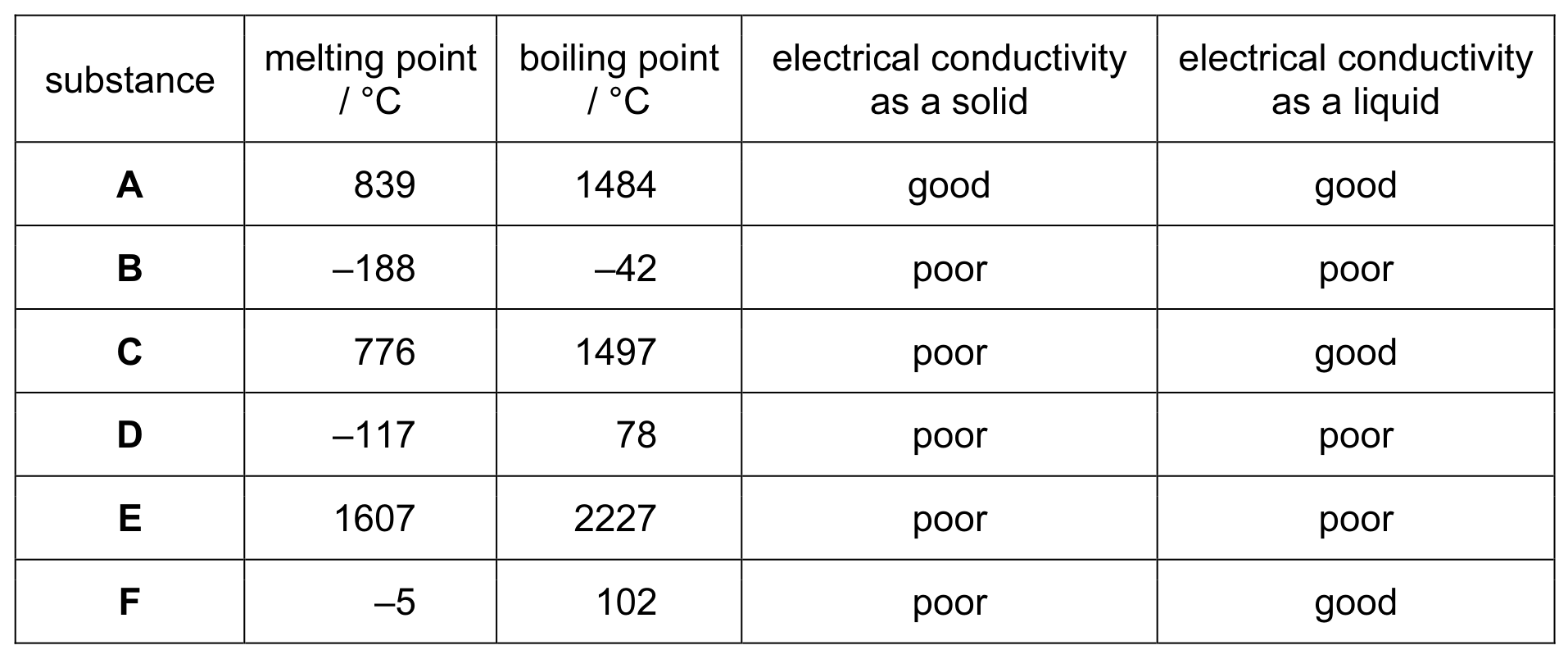
Which substance could be propane?
 EduNinja
CAIE IGCSE Chemistry Extended 2.5 Simple molecules and covalent bonds question practice helps you revise this syllabus point with the course map in view. Use this page to focus on one topic, check the style of questions available, and connect each attempt back to the knowledge area it is testing.
EduNinja keeps Chemistry practice aligned to CAIE at Extended level, so you can move from topic review into exam-style question bank work without losing the syllabus structure. Start with a small set, mark the weak steps, then return to nearby topic links when a definition, graph, calculation, or explanation needs repair.
The following table gives information about six substances.
Which substance could be propane?
This question is about gases.
has covalent bonds.
What is a covalent bond?
Complete the dot-and-cross diagram to show the electron arrangement in a molecule of .
Show outer shell electrons only.
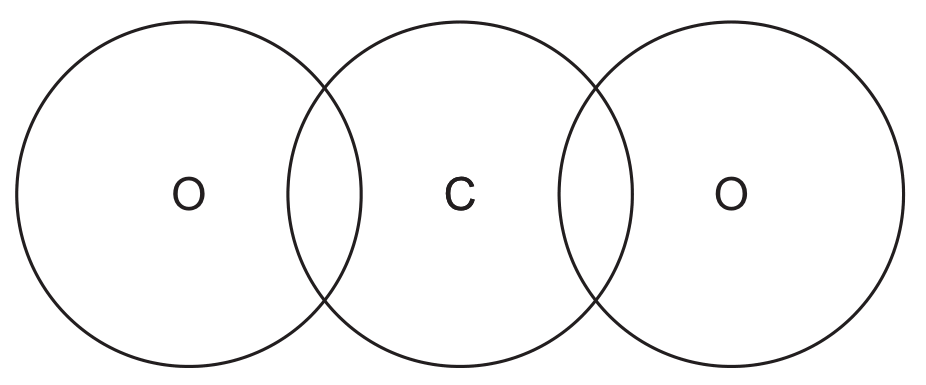
Complete the diagram to show the electron arrangement in a carbon dioxide molecule. Show the outer shell electrons only.
This question is about gases found in clean, dry air and gases found in polluted air.
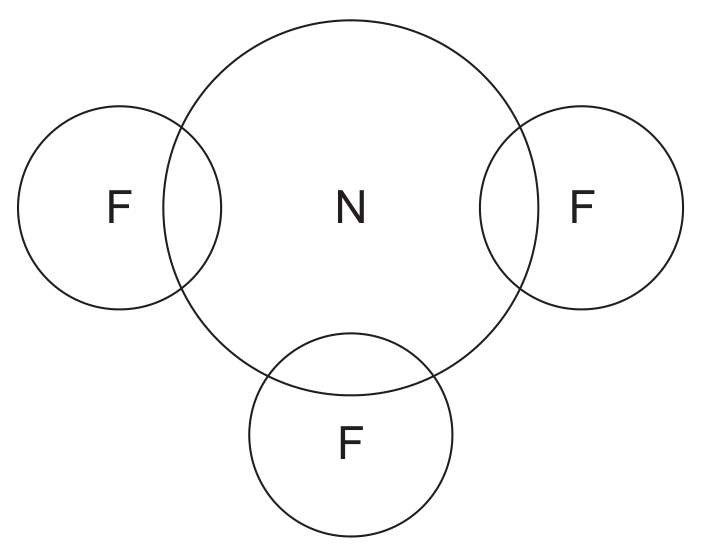
Complete the dot-and-cross diagram in Fig. 1.1 for a molecule of . Show outer shell electrons only.
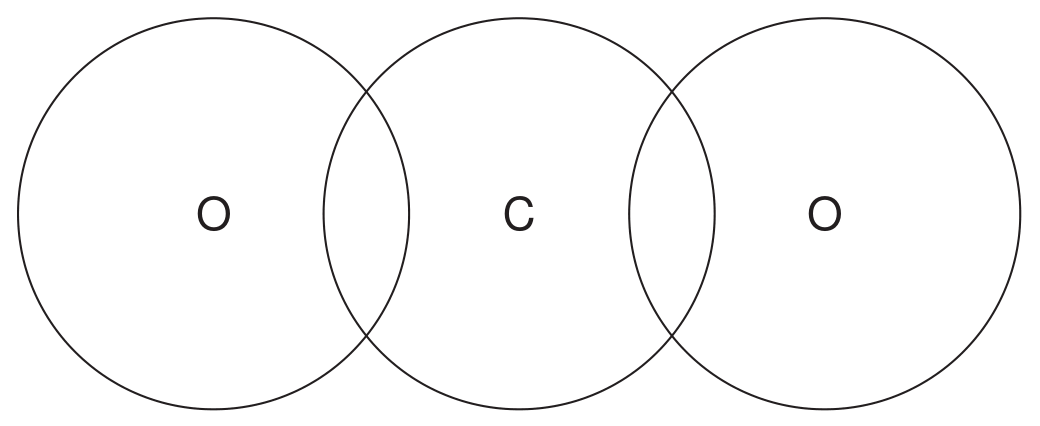
Fig. 1.1
Ammonia, , is a covalent molecule.
Which diagram shows the outer-shell electron arrangement in a molecule of ammonia?
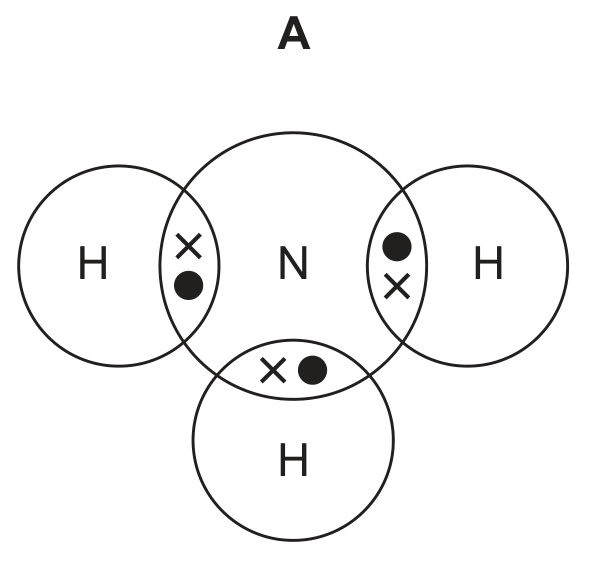
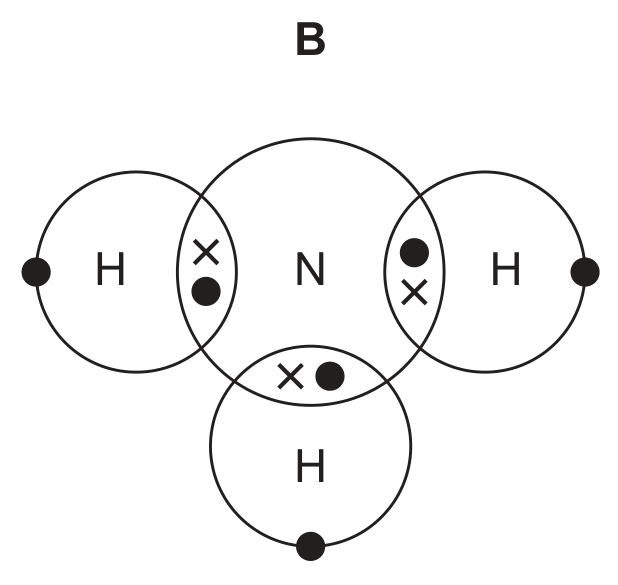
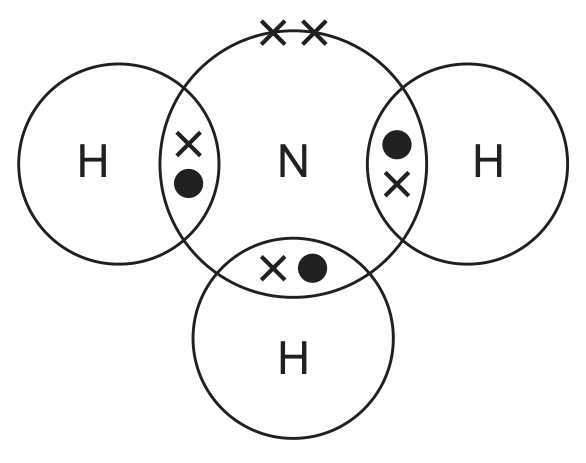
C
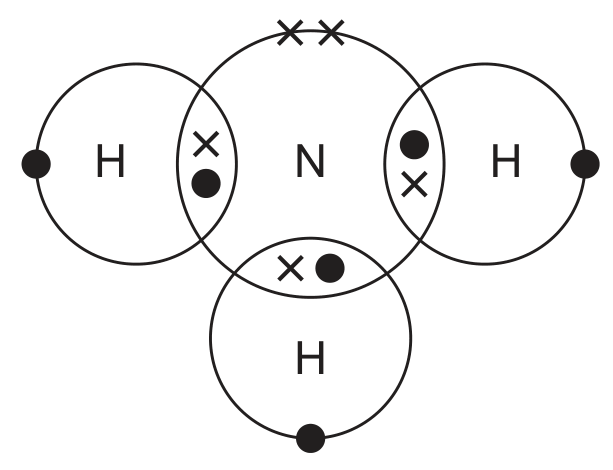
D
The table shows the melting points, boiling points and electrical conductivities of six substances, D, E, F, G, H and I.
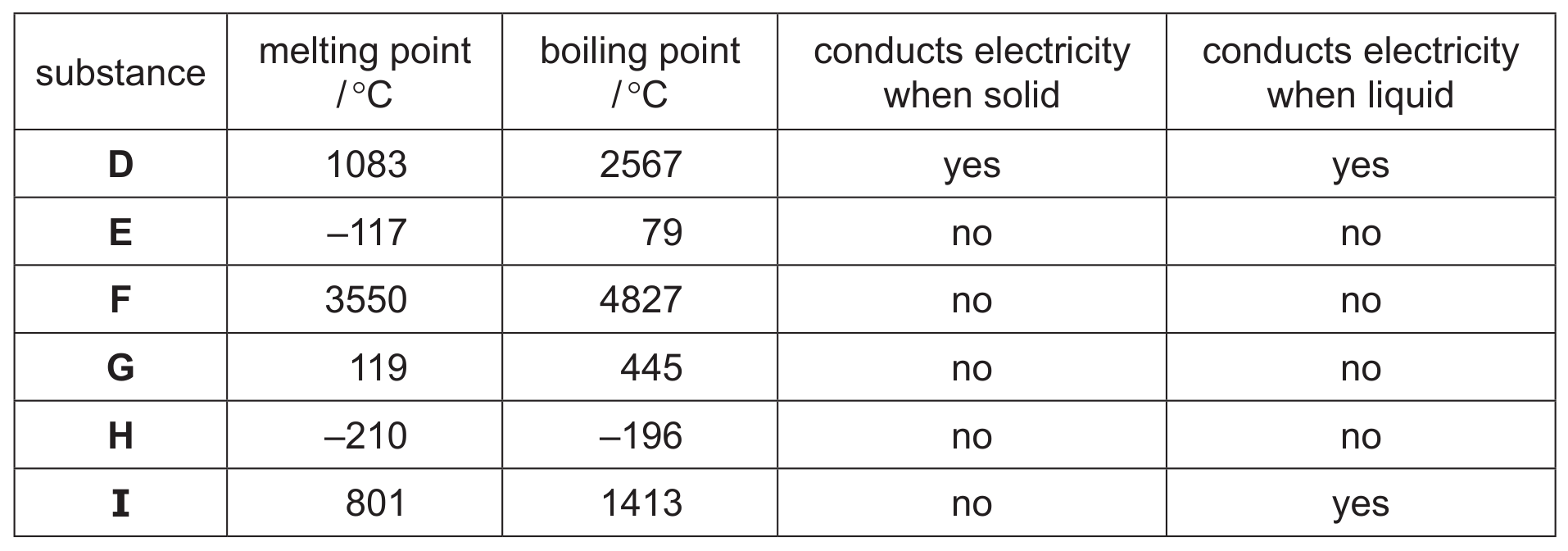
Identify the substance, D, E, F, G, H or I, which is:
a solid consisting of simple molecules at . ..... [1]
The table shows the melting points, boiling points and electrical conductivities of six substances D, E, F, G, H and I.
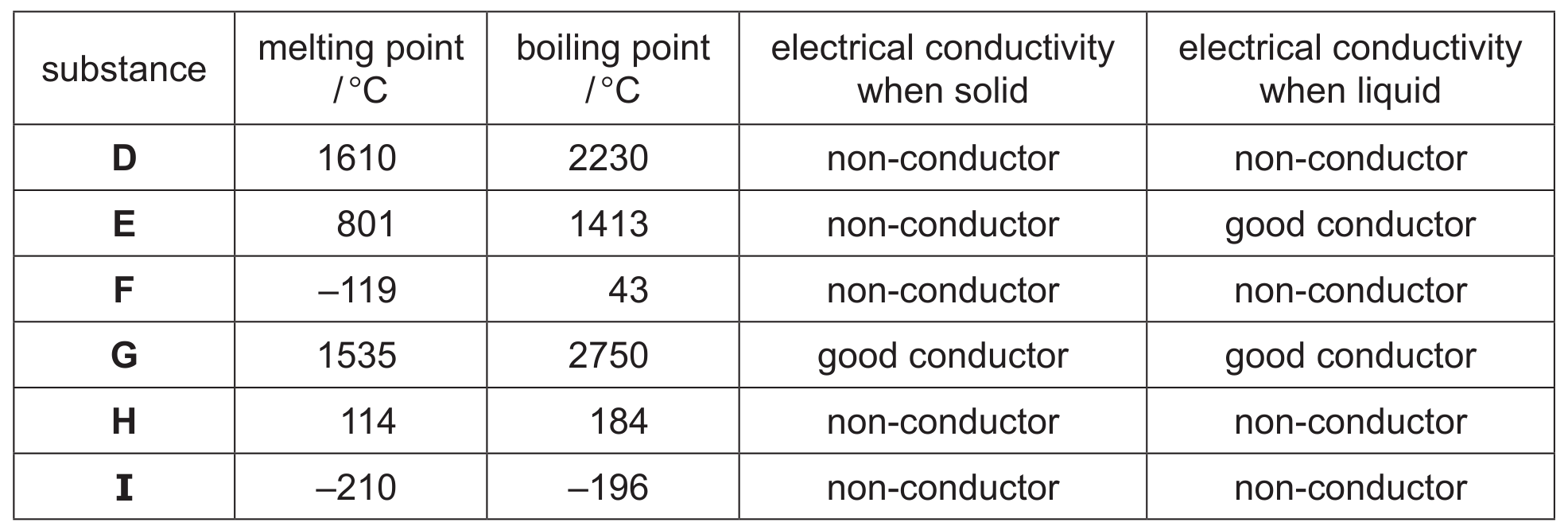
Choose substances from the table which match the following descriptions. Each substance may be used once, more than once or not at all.
Which three substances contain simple molecules?
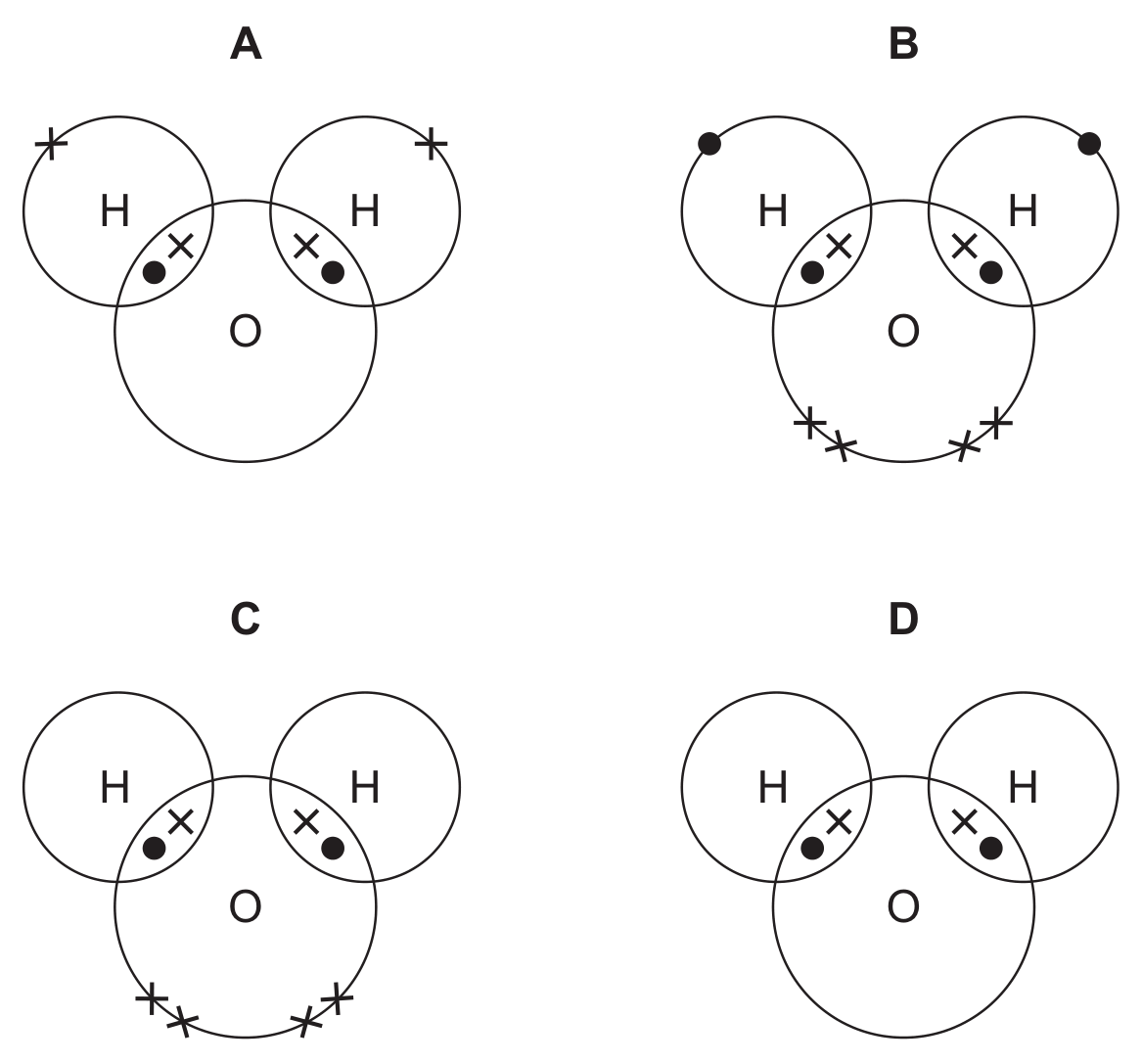
Which diagram shows the arrangement of the outer shell electrons in a molecule of water?
Which row describes the formation of single covalent bonds in methane?
both atoms gain a
noble gas electronic structure
both atoms have the same number
of electrons in their outer shell
both atoms gain a
noble gas electronic structure
both atoms have the same number
of electrons in their outer shell
The table shows the electronic structure of four atoms.
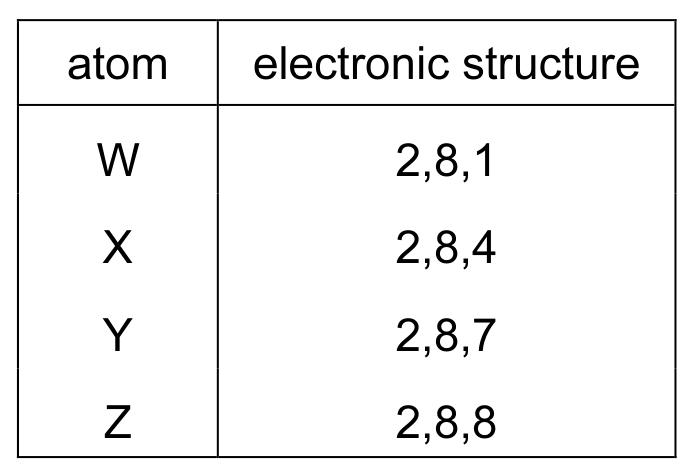
Which two atoms combine to form a covalent compound?
W and X
W and Y
X and Y
X and Z