EduNinja

IGCSE Chemistry Extended11.4 AlkanesTopic Practice

11.4 Alkanes

CAIE IGCSE Chemistry Extended 11.4 Alkanes question practice helps you revise this syllabus point with the course map in view. Use this page to focus on one topic, check the style of questions available, and connect each attempt back to the knowledge area it is testing.

EduNinja keeps Chemistry practice aligned to CAIE at Extended level, so you can move from topic review into exam-style question bank work without losing the syllabus structure. Start with a small set, mark the weak steps, then return to nearby topic links when a definition, graph, calculation, or explanation needs repair.

Question 1(f)

[Maximum number: 1]

Some symbol equations and word equations, A to J, are shown.

A H++OHH2O\mathrm{H}^{+}+\mathrm{OH}^{-} \rightarrow \mathrm{H}_{2} \mathrm{O}

B Cr3++3OHCr(OH)3\mathrm{Cr}^{3+}+3 \mathrm{OH}^{-} \rightarrow \mathrm{Cr}(\mathrm{OH})_{3}

C methane + chlorine → chloromethane + hydrogen chloride
D propene + bromine → 1,2-dibromopropane

E C10H22C8H18+C2H4\quad \mathrm{C}_{10} \mathrm{H}_{22} \rightarrow \mathrm{C}_{8} \mathrm{H}_{18}+\mathrm{C}_{2} \mathrm{H}_{4}

F chlorine + aqueous potassium bromide → bromine + aqueous potassium chloride
G methane + oxygen → carbon monoxide + water

H C2H5COOH+CH3OHC2H5COOCH3+H2O\mathrm{C}_{2} \mathrm{H}_{5} \mathrm{COOH}+\mathrm{CH}_{3} \mathrm{OH} \rightarrow \mathrm{C}_{2} \mathrm{H}_{5} \mathrm{COOCH}_{3}+\mathrm{H}_{2} \mathrm{O}

I hydrogen + oxygen → water

J 6CO2+6H2OC6H12O6+6O26 \mathrm{CO}_{2}+6 \mathrm{H}_{2} \mathrm{O} \rightarrow \mathrm{C}_{6} \mathrm{H}_{12} \mathrm{O}_{6}+6 \mathrm{O}_{2}

Use the equations to answer the questions that follow.
Each equation may be used once, more than once, or not at all.
Give the letter, A to J, for the equation which represents:

a substitution reaction. [1]
[Total: 6]

Question 2 starts on the next page.
Question 1(a)(iv)

[Maximum number: 1]

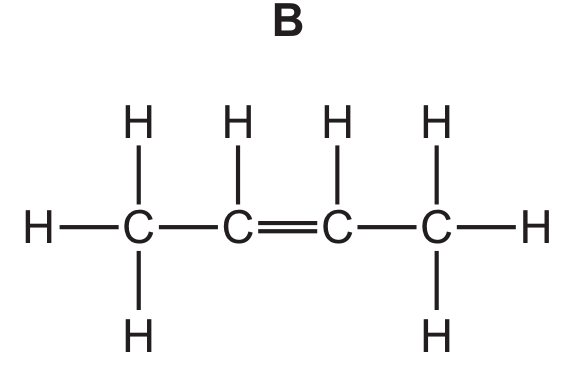
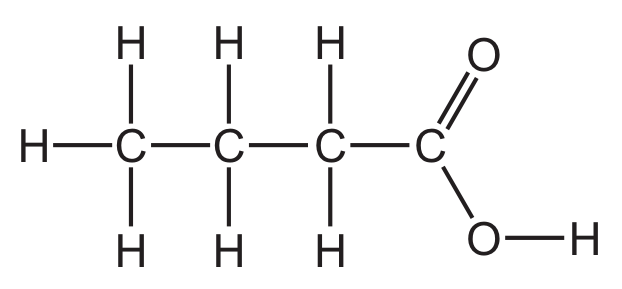
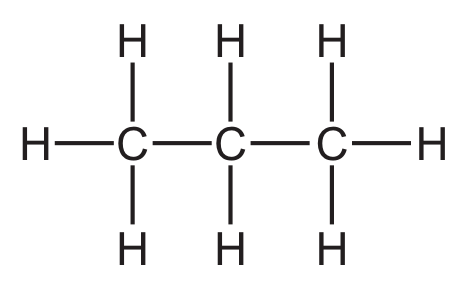
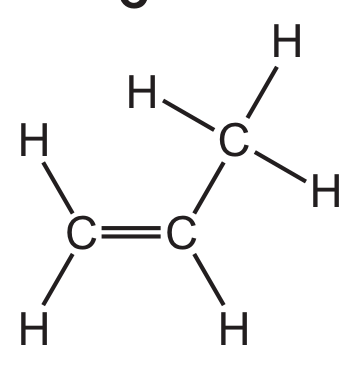
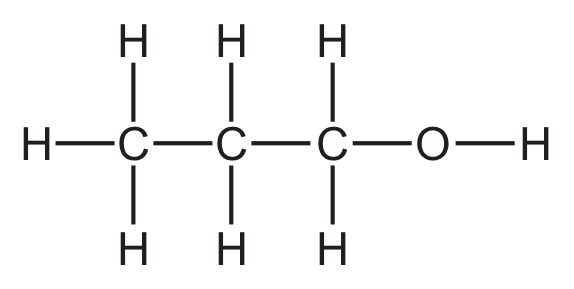
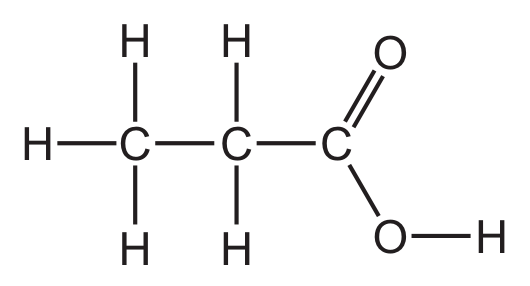
Five organic compounds have the following structures.
A
C
C
A
,

Question image

B
B

Question image
Question image
Question image

D

Question image

E

Question image

Which compound is a saturated hydrocarbon?

Question 1(c)(ii)

[Maximum number: 2]

Petroleum is a useful natural resource.

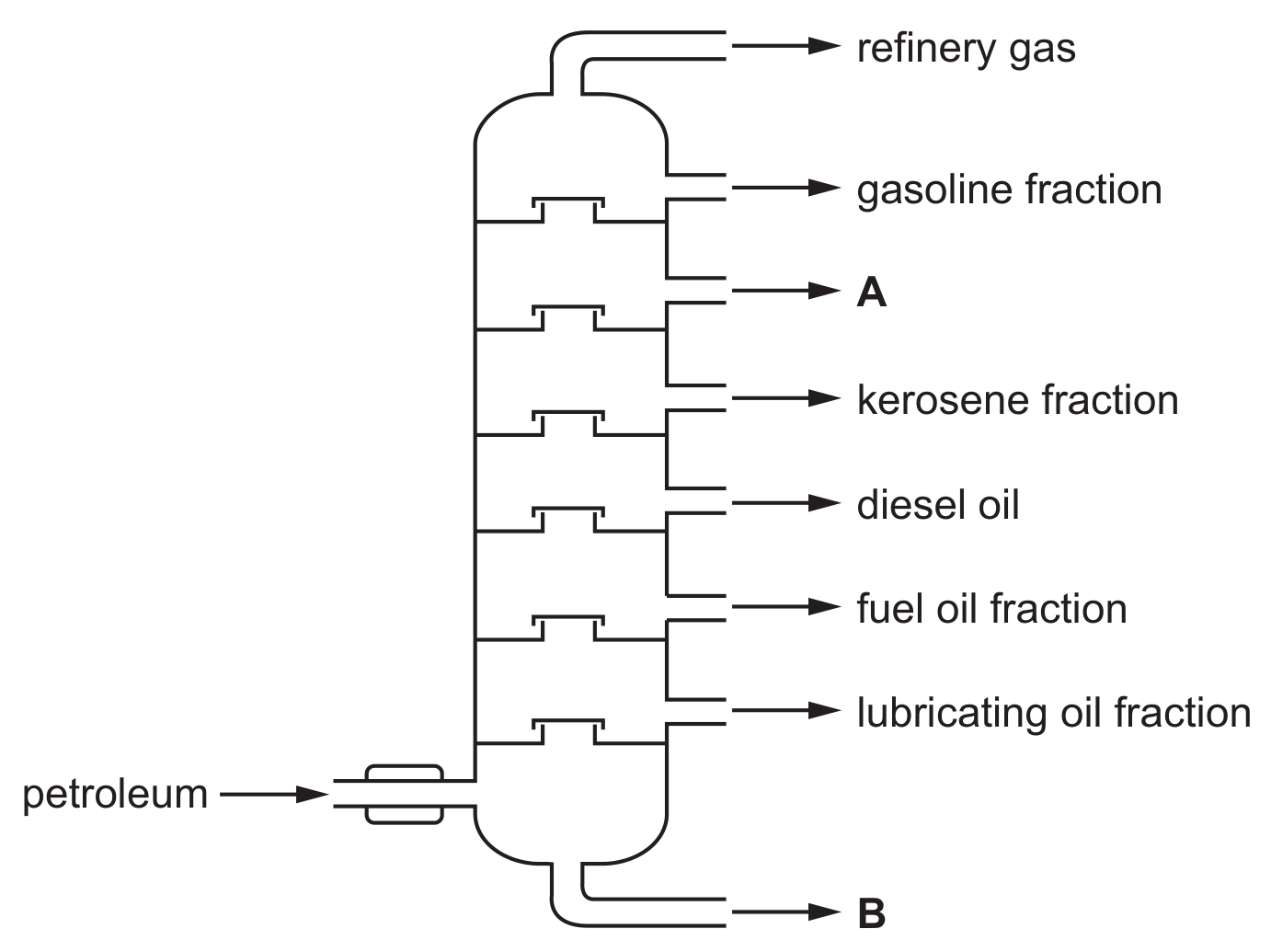
The diagram shows how petroleum can be separated into useful substances.

Question image

Refinery gas is a mixture of hydrocarbons.

One refinery gas is butane, C4H10\mathrm{C}_{4} \mathrm{H}_{10}.

Write the chemical equation for the complete combustion of butane.

Question 1(d)

[Maximum number: 1]

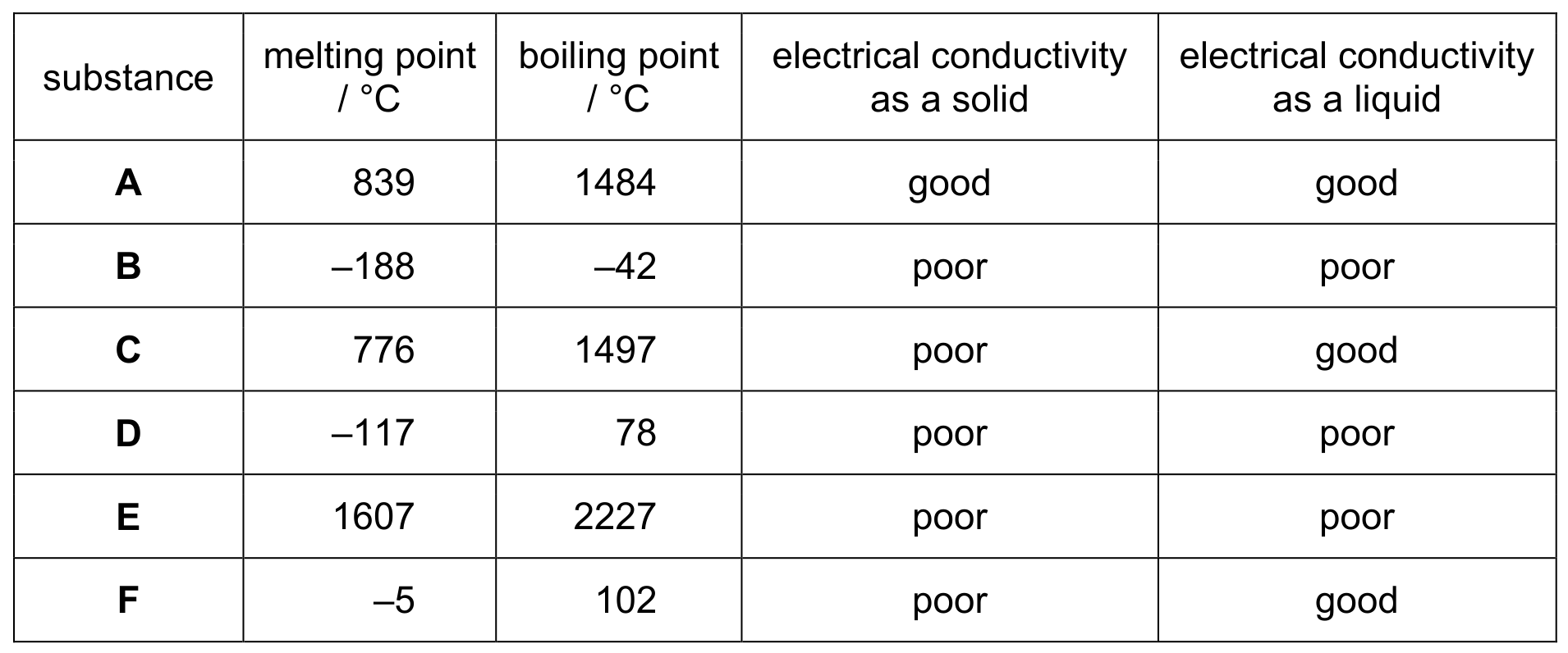
The following table gives information about six substances.

Table

Which substance could be propane?

Question 1(a)(iv)

[Maximum number: 1]

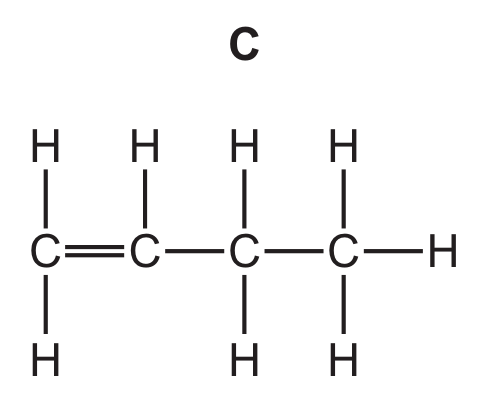
The structures of five organic compounds, A, B, C, D and E, are shown.
Answer the questions that follow.
Each letter may be used once, more than once or not at all.
A

Question image

B

Question image

c

Question image

D

Question image

E
E

Question image

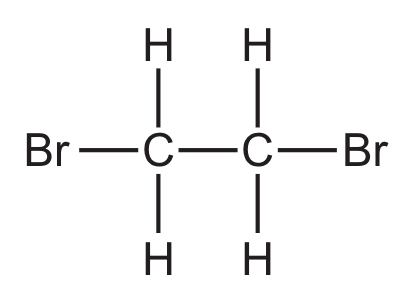
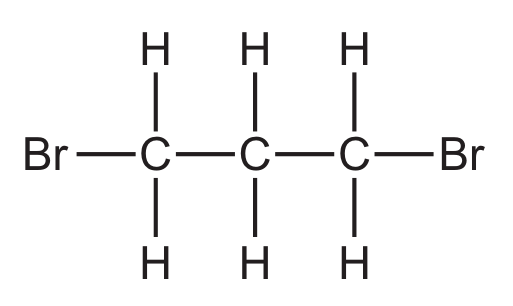
Give the letter of one compound that reacts with chlorine to form the compound shown.

Question image

Question 2(f)(ii)

[Maximum number: 2]

Silver has an atomic number of 47.

Members of one homologous series only react with chlorine in the presence of sunlight.

Name two products that form when the compound in (i) reacts with chlorine.

1

2

Question 15

[Maximum number: 1]

Which reaction is not affected by the presence of light?

A

a candle burning

B

methane reacting with chlorine

C

photosynthesis

D

silver bromide decomposing to form silver

Question 19

[Maximum number: 1]

Which reaction is a photochemical reaction?

A

addition of bromine to propene

B

esterification of ethanol and ethanoic acid

C

oxidation of ethanol

D

substitution of methane with chlorine

Question 5

[Maximum number: 3]

Chlorine, bromine and iodine are halogens.

Question 5(d)

(a)

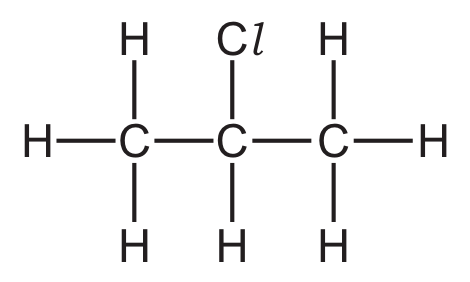
When one mole of chlorine, Cl2\mathrm{Cl}_{2}, reacts with one mole of propane, a mixture of two structural isomers is formed.

[ 3 ]

Question 5(d)(i)

(i)

What is the name of the type of reaction which takes place between chlorine and propane?

[ 1 ]

Question 5(d)(iii)

(ii)

Draw the structure of two structural isomers formed when one mole of chlorine reacts with one mole of propane.

[ 2 ]

Question 4

[Maximum number: 4]

Gasoline is used as a fuel for cars. It is a mixture of hydrocarbons.

Question 4(b)

(a)

One of the compounds in gasoline is heptane, C7H16\mathrm{C}_{7} \mathrm{H}_{16}. Heptane is a saturated hydrocarbon.

[ 1 ]

Question 4(b)(ii)

(i)

To which homologous series does heptane belong?

[ 1 ]

Question 4(d)

(b)

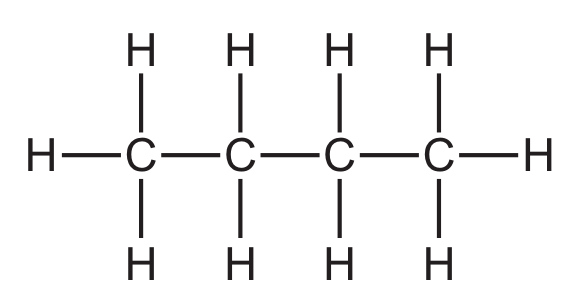
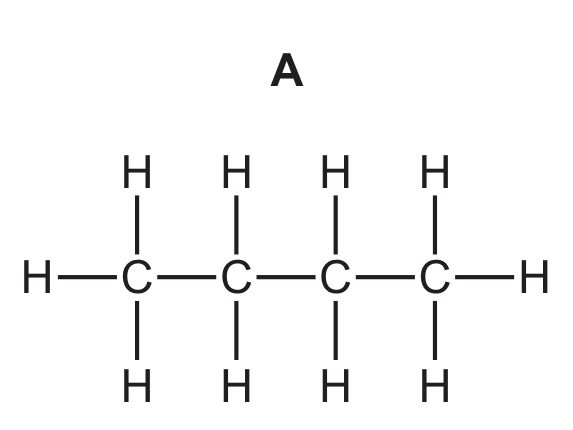
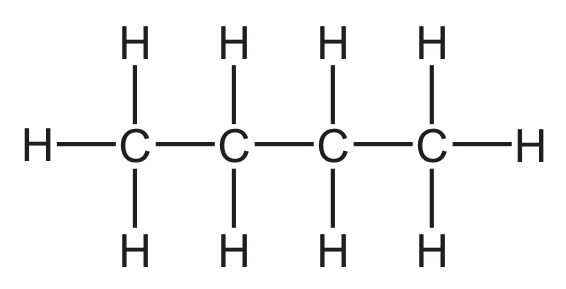
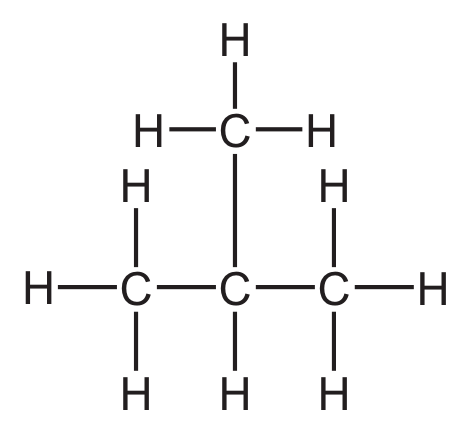
The formula C4H10\mathrm{C}_{4} \mathrm{H}_{10} represents two structural isomers, A and B.

A

A

B

B

[ 3 ]

Question 4(d)(iii)

(i)

Isomer B reacts with chlorine in a substitution reaction.

Give the conditions required for the reaction to occur and draw the structures of two possible products, one of which is organic and one of which is not organic.
conditions
structures of products

[ 3 ]
0 selected