Question 1(d)(ii)
[Maximum number: 1]
This question is about states of matter.
A solution is a mixture of a solute and a solvent.
Name the type of reaction when two solutions react to form an insoluble substance.
 EduNinja
CAIE IGCSE Chemistry Extended 7.3 Preparation of salts question practice helps you revise this syllabus point with the course map in view. Use this page to focus on one topic, check the style of questions available, and connect each attempt back to the knowledge area it is testing.
EduNinja keeps Chemistry practice aligned to CAIE at Extended level, so you can move from topic review into exam-style question bank work without losing the syllabus structure. Start with a small set, mark the weak steps, then return to nearby topic links when a definition, graph, calculation, or explanation needs repair.
This question is about states of matter.
A solution is a mixture of a solute and a solvent.
Name the type of reaction when two solutions react to form an insoluble substance.
Some symbol equations and word equations, A to J, are shown.
A
B
C ethane + chlorine → chloroethane + hydrogen chloride
D
E ethene + steam → ethanol
F chlorine + aqueous potassium iodide → iodine + aqueous potassium chloride
G
H ethanoic acid + ethanol → ethyl ethanoate + water
I calcium carbonate → calcium oxide + carbon dioxide
J
Use the equations to answer the questions that follow.
Each equation may be used once, more than once, or not at all.
Give the letter, A to J, for the equation that represents:
a precipitation reaction [1]
Some symbol equations and word equations, A to J, are shown.
A
B
C methane + chlorine → chloromethane + hydrogen chloride
D propene + bromine → 1,2-dibromopropane
E
F chlorine + aqueous potassium bromide → bromine + aqueous potassium chloride
G methane + oxygen → carbon monoxide + water
H
I hydrogen + oxygen → water
J
Use the equations to answer the questions that follow.
Each equation may be used once, more than once, or not at all.
Give the letter, A to J, for the equation which represents:
a precipitation reaction [1]
Lead(II) iodide is insoluble in water.
Lead(II) iodide is made by adding aqueous lead(II) nitrate to aqueous potassium iodide.
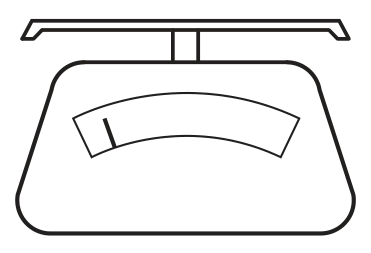
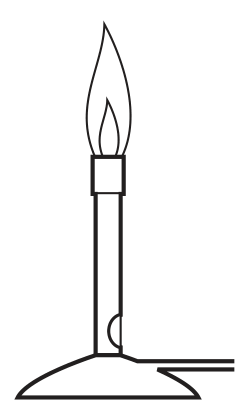
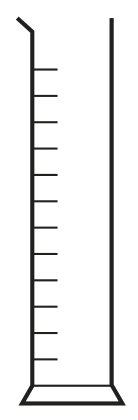
Which pieces of apparatus are needed to obtain solid lead(II) iodide from of aqueous lead(II) nitrate?

1
2
3

4
5
1, 2 and 4
1, 3 and 5
1, 4 and 5
2, 4 and 5
The equation for the reaction between barium chloride and dilute sulfuric acid is shown.
Which row shows the state symbols for this equation?
2 HCl
The equation for the reaction between barium chloride and dilute sulfuric acid is shown.
Which row shows the state symbols for this equation?
2 HCl
Sodium is a reactive metal.
When NaOH(aq) is added to aqueous iron(III) chloride, , a solid product is formed.
Name the type of reaction where a solid is formed from two solutions.
Name this solid product.
Cobalt and copper are transition elements.
Both copper and cobalt can form coloured compounds. Some of these compounds contain water of crystallisation.
Define the term water of crystallisation.
State the colour and formula of hydrated cobalt(II) chloride crystals.
colour
formula
Potassium is a Group I element.
Aqueous potassium hydroxide reacts with a dilute acid to produce aqueous potassium chloride, KCl(aq), which is a salt.
Name the dilute acid used.
Soluble salts can be made by adding a metal carbonate to a dilute acid.
A student wanted to make hydrated iron(II) sulfate crystals, , by adding excess iron(II) carbonate to dilute sulfuric acid. The student followed the procedure shown.
step 1 Add dilute sulfuric acid to a beaker.
step 2 Add small amounts of iron(II) carbonate to the dilute sulfuric acid in the beaker until the iron(II) carbonate is in excess.
step 3 Filter the mixture formed in step 2.
step 4 Heat the filtrate until it is a saturated solution. Allow to cool.
step 5 Once cold, pour away the remaining solution. Dry the crystals between filter papers.
Why must the iron(II) carbonate be added in excess in step 2?
State two observations in step 2 that would show that iron(II) carbonate was in excess. 1
2
Describe what should be done during step 3 to ensure there is a maximum yield of crystals.
Name a different compound that could be used instead of iron(II) carbonate to produce hydrated iron(II) sulfate crystals from dilute sulfuric acid.
Insoluble salts can be made by mixing solutions of two soluble salts.
A student followed the procedure shown to make silver bromide, an insoluble salt.
step 1 Add aqueous silver nitrate to a beaker. Then add aqueous potassium bromide and stir.
step 2 Filter the mixture formed in step 1.
step 3 Dry the residue.
State the term used to describe this method of making salts.
Give the observation the student would make during step 1.