Question 3
[Maximum number: 1]
The Group I element potassium forms an ionic bond with the Group VII element fluorine.
Which two ions are produced?
A
and
B
and
C
and
D
and
 EduNinja
• Describe formation of ionic bonds between elements from Group I and Group VII, including the use of dot-and-cross diagrams
The Group I element potassium forms an ionic bond with the Group VII element fluorine.
Which two ions are produced?
and
and
and
and
Lithium reacts with fluorine to form the compound lithium fluoride.
Which statement about this reaction is correct?
Each fluorine atom gains one electron.
Each fluorine atom gains two or more electrons.
Each fluorine atom loses one electron.
Each fluorine atom loses two or more electrons.
The electronic structures of two atoms, P and Q, are shown.
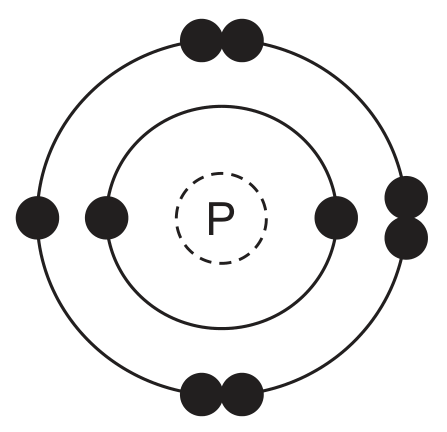
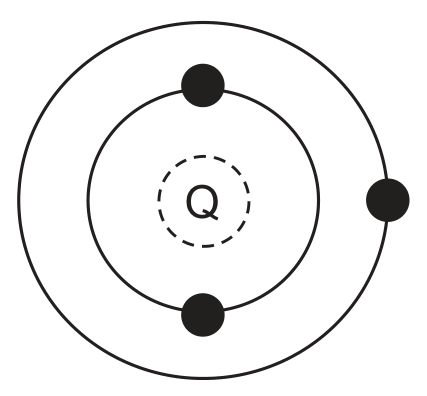
P and Q combine together to form a compound.
What is the type of bonding in the compound and what is the formula of the compound?
type of bonding
formula
ionic
PQ
ionic
covalent
covalent
PQ
Lithium and fluorine react to form lithium fluoride.
A student writes three statements about the reaction.
1 Lithium atoms lose an electron when they react.
2 Each fluoride ion has one more electron than a fluorine atom.
3 Lithium fluoride is a mixture of elements.
Which statements are correct?
1 and 2 only
1 and 3 only
2 and 3 only
1, 2 and 3
The arrangements of the electrons in two ions formed from elements X and Y are shown.
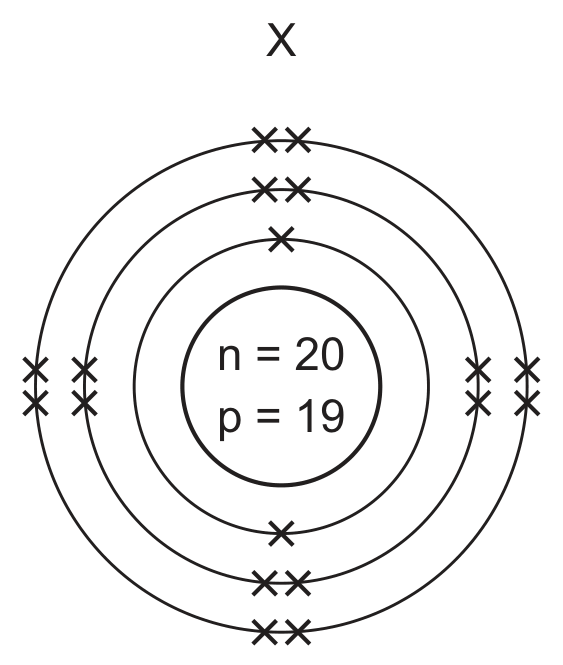
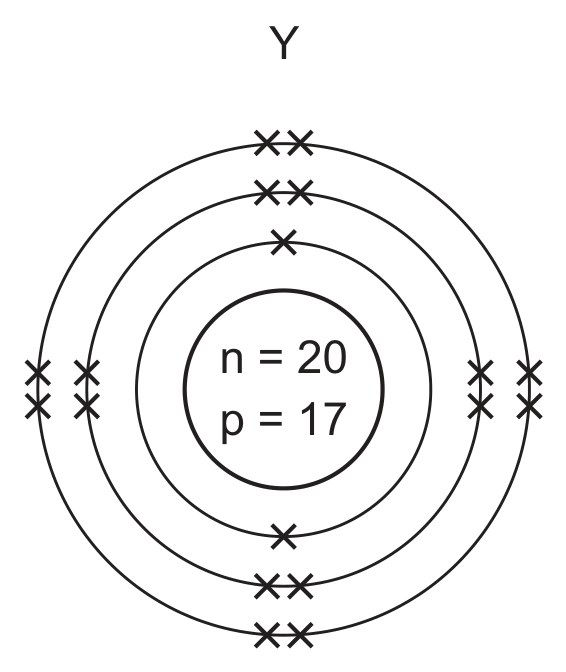
Which equation represents the reaction between elements X and Y ?
A
B
C
D
The arrangements of the electrons in two ions formed from elements X and Y are shown.
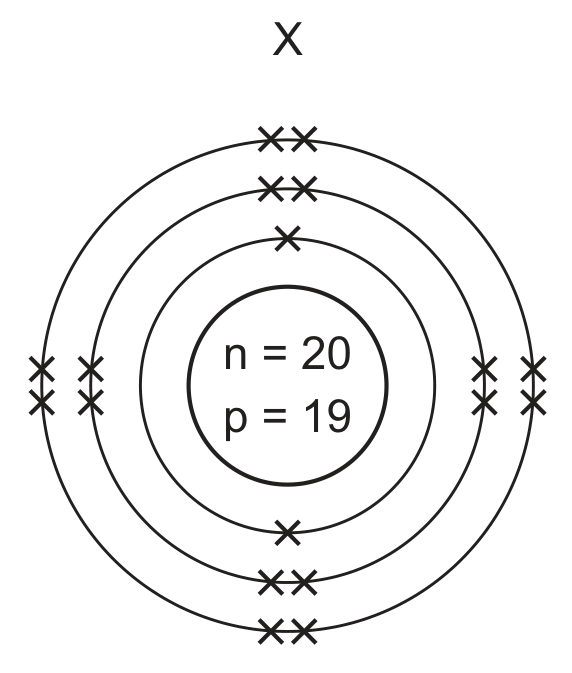
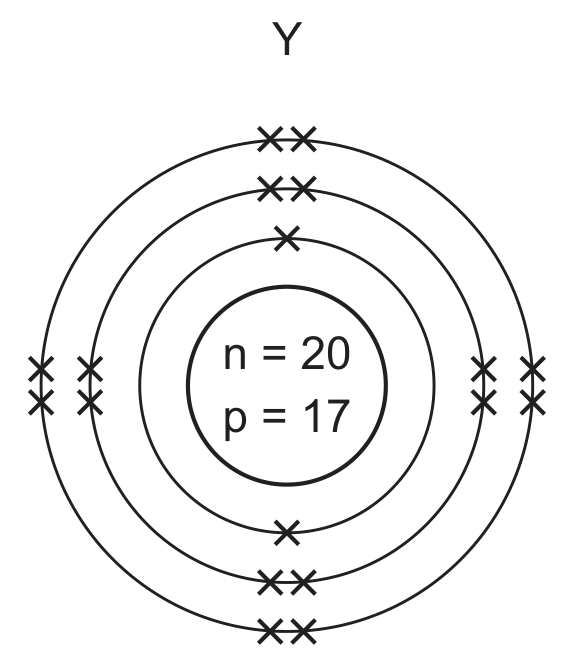
Which equation represents the reaction between elements X and Y ?
A Group I element combines with a Group VII element and forms an ionic bond.
Which row shows how the electronic structures change?
before
bonding
after
bonding
before
bonding
after
bonding
2,8,1
2,8,2
2,7
2,6
2,8
2,7
2,8
2,8,1
2,8,1
2,8
2,7
2,8
2,8
2,8,1
2,8
2,7
Chemical compounds formed from a Group I element and a Group VII element contain ionic bonds.
How are the ionic bonds formed?
A Electrons are transferred from Group VII atoms to Group I atoms.
B Electrons are shared between Group I atoms and Group VII atoms.
C Electrons are lost by Group I atoms and Group VII atoms.
D Electrons are transferred from Group I atoms to Group VII atoms.
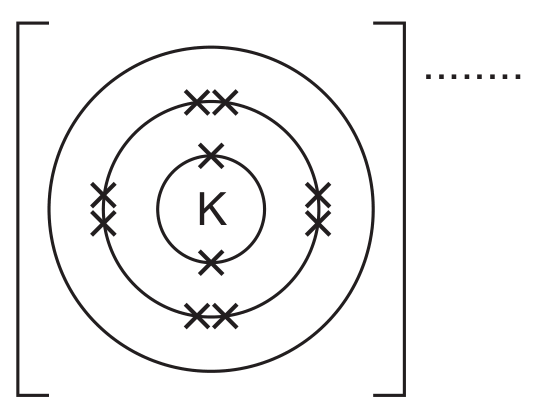
Potassium reacts with chlorine to form potassium chloride, KCl.
Potassium chloride is an ionic compound.
Complete the diagram to show the electron arrangement in the outer shells of the ions present in potassium chloride.
Give the charges on both ions.
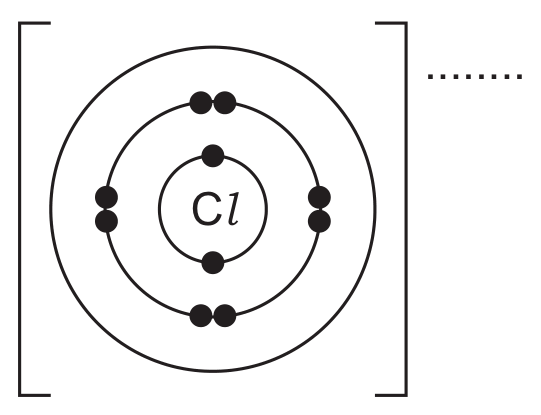
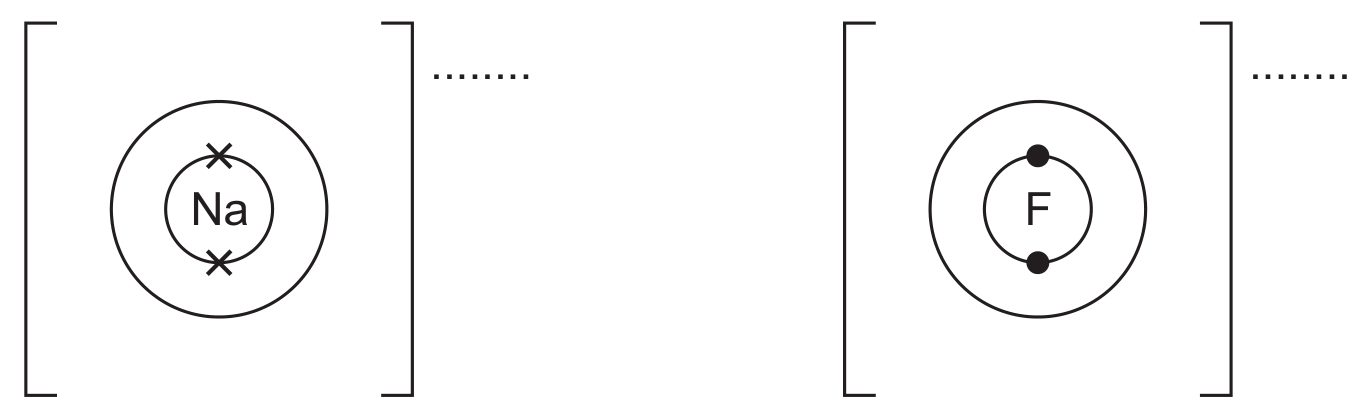
Sodium reacts with fluorine to form sodium fluoride, NaF.
Sodium fluoride is an ionic compound.
Complete the diagram to show the electron arrangement in the outer shells of the ions present in sodium fluoride.
Give the charges on both ions.