IB Physics SL B.5.13 Series and Parallel Circuits

Practise reducing resistor networks and using shared current or potential difference to calculate branch values, power changes and the effect of switches or variable components.

Syllabus
First assessment 2025
Objective
Level
SL

Exam points

  • add series resistances and use reciprocal addition for parallel branches before simplifying the network
  • use equal series current and equal parallel potential difference to determine branch quantities
  • predict how opening, closing or adjusting a branch changes total resistance, current and component power

B.5.13—Series and parallel circuits question 1

[Maximum number: 4]

This question is in two parts. Part 1 is about a thermistor circuit. Part 2 is about vibrations and waves.
Part 1 Thermistor circuit
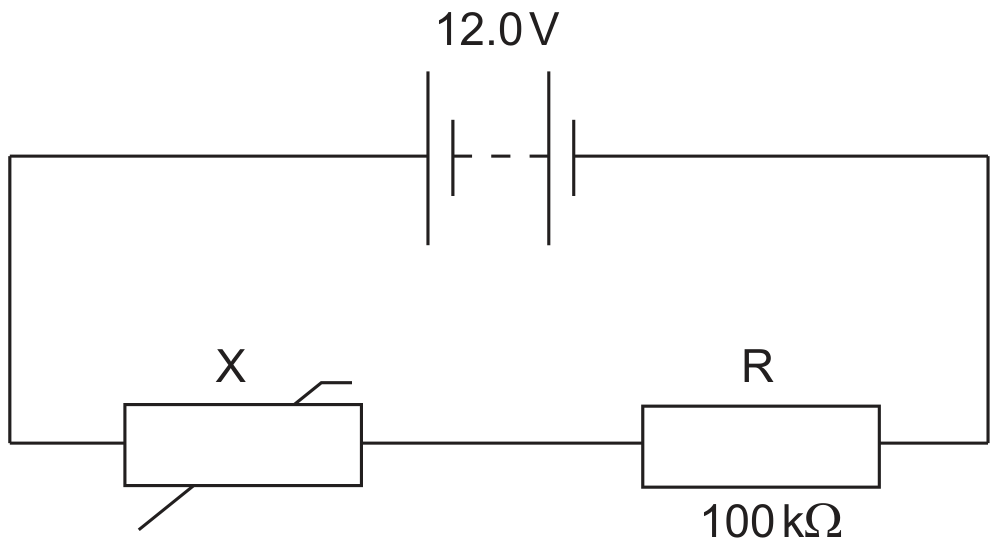
The circuit shows a negative temperature coefficient (NTC) thermistor X and a 100kΩ100 \mathrm{k} \Omega fixed resistor R connected across a battery.

Figure for Question B.5.13—Series and parallel circuits question 1 — IB Physics SL

The battery has an electromotive force (emf) of 12.0 V and negligible internal resistance.

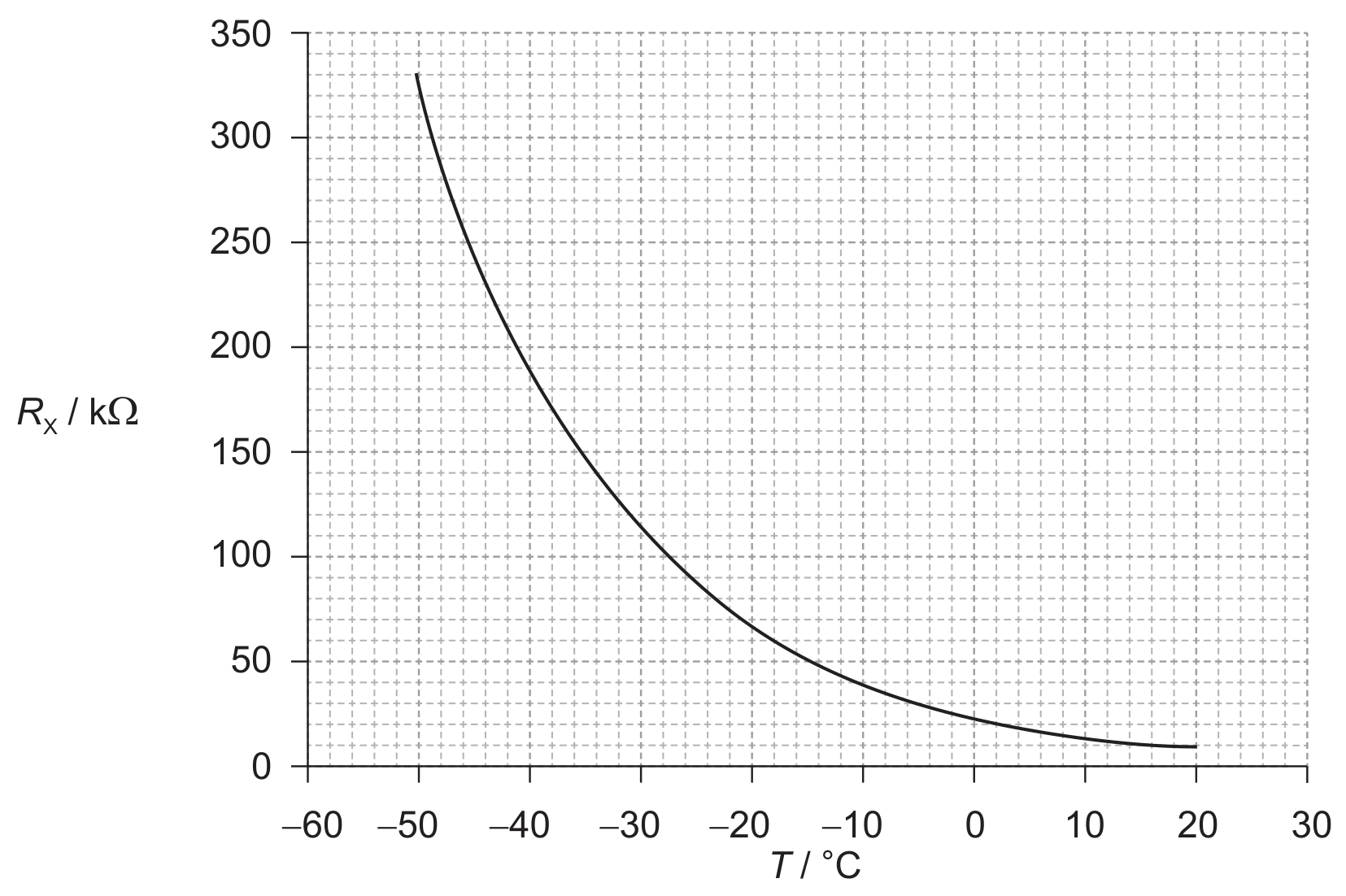
The graph below shows the variation with temperature T of the resistance RxR_{\mathrm{x}} of the thermistor.

Figure for Question B.5.13—Series and parallel circuits question 1 — IB Physics SL

Determine the temperature of X when the potential difference across R is 4.5 V .

All question bank results loaded