Question 7
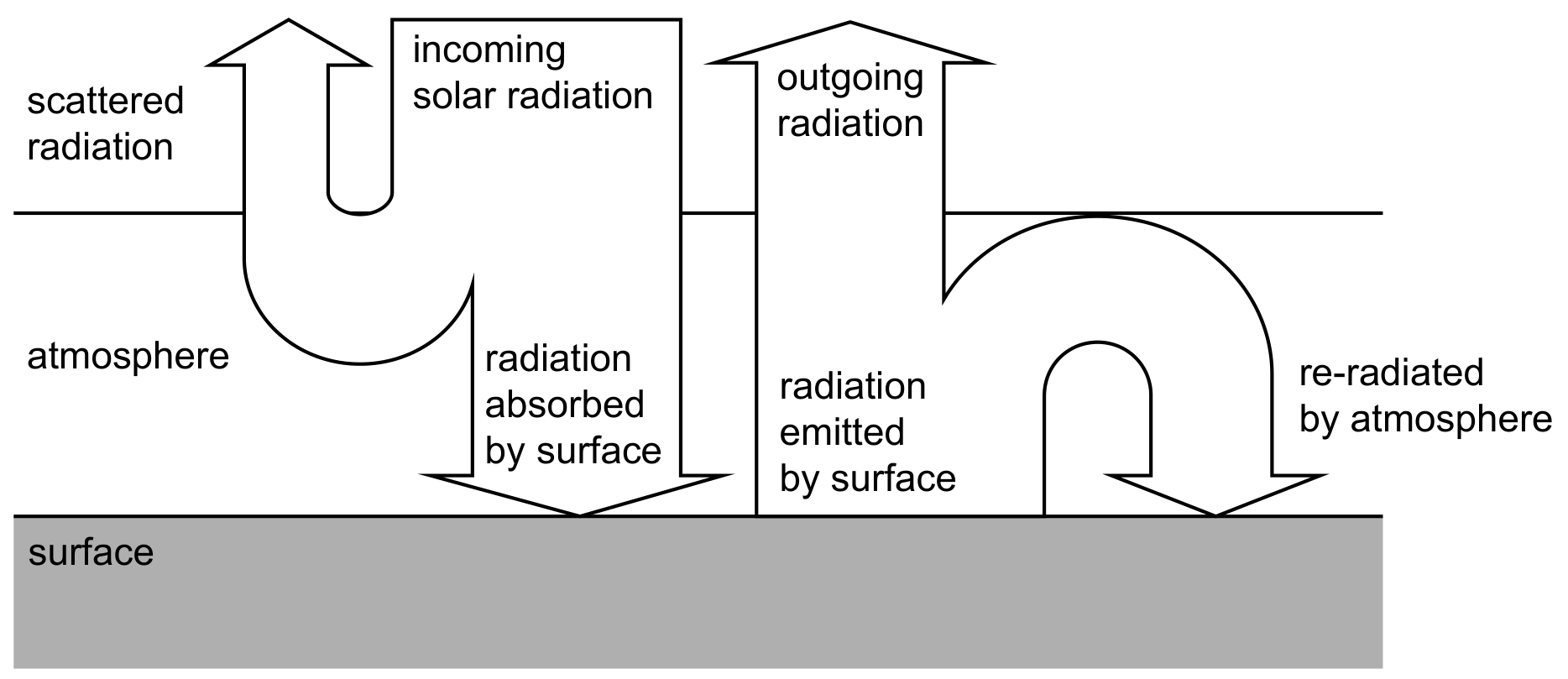
The albedo of the atmosphere above a small region on the Earth's surface is 0.25 . The solar constant is S.
What is the incoming intensity of solar radiation incident on this region when the Sun is directly overhead?
S
EduNinjaThe albedo of the atmosphere above a small region on the Earth's surface is 0.25 . The solar constant is S.
What is the incoming intensity of solar radiation incident on this region when the Sun is directly overhead?
163S
4S
43S
S
The energy balance model of a planet's climate is shown. The reflected and radiated intensities are given in terms of the incident incoming intensity I.

What is the radiated intensity from the surface of the planet?
0.40 I
0.50 I
0.70 I
1.10 I
What is a primary cause of the enhanced greenhouse effect?
Melting of ice at Earth's poles
Increases in volcanic activity
Deforestation of rain forests
Burning of fossil fuels
A student makes three statements about Earth's albedo.
I. It varies daily.
II. It depends on latitude.
III. It depends on cloud formation.
Which of the statements are correct?
I and II only
I and III only
II and III only
I, II and III
Which process involving gas molecules in the Earth's atmosphere is the main cause of the greenhouse effect?
Reflection of incoming solar radiation
Absorption and re-radiation of incoming solar radiation
Reflection of outgoing infrared radiation
Absorption and re-radiation of outgoing infrared radiation
The equation in (a) leads to the following expression which can be used to predict the Earth's average surface temperature T.
Calculate the predicted temperature of the Earth.
This question is about the use of energy resources.
Energy resources such as La Rance tidal power station could replace the use of fossil fuels. This may result in an increase in the average albedo of Earth.
State two reasons why the albedo of Earth must be given as an average value.
1.
2.
Suggest, with reference to the enhanced greenhouse effect, why the reduction in the use of fossil fuels could lead to an increase in the average albedo of Earth.
This question is about energy sources.
A small island is situated in the Arctic. The islanders require an electricity supply but have no fossil fuels on the island. It is suggested that wind generators should be used in combination with power stations using either oil or nuclear fuel.
The emissions from the oil-fired power station in (c) are likely to increase global warming by the enhanced greenhouse effect.
State what is meant by the enhanced greenhouse effect.
Outline the mechanism by which greenhouse gases contribute to global warming.
This question is in two parts. Part 1 is about renewable energy. Part 2 is about nuclear energy and radioactivity.
A small coastal community decides to use a wind farm consisting of five identical wind turbines to generate part of its energy. At the proposed site, the average wind speed is 8.5 m s−1 and the density of air is 1.3 kg m−3. The maximum power required from the wind farm is 0.75 MW . Each turbine has an efficiency of 30 %.
Currently, a nearby coal-fired power station generates energy for the community. Less coal will be burnt at the power station if the wind farm is constructed.
Suggest the likely effect on the Earth's temperature of a reduction in the concentration of atmospheric greenhouse gases.
The graph shows the variation of binding energy per nucleon with nucleon number. The position for uranium-235 (U-235) is shown.

This question is in two parts. Part 1 is about solar radiation and the greenhouse effect. Part 2 is about a mass on a spring.
Part 1 Solar radiation and the greenhouse effect
The following data are available.

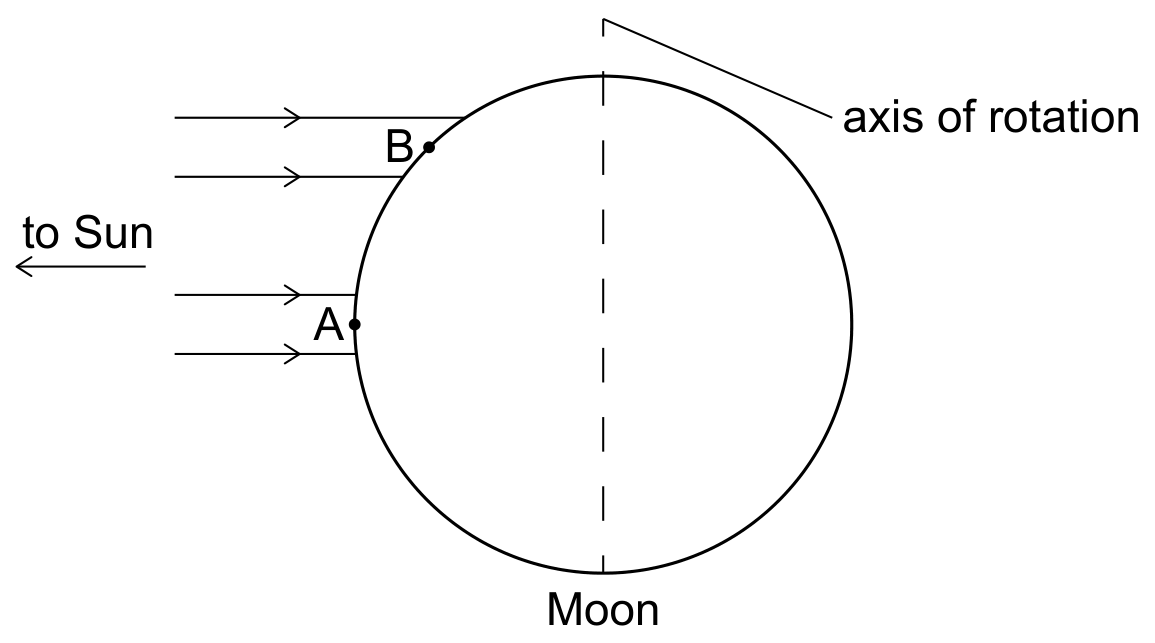
State two reasons why the solar power incident per unit area at a point on the surface of the Earth is likely to be different from your answer in (c).
1 :
2:
Explain why the actual surface temperature of the Earth is greater than the value in (e).
Outline why the burning of fossil fuels may lead to an increase in the average surface temperature of the Earth.
Part 2 A mass on a spring
An object is placed on a frictionless surface and attached to a light horizontal spring.

The other end of the spring is attached to a stationary point P . Air resistance is negligible. The equilibrium position is at O . The object is moved to position Y and released.