IB Physics SL A: Space, Time and Motion Question Bank

Practise modelling translational, rotational and relativistic motion through kinematics, forces, energy, momentum, rigid-body mechanics and spacetime calculations.

Syllabus
First assessment 2025
Topic
Level
SL

A. Space, time and motion question 1

[Maximum number: 7]

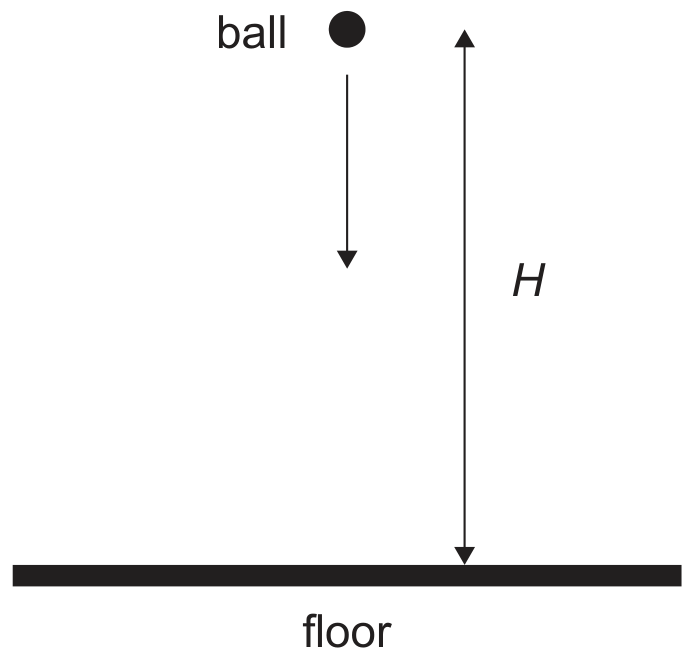
A ball of mass 0.250 kg is released from rest at time t=0, from a height H above a horizontal floor.

Figure for Question A. Space, time and motion question 1 — IB Physics SL

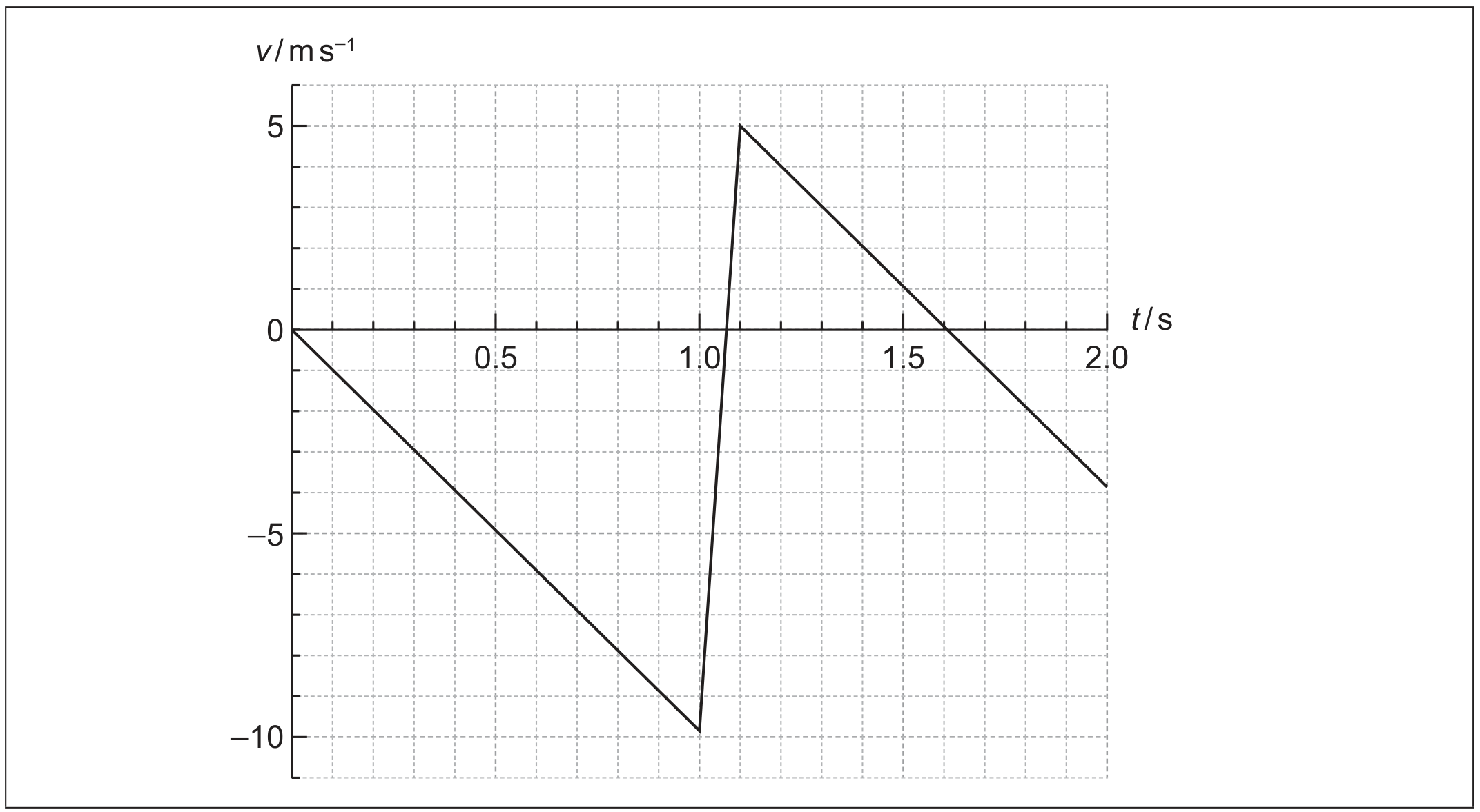
The graph shows the variation with time t of the velocity v of the ball. Air resistance is negligible. Take g=9.80 ms2g=-9.80 \mathrm{~ms}^{-2}. The ball reaches the floor after 1.0 s .

Figure for Question A. Space, time and motion question 1 — IB Physics SL

Question (a)

(a)

Label the time and velocity graph, using the letter M , the point where the ball reaches the maximum rebound height.

[ 1 ]

Question (b)

(b)

State the acceleration of the ball at the maximum rebound height.

[ 1 ]

Question (c)

(c)

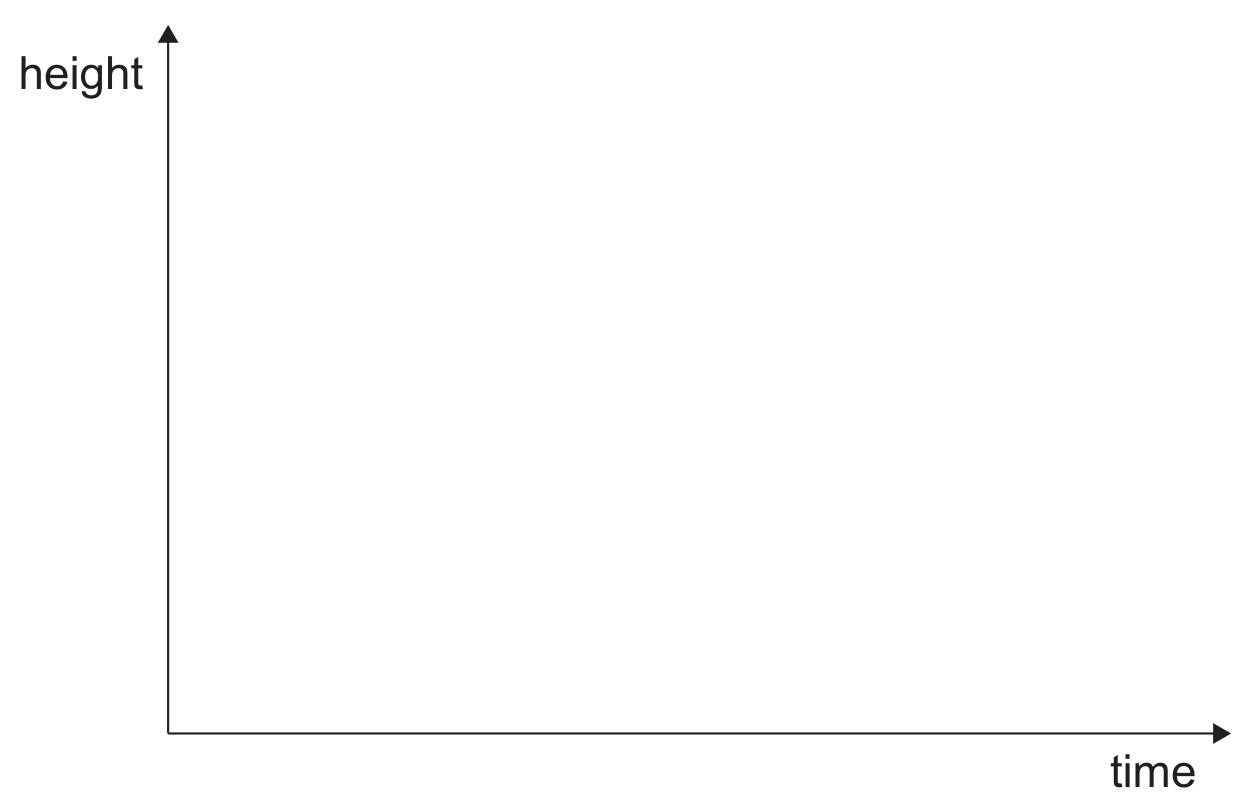
Draw, on the axes, a graph to show the variation with time of the height of the ball from the instant it rebounds from the floor until the instant it reaches the maximum rebound height. No numbers are required on the axes.

Figure for Question (c) — IB Physics SL
[ 1 ]

Question (d)

(d)

Determine the average force exerted on the floor by the ball.

[ 3 ]

Question (e)

(e)

Suggest why the momentum of the ball was not conserved during the collision with the floor.

[ 1 ]

A. Space, time and motion question 2

[Maximum number: 6]

Question (a)

(a)

B3. This question is in two parts. Part 1 is about a collision. Part 2 is about electric current and resistance.
Part 1 A collision
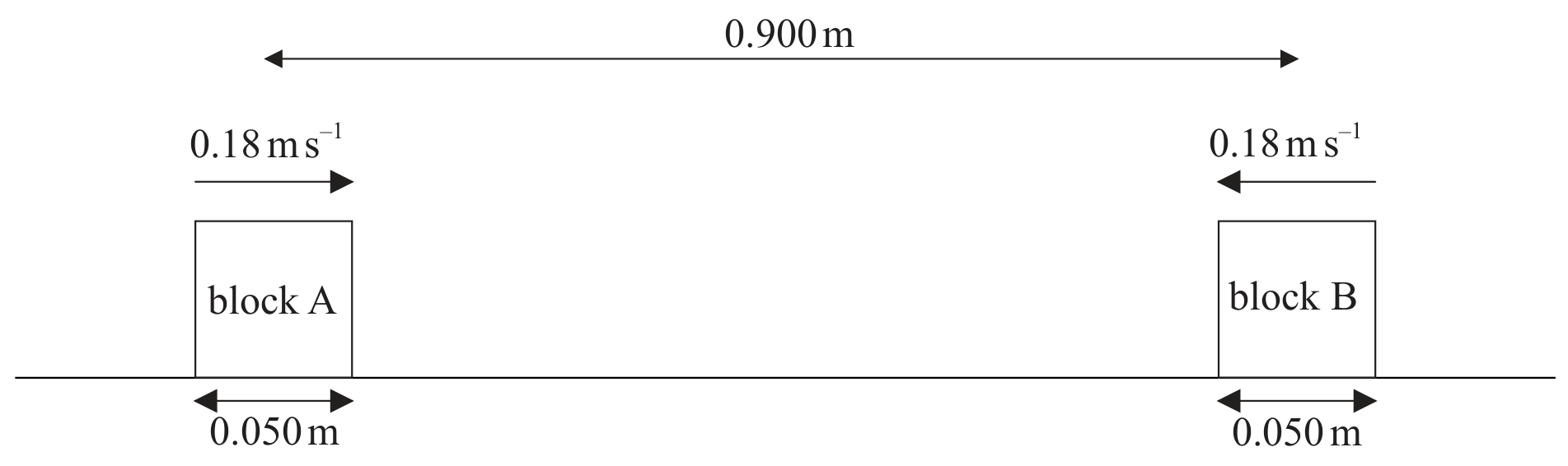
Two identical blocks of mass 0.17 kg and length 0.050 m are travelling towards each other along a straight line through their centres as shown below. Assume that the surface is frictionless.

Figure for Question (a) — IB Physics SL

The initial distance between the centres of the blocks is 0.900 m and both blocks are moving at a speed of 0.18 m s10.18 \mathrm{~m} \mathrm{~s}^{-1} relative to the surface.

[ 6 ]

Question (i)

(i)

As a result of the collision, the blocks reverse their direction of motion and travel at the same speed as each other. During the collision, 20 % of the kinetic energy of the blocks is given off as thermal energy to the surroundings.

[ 2 ]

Question (i)

(i)

State and explain whether the collision is elastic or inelastic.

[ 2 ]

Question (ii)

(ii)

State Newton's third law of motion.

[ 1 ]

Question (iii)

(iii)

During the collision of the blocks, the magnitude of the force that block A exerts on block B is FABF_{\mathrm{AB}} and the magnitude of the force that block B exerts on block A is FBAF_{\mathrm{BA}}. On the diagram below, draw labelled arrows to represent the magnitude and direction of the forces FABF_{\mathrm{AB}} and FBAF_{\mathrm{BA}}.

[ 3 ]

A. Space, time and motion question 3

[Maximum number: 5]

This question is in two parts. Part 1 is about energy resources. Part 2 is about thermal physics.
Part 1 Energy resources
Electricity can be generated using nuclear fission, by burning fossil fuels or using pump storage hydroelectric schemes.

Question (a)

(a)

A hydroelectric scheme has an efficiency of 92 %. Water stored in the dam falls through an average height of 57 m . Determine the rate of flow of water, in kgs1\mathrm{kg} \mathrm{s}^{-1}, required to generate an electrical output power of 4.5 MW .
Part 2 Thermal physics

[ 3 ]

Question (b)

(b)

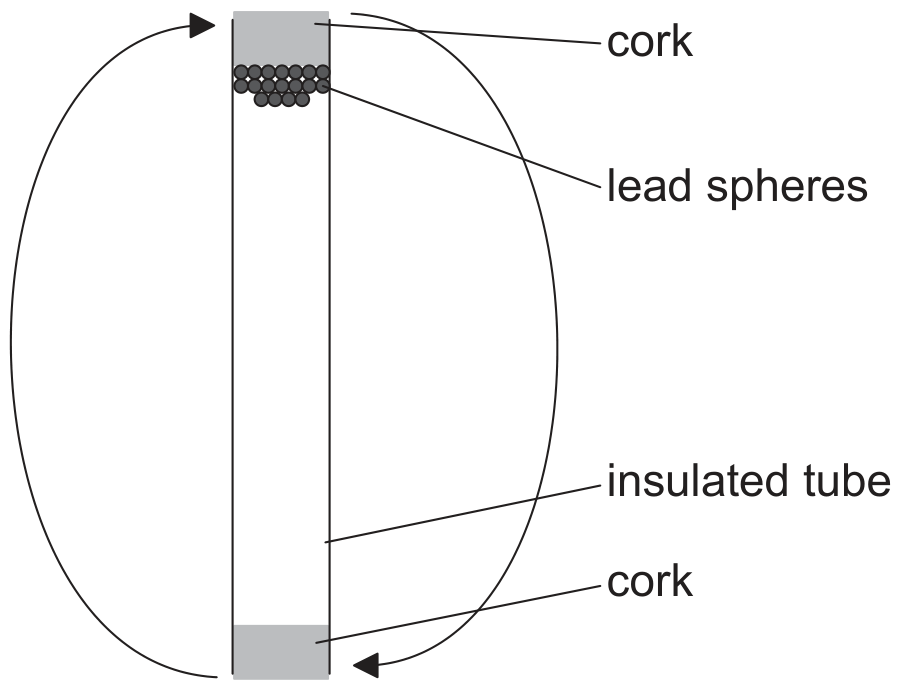
A mass of 0.22 kg of lead spheres is placed in a well-insulated tube. The tube is turned upside down several times so that the spheres fall through an average height of 0.45 m each time the tube is turned. The temperature of the spheres is found to increase by 8C8^{\circ} \mathrm{C}.

Figure for Question (b) — IB Physics SL
[ 2 ]

Question (i)

(i)

Discuss the changes to the energy of the lead spheres.

[ 2 ]

A. Space, time and motion question 4

[Maximum number: 10]

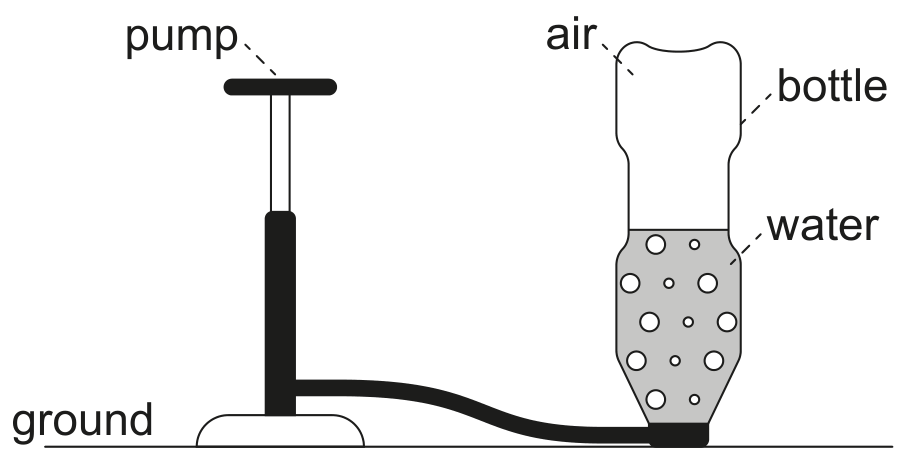
A toy rocket is made from a plastic bottle that contains some water.

Air is pumped into the vertical bottle until the pressure inside forces water and air out of the bottle. The bottle then travels vertically upwards.

Figure for Question A. Space, time and motion question 4 — IB Physics SL

The air-water mixture is called the propellant.
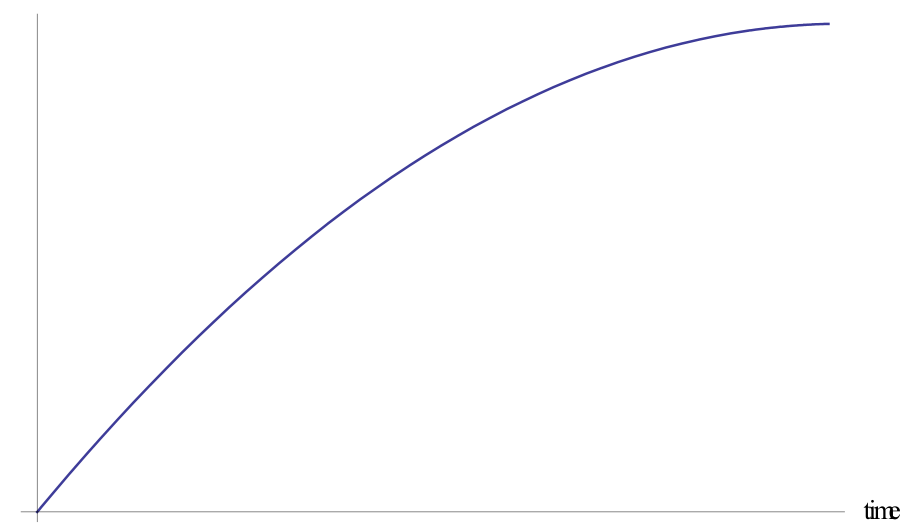
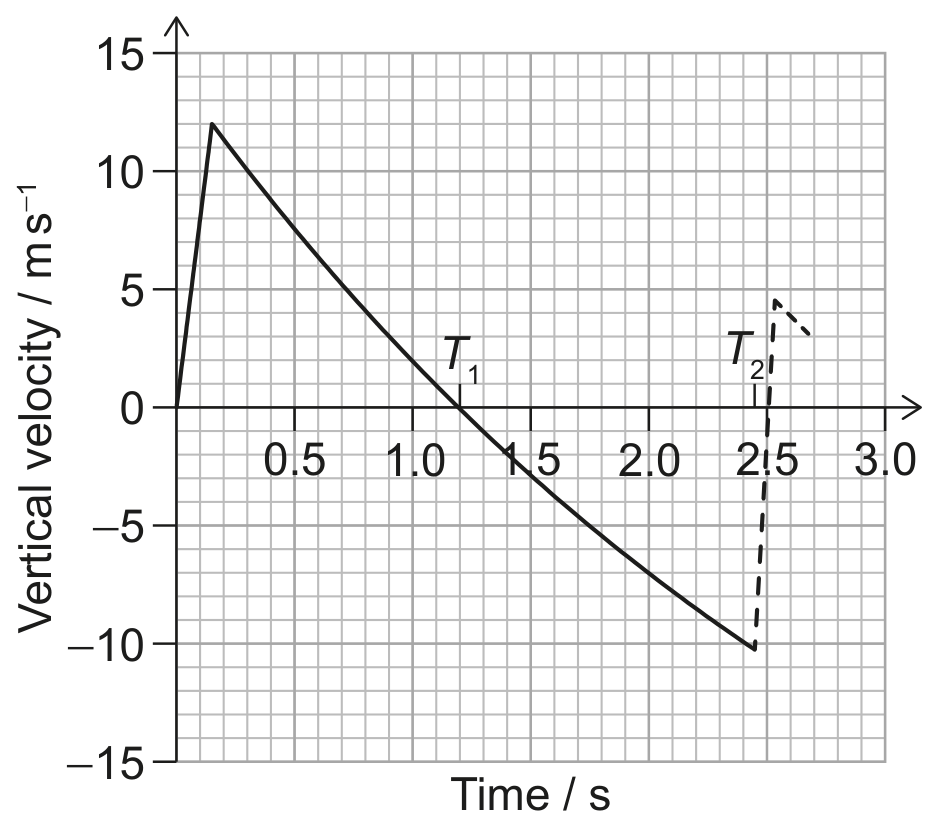
The variation with time of the vertical velocity of the bottle is shown.

Figure for Question A. Space, time and motion question 4 — IB Physics SL

The bottle reaches its highest point at time T1T_{1} on the graph and returns to the ground at time T2T_{2}. The bottle then bounces. The motion of the bottle after the bounce is shown as a dashed line.

Question (a)

(a)

Estimate the acceleration of the bottle when it is at its maximum height.

[ 2 ]

Question (b)

(b)

The bottle bounces when it returns to the ground.

[ 5 ]

Question (i)

(i)

Calculate the fraction of the kinetic energy of the bottle that remains after the bounce.

[ 2 ]

Question (ii)

(ii)

The mass of the bottle is 27 g and it is in contact with the ground for 85 ms .

Determine the average force exerted by the ground on the bottle. Give your answer to an appropriate number of significant figures.

[ 3 ]

Question (c)

(c)

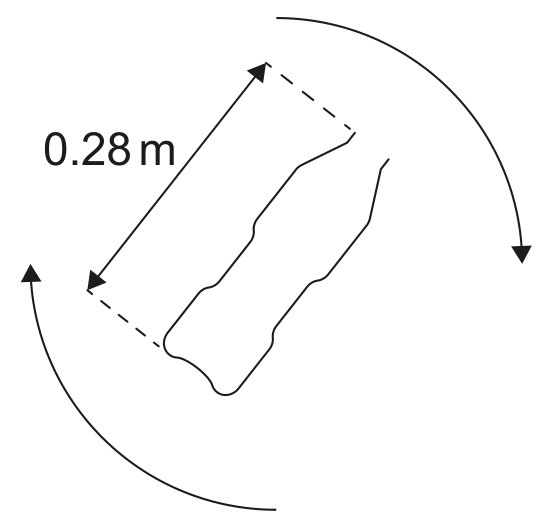
After a second bounce, the bottle rotates about its centre of mass. The bottle rotates at 0.35 revolutions per second.

Figure for Question (c) — IB Physics SL

The centre of mass of the bottle is halfway between the base and the top of the bottle. Assume that the velocity of the centre of mass is zero.

Calculate the linear speed of the top of the bottle.

[ 3 ]

A. Space, time and motion question 5

[Maximum number: 1]

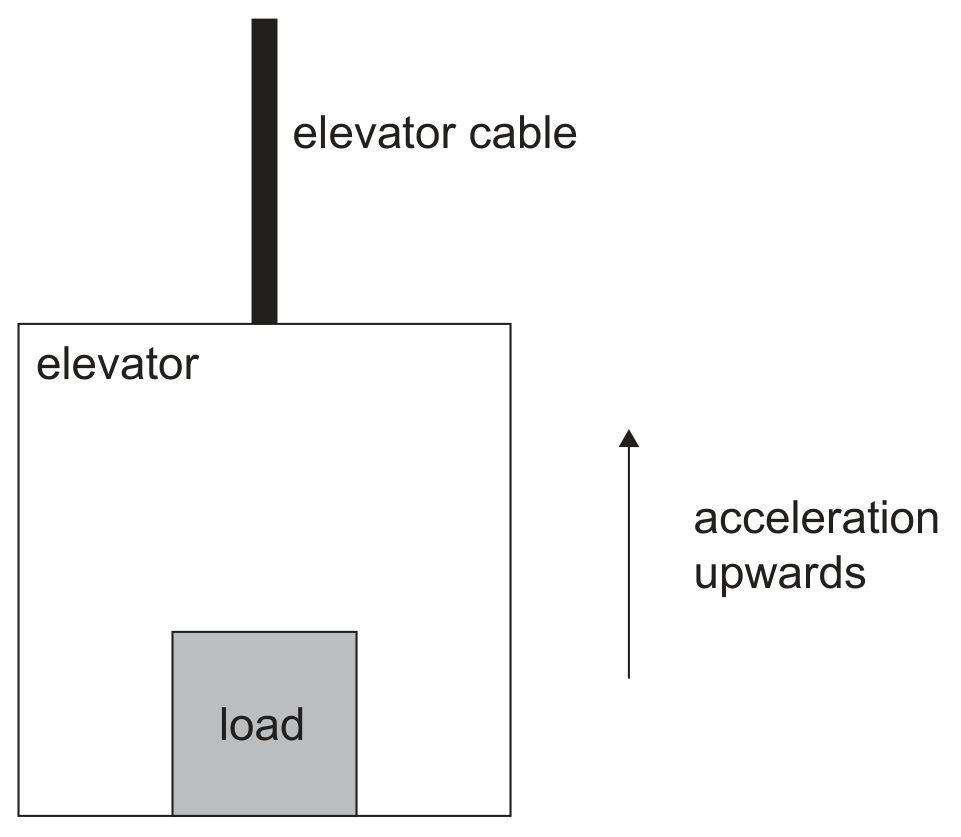
An elevator (lift) and its load accelerate vertically upwards.

Figure for Question A. Space, time and motion question 5 — IB Physics SL

Which statement is correct in this situation?

A

The net force on the load is zero.

B

The tension in the cable is equal but opposite to the combined weight of the elevator and its load.

C

The normal reaction force on the load is equal but opposite to the force on the elevator from the load.

D

The elevator and its load are in translational equilibrium.

A. Space, time and motion question 6

[Maximum number: 15]

This question is in two parts. Part 1 is about the motion of a ship. Part 2 is about melting ice.

Question (a)

(a)

Outline the meaning of work.

[ 2 ]

Question (b)

(b)

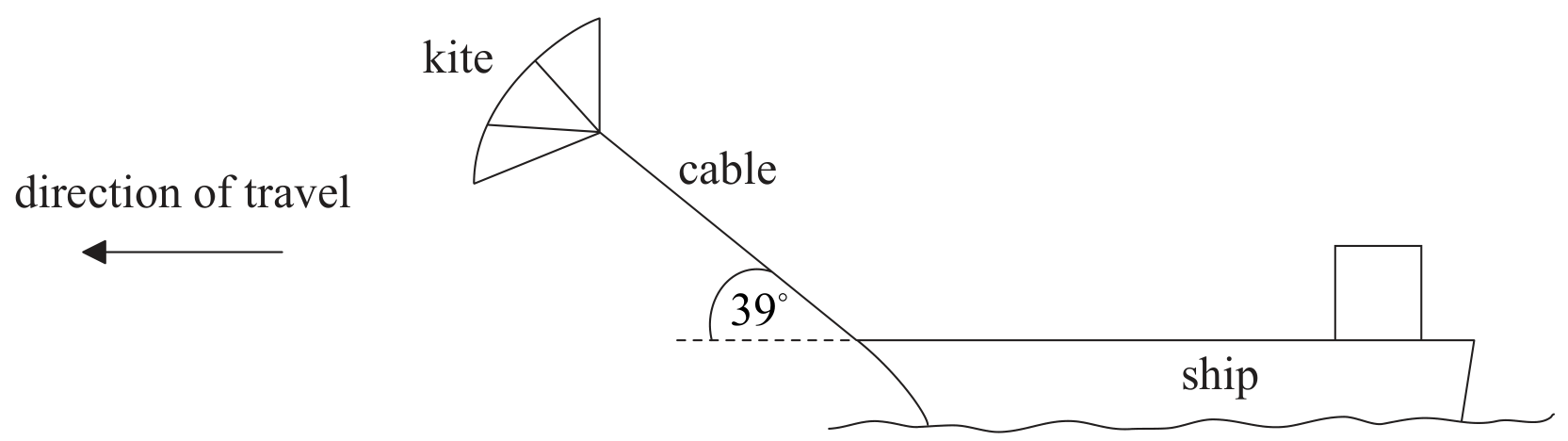
Some cargo ships use kites working together with the ship's engines to move the vessel.

Figure for Question (b) — IB Physics SL

The tension in the cable that connects the kite to the ship is 250 kN . The kite is pulling the ship at an angle of 3939^{\circ} to the horizontal. The ship travels at a steady speed of 8.5 m s18.5 \mathrm{~m} \mathrm{~s}^{-1} when the ship's engines operate with a power output of 2.7 MW .

[ 6 ]

Question (i)

(i)

Calculate the work done on the ship by the kite when the ship travels a distance of 1.0 km .

[ 2 ]

Question (ii)

(ii)

Show that, when the ship is travelling at a speed of 8.5 m s18.5 \mathrm{~m} \mathrm{~s}^{-1}, the kite provides about 40 % of the total power required by the ship.

[ 4 ]

Question (c)

(c)

The kite is taken down and no longer produces a force on the ship. The resistive force F that opposes the motion of the ship is related to the speed v of the ship by

F=kv2F=k v^{2}

where k is a constant.
Show that, if the power output of the engines remains at 2.7 MW , the speed of the ship will decrease to about 7 ms17 \mathrm{~ms}^{-1}. Assume that k is independent of whether the kite is in use or not.

[ 3 ]

Question (d)

(d)

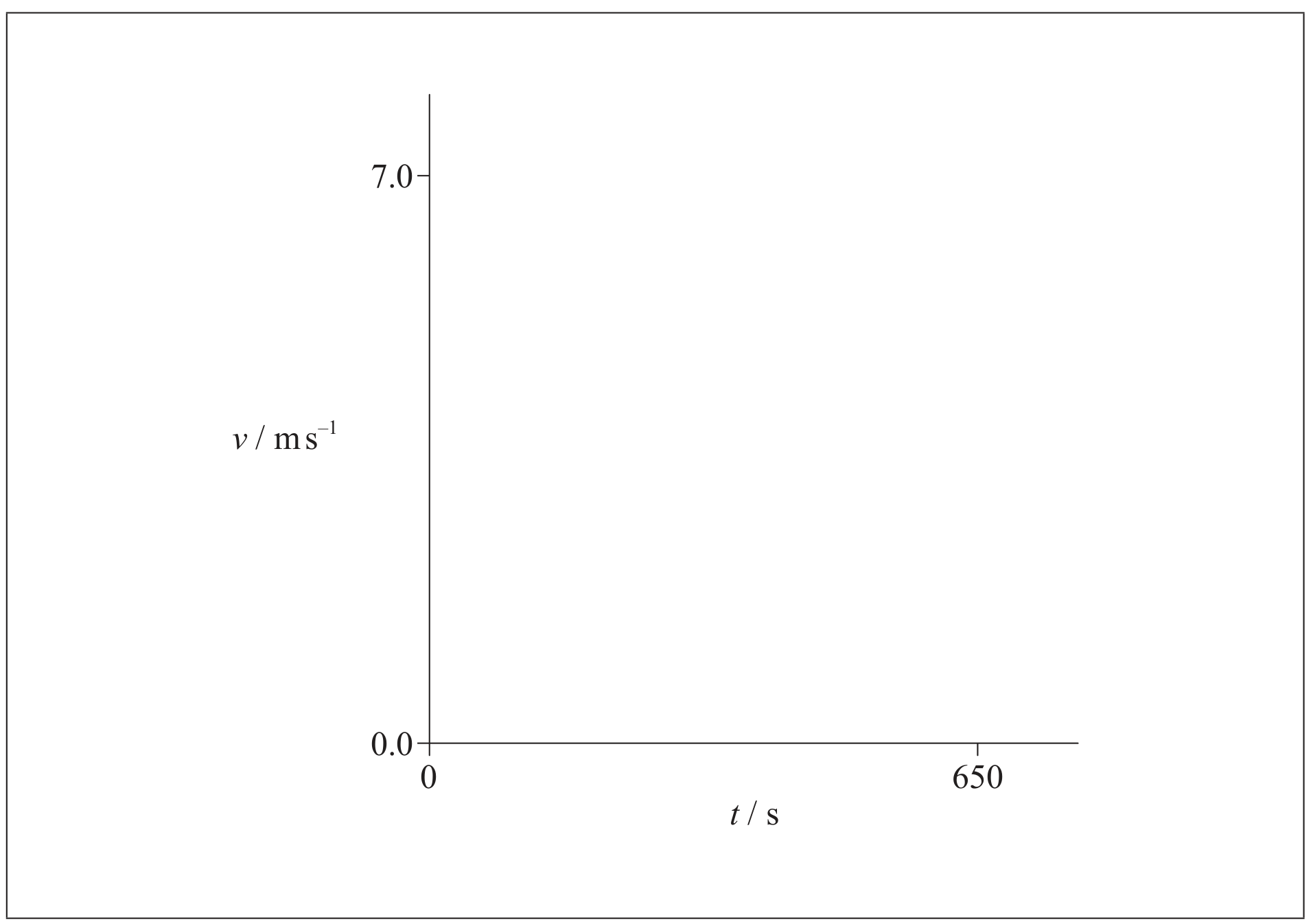
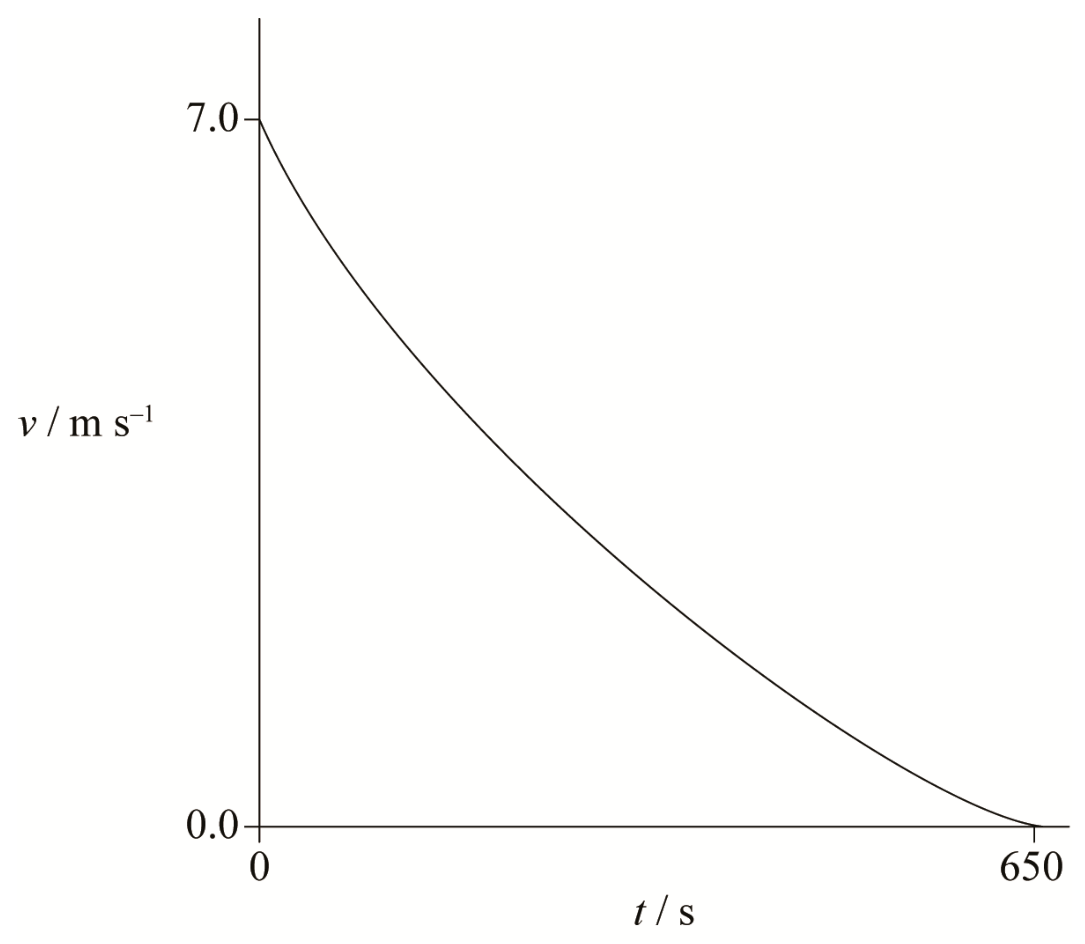
The ship's engines are switched off and the ship comes to rest from a speed of 7 m s17 \mathrm{~m} \mathrm{~s}^{-1} in a time of 650 s .

[ 4 ]

Question (i)

(i)

Estimate the distance that the ship takes to stop. Assume that the acceleration is uniform.

[ 2 ]

Question (ii)

(ii)

It is unlikely that the acceleration of the ship will be uniform given that the resistive force acting on the ship depends on the speed of the ship. Using the axes, sketch a graph to show how the speed v varies with time t after the ship's engines are switched off.

Figure for Question (ii) — IB Physics SL
[ 2 ]
All question bank results loaded