D2.1.5—DNA replication prerequisite
DNA replication in S phase creates sister chromatids that remain attached until their separation during mitosis or meiosis later in division.
- Syllabus
- First assessment 2025
- Objective
- D2.1.5
- Level
- HL
DNA replication in S phase creates sister chromatids that remain attached until their separation during mitosis or meiosis later in division.
Coverage 2021–2023 · Updated 16 Jul 2026
Before S phase, one chromosome contains one DNA molecule. During S phase that DNA is replicated.
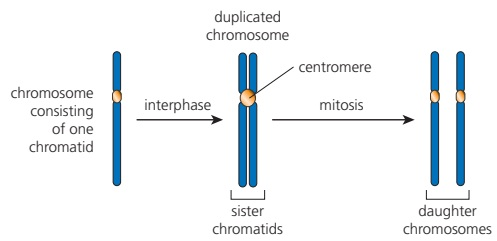
After replication, the chromosome consists of two nearly identical sister chromatids joined at a centromere. The chromosome count has not doubled, but the DNA amount has.
When the sister chromatids separate, each becomes an individual daughter chromosome. Sending one copy to each future nucleus preserves a complete genome.
Do not count chromatids as separate chromosomes while they remain joined at one centromere.
Before meiosis, S phase replicates every chromosome into two sister chromatids. The nucleus is still diploid because both homologues of each pair remain present.
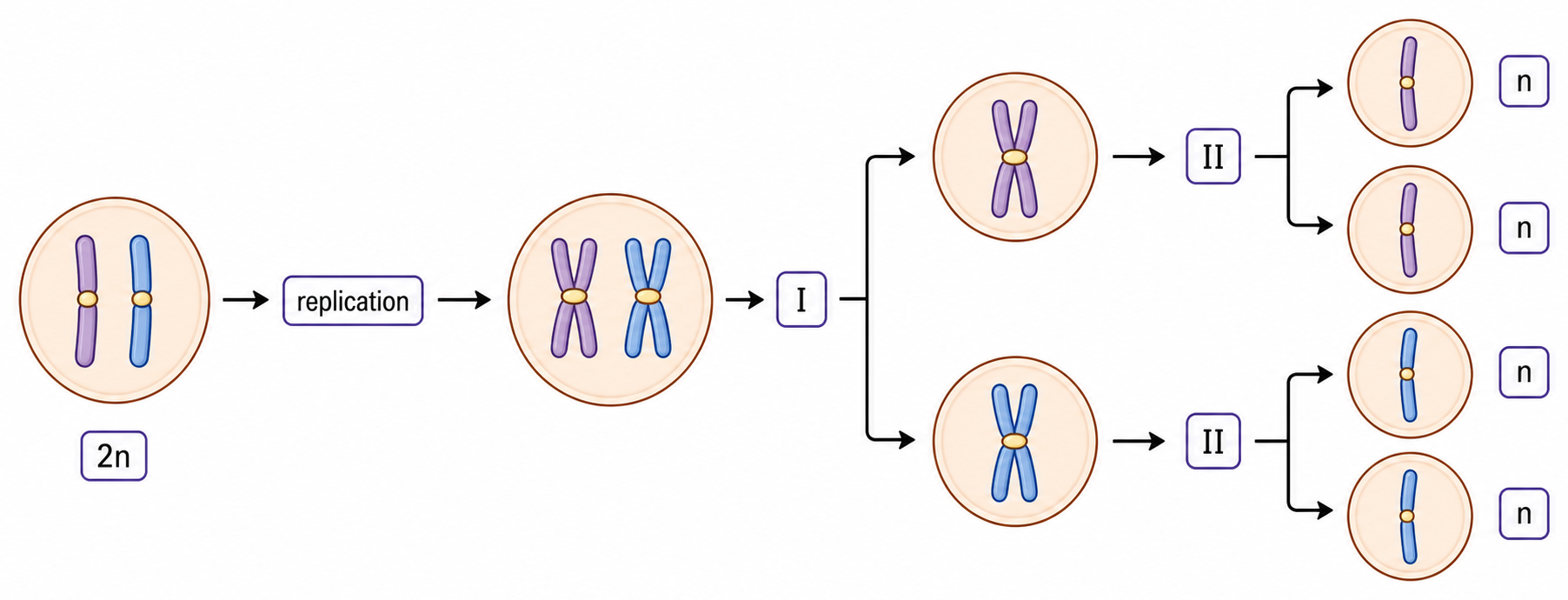
In meiosis I, homologous maternal and paternal chromosomes separate into different nuclei. Chromosome number is reduced from diploid to haploid, although each chromosome still has two chromatids.
There is no second DNA replication. In meiosis II, sister chromatids separate, producing four haploid nuclei with one chromosome from each homologous pair.
Reduction prevents chromosome number doubling in every generation: haploid gametes fuse at fertilization to restore the diploid number.
