Question 14
[Maximum number: 1]
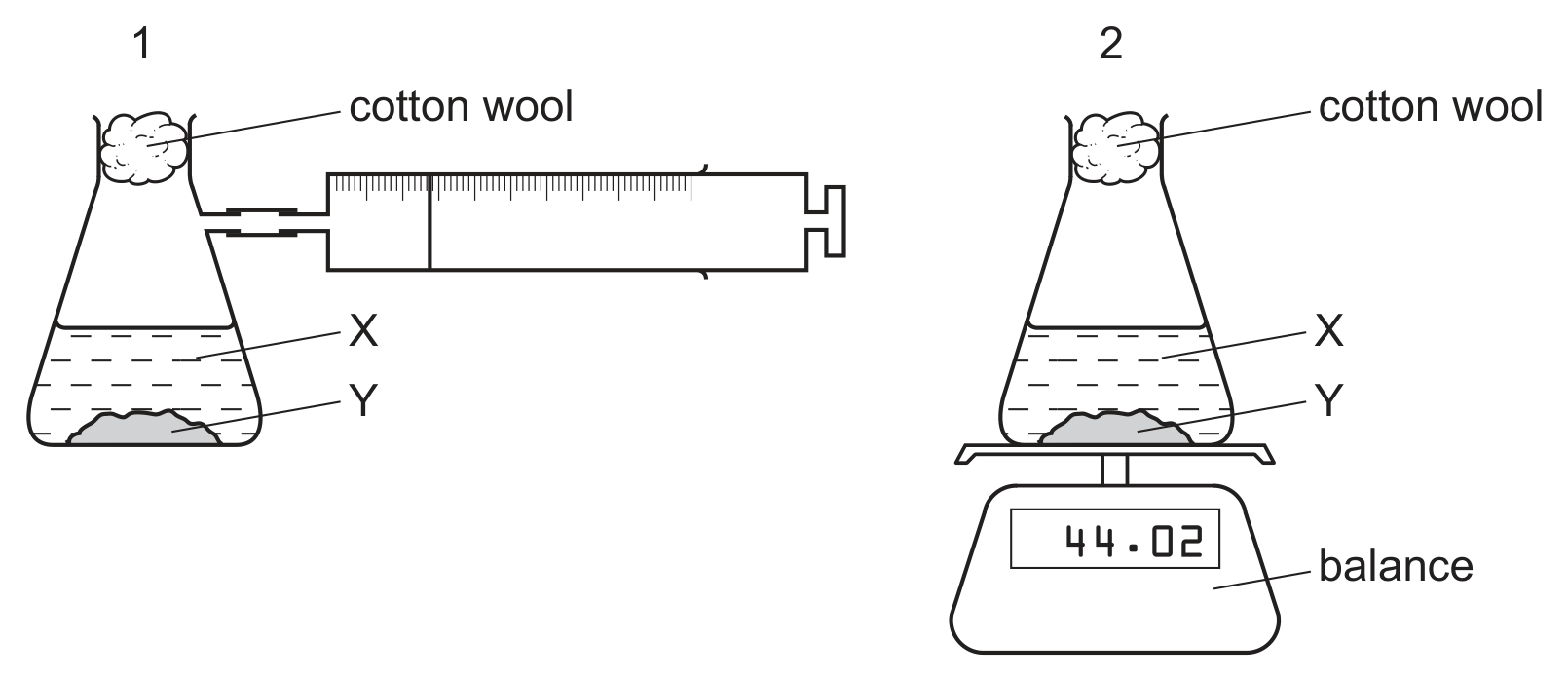
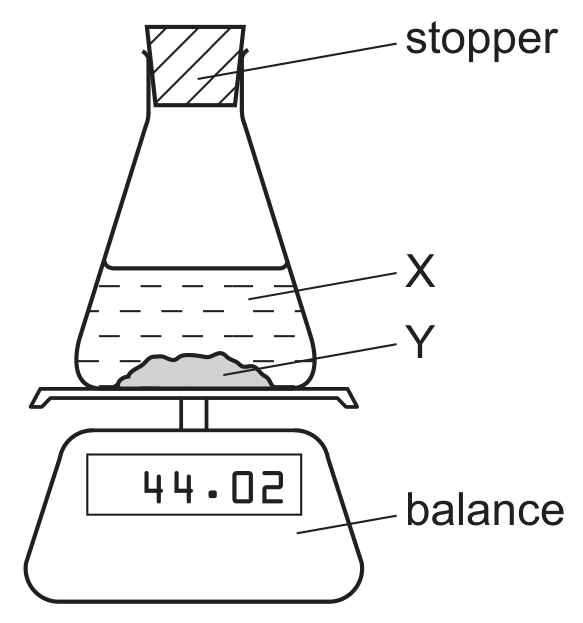
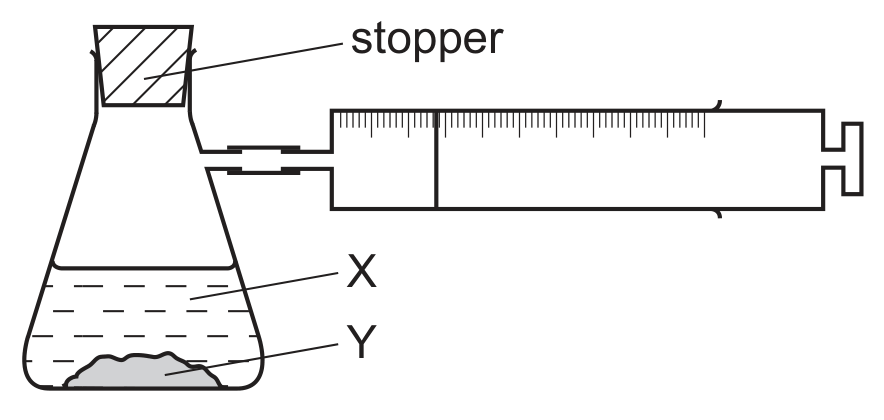
A liquid X reacts with solid Y to form a gas.
Which two diagrams show suitable methods for investigating the rate (speed) of the reaction?
3
4
A
1 and 3
B
1 and 4
C
2 and 3
D
2 and 4
 EduNinja
• Describe practical methods for investigating the rate of a reaction including change in mass of a reactant or a product and the formation of a gas
A liquid X reacts with solid Y to form a gas.
Which two diagrams show suitable methods for investigating the rate (speed) of the reaction?
3
4
1 and 3
1 and 4
2 and 3
2 and 4
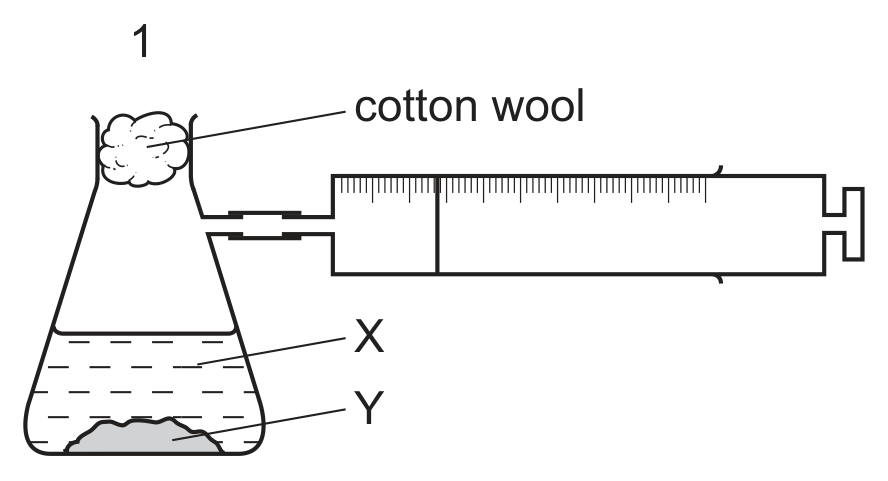
A liquid X reacts with solid Y to form a gas.
Which two diagrams show suitable methods for investigating the rate (speed) of the reaction?
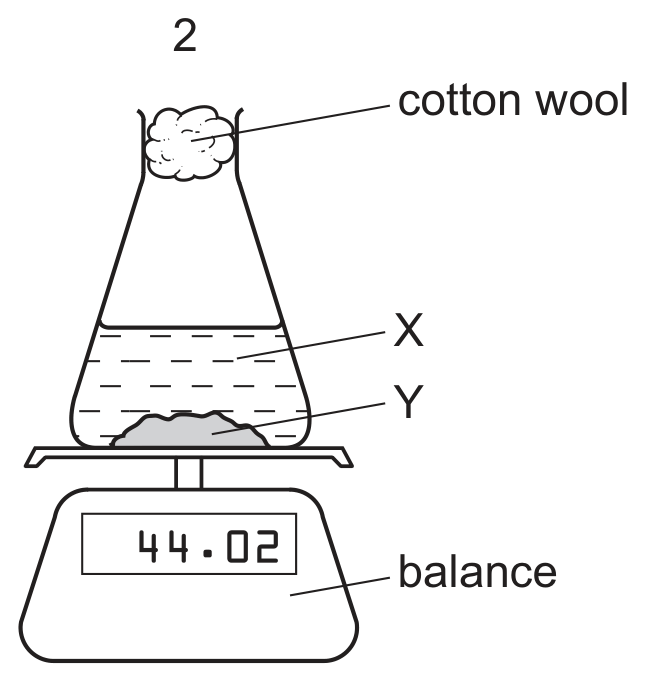
3
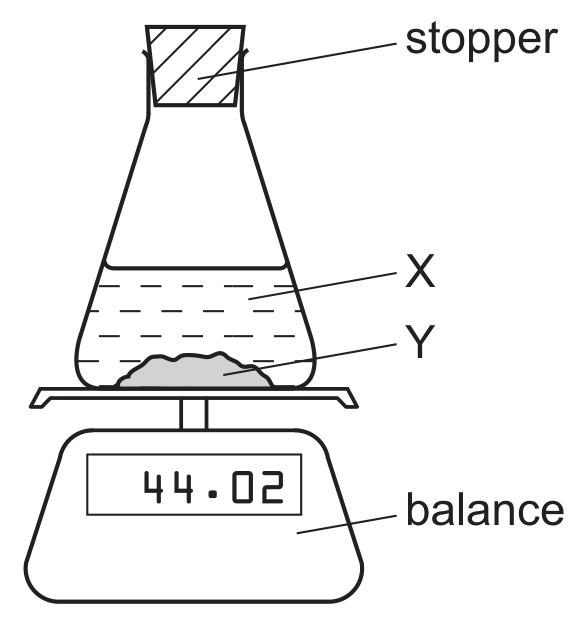
4
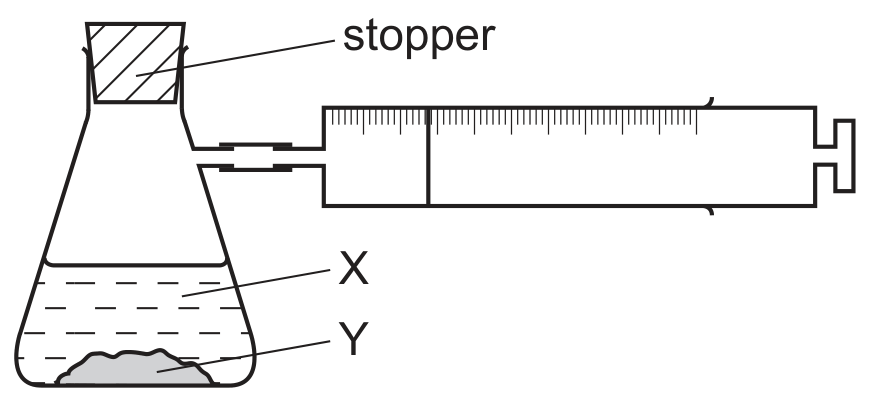
1 and 3
1 and 4
2 and 3
2 and 4
The apparatus shown is used to measure the rate of a reaction.
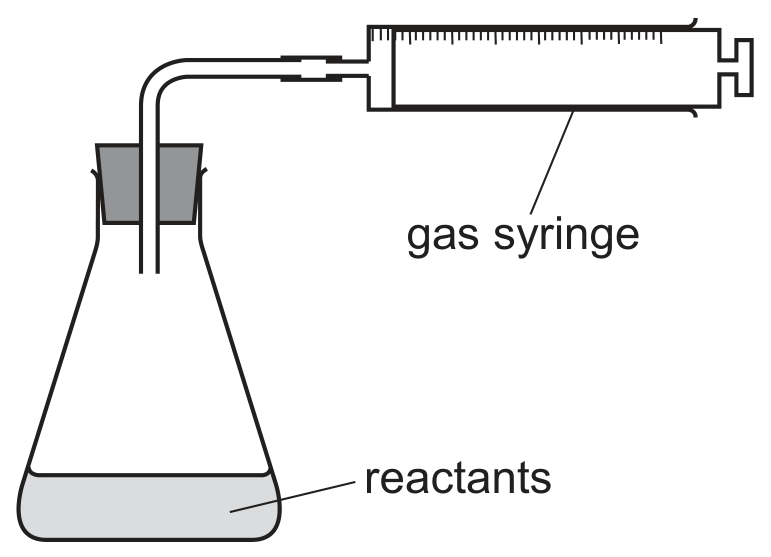
Which equation represents a reaction where the rate can be measured using this apparatus?
The apparatus shown can be used to measure the rate of some chemical reactions.
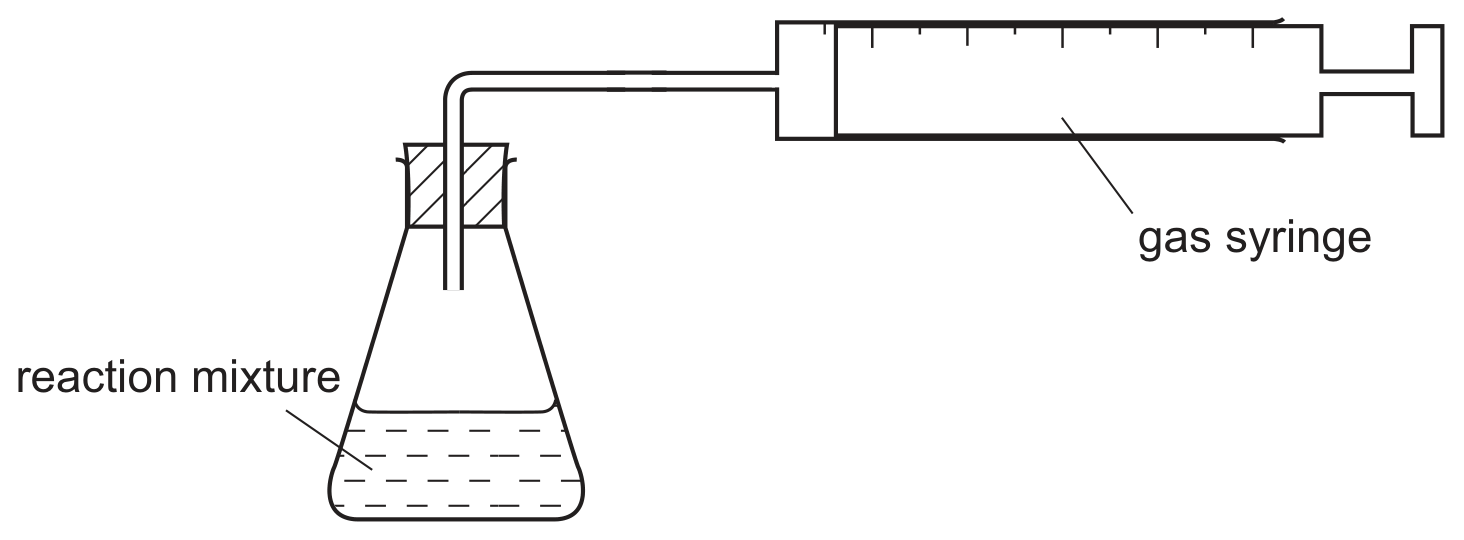
For which two reactions would this apparatus be suitable?
reaction
reaction
reaction
reaction
A 1 and 2
B 1 and 3
C 2 and 4
D 3 and 4
The apparatus shown can be used to measure the rate of some chemical reactions.
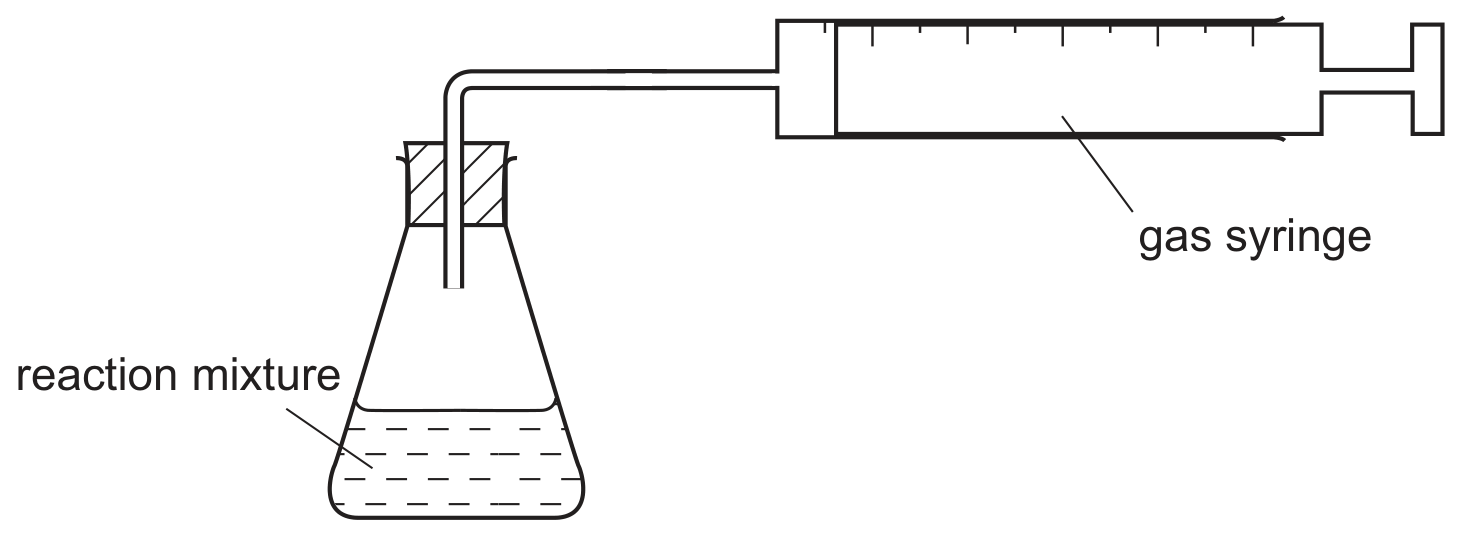
For which two reactions would this apparatus be suitable?
reaction
reaction
reaction
reaction
1 and 2
1 and 3
2 and 4
3 and 4
A student investigates the effect of concentration on the rate of reaction between calcium carbonate and hydrochloric acid. He follows the method shown.
- Place 1 g of calcium carbonate in a conical flask.
- Add excess hydrochloric acid.
- Let the reaction continue until no more gas is made.
- Repeat the experiment with different concentrations of hydrochloric acid.
Which essential step has been left out of the method if he is to work out the rate of the reaction?
heating the reaction mixture
placing a bung in the flask
timing the reaction
using a catalyst
Oxygen is produced by the decomposition of aqueous hydrogen peroxide. Manganese(IV) oxide, , is a catalyst for this reaction.
A student adds powdered manganese(IV) oxide to aqueous hydrogen peroxide in a conical flask as shown in Fig. 4.1. The mass of the conical flask and its contents is measured at regular time intervals. The mass decreases as time increases.
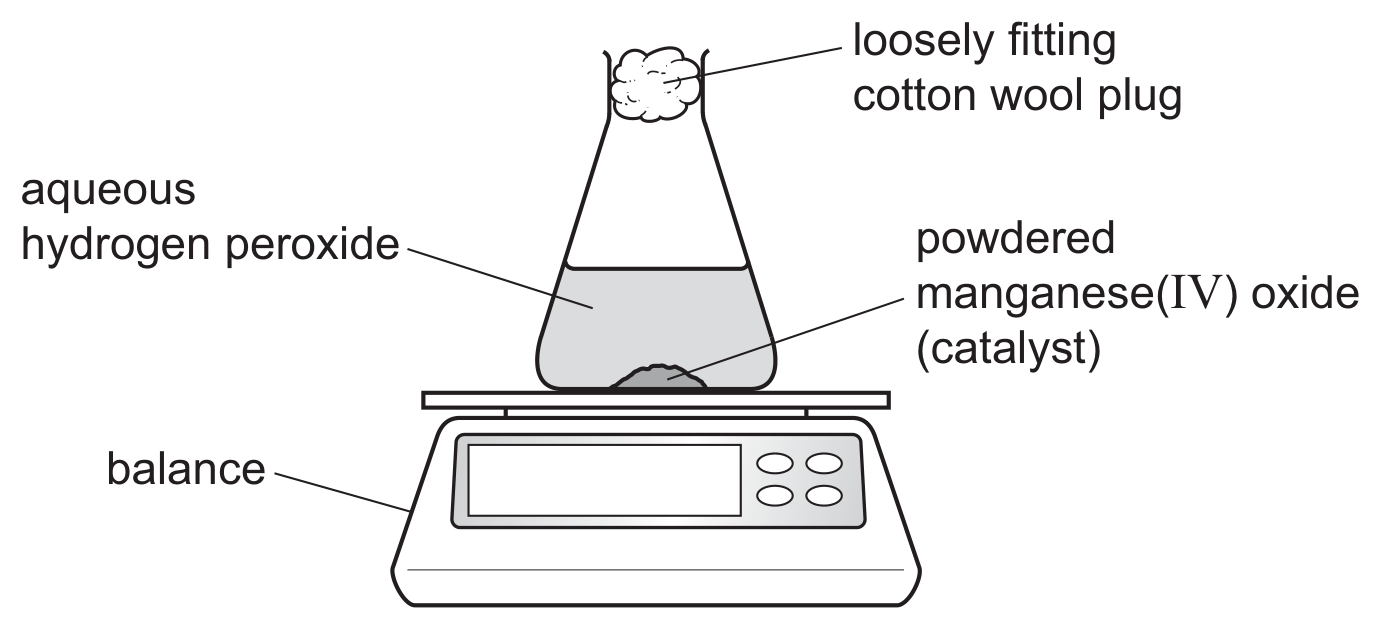
Fig. 4.1
State why the mass of the conical flask and its contents decreases as time increases.
When aqueous sodium thiosulfate and dilute hydrochloric acid are mixed, a precipitate of insoluble sulfur is produced. This makes the mixture difficult to see through.
The time taken for the cross to disappear from view is measured.
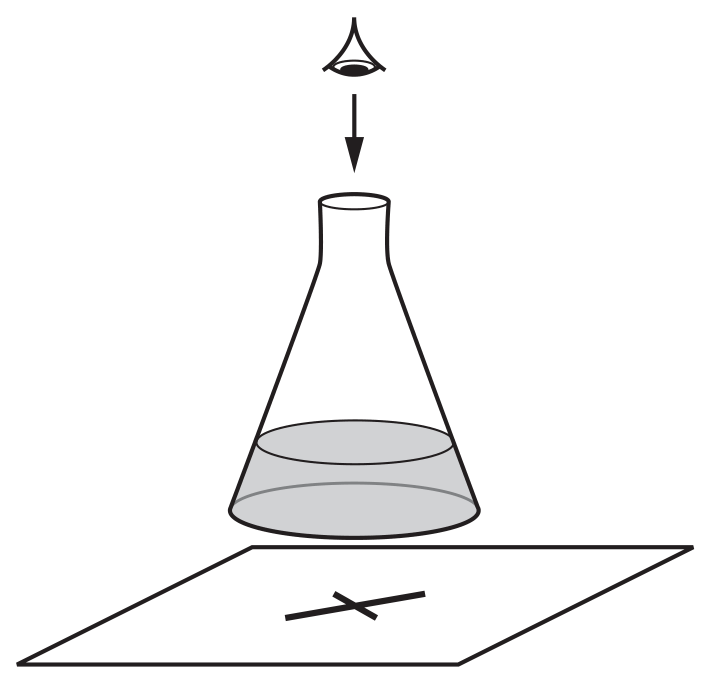
A student adds the following volumes of aqueous sodium thiosulfate, dilute hydrochloric acid and distilled water to the conical flask.
The time taken for the formation of the precipitate of sulfur to make the cross disappear from view is recorded.
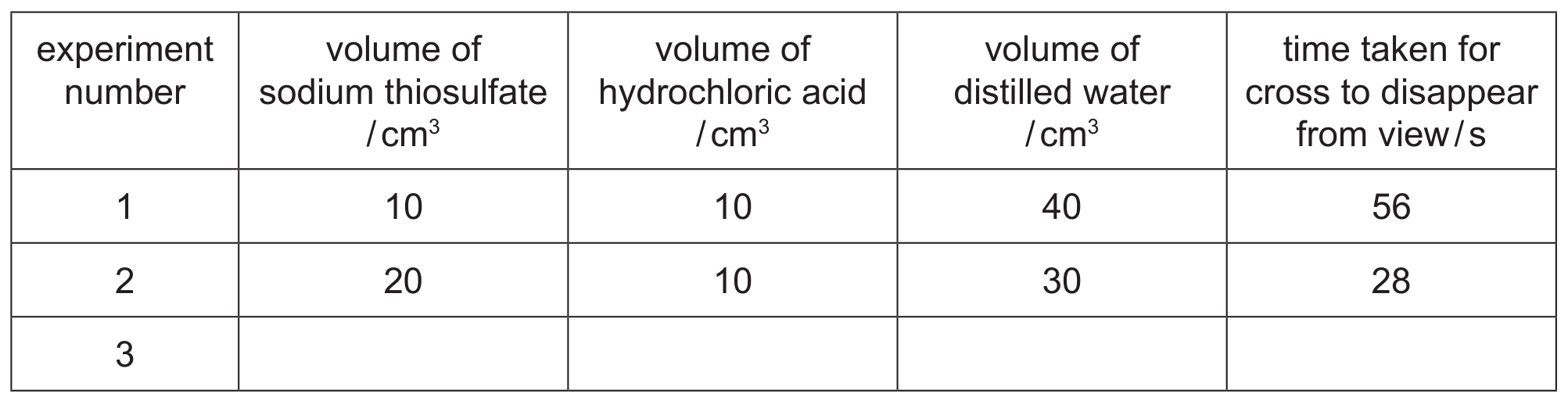
State the order in which the aqueous sodium thiosulfate, hydrochloric acid and distilled water should be added to the flask.
Hydrogen peroxide, , decomposes into water and oxygen in the presence of a catalyst, manganese(IV) oxide.
The student carries out a second experiment to investigate whether another substance, copper(II) oxide, is a better catalyst than manganese(IV) oxide.
Describe how the second experiment is carried out. You should state clearly how you would make sure that the catalyst is the only variable.
A student investigates the rate of reaction between lumps of calcium carbonate and dilute hydrochloric acid using the apparatus shown.
The calcium carbonate was in excess.
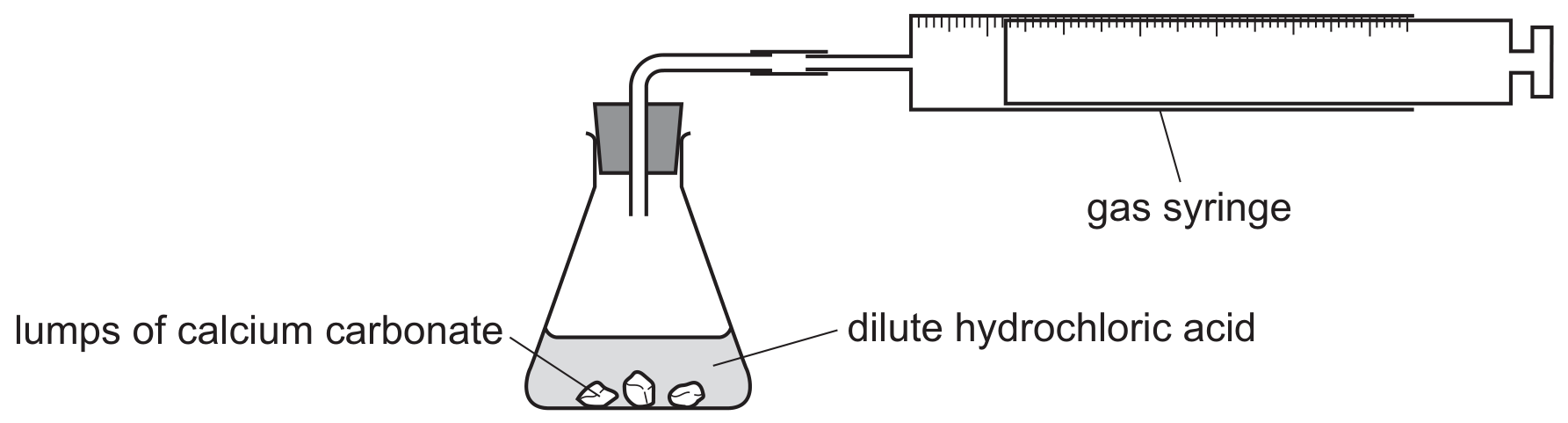
Which measurements should the student make during the reaction to determine the rate of reaction?