Question 1(d)(i)
[Maximum number: 1]
The electronic structures of some atoms and ions are shown.

A
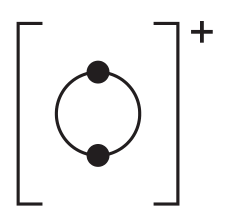
B
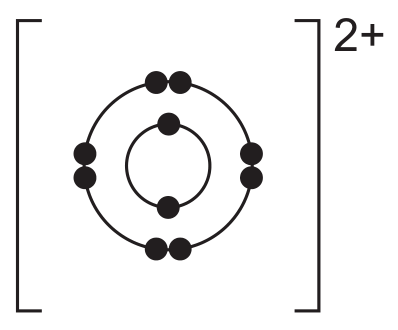
C
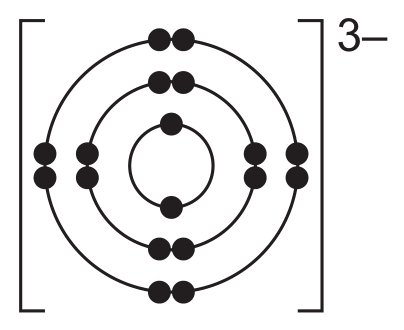
D
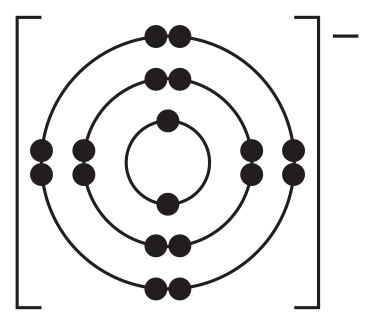
E
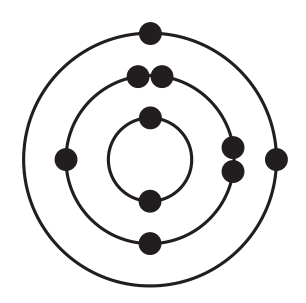
F
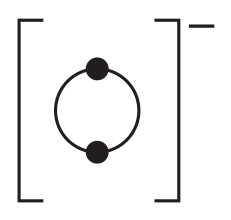
G
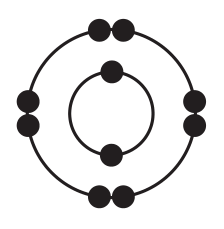
H
Use the Periodic Table to deduce:
the chemical symbol for ion G
 EduNinja
• Interpret/use symbols for atoms and ions, e.g. 12C and 35Cl- notation with mass/nucleon and proton/atomic numbers
The electronic structures of some atoms and ions are shown.
A
B
C
D
E
F
G
H
Use the Periodic Table to deduce:
the chemical symbol for ion G
This question is about the structures of atoms and ions.
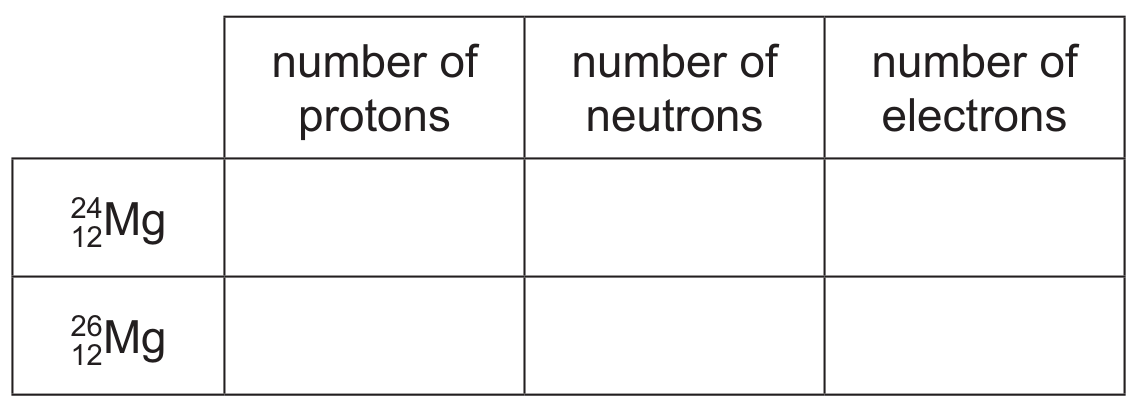
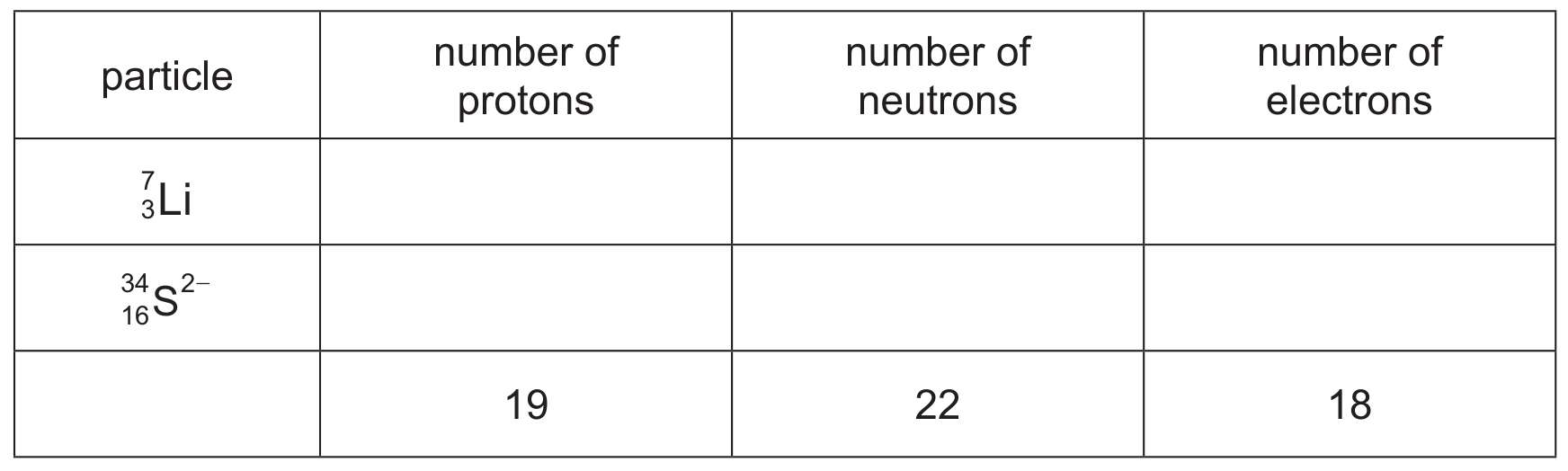
Complete the table to show the number of protons, neutrons and electrons present in atoms of and .
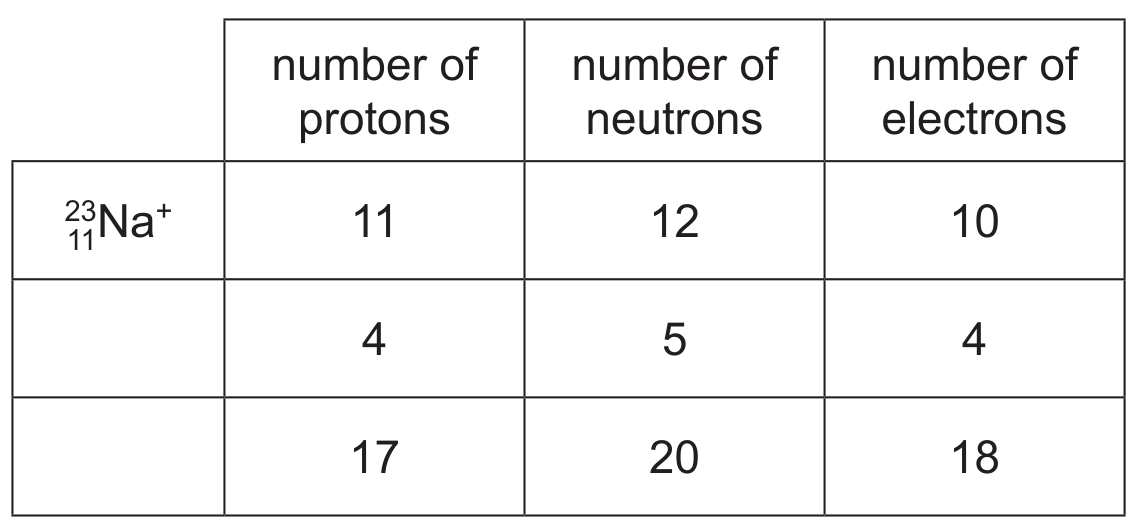
Complete the table to identify the atoms and ions which have the following numbers of protons, neutrons and electrons.
The table gives information about five particles. The particles are all atoms or ions.
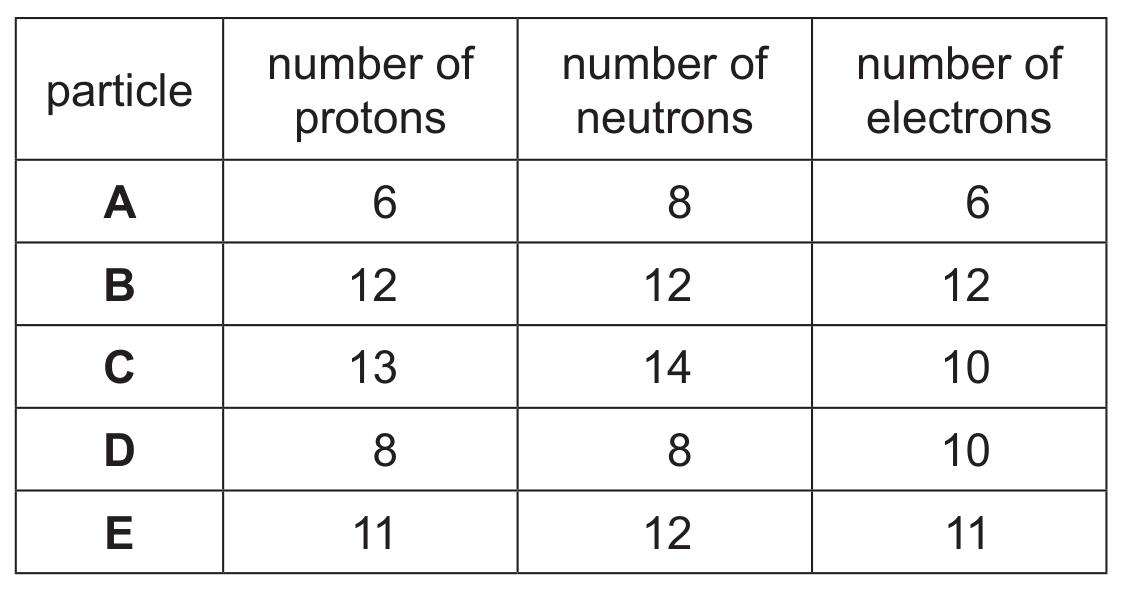
Answer the following questions using the information in the table. Each particle may be used once, more than once or not at all.
D is an ion of an element.
Identify the element and write the formula of D.
Iron ore contains iron(III) oxide, . A blast furnace is used to extract iron from .
Equations for some of the reactions in the blast furnace are shown.
equation
equation
equation
Both iron(III) oxide and aluminium oxide contain metal ions with a 3+ charge.
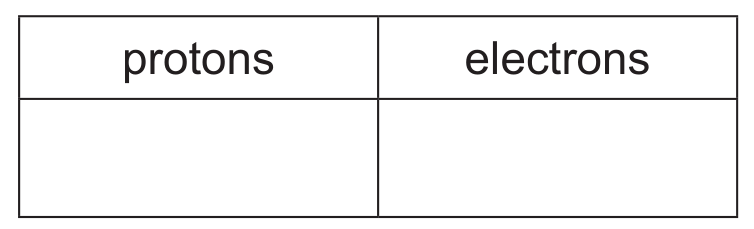
Deduce the number of protons and electrons in an ion.
Six different atoms can be represented as follows.
L
Answer the following questions using atoms from the list. Each atom may be used once, more than once or not at all.
Select one atom from the six shown which
has exactly seven protons,
has exactly six neutrons,
has more protons than neutrons,
This question is about subatomic particles.
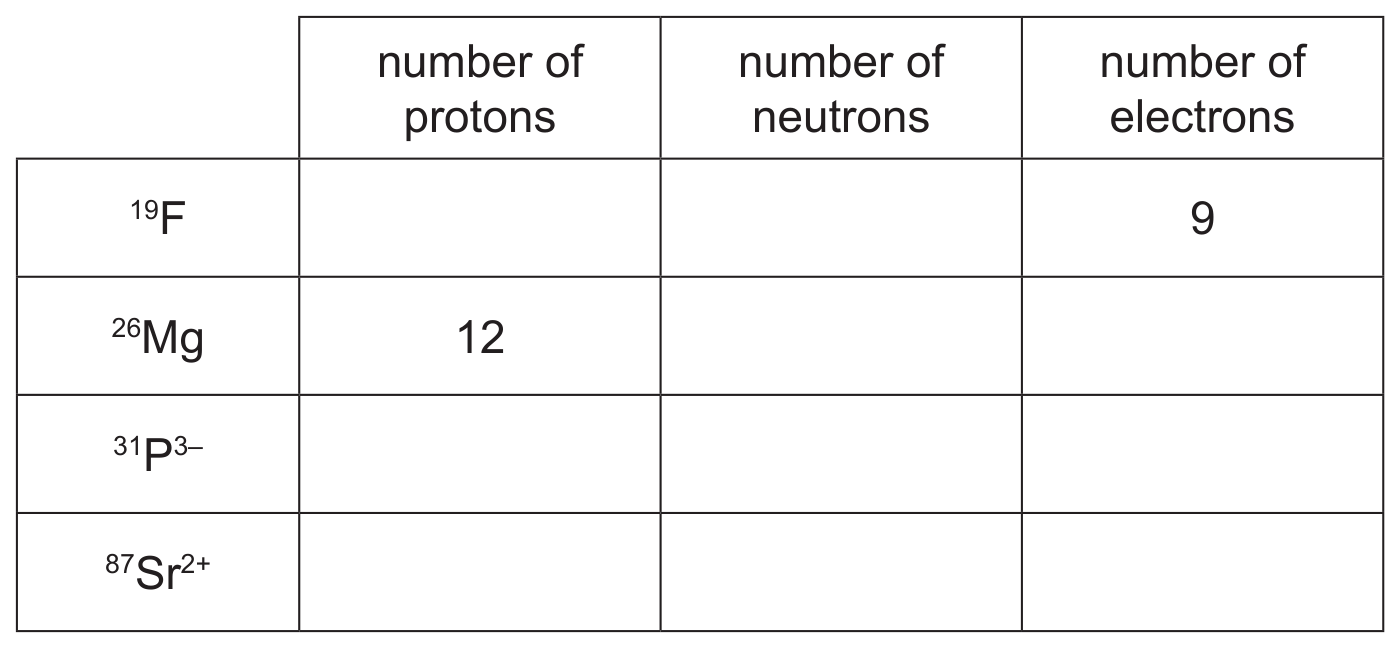
Complete the table to show the number of protons, neutrons and electrons in the atoms and ions given.
Protons, neutrons and electrons are subatomic particles.
The table shows the number of protons, neutrons and electrons in some atoms and ions. Complete the table.
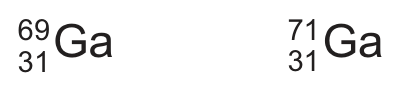
The following are gallium atoms.
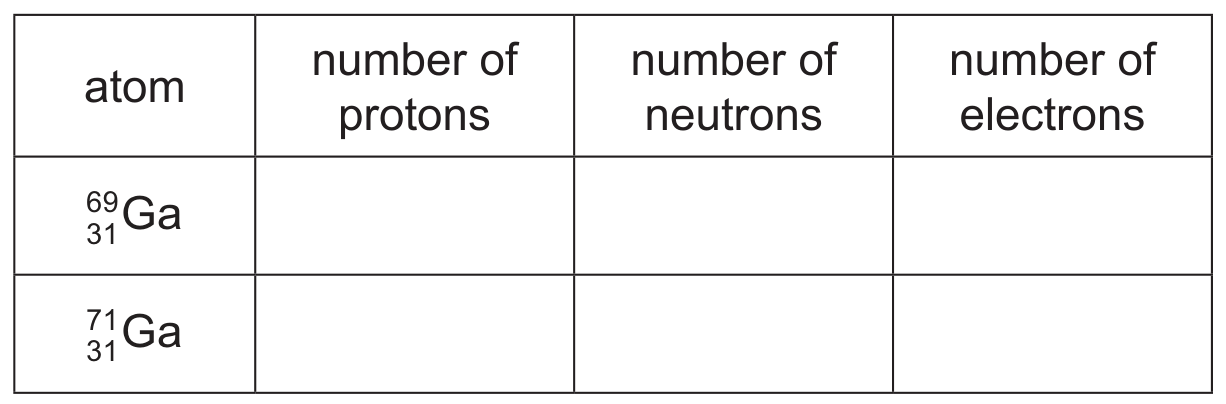
Complete the following table.
Atoms contain particles called electrons, neutrons and protons.
How many electrons, neutrons and protons are there in the ion shown?
number of electrons
number of neutrons
number of protons
This question is about elements X, Y and Z.
An atom of element X is represented as .
What is the total number of particles in the nucleus of an atom of ?