Question 1(b)(i)
[Maximum number: 2]
Protons, neutrons and electrons are subatomic particles.
Bromine has two isotopes.
Define the term isotope.
 EduNinja
• Define isotopes as different atoms of the same element that have the same number of protons but different numbers of neutrons
Protons, neutrons and electrons are subatomic particles.
Bromine has two isotopes.
Define the term isotope.
This question is about elements X, Y and Z.
What term is used to describe atoms of the same element with different numbers of particles in the nucleus?
The table shows the numbers of protons, neutrons and electrons in particles A to I.
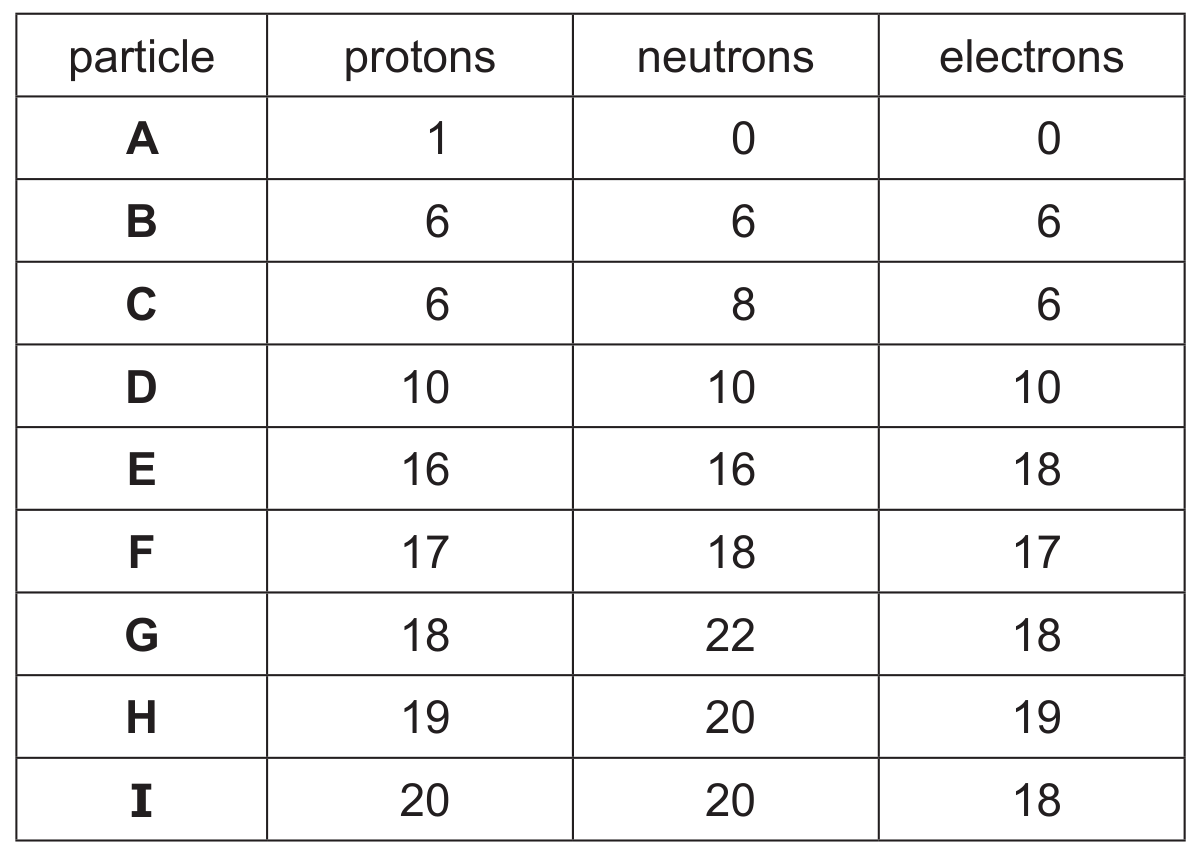
Answer the following questions about particles A to I. Each letter may be used once, more than once or not at all.
Explain why B and C are isotopes of the same element.
This question is about the structures of atoms and ions.
What term is used to describe atoms of the same element, such as and ?
Six different atoms can be represented as follows.
L
Two of the six atoms shown are isotopes of each other.
What is meant by the term isotopes?
Which two of the six atoms shown are isotopes of each other?
The following are isotopes of carbon.
In terms of numbers of protons, neutrons and electrons, how are these three isotopes the same and how are they different?
They are the same because
They are different because
The atomic structures of four particles, W, X, Y and Z, are shown.
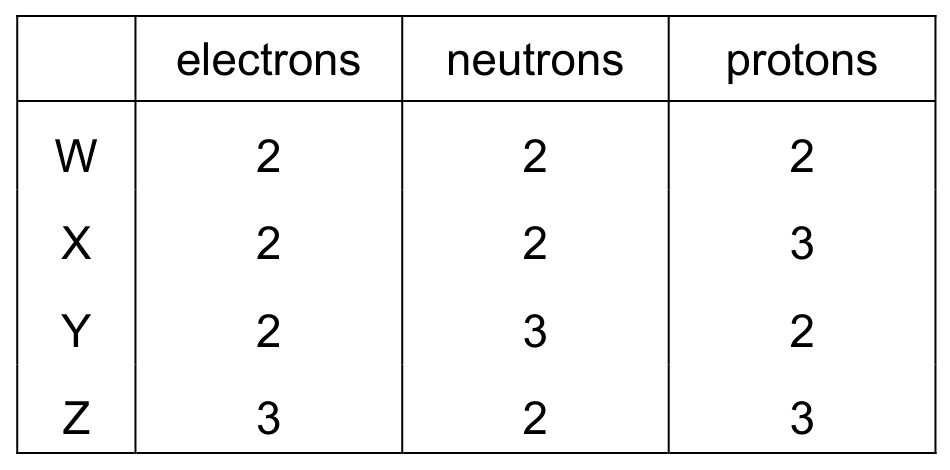
Which particles are isotopes of the same element?
W and X
W and Y
X and Y
X and Z
The diagram shows the structure of an atom.
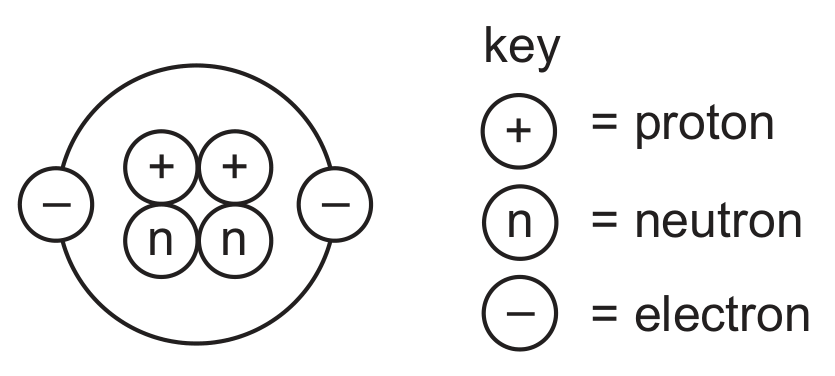
Which diagram shows the structure of an isotope of this atom?
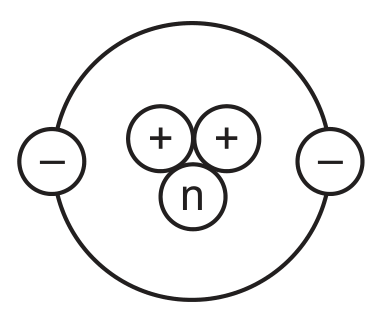
A
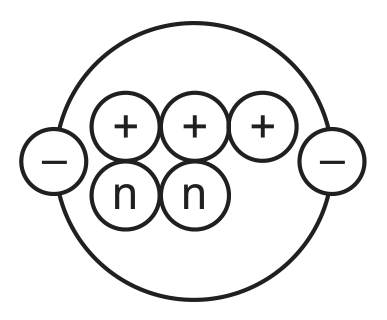
B
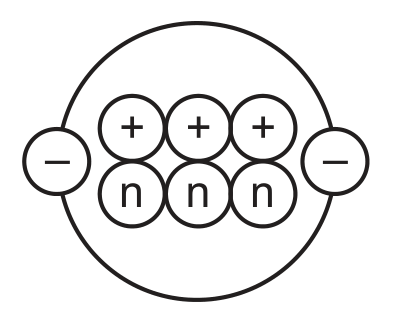
C
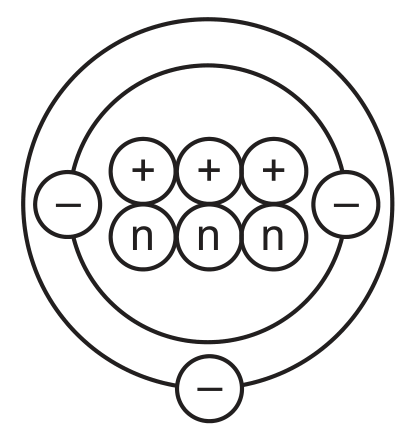
D
Which statement describes isotopes?
Isotopes of the same element have different electron arrangements.
Isotopes of the same element have different nuclear charges.
Isotopes of the same element have nuclei with masses that are the same.
Isotopes of the same element have the same number of protons.
The diagram shows the structure of an atom.
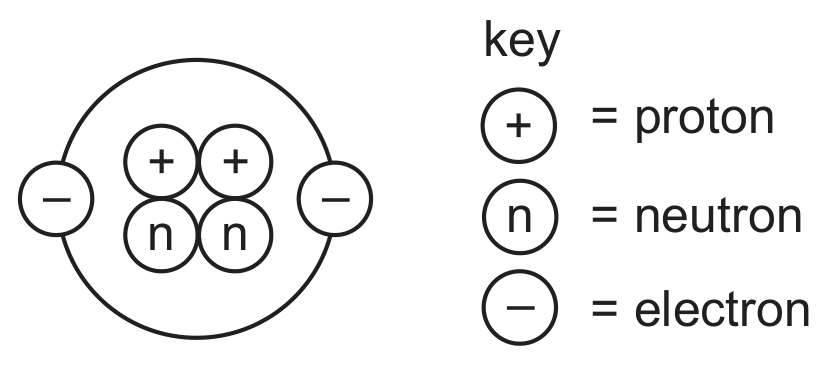
Which diagram shows the structure of an isotope of this atom?