EduNinja

IGCSE Chemistry Extended2.2.6—Periodic table shell rules: (a) GroupTopic Practice

2.2.6—Periodic table shell rules: (a) Group

• State periodic table shell rules: (a) Group VIII noble gases have full outer shells (b) outer-shell electrons equal group number in Groups I-VII (c) occupied shells equal period number

Question 1(c)

[Maximum number: 1]

Period 3 of the Periodic Table is shown.

Table

Answer the following questions using only these elements.
Each element may be used once, more than once or not at all.
State which element:

is made of atoms which have a full outer shell of electrons

Question 1(b)(iii)

[Maximum number: 1]

The symbols of the elements in Period 2 of the Periodic Table are shown.

Li Be B C N O F Ne

For each of the following, give the symbol of an element from Period 2 which matches the description.

Each element may be used once, more than once or not at all.
Which element:

has atoms with only two electrons in the outer shell

Question 1(a)(i)

[Maximum number: 2]

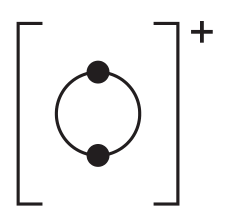
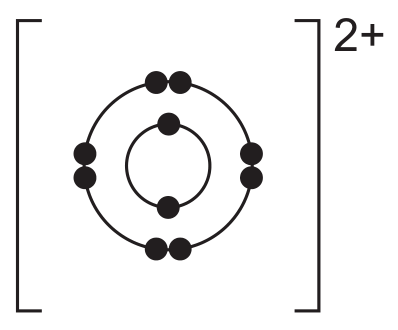
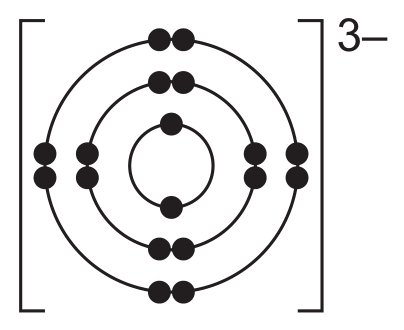
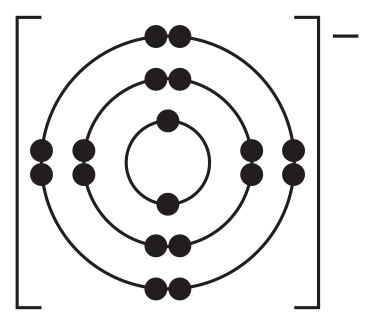
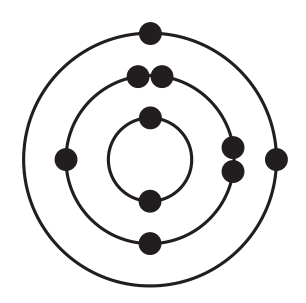
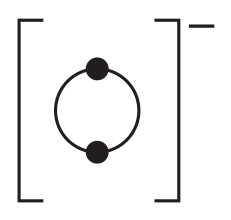
The electronic structures of some atoms and ions are shown.

A

A

B

B

C

C

D

D

E

E

F

F

G

G

H

H

Write the letters, A, B, C, D, E, F, G or H, of the electronic structures which show:

atoms of two different noble gases and

Question 1(a)(iii)

[Maximum number: 2]

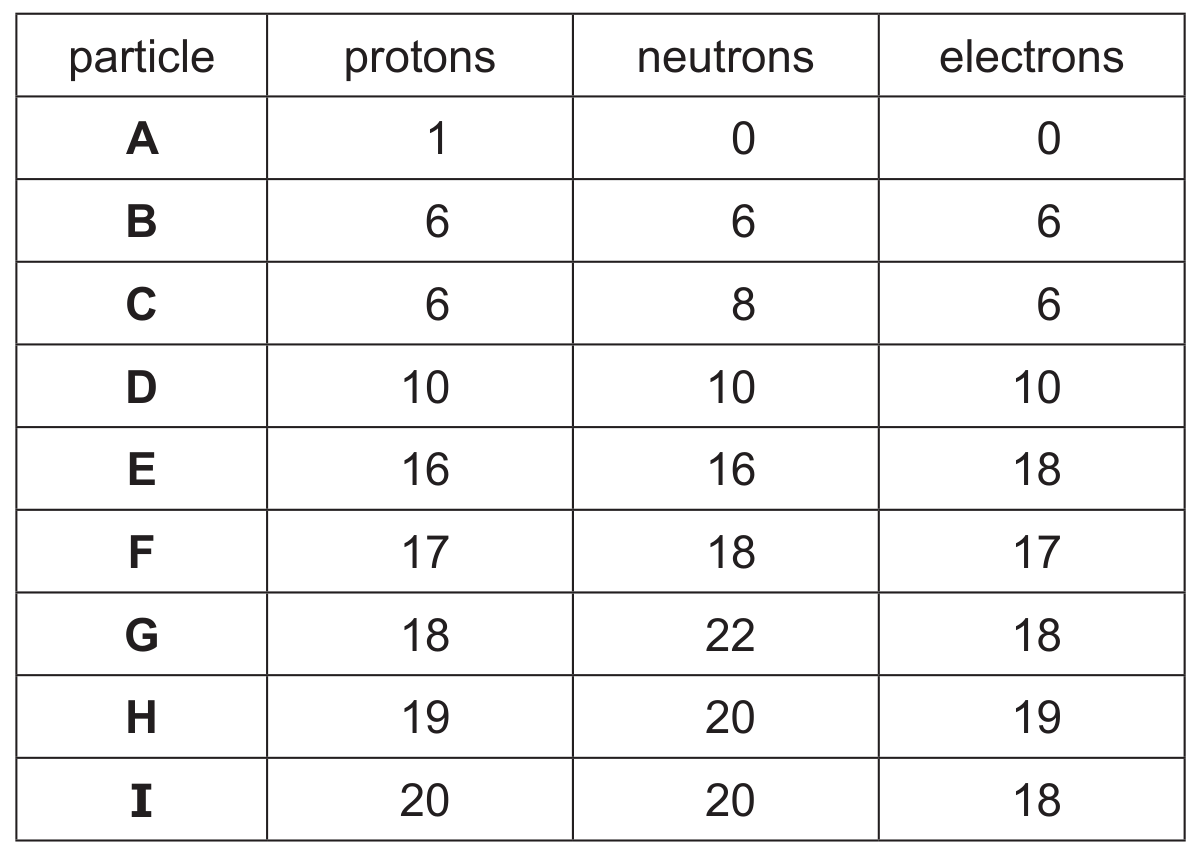
The table shows the numbers of protons, neutrons and electrons in particles A to I.

Table

Answer the following questions about particles A to I. Each letter may be used once, more than once or not at all.

State which of the particles A to I:

are noble gas atoms and

Question 1(b)

[Maximum number: 1]

The symbols of the elements of Period 3 of the Periodic Table are shown.

Table

Answer the following questions about these elements.
Each element may be used once, more than once or not at all.
Write the symbol of an element which:

has only two electrons in its outermost shell

Question 1(a)(iv)

[Maximum number: 1]

Some elements are shown in the order they appear in the reactivity series. The most reactive element is at the top.
> sodium calcium magnesium aluminium zinc iron hydrogen copper

Answer the questions using the list of elements. Each element may be used once, more than once or not at all.

Identify:

a metal with three electrons in the outer shell of its atoms

Question 1

[Maximum number: 4]

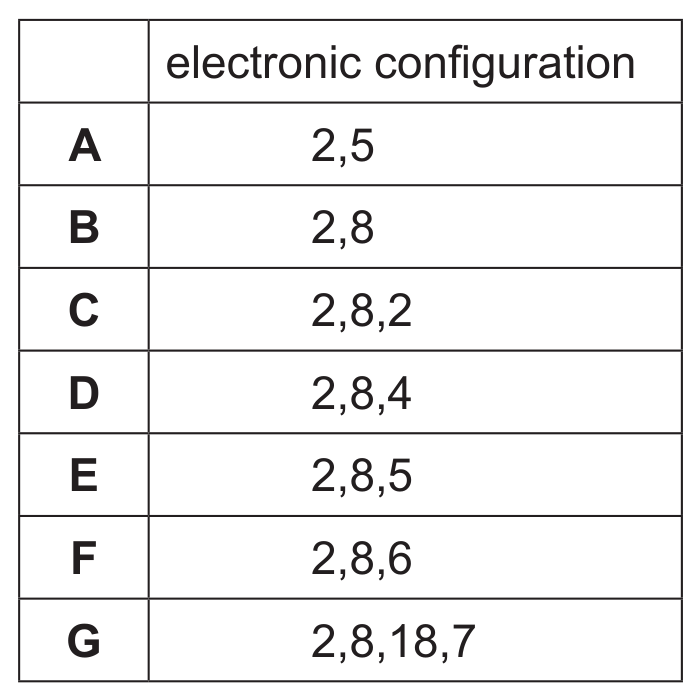
Table 1.1 gives the electronic configurations of some atoms and ions, A to G.

Table 1.1

Table 1.1

Answer the following questions about A to G.
Each letter may be used once, more than once or not at all.
State which of the atoms or ions, A to G, could be:

Question 1(a)

(a)

a noble gas atom

[ 1 ]

Question 1(b)

(b)

an atom of an element in Group VI

[ 1 ]

Question 1(d)

(c)

atoms from the same group and

[ 1 ]

Question 1(e)

(d)

a halogen atom

[ 1 ]

Question 1

[Maximum number: 2]

Six different atoms can be represented as follows.
13 A{ }_{1}^{3} \mathrm{~A}23D{ }_{2}^{3} \mathrm{D}612E{ }_{6}^{12} E613G{ }_{6}^{13} \mathbf{G}714 J{ }_{7}^{14} \mathrm{~J}919{ }_{9}^{19} L

Question 1(a)

(a)

Answer the following questions using atoms from the list. Each atom may be used once, more than once or not at all.

Select one atom from the six shown which

[ 2 ]

Question 1(a)(v)

(i)

is an atom of an element from Group VII of the Periodic Table,

[ 1 ]

Question 1(a)(vi)

(ii)

is an atom of a noble gas.

[ 1 ]

Question 1(a)(v)

[Maximum number: 1]

For each of the following, give the name of an element from Period 2 (lithium to neon), which matches the description.
Elements may be used once, more than once or not at all.

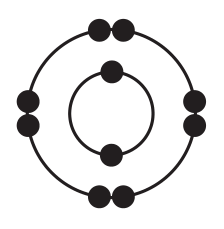
an element which has atoms with a full outer shell of electrons
Question 2

[Maximum number: 1]

An atom of element X contains:
- 5 protons
- 6 neutrons
- 5 electrons.

Which statements about element X are correct?
1 X has an atomic number of 6.
2 X has a nucleon number of 11.
3 X is in Group II of the Periodic Table.
4 X is in the second period of the Periodic Table.

A

1 and 3

B

1 and 4

C

2 and 3

D

2 and 4

0 selected