Question 1
Which process causes the greatest increase in the distance between particles?
A condensation
B freezing
C melting
D sublimation
 EduNinja
• Describe structures of solids, liquids and gases in terms of particle separation, arrangement and motion
Which process causes the greatest increase in the distance between particles?
A condensation
B freezing
C melting
D sublimation
Sodium chloride is a liquid at .
Which row describes the arrangement and the motion of the particles in sodium chloride at ?
arrangement
of particles
motion
of particles
regular
vibrate about a fixed point
regular
move randomly
random
vibrate about a fixed point
random
move randomly
When smoke particles are observed with a microscope they are seen to move around randomly. This is called Brownian motion.
What causes Brownian motion?
diffusion of the smoke particles
molecules in the air hitting the smoke particles
sublimation of the smoke particles
the smoke particles hitting the walls of the container
The diagram shows the arrangement of particles in the three states of matter.
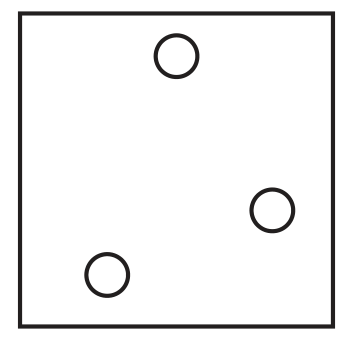
P
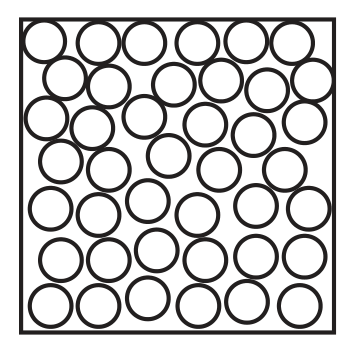
Q

R
Solid carbon dioxide (dry ice) sublimes to gaseous carbon dioxide.
Which row describes the initial and final states?
initial
state
final
state
P
R
Q
P
R
P
R
Q
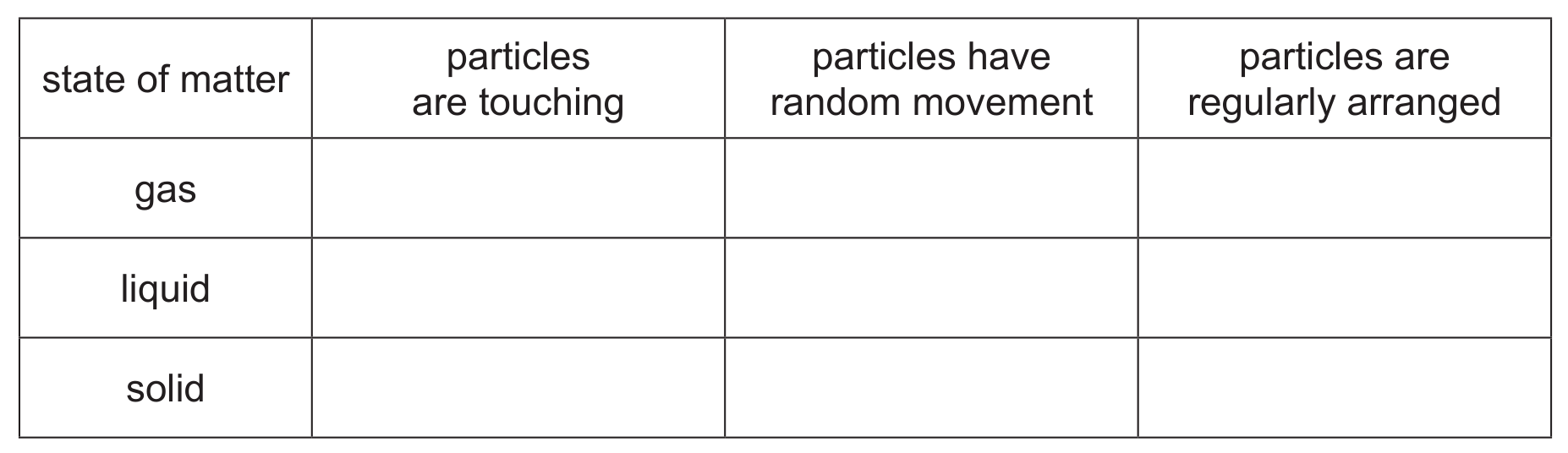
This question is about states of matter.
Complete the table, using ticks and crosses (X), to describe the properties of gases, liquids and solids.
Element X can undergo the following physical changes.
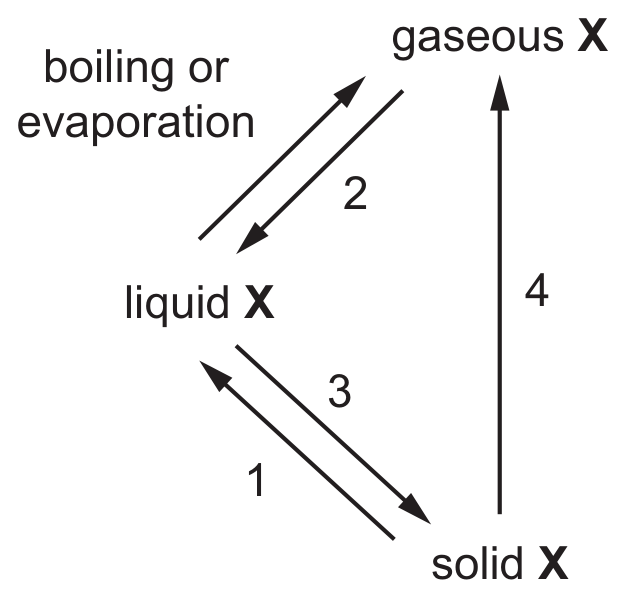
Describe the separation, arrangement and motion of particles of element X in the solid state.
separation
arrangement
motion
Dust particles in the air move around in a random way.
What term describes the random movement of the dust particles?
Identify the particles in the air which cause the random movement of the dust particles.
Explain why the dust particles move in this way.
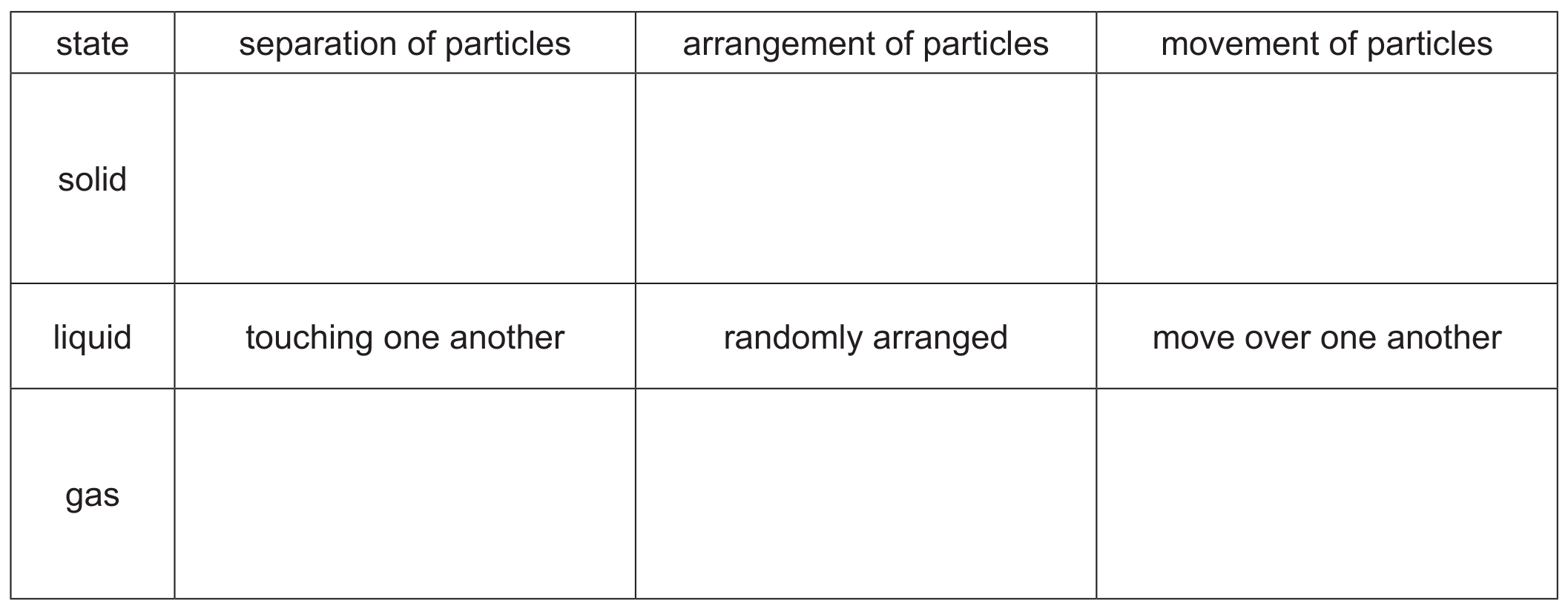
Particles behave differently when in different physical states.
Complete the table to show the separation, arrangement and movement of particles in each physical state.
Which description of Brownian motion is correct?
random movement of particles due to bombardment by larger particles
random movement of particles due to bombardment by smaller particles
random movement of particles from a high concentration to a low concentration
random movement of particles from a low concentration to a high concentration
In which state does of methane contain the most particles?
A gas at
B gas at room temperature
C liquid
D solid