Question 1
Question 1(c)
(a)
The iodination of benzene requires the presence of nitric acid.
Question 1(c)(i)
(i)
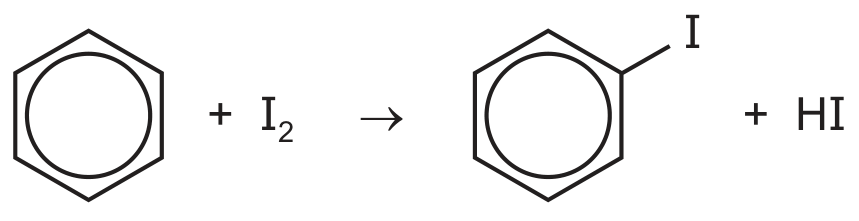
Using bond enthalpies from the Data Booklet, calculate the enthalpy change for the following reaction.
 EduNinja
The iodination of benzene requires the presence of nitric acid.
Using bond enthalpies from the Data Booklet, calculate the enthalpy change for the following reaction.
What is meant by the term lattice energy?
The apparatus shown in the diagram can be used to measure the enthalpy change of formation of magnesium oxide, .
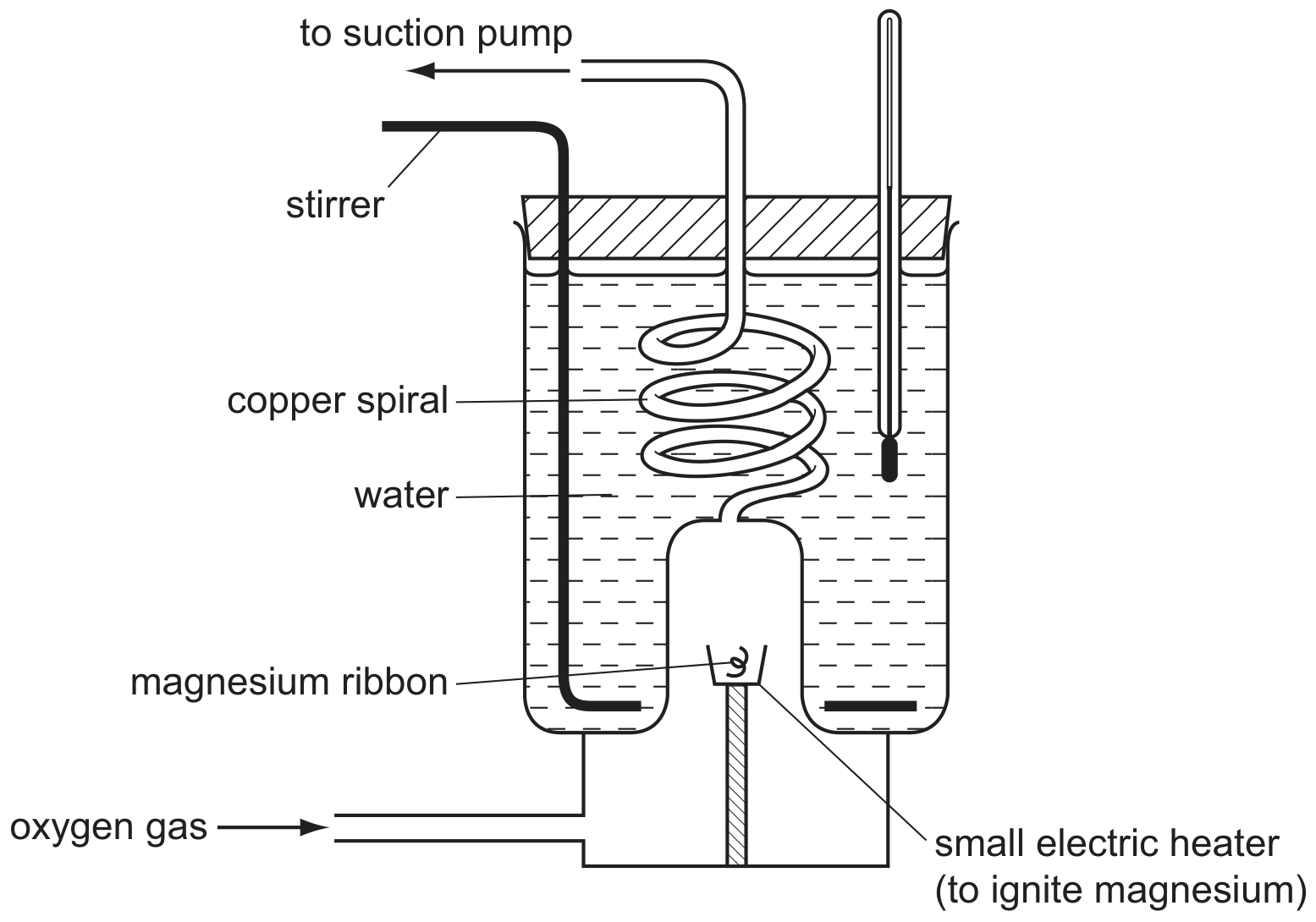
List the measurements you would need to make using this apparatus in order to calculate .
Sulfuric acid is manufactured by the Contact process.
One stage in this process is the conversion of sulfur dioxide into sulfur trioxide in the presence of a heterogeneous catalyst of vanadium(V) oxide, .

Some bond energies are given.
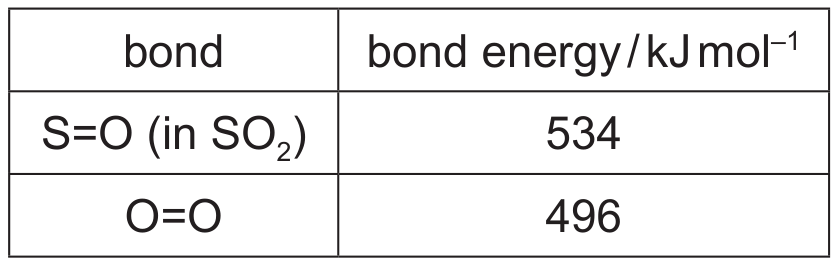
Use the data, and the enthalpy change for the conversion of sulfur dioxide into sulfur trioxide, to calculate a value for the S=O bond energy in .
S=O bond energy in
The Contact process is usually carried out at a temperature of about and a pressure just above atmospheric pressure. Using a higher or lower temperature and pressure would affect both the rate of production of sulfur trioxide and the yield of sulfur trioxide.
A reaction pathway diagram for both the catalysed and uncatalysed reactions between and is shown.
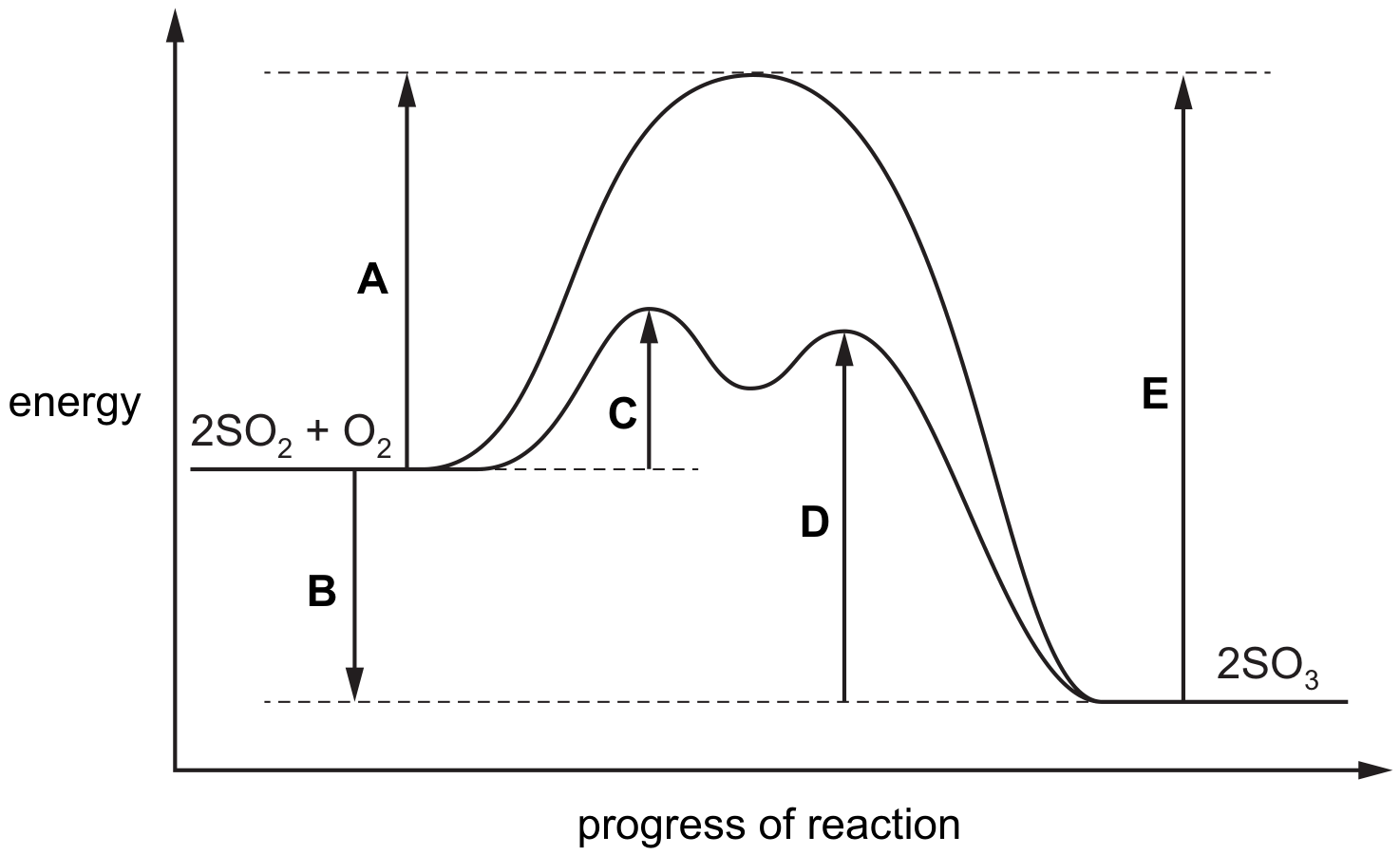
The letters A-E represent energy changes.
Complete the table by stating which letter, A-E, represents the energy change described.
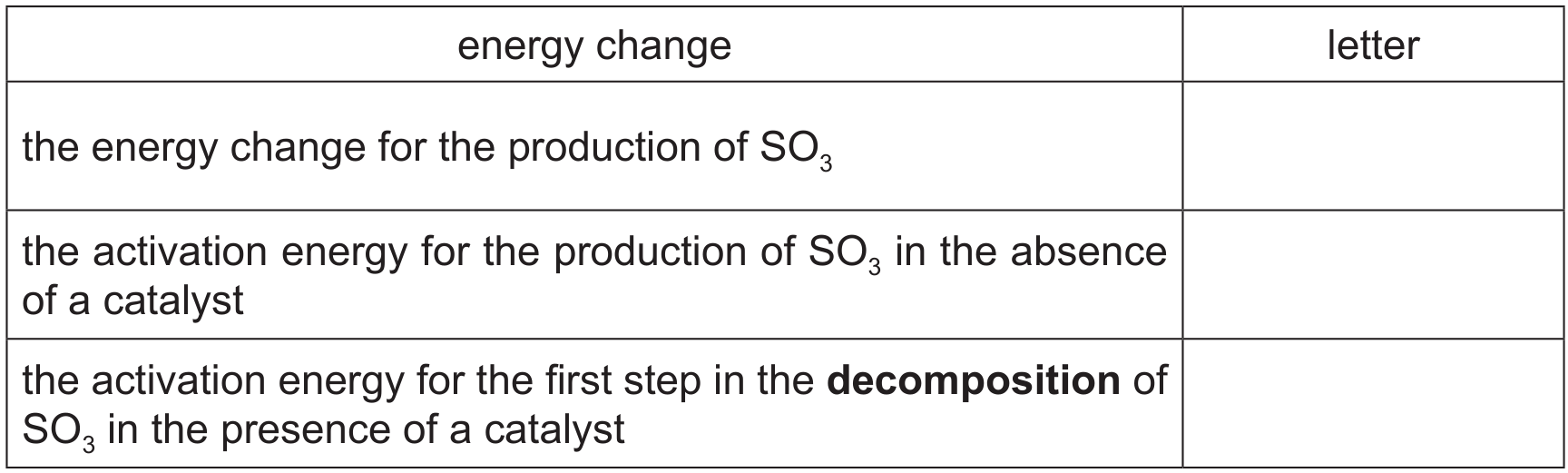
The equation for this stage of the Contact Process is shown.
When vapour is passed over Si at red heat, is formed. contains a Si - Si bond.
The reaction of and re-forms .
Use bond energy data from the Data Booklet to calculate for this reaction.
Ammonia, , is manufactured from nitrogen and hydrogen by the Haber process.
Some bond energies are given.
Use the data to calculate a value for the N-H bond energy.
You must show your working.
Ammonia, , is manufactured from nitrogen and hydrogen by the Haber process.
Some bond energies are given.
Use the data to calculate a value for the N-H bond energy.
You must show your working.
Enthalpy changes, , can be positive or negative.
Which row is correct?
positive
negative
atomisation
bond breaking
bond breaking
neutralisation
bond making
combustion
combustion
bond making
The rate of the reaction is studied.
At 400 K the rate constant for the forward reaction is approximately 1000 times greater than the rate constant for the backward reaction. The overall orders of the forward and backward reactions are the same.

At 700 K the rate constant for the forward reaction is approximately 50 times greater than the rate constant for the backward reaction.
Use this information and the information in (c)(i) to deduce the signs of the values of the forward and backward reactions. Explain your answer.
When sulfur is heated under pressure with chlorine, the major product is .
Use data from the Data Booklet to calculate the enthalpy change, , for this reaction. The eight sulfur atoms in the molecule are all joined in a single ring by single bonds.
Which statement about enthalpy changes is correct?
Enthalpy changes of atomisation are always negative.
Enthalpy changes of combustion are always positive.
Enthalpy changes of formation are always positive.
Enthalpy changes of neutralisation are always negative.