Question 1
[Maximum number: 1]
Propanoic acid is treated with reagent X at room temperature. The organic product of the reaction is sodium propanoate. No gas is produced during the reaction.
What could be reagent X ?
A
B
NaOH(aq)
C
D
 EduNinja
Propanoic acid is treated with reagent X at room temperature. The organic product of the reaction is sodium propanoate. No gas is produced during the reaction.
What could be reagent X ?
NaOH(aq)
Iron is a transition element in the fourth period. Iron forms compounds containing the ions and .
E is a complex ion, , containing with a coordination number of 6 .
contains ligands which are anions of ethanedioic acid, .
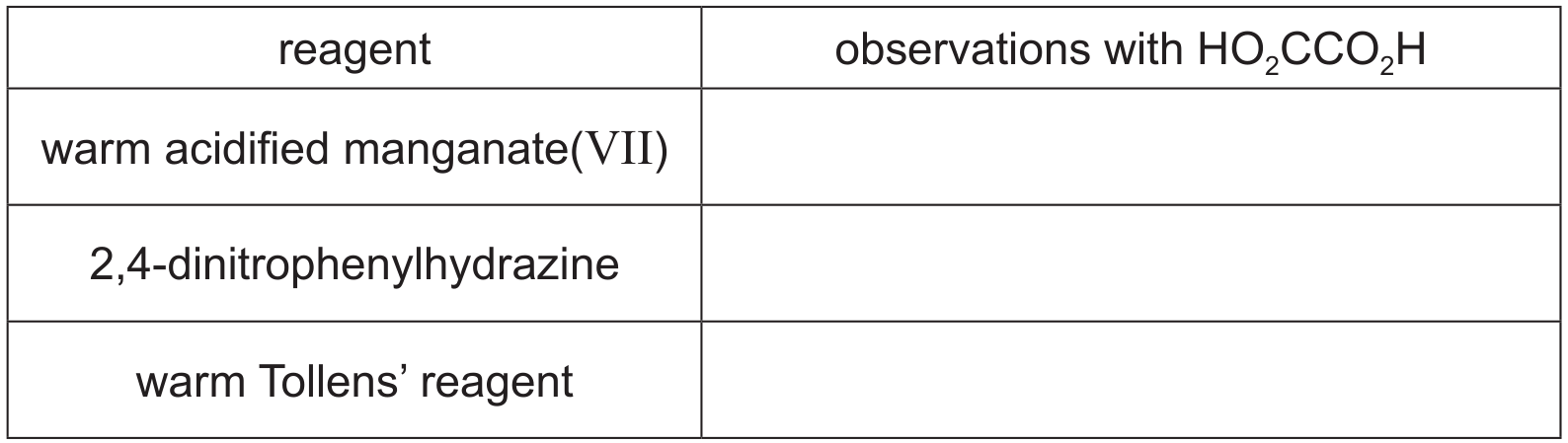
Complete the table to show any observations for the reactions of with the named reagents.
Where no change is observed, write 'none'.
Barium hydroxide, , is a strong base used in inorganic and organic reactions.
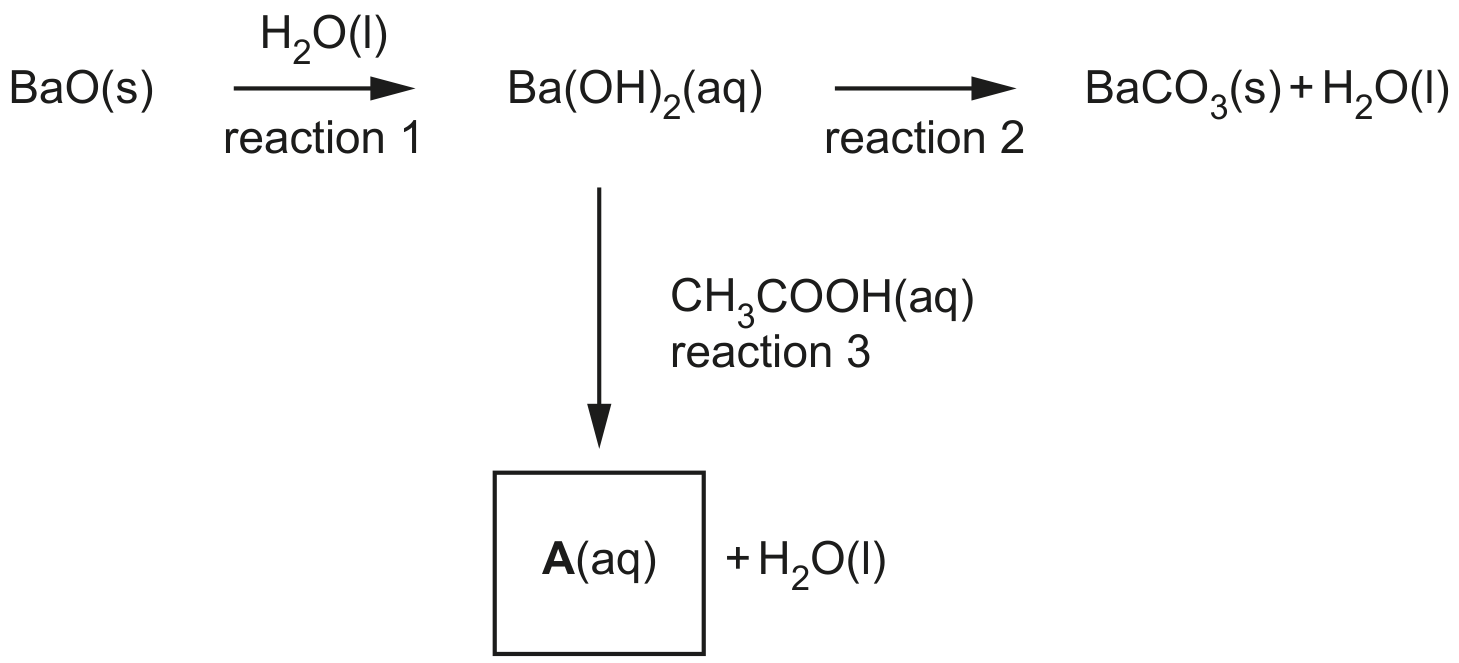
Fig. 2.1 shows a reaction scheme involving \(\mathrm{Ba
is used to hydrolyse organic compounds.
Fig. 2.2 shows the reaction of B with , followed by acidification.
Draw the structures of the organic products of the process shown in Fig. 2.2.
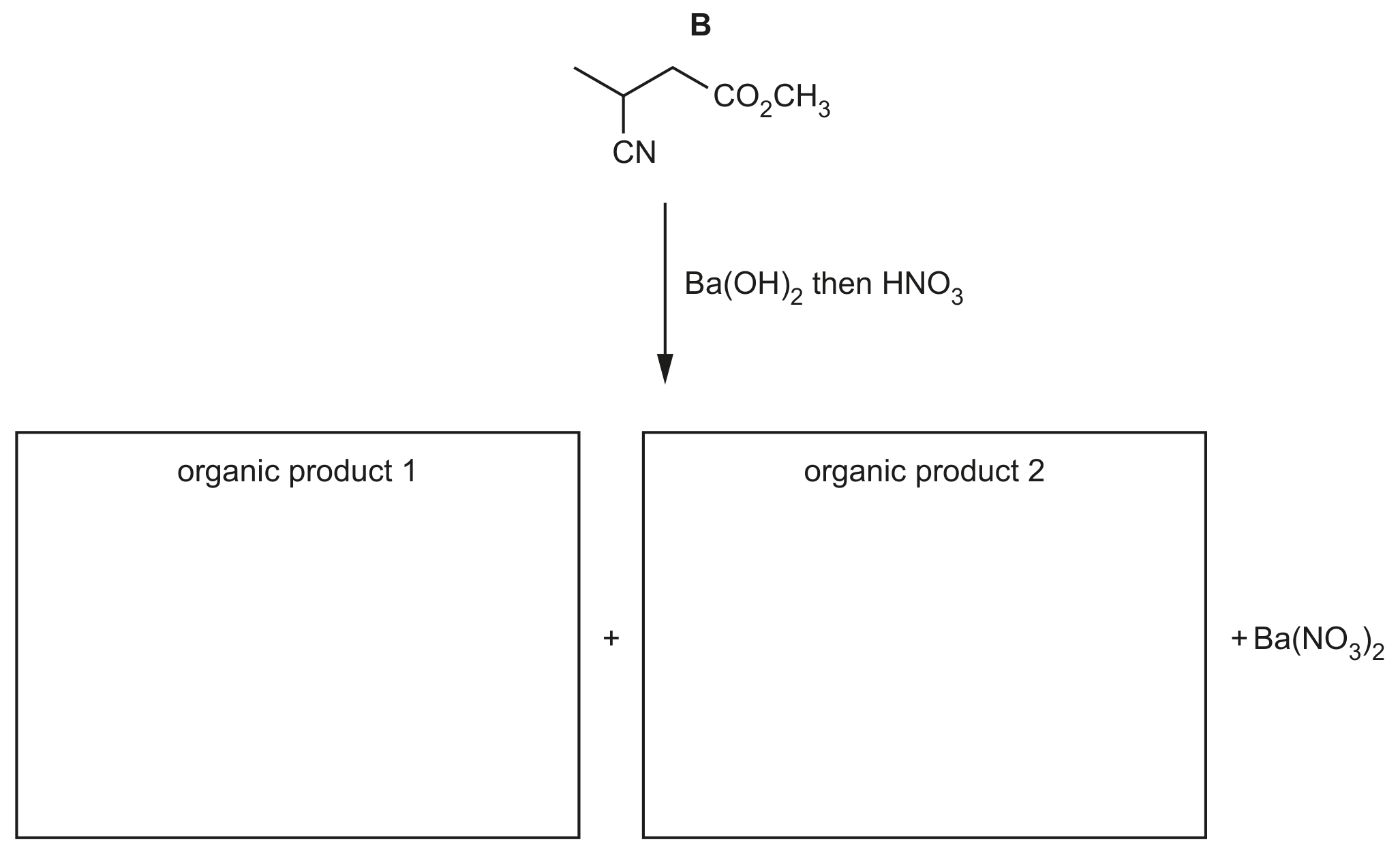
Fig. 2.2
Which substance, when warmed with aqueous ammonium chloride, would produce an alkaline gas?
Propanoic acid, , is a weak acid with .
Write an equation for the reaction between sodium hydroxide and propanoic acid.
Compound R is a weak diprotic (dibasic) acid which is very soluble in water.
State the reagent(s) and essential conditions that would be used for the following conversions.
S into T
S into U
T into S
Give the structural formula of the organic product formed in each of the following reactions.
T reacting with an excess of Na
U reacting with an excess of
A compound Y has all of the properties below.
- It is a liquid at .
- It mixes completely with water.
- It reacts with aqueous sodium hydroxide.
What could Y be?
ethanoic acid
ethanol
ethene
ethyl ethanoate
An organic compound J reacts with sodium to produce an organic ion with a charge of -3 . J reacts with NaOH(aq) to produce an organic ion with a charge of -1 .
What could be the structural formula of J ?
Carboxylic acids may be prepared by several different methods.
In which reaction would propanoic acid be formed?
adding ammonium propanoate to dilute sulfuric acid
heating ethyl propanoate with aqueous sodium hydroxide
heating propan-2-ol with acidified potassium manganate(VII) under reflux
heating propyl ethanoate with dilute sulfuric acid
An ester P with a fruity odour has the following structural formula.
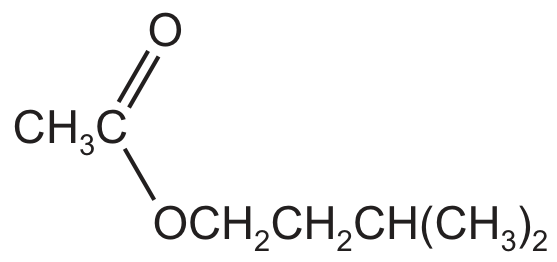
Which compounds are produced when P is hydrolysed using hydrochloric acid?
and
and
and
and