C1.1.5—Induced-fit binding
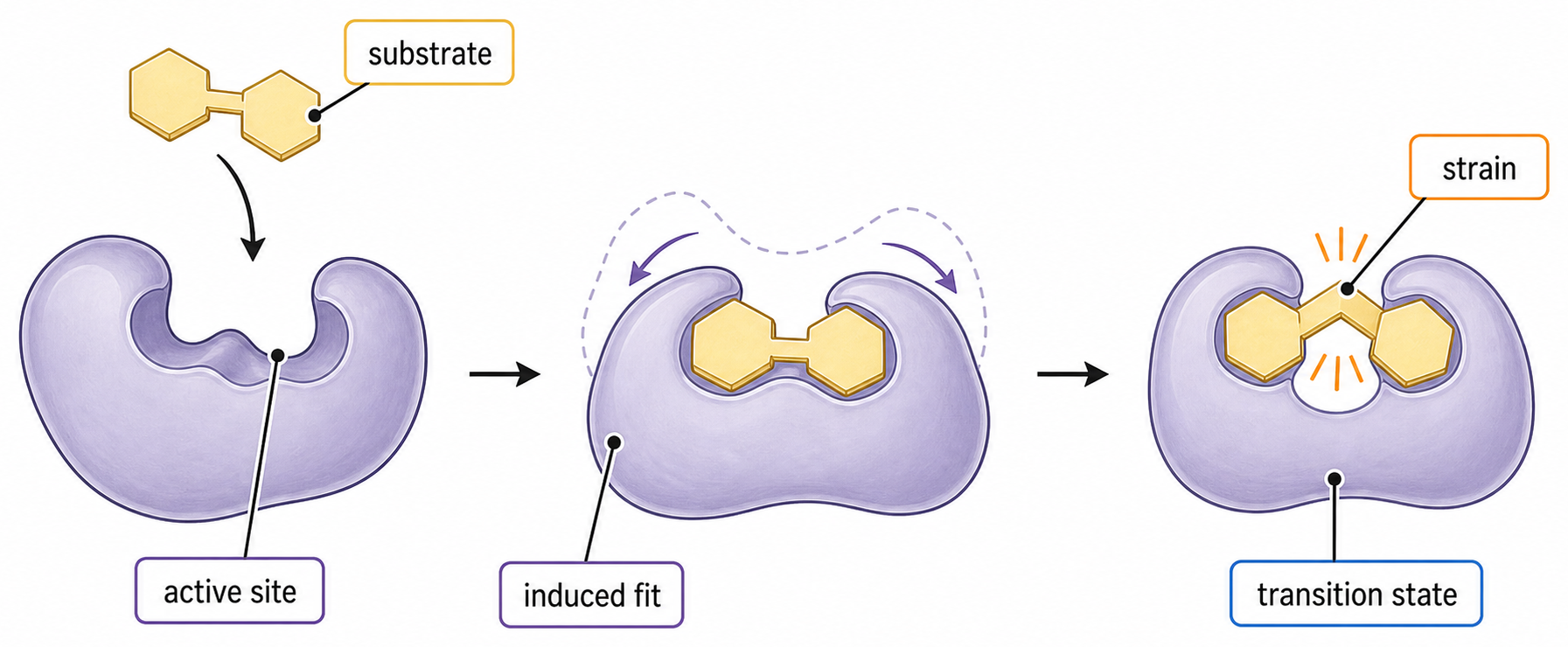
Induced-fit binding means substrate interaction changes active-site shape, aligning catalytic groups and straining substrate bonds during enzyme action in cells.
- Syllabus
- First assessment 2025
- Objective
- C1.1.5
- Level
- SL
Induced-fit binding means substrate interaction changes active-site shape, aligning catalytic groups and straining substrate bonds during enzyme action in cells.
Coverage 2011–2025 · Updated 15 Jul 2026
In the induced-fit model, substrate binding causes a small active-site shape change that positions reactants and catalytic groups.
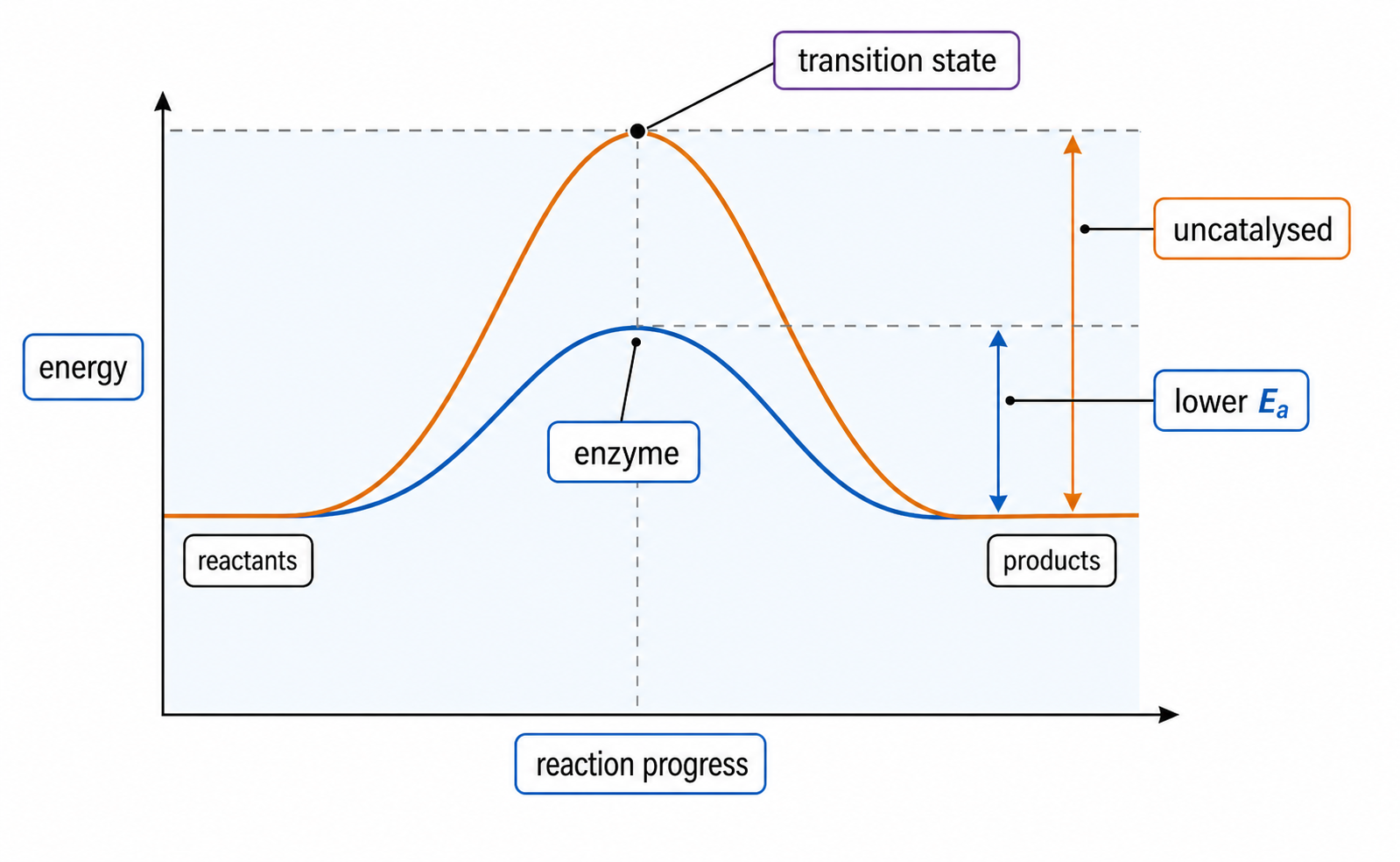
The flexible fit stabilizes the transition state and can strain bonds or exclude water. Binding is therefore more than a rigid lock-and-key match.
A useful induced-fit explanation includes:
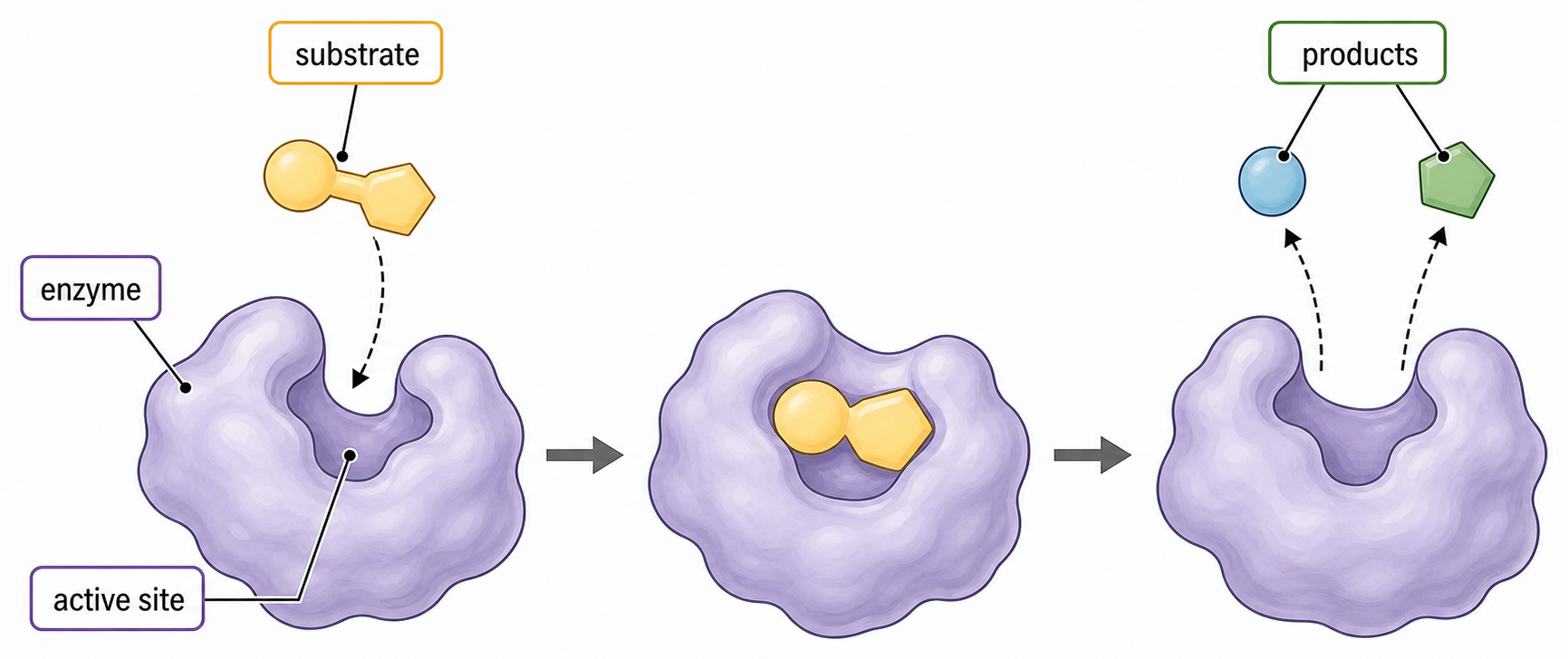
When substrate enters an enzyme pocket, side chains can rotate into a catalytic arrangement; products then leave because their interactions are weaker.
Induced fit does not mean every substrate binds equally well or that the enzyme permanently changes shape.
This objective is assessed through structured response, commonly using Describe / Outline.
Describe / Outline
Build the answer around this relationship: Induced fit involves a shape change when substrate binds.
Representative question
Describe the lock and key model of enzyme activity and how the induced fit model extends it.
enzymes are (globular) proteins that are catalysts/lower activation energy of chemical reactions;
lock and key model: explains specificity of enzyme-substrate; the substrate (key) fits into/has complementary shape to the active site (lock) of the enzyme;
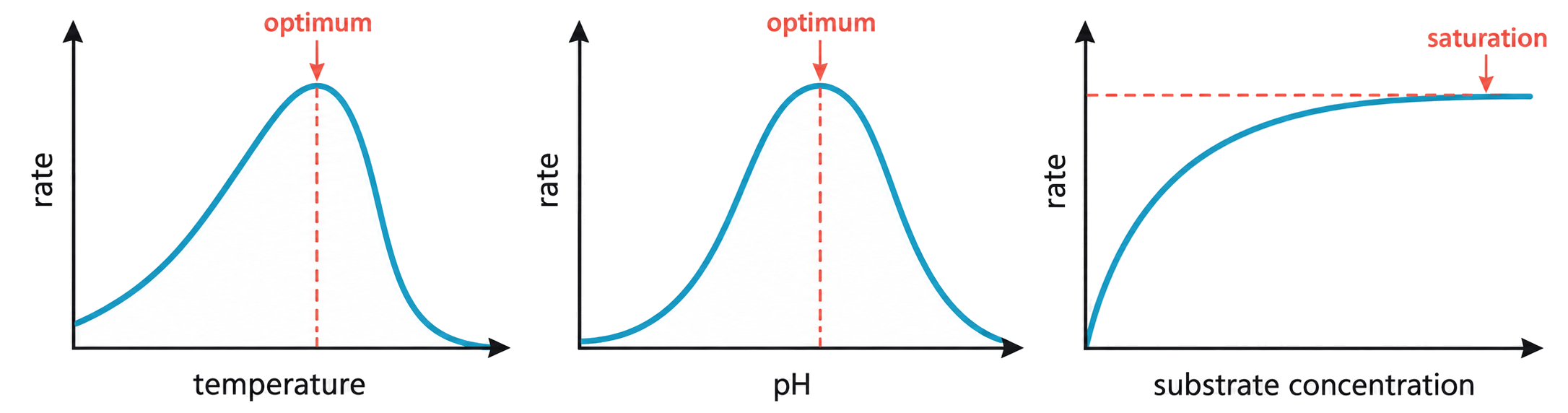
the active site can be changed by different chemicals/temperatures/ pH so substrate cannot bind;
induced-fit model:
changes in the active site/conformational changes to allow substrate to bind; the substrate induces the active site to change; bonds weakened in the substrate (so easier to break); explain reduction of activation energy/wider substrate specificity;
Marking guidance:
Accept the above points in the form of a clearly drawn annotated diagram.
Award [3 max] if only one model addressed.
Enzymes are biological catalysts that lower activation energy and remain unchanged. Their globular protein shape creates active-site specificity; induced fit aligns substrates; molecular motion and collisions affect rate; temperature, pH, and substrate concentration change activity; assays measure substrate loss or product formation over time.