Question 1(e)
[Maximum number: 1]
Diamond and graphite are different solid forms of carbon. The carbon atoms in diamond and graphite are arranged in different ways.
Explain how graphite conducts electricity.
 EduNinja
• Relate the structures and bonding of graphite and diamond to their uses, (a) graphite as a lubricant and as an electrode (b) diamond in cutting tools
Diamond and graphite are different solid forms of carbon. The carbon atoms in diamond and graphite are arranged in different ways.
Explain how graphite conducts electricity.
The 'lead' in a pencil is made of a mixture of graphite and clay.
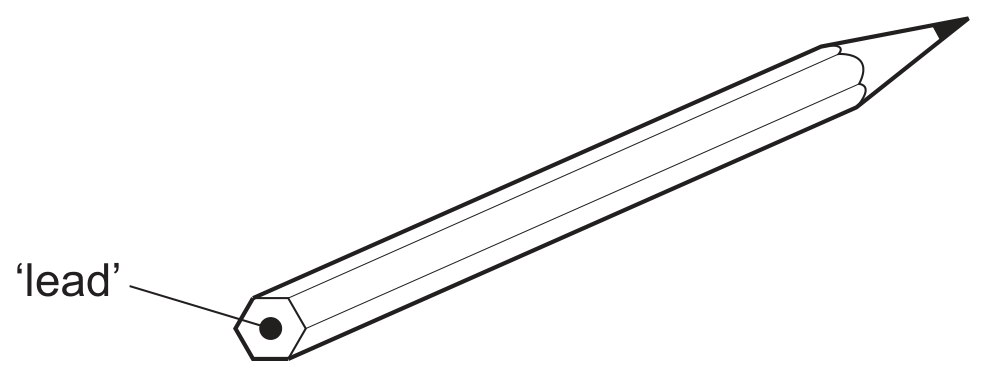
When the percentage of graphite is increased, the pencil slides across the paper more easily.
Which statement explains this observation?
Graphite has a high melting point.
Graphite is a form of carbon.
Graphite is a lubricant.
Graphite is a non-metal.
The 'lead' in a pencil is made of a mixture of graphite and clay.
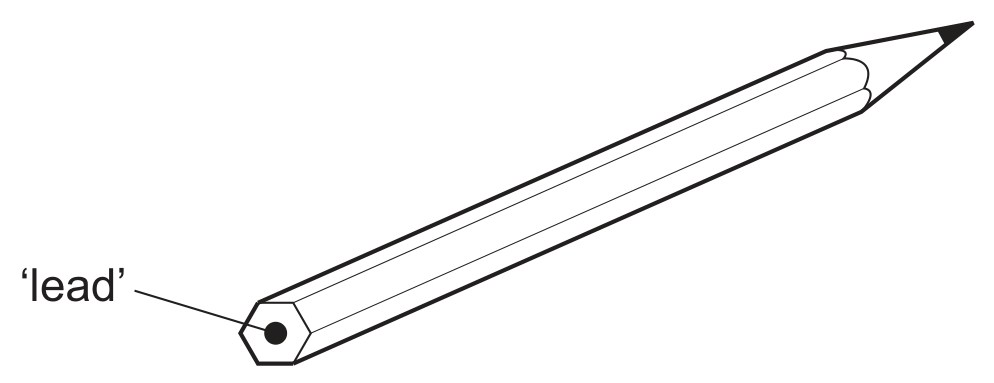
When the percentage of graphite is increased, the pencil slides across the paper more easily.
Which statement explains this observation?
A Graphite has a high melting point.
B Graphite is a form of carbon.
C Graphite is a lubricant.
D Graphite is a non-metal.
The 'lead' in a pencil is made of a mixture of graphite and clay.
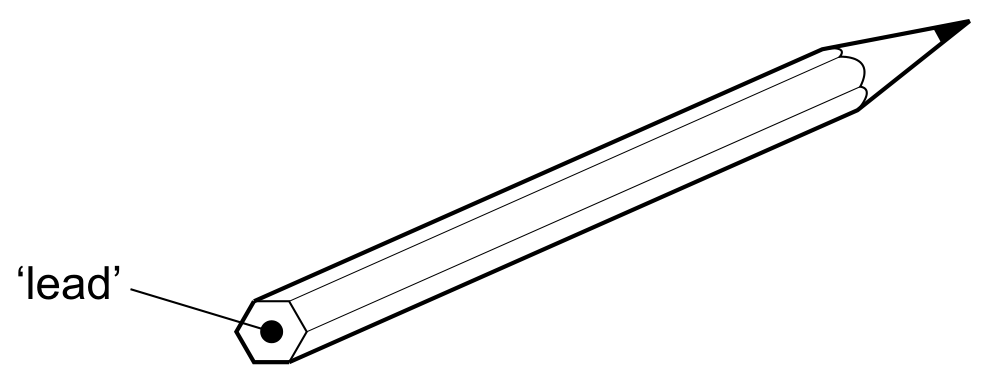
When the percentage of graphite is increased, the pencil moves across the paper more easily.
Which statement explains this observation?
Graphite has a high melting point.
Graphite is a form of carbon.
Graphite is a lubricant.
Graphite is a non-metal.
The 'lead' in a pencil is made of a mixture of graphite and clay.
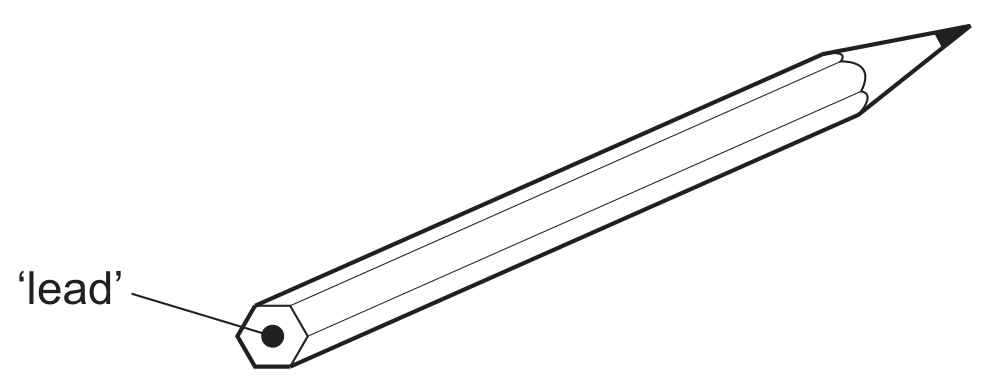
When the percentage of graphite is increased, the pencil slides across the paper more easily.
Which statement explains this observation?
Graphite has a high melting point.
Graphite is a form of carbon.
Graphite is a lubricant.
Graphite is a non-metal.
Diamond is extremely hard and does not conduct electricity.
Which statement explains these properties?
A It has a lattice of positive carbon ions in a 'sea of electrons'.
B It has delocalised electrons and each carbon atom forms three covalent bonds with other carbon atoms.
C It has no delocalised electrons and each carbon atom forms four covalent bonds with other carbon atoms.
D It has strong ionic bonds between each carbon atom.
Which statement about graphite explains why it is used as an electrode?
It contains ions.
It has a giant covalent structure.
It is a metal.
It has mobile electrons.
Which row about the structures and uses of diamond and graphite is correct?
structure
use
diamond has a giant covalent structure
diamond is used to make electrodes
diamond has a simple covalent structure
diamond is used to make cutting tools
graphite has a giant covalent structure
graphite is used as a lubricant
graphite has a simple covalent structure
graphite is used to make cutting tools
Which statement about carbon is correct?
Diamond and graphite both have simple molecular structures.
Diamond and graphite are both used to make cutting tools.
Each carbon atom in diamond is bonded to three other carbon atoms.
Graphite conducts electricity and has a giant covalent structure.
Graphite has a giant covalent structure.
Which statements about graphite are correct?
1 Carbon atoms form four covalent bonds with neighbouring atoms.
2 There are delocalised electrons between layers of carbon atoms.
3 Graphite is a useful lubricant.
4 Graphite is a good conductor of electricity.
1 and 2
1, 3 and 4
2, 3 and 4
3 and 4 only