Question 1(a)(iii)
[Maximum number: 1]
State one gas which:
is unsaturated
 EduNinja
• State: the bonding in alkenes includes a double carbon–carbon covalent bond and that alkenes are unsaturated hydrocarbons
State one gas which:
is unsaturated
A list of substances is shown.
> barium nitrate carbon monoxide hydrated cobalt(II) chloride copper(II) oxide anhydrous copper(II) sulfate ethane potassium iodide propene sodium bromide sulfur dioxide zinc oxide
Answer the following questions using only the substances from the list. Each substance may be used once, more than once or not at all.
Give the name of the substance that:
is an unsaturated hydrocarbon
Ethene is an unsaturated hydrocarbon.
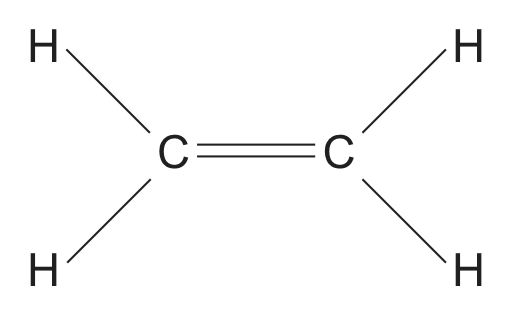
Which description of the bonding in ethene is correct?
All atoms in the molecule have a share of eight electrons.
Each carbon atom shares two of its electrons with hydrogen atoms and two of its electrons with a carbon atom.
Each carbon atom shares two of its electrons with hydrogen atoms and one of its electrons with a carbon atom.
The two carbon atoms share a total of six electrons with other atoms.
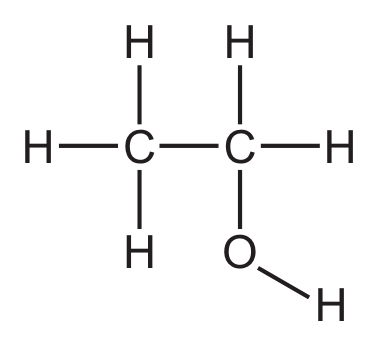
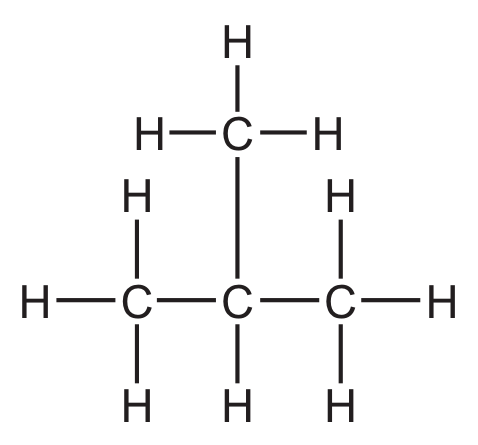
The structures of six organic compounds are shown.
A
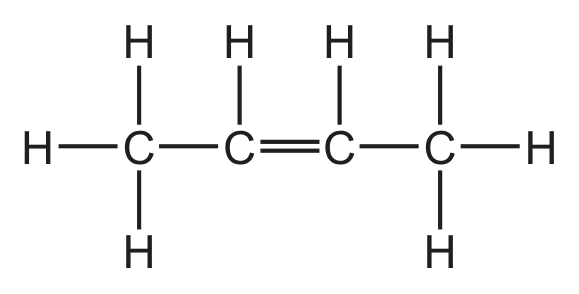
B
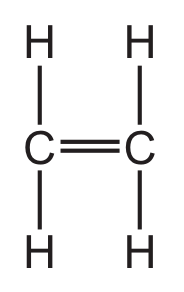
C
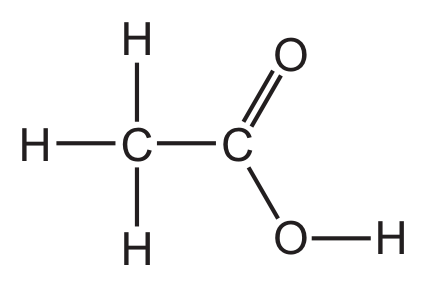
D
E
F
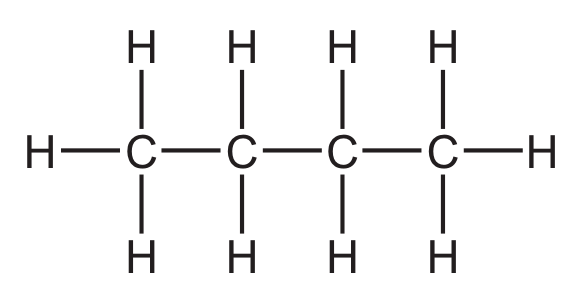
Explain why B is an unsaturated hydrocarbon.
Chlorine, bromine and iodine are halogens.
When one mole of bromine, , reacts with one mole of propene, one organic product is formed.
Which part of the propene molecule reacts with bromine?
Which statement about ethene is correct?
It has the chemical formula .
It burns in excess oxygen producing carbon dioxide and water.
It reacts with to produce an orange solution.
It reacts with oxygen to form ethanol.
38 P, Q, R and S are four organic compounds.
P is an unsaturated hydrocarbon.
Q burns but otherwise is unreactive.
R contains a C-C single bond and a C=C double bond.
S undergoes addition polymerisation.
Which compounds are alkenes?
P and R only
P, R and S
P, Q and S
Q, R and S
Propane and propene both react with chlorine.
A molecule of propene, , is unsaturated and will react with chlorine at room temperature.
State why propene is an unsaturated molecule.
Addition polymerisation and condensation polymerisation are two types of polymerisation.
Which functional group is present in all the monomers which are used to make addition polymers?
Many organic compounds contain carbon and hydrogen only.
Fig. 7.1 shows a section of a polymer formed from an alkene.
Identify the functional group in alkenes that reacts when alkenes form polymers.