IB Physics SL B.1.12 Conduction rate
Practise conduction calculations by using thermal conductivity, area, thickness and temperature difference to find energy transfer rates and read graph changes.
- Syllabus
- First assessment 2025
- Objective
- —
- Level
- SL
Practise conduction calculations by using thermal conductivity, area, thickness and temperature difference to find energy transfer rates and read graph changes.
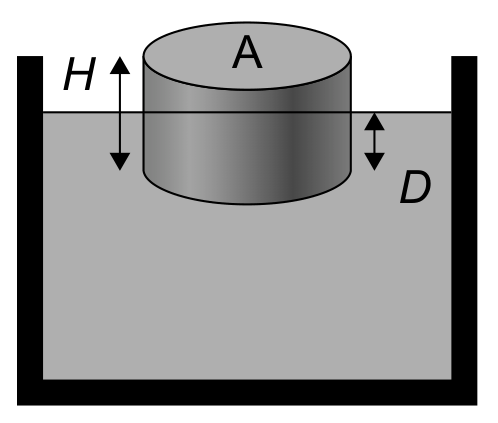
A cylindrical cork of height H and cross-sectional area A is floating stationary in water. Its depth below the water surface is D.
On a winter day, the surface of a lake is frozen. The temperature of the air above the lake is . The layer of ice frozen on the surface of the lake has a thickness of 1.9 cm .
The thermal conductivity of ice is . Calculate the rate per unit area at which thermal energy leaves the lake by conduction through the ice layer.
Explain how the rate calculated in (e)(i) changes as the layer of ice grows thicker.