IB Physics SL B.1.10 Thermal transfer mechanisms
Choose conduction, convection or radiation in real devices and explain the design decision or pathway that transfers energy.
- Syllabus
- First assessment 2025
- Objective
- —
- Level
- SL
Choose conduction, convection or radiation in real devices and explain the design decision or pathway that transfers energy.
An electrically heated pad is designed to keep a pet warm.
The pad is heated using a resistor that is placed inside the pad. The dimensions of the resistor are shown on the diagram. The resistor has a resistance of and a total length of 1.25 m .
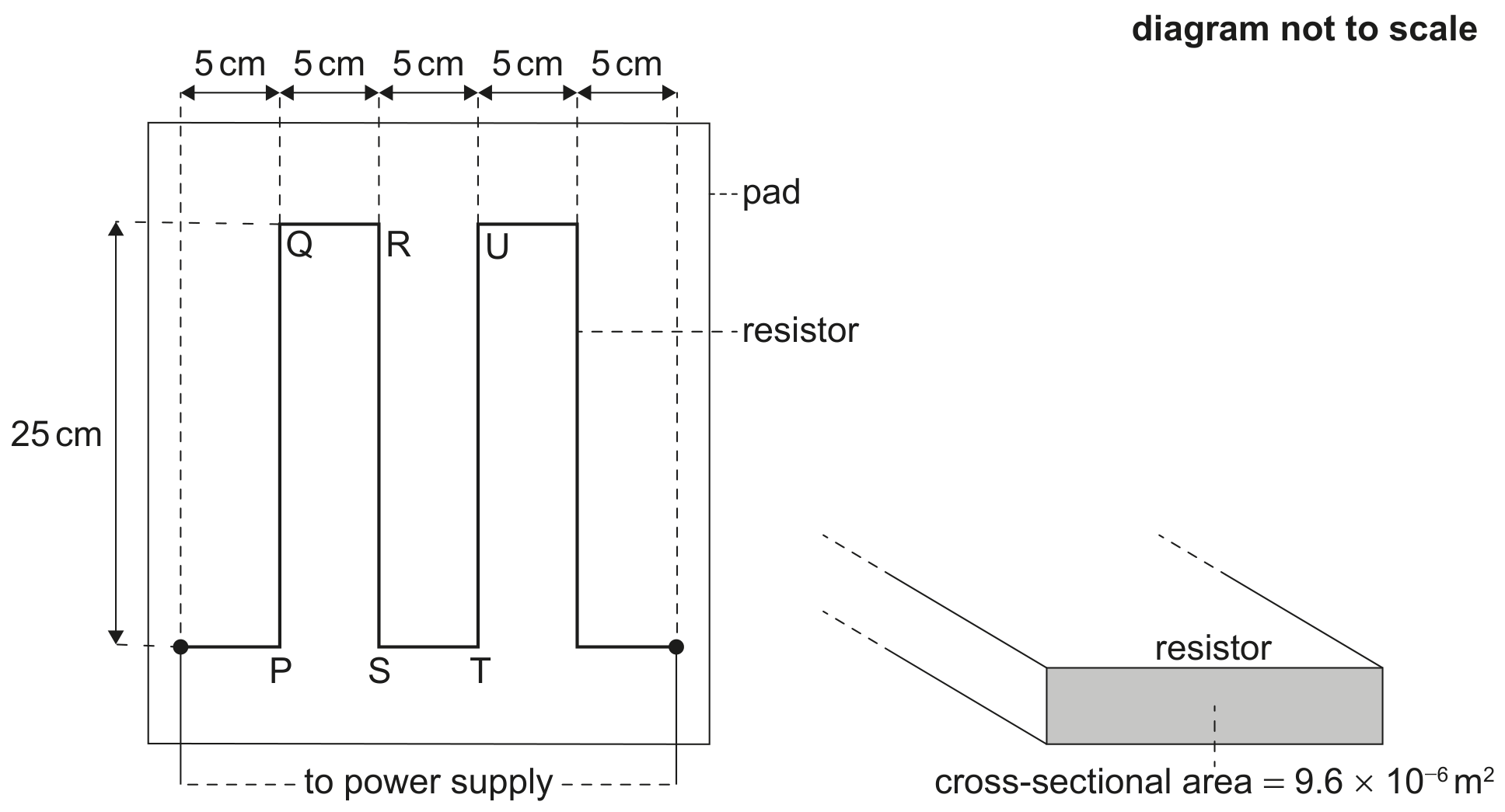
When there is a current in the resistor, the temperature in the pad changes from a room temperature of to its operating temperature at .
The design of the pad encloses the resistor in a material that traps air. The design also places the resistor close to the top surface of the pad.
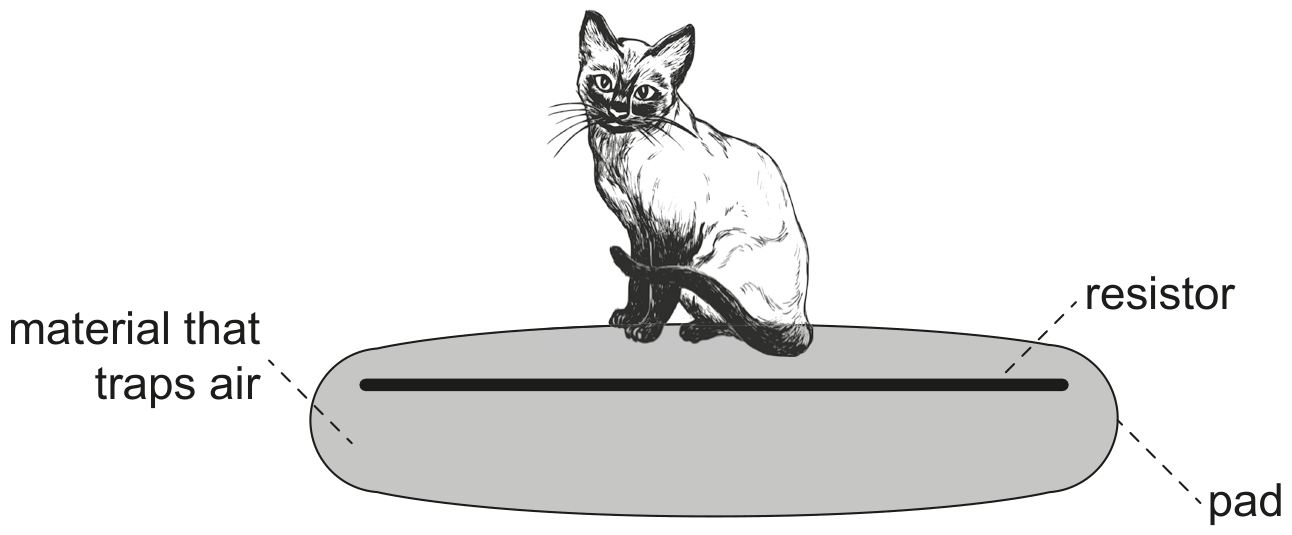
Explain, with reference to thermal energy transfer, why the pad is designed in this way.