IB Physics SL A.3.9 Kinetic energy
Practise calculating kinetic energy and relating it to mass, speed, momentum and graph-based work in particle and object motion.
- Syllabus
- First assessment 2025
- Objective
- —
- Level
- SL
Practise calculating kinetic energy and relating it to mass, speed, momentum and graph-based work in particle and object motion.
A toy rocket is made from a plastic bottle that contains some water.
Air is pumped into the vertical bottle until the pressure inside forces water and air out of the bottle. The bottle then travels vertically upwards.
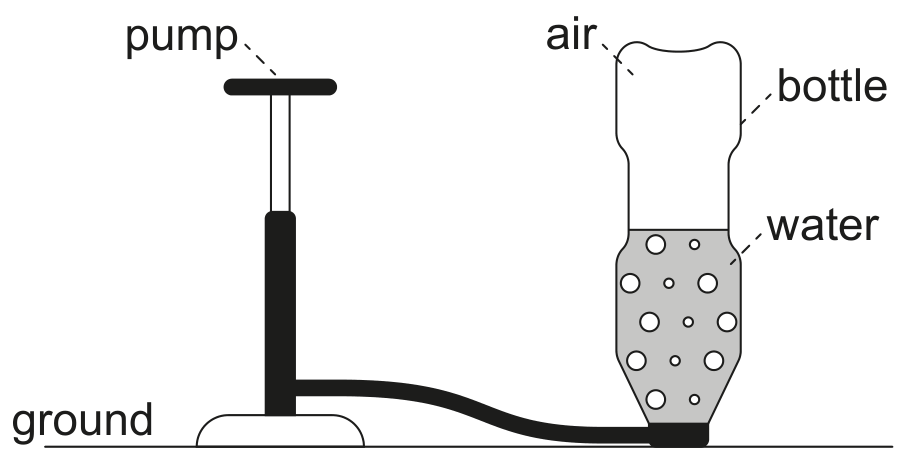
The air-water mixture is called the propellant.
The variation with time of the vertical velocity of the bottle is shown.
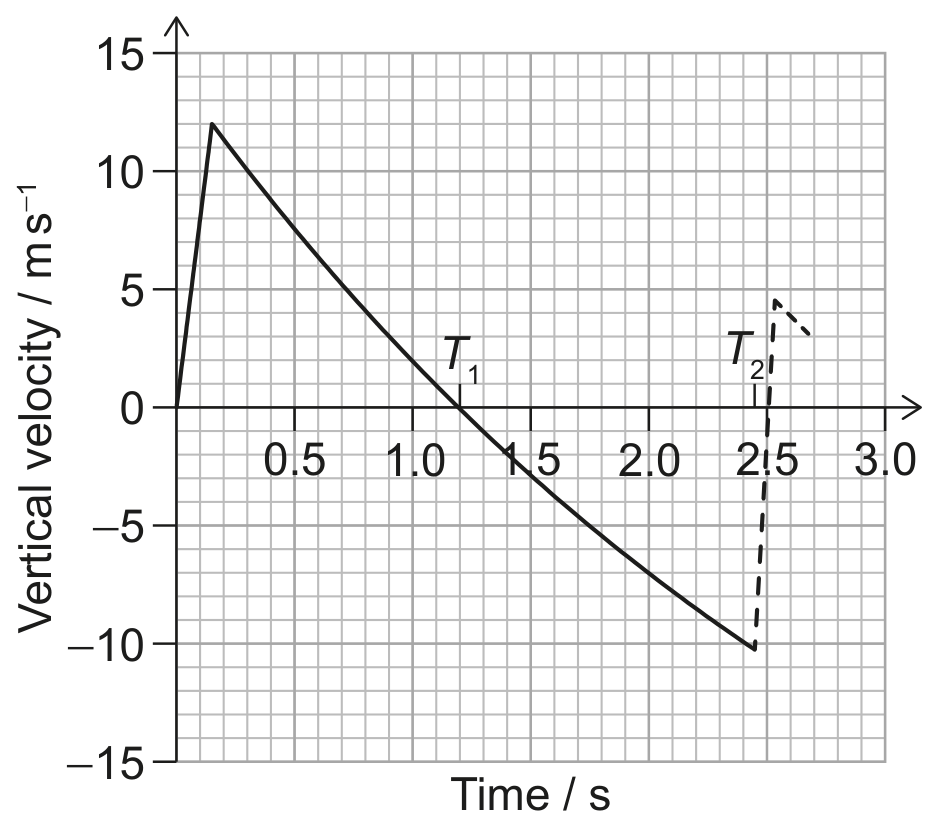
The bottle reaches its highest point at time on the graph and returns to the ground at time . The bottle then bounces. The motion of the bottle after the bounce is shown as a dashed line.
The bottle bounces when it returns to the ground.
Calculate the fraction of the kinetic energy of the bottle that remains after the bounce.