IB Physics SL A.3.1 Conservation of energy
Practise tracing energy stores and transfers, then using conservation of energy to explain outcomes and calculate speeds or power.
- Syllabus
- First assessment 2025
- Objective
- —
- Level
- SL
Practise tracing energy stores and transfers, then using conservation of energy to explain outcomes and calculate speeds or power.
This question is in two parts. Part 1 is about energy resources. Part 2 is about thermal physics.
Part 1 Energy resources
Electricity can be generated using nuclear fission, by burning fossil fuels or using pump storage hydroelectric schemes.
A mass of 0.22 kg of lead spheres is placed in a well-insulated tube. The tube is turned upside down several times so that the spheres fall through an average height of 0.45 m each time the tube is turned. The temperature of the spheres is found to increase by .
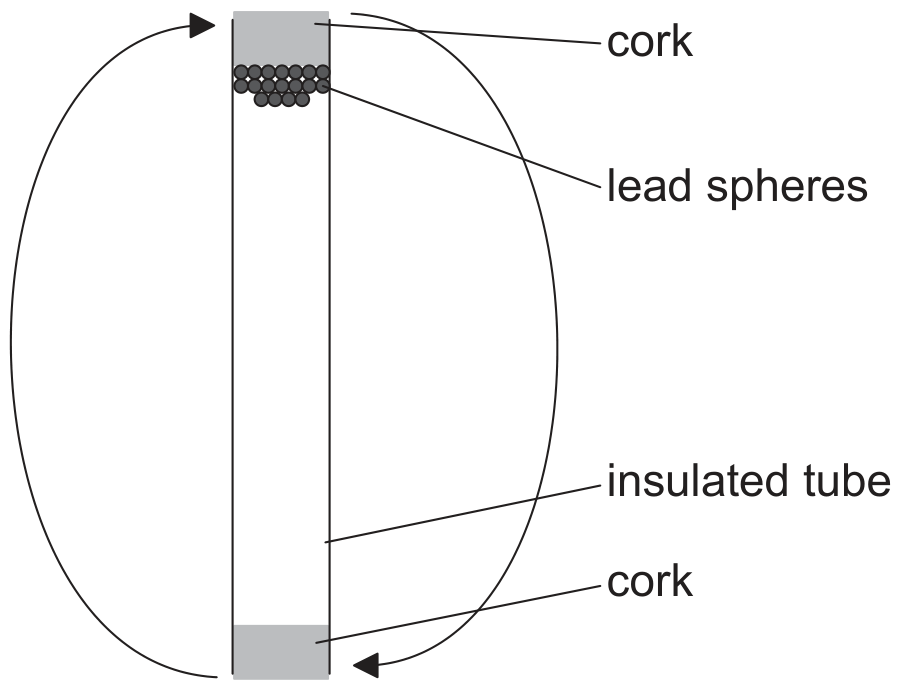
Discuss the changes to the energy of the lead spheres.