
Question 2(a)
[Maximum number: 4]
Outline two ways in which B R D could change its marketing mix when it switches to making model trains with plastic rather than metal in 2024 (lines 108-110).
 EduNinja
Students practise linking all seven Ps—product, price, place, promotion, people, processes, physical evidence—to strategic decisions using case-study evidence, financial data,…
Outline two ways in which B R D could change its marketing mix when it switches to making model trains with plastic rather than metal in 2024 (lines 108-110).
Explain different distribution channels that SVT could use for the WF15 water purifier (lines 132-133).
Fru-Yo (FY)

Fru-Yo (FY) produces premium-priced yoghurts. FY has strong brand loyalty and relies only on word-of mouth promotion. FYs target market is consumers who may have health problems.
FY created two new zero-sugar fruit yoghurts. FY did no market research into the new yoghurts but is confident that FYs brand loyalty will ensure success. The market constantly changes because competitors regularly introduce new healthy yoghurts.
Table 2 shows forecasted financial information for the two new zero-sugar fruit yoghurts, Yoghurt A and Yoghurt B.
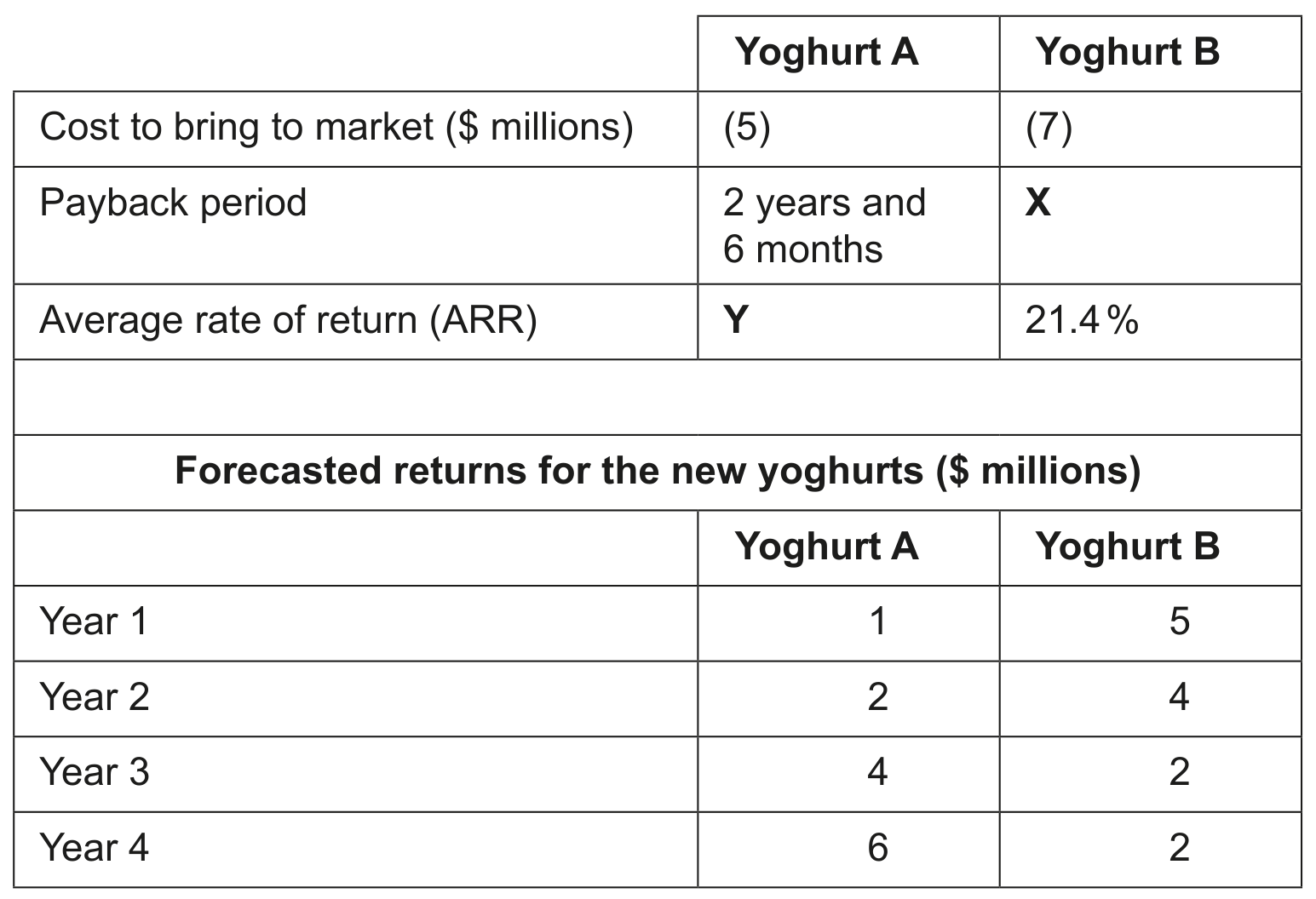
Table 2: Forecasted financial information for FY's new zero-sugar fruit yoghurts
State two features of brand loyalty.
BRD manufactures Matchfix plastic model kits in its Liverpool factory. The Matchfix product range was profitable until 2020 . The market is competitive, and prices are increasingly important to customers. BRD uses a cost-plus (mark-up) pricing strategy and reviews its kit prices regularly. In 2021, the cost of plastic increased by 20 %, with a further increase in 2022 of 25 %. Matchfix plastic model kit sales fell in 2021 and again in 2022.
By 2022, 50 % of the Liverpool factory space was unused. The marketing director, Simpson Smith, wants to attract a new market segment. He has suggested two options for this unused space: a science and imagination centre and a railway museum.
- Option 1: A science and imagination centre. This would include interactive exhibits, allowing families to experiment with wind, magnets, electricity, and light. Highly trained employees would be needed to assist with experiments.
- Option 2: A railway museum. This would display full-size railway engines and rail cars used in the 20th century. A small number of employees would be needed as guides.
For each option, the entrance fee would be £ 15 per adult, with accompanied children entering for free. BRD would also open a café. Fixed costs for the café are forecasted at £ 25000 per annum and variable costs at £ 10 per customer. Simpson has predicted that 80 % of visitors will visit the café, with an average spend per adult of £ 15. Forecasted costs and visitor numbers for both options are shown in Table 1 and Table 2.
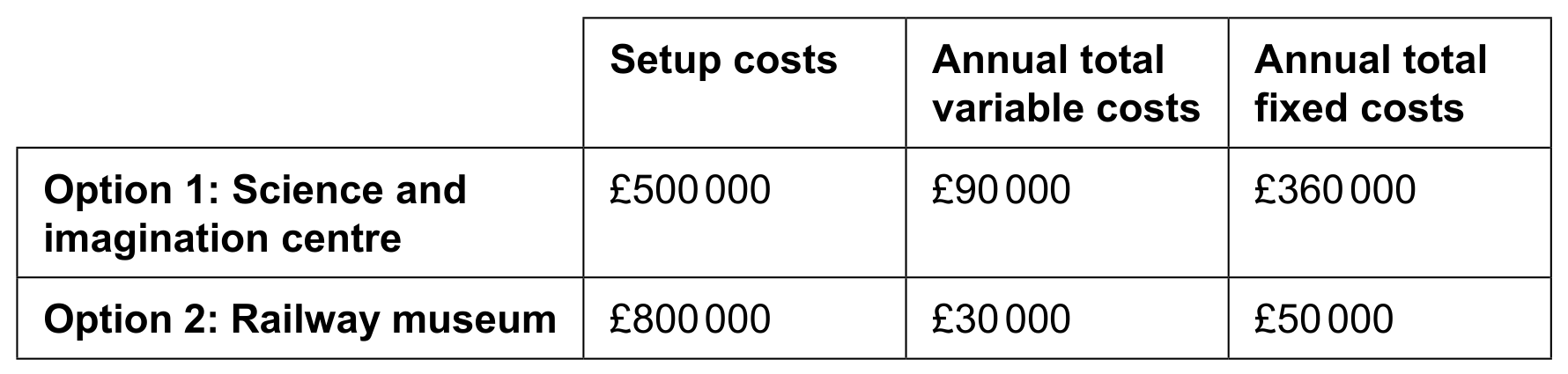
Table 1: Forecasted costs for Option 1 and Option 2
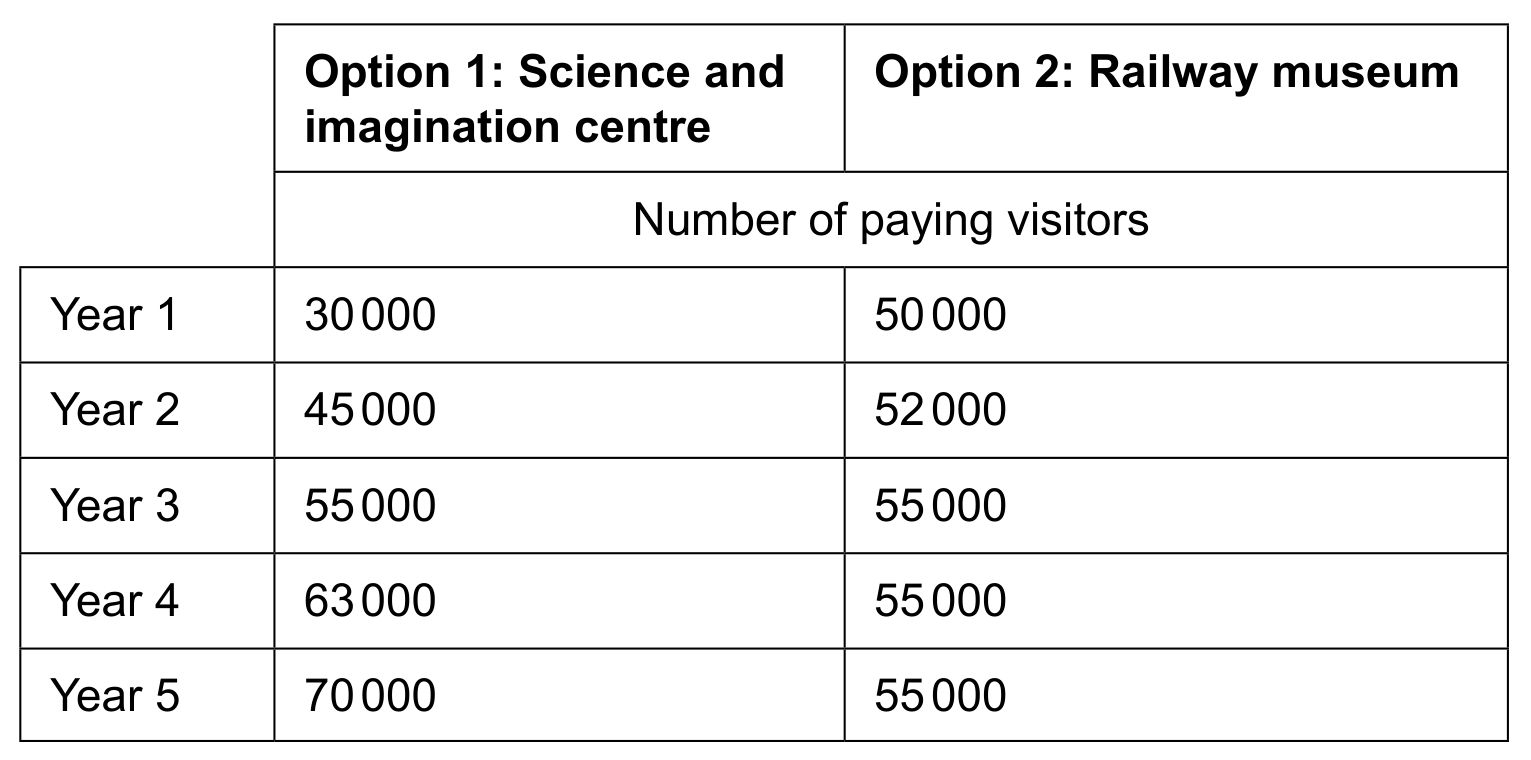
Table 2: Forecasted number of paying visitors for Option 1 and Option 2
Explain one advantage and one disadvantage for BRD of using a cost-plus (mark-up) pricing strategy for its Matchfix plastic model kits.
3. Dean West Tutoring (DWT)
Dean West was an International Baccalaureate (IB) business management teacher in a developing country (country X). He also offered private tuition to students in need of additional support. Five years ago, he decided to leave teaching and set up Dean West Tutoring (DWT).
DWT has grown in the last five years and now employs ten tutors offering face-to-face tuition in a range of IB subjects. The tutors work part-time. DWT takes a percentage of the fees that students pay for the tutoring. To establish positive branding for DWT, Dean expects all tutors to follow a strict code of conduct. He also reviews each tutor's performance and student feedback every week. Some tutors are feeling demotivated.
With the worldwide growth of online learning in the last few years, Dean saw an opportunity to expand DWT. He discovered a large market in Asia, particularly in China. Online one-to
one tuition in Asia is charged at an hourly rate that is three times higher than that usually charged in country X. DWT would need to hire agents in Asia to find potential students who want to learn online.
As the new school year is starting soon in China, Dean will need to act quickly. He is considering drawing up a Gantt chart to assist his planning.
However, DWT's existing tutors are concerned about the expansion due to their lack of experience and equipment for online tutoring.
Dean is now considering two options to ensure that D W T has enough suitable tutors for expansion to online tuition:
- Option 1: Offer training and support to the existing tutors.
- Option 2: Recruit new tutors from anywhere in the world with online teaching experience.
Define the term branding.
5. Justin Price Clothing Ltd. (JP)
Justin Price Clothing Ltd. (JP) is a private limited company that manufactures clothing. Its unique selling point/proposition (USP) is its innovative process. Customers send images of themselves and some measurements to J P via the internet, which J P uses to determine the customer's exact measurements. Then, a style consultant contacts the customer via video conference to discuss the customer's fashion preferences. After this, the style consultant designs clothing for that customer. Using job/customized production, JP manufactures and ships the clothing to the customer. Most materials (stock) are ordered when a customer agrees to the designs. A total of 84 % of JP's customers have purchased items from JP more than five times.
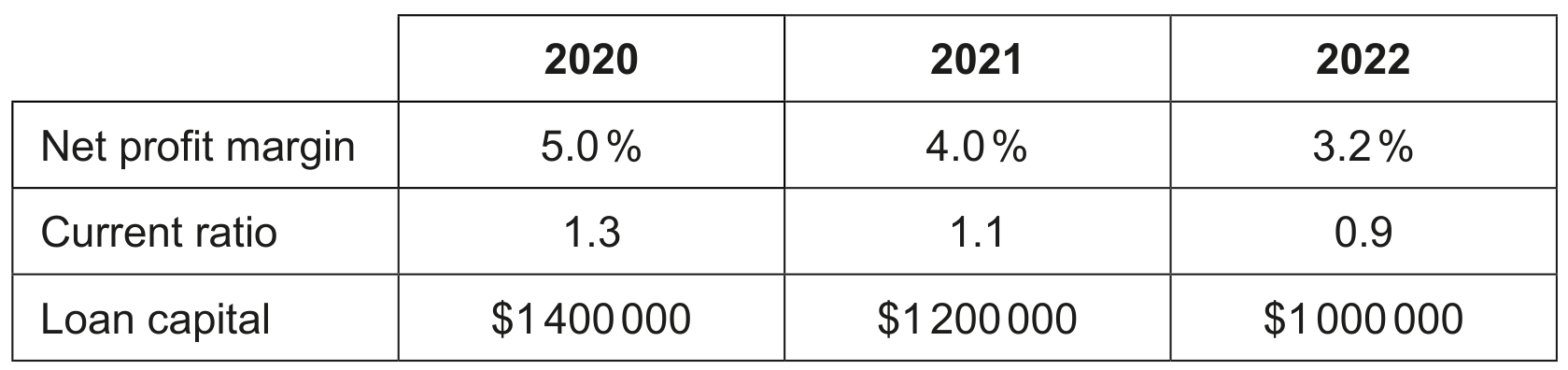
Table 3: Selected financial information for the year or at year's end 2020, 2021 and 2022
Justin Price, JP's owner, asked his management team to consider two options and decide which would best increase profitability:
- Option 1: Change JP's design and production model. Consultants, when working with customers online, would recommend from a series of pre-made options. The company would shift to batch production and have the stock (inventory) available. Style consultants would still be central to the process, but the clothing would no longer be custom made.
- Option 2: Increase JP's customer base. JP's customers have high brand loyalty. However, the brand is not very well known. JP would open several strategically located retail stores in a few major cities to increase brand awareness. In the store, customers could get their measurements taken and receive in-person fashion advice from a fashion consultant, after which they could purchase unique clothing. JP would continue its online services.
With reference to JP, explain the term brand loyalty.
Discuss the two options that Justin has suggested.
Section C
Answer one question from this section. The organizations featured in sections A and B and in the paper 1 case study may not be used as a basis to your answer.
5. Justin Price Clothing Ltd. (JP)
Justin Price Clothing Ltd. (JP) is a private limited company that manufactures clothing. Its unique selling point/proposition (USP) is its innovative process. Customers sends images of themselves and some measurements to J P via the internet, which J P uses to determine the customer's exact measurements. Then, a style consultant contacts the customer via video conference to discuss the customer's fashion preferences. After this, the style consultant designs clothing for that customer. Using job/customized production, JP manufactures and ships the clothing to the customer. Most materials (stock) are ordered when a customer agrees to the designs. A total of 84 % of JP's customers have purchased items from JP more than five times.
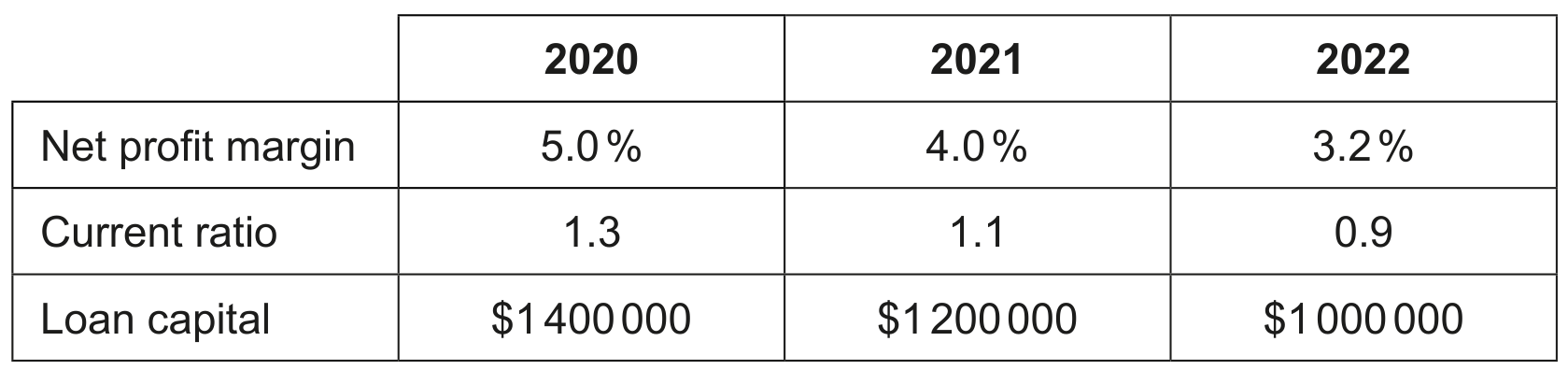
Table 3: Selected financial information for the year or at year's end 2020, 2021 and 2022
Justin Price, JP's owner, asked his management team to consider two options and decide which would best increase profitability:
- Option 1: Change JP's design and production model. Consultants, when working with customers online, would recommend from a series of pre-made options. The company would shift to batch production and have the stock (inventory) available. Style consultants would still be central to the process, but the clothing would no longer be custom made.
- Option 2: Increase JP's customer base. JP's customers have high brand loyalty. However, the brand is not very well known. JP would open several strategically located retail stores in a few major cities to increase brand awareness. In the store, customers could get their measurements taken and receive in-person fashion advice from a fashion consultant, after which they could purchase unique clothing. JP would continue its online services.
With reference to JP, explain the term brand loyalty.
Discuss the two options that Justin has suggested.
Section C
Answer one question from this section. The organizations featured in sections A and B and in the paper 1 case study may not be used as a basis to your answer.