EduNinja

3.3 Costs and revenues Topic Practice

3.3 Costs and revenues Topic Practice
IB Business Management syllabusBusiness Management SL/HLFirst assessment 2025

Students practise calculating and interpreting costs and revenues—fixed, variable, total, and streams—using case data to assess profitability and strategic shifts.

Exam points

  • calculate total variable costs or forecast profit using contribution analysis then interpret viability against
  • explain how changing demand affects RE’s revenue streams and cost structure by distinguishing variable input costs

Question 1

[Maximum number: 2]

1. Fishers
Fishers manufactures baseball caps. In 2017, it sold 75000 caps. The variable cost per cap was $ 6.70 % of Fishers's annual sales occur from April to September. Starting in March, Fishers experiences a significant increase in current assets and current liabilities, which start to decrease in October.

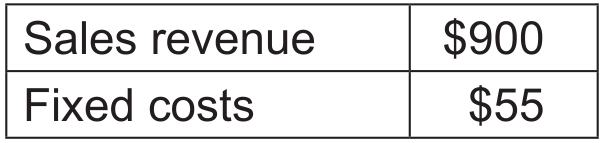
Table 1: Selected data for Fishers for 2017 (figures in \$000s)

Table 1: Selected data for Fishers for 2017 (figures in \$000s)

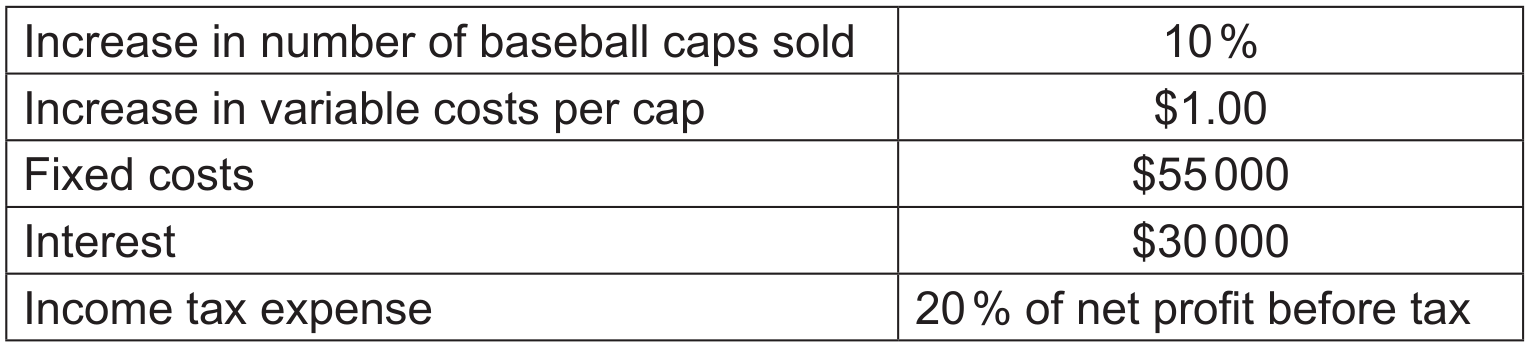
Table 2: Selected forecasted financial information for Fishers for 2018

Table 2: Selected forecasted financial information for Fishers for 2018

Sales price per cap will remain the same as in 2017.

Question 1(c)

(a)

Using Table 2, calculate the following forecasted figures for 2018:

[ 2 ]

Question 1(c)(i)

(i)

sales revenue;

[ 1 ]

Question 1(c)(ii)

(ii)

total variable costs;

[ 1 ]

Question 1(a)

[Maximum number: 2]

1. Calorie Count (CC)
Evana Dox has recently set up her own business, called Calorie Count (CC). She has identified a precise market segment: local middle-aged people struggling to have a healthy lifestyle because of long working hours. Customers will order meals in the morning, and in the evening Evana will deliver the meals.
Evana is converting the ground floor of her house into a professional kitchen complying with all hygiene standards and food safety regulations. She will employ her niece Athena, a graduate from a catering college. 60 % of the initial investment and start-up costs will come from Evana's personal savings; the other 40 % will be financed by external sources.
Evana has carried out secondary market research and found that the net profit margin in catering businesses of the same size is 35 %. However, for her new business Evana knows that her net profit margin will be much lower.
For her first year of operations, she aims for a net profit margin of 15 %. In the first year, she hopes to sell an average of 50 meals per day, 5 days per week. She estimates that each meal would be sold at an average price of $ 17. This price, Evana believes, will be competitive and will generate an adequate contribution per meal for her business to be successful.
CC uses a cost-based pricing strategy, with the following estimated costs:
- variable cost per meal: 70 % of selling price
- fixed cost per annum: $ 42000.

Identify two variable costs for CC.

Question 2(a)

[Maximum number: 2]

Parder

Image removed for copyright reasons

Parder manufactures ride-on (riding) lawnmowers.
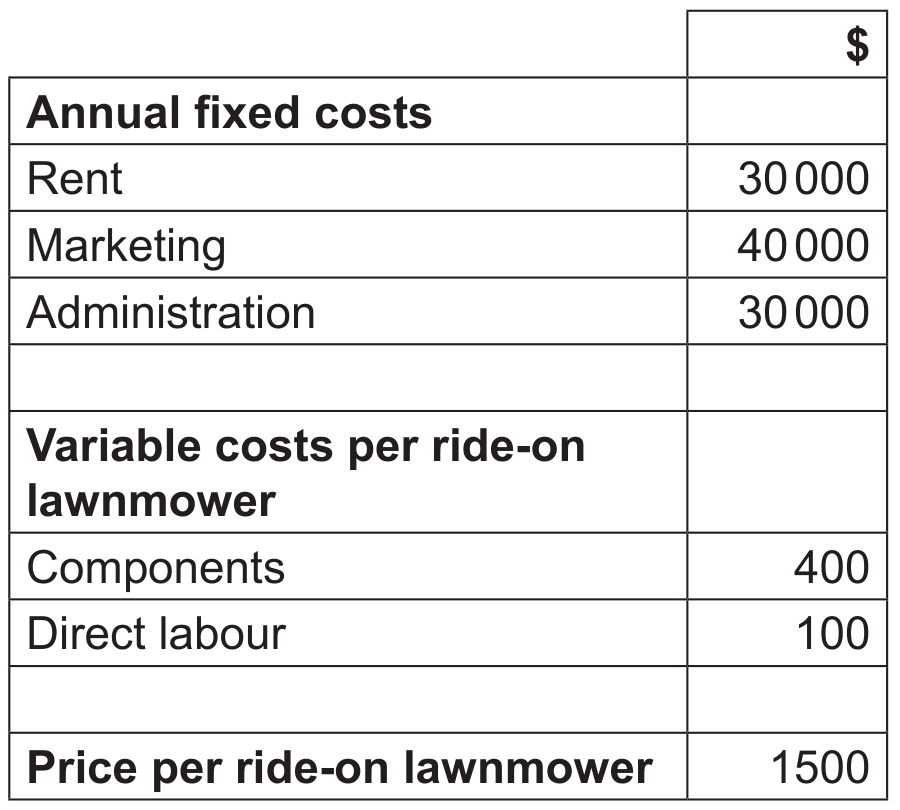
Selected forecast financial data for the ride-on lawnmowers, for 2016:

Table

Define the term variable costs.

Question 2(a)

[Maximum number: 2]

2. Café Lucchini (CL)
Fabi Lucchini will open the only café, selling hot and cold drinks only, in her small village. The economy is weak so the local government will pay 50 % of the rent for the premises in which C L will operate.
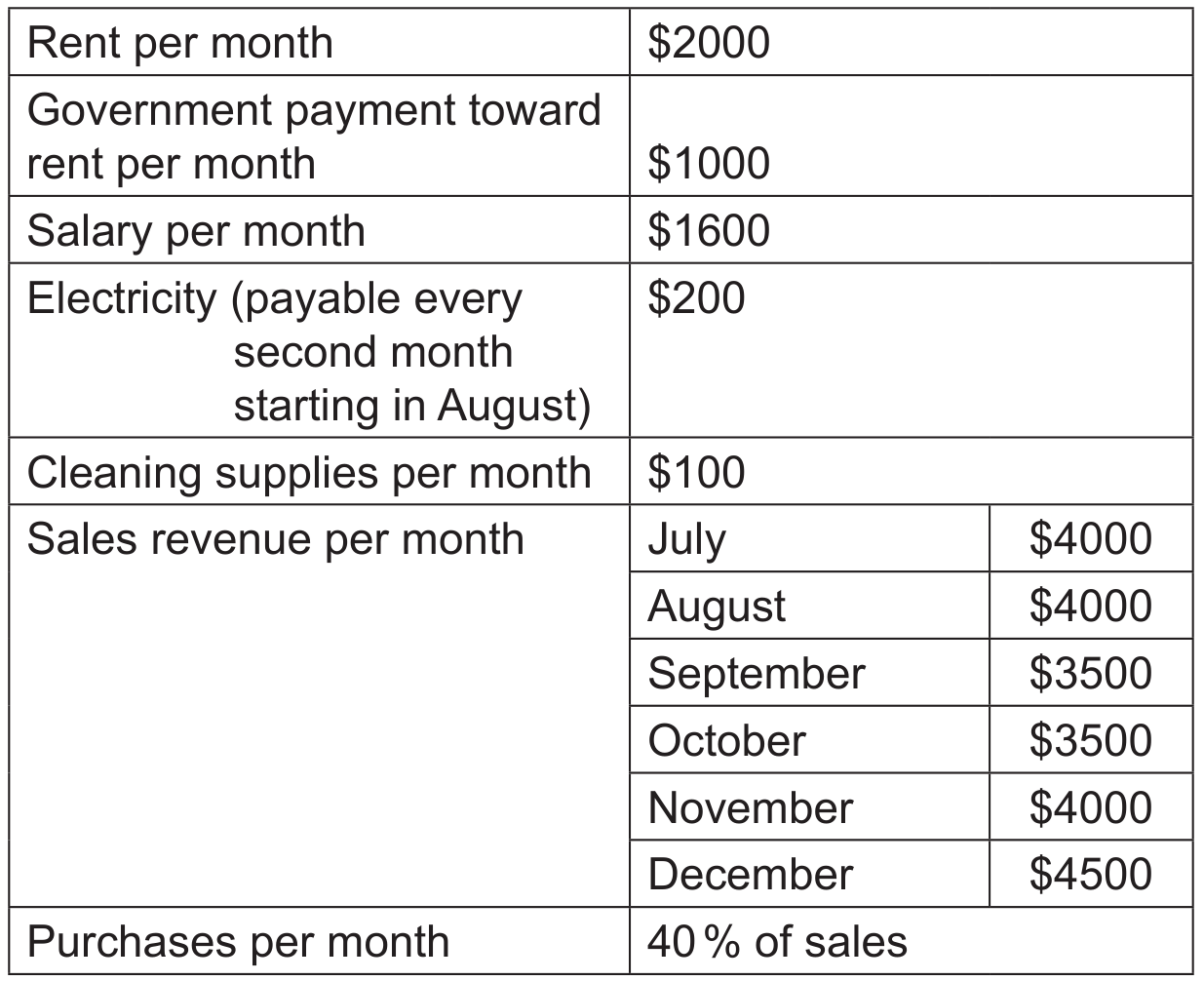
Fabi has forecasted the following figures for the first six months of operation, beginning on 1 July 2016:

Table

An option is to install cooking facilities and serve meals to increase CL's sales revenue. Fabi estimates that she could sell 40 meals per day at an average variable cost of $ 5 and at an average sales price of $ 10. Serving meals would increase her fixed costs by $ 3000 per month.

Define the term fixed cost.

Question 4(a)

[Maximum number: 2]

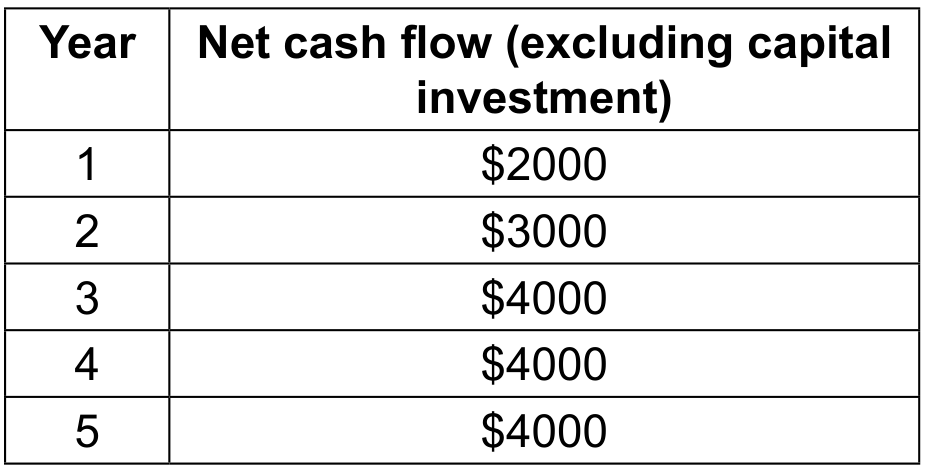
Paul's idea for 3D printing takes Utopia into a secondary sector activity that contrasts with its usual tertiary sector activities. In order to produce a sufficient number of souvenirs, Utopia would need to buy ten 3D printers at $ 1000 each. There would be material costs and significant operating costs, as well as time and additional labour. Paul has produced a net cash flow forecast for the project (Table 1) assuming a five year life for the printers. He likes the idea that each souvenir produced could be of a unique design and personalized. Some of the materials would be from recycled plastics obtained from waste at the resort. Recycling would reduce variable costs and it would be good for the resort's environment and for Utopia's caring image.

Liza does not like the idea of 3D printing. She is concerned that the souvenirs may damage Utopia's exclusive brand. She can see difficulties with recruiting someone with both the necessary IT skills and the ability to make decisions about which types of souvenirs to produce. She is particularly concerned about the impact on Utopia's current suppliers of souvenirs. She thinks that 3D printing is more suited to larger organizations.

John believes that the 3D printing technology will bring other benefits to his businesses. He can imagine decorations and other useful items being produced for the resort and its offices.

Table 1: Net cash flow for the 3D printing project

Table 1: Net cash flow for the 3D printing project

Define the term variable cost.

Question 3(a)

[Maximum number: 2]

3. Carol's Designs (CD)
Carol Rodríguez is passionate about design. She runs Carol's Designs (CD) with two assistants, making and selling party dresses directly to consumers through her website. Customers provide their style preferences and measurements. Then, Carol emails a computer-designed drawing for the customer's approval. CD uses job/customized production.
An emerging talent in dress design, Carol decided to use e-commerce because she could not afford the fixed costs of an expensive physical location and traditional promotional techniques. Through her website, she promotes and sells her designs to a large audience and collects valuable information and opinions from her customers. The business-to-consumer (B2C) approach, essential for her business growth, requires regular website updates.
E-commerce sales have steadily increased worldwide, and Carol's dress orders have increased too. However, CD regularly misses delivery deadlines and is often short of cash. Carol's bank suggested that she find a partner. She approached Juan Pérez, an engineer and business angel, about becoming a 50 % partner in CD. Juan thinks Carol needs to delegate design and focus on the operation of the business.
CD uses social media marketing. Alexia Bros, a famous actress, ordered a dress for this season's cinema festival, and Carol uploaded pictures of Alexia wearing her newly designed dress. Recently, however, some negative comments, including customer complaints about delays in delivery times, have appeared on social media. Carol did not have time to reply to these complaints. She is planning to hire a social media marketing manager.


Define the term fixed cost.

Question 4(a)

[Maximum number: 2]

4. Willow Enterprises (WE)
Willow Enterprises (WE) was founded in 1989 originally as a small manufacturer of carpeting for high-end commercial and institutional office space. In 1997 the management made several strategic decisions:
- change from the use of cheap man-made materials to more expensive natural fibres in its carpets
- change legal status from a private to a public limited company
- use profits to increase production capacity and expand the sales force
- diversify by taking over other regional businesses, including a retail chain, and transform them into environmentally friendly businesses.
Because of its appeal to environmentally conscious customers, WE became the regional market leader and, by 2008, was an important carpet manufacturer at a national level.
At this time, Chief Executive Officer Simon Dee decided that WE would adopt a far-reaching programme of corporate social responsibility (CSR). Every year, WE committed more resources to various forms of corporate social responsibility (CSR), such as charitable contributions and fair payments to employees and suppliers. By 2018, WE had diverse revenue streams and a brand identity strongly associated with corporate social responsibility (CSR).
For the last few years, WE's gross and net profit margins have been falling slightly but steadily. Simon has attributed the declining profitability to diseconomies of scale and one-off (one-time) expenses associated with each takeover. The Chief Financial Officer, Ruth Croft, disagreed. She gave Simon a copy of a 1970 article by the economist Milton Friedman entitled "The Social Responsibility of Business is to increase its Profits".

Define the term revenue streams.

0 selected