EduNinja

1.3 Business objectives Topic Practice

1.3 Business objectives Topic Practice
IB Business Management syllabusBusiness Management SL/HLFirst assessment 2025

Students practise explaining, evaluating and applying business objectives—including mission statements, ethical goals, strategic priorities and CSR—using real case-study evidence…

Exam points

  • explain how a business’s mission statement guides strategic decisions or informs stakeholder expectations
  • evaluate whether a proposed action aligns with stated ethical objectives by weighing short-term costs against

Question 2(a)

[Maximum number: 2]

2. Alfombras Horizonte (AH)
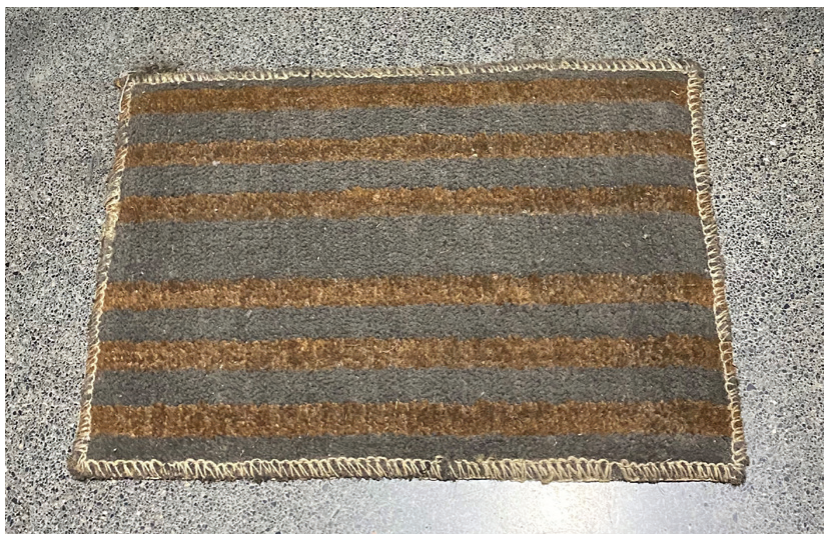
Alfombras Horizonte (AH) produces natural henequen* rugs in Yucatán, Mexico, and sells them online. AH rugs are very popular among young people because of their eco-friendly materials and AH's mission statement: "We are responsible with Mother Earth for our environment and ourselves."
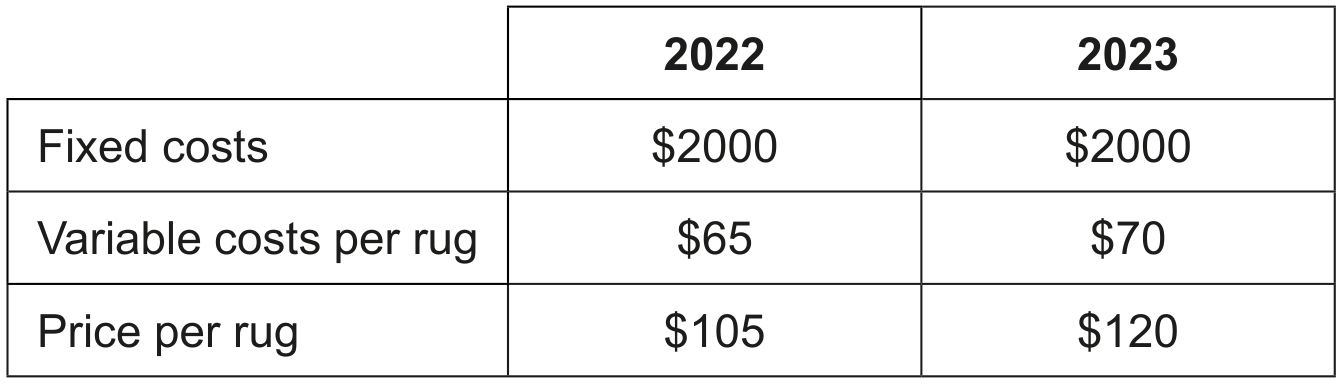
In 2022, A H 's costs increased, but it kept prices unchanged. For 2023, A H decided to change its pricing

Question image

strategy and pass on all cost increases to customers.

Table 2: Selected financial information for \(\boldsymbol{A

Table 2: Selected financial information for \(\boldsymbol{A

* henequen: a fibre plant from Mexico and Guatemala. Fabrics made from henequen fibre are used to make a wide variety of products, including bags, rugs and hammocks.

State two benefits to a business of having a mission statement.

Question 3(a)

[Maximum number: 2]

3. Cool Meals (CM)
Cool Meals (CM) produces frozen organic ready-made meals that are sold to food retailers throughout the country.
CM buys large quantities of organic ingredients from local farmers for its just-in-case (JIC) stock control management. It uses a cost-plus (mark-up) pricing strategy.
CM is known for its:
- good-quality organic frozen meals, which are perceived as good value for money
- flexibility with retailers in terms of quantity of meals supplied, credit given and efficient delivery at pre-arranged dates
- corporate social responsibility (CSR) based on a long-term commitment made to farmers to purchase large quantities of organic ingredients every four months and pay a fair price promptly
- CM has an excellent working relationship with farmers, who always prioritize CM's requests in terms of quantity and delivery.
Recently, an economic downturn and increased competition, especially from non-organic frozen meal suppliers, has decreased demand for frozen organic meals.
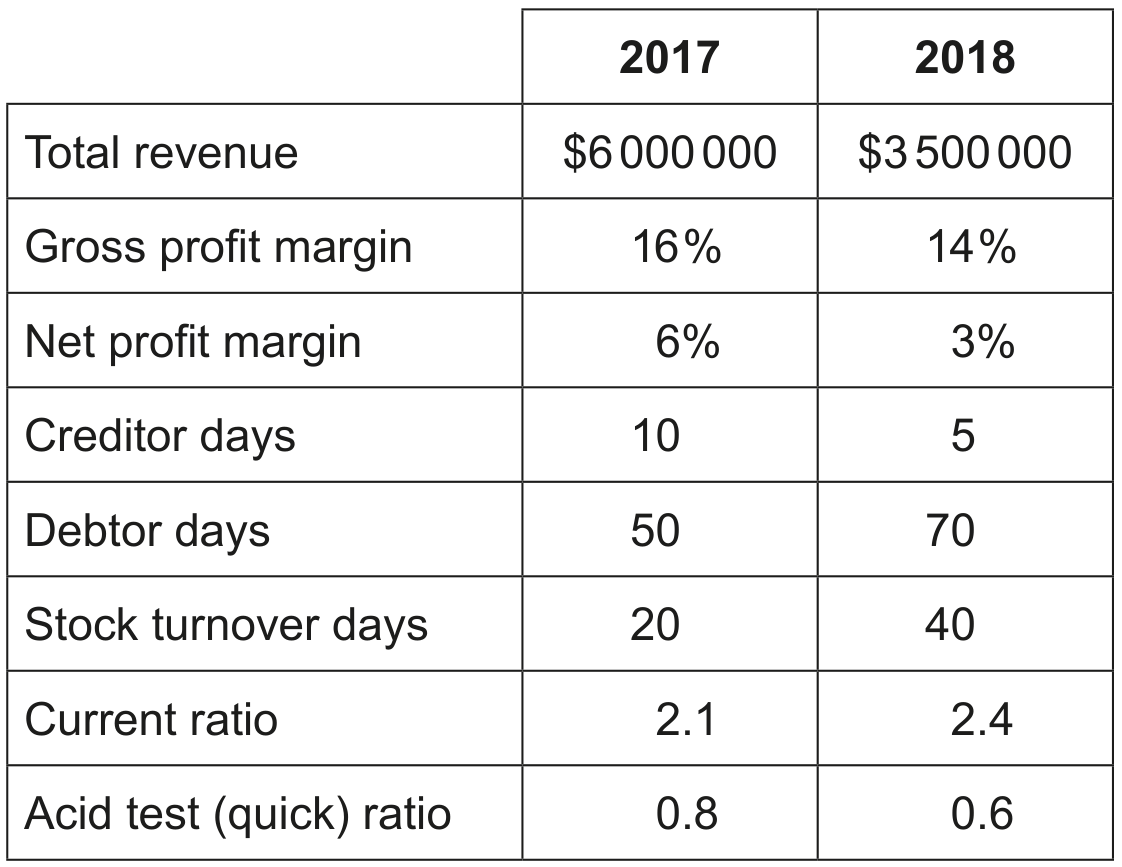
The finance manager of CM, Kayleigh, provided the following financial information.

Table 1: Selected financial information for CM

Table 1: Selected financial information for CM

Kayleigh is worried about the cash flow of CM and suggested the company changes the stock control method from just-in-case (JIC) to just-in-time (JIT). She is also looking at other strategies to improve CM's financial position.

Define the term corporate social responsibility (CSR).

Question 3(c)

[Maximum number: 4]

3. Soft Skin Cosmetics (SSC)
Soft Skin Cosmetics (SSC) is a private limited company that produces a small range of face creams and soaps. Its products are designed and produced in the United States, and are made from safe, natural ingredients.
SSC has a product-orientated marketing approach. Tiffany Presley, one of the company's co-founders, believes that SSC's consumers value health above fashion. "The skincare market is full of toxic products, but ours are healthy even if they don't smell or look as nice," she says. Chelsea Presley, SSC's other co-founder, wants to develop the first sunscreen free of synthetic chemicals. However, product innovation is costly and risky. If the new sunscreen is a failure, several years of research and development costs will be wasted, which SSC cannot afford. SSC currently lacks the scale to innovate.
SSC does not pay for advertising. It relies on social media and word-of-mouth promotion. Its brand awareness is very high among young women, and customer reviews are very positive about SSC's quality and effectiveness. The company only sells online, not in retail outlets. To reach unsatisfied demand domestically and internationally, SSC would have to broaden its current distribution channels.
SSC practises corporate social responsibility (CSR). It does not test its products on animals, and supports several charities protecting endangered species. Pressure groups publicly recognize SSC's commitment to animal welfare.
Currently, multinational companies dominate the global skincare market. Small emerging companies rarely survive. Chelsea wants to convert SSC to a public limited company, but Tiffany disagrees: she argues that shareholder pressure toward profit maximization could jeopardize consumer and animal safety.


Explain one advantage and one disadvantage to SSC of practising corporate social responsibility (CSR).

Question 4(a)

[Maximum number: 2]

4. Bandit \& Max
Bandit \& Max (BM) is a partnership between Dr. Jones and Dr. Morris that produces specialist food for dogs with health problems. BM's unique selling point/proposition (USP) is food for dogs with diabetes and digestive or kidney problems. BM's mission statement is, "To help strengthen the bond between people and their dogs."
BM uses a cost-plus (mark-up) pricing strategy; however, the costs of raw materials are rising. B M has an excellent brand image and sells its products only through veterinarians and large pet shops that provide advice to customers. Veterinarians recommend BM's dog food because of its high quality and nutritional value. However, potential customers in some areas lack access to BM's food. BM's sales are not growing.
Dr. Morris wants to diversify into specialist cat food, as more people are buying or adopting cats. B M has experience in developing new products. In the past, B M outsourced its research and development. Now, Dr. Morris wants BM to build its own research facilities, but building costs are high. BM's warehouse will need refurbishing to stock more food. BM could become a private limited company to raise the necessary finance.
Dr. Jones disagrees. He believes BM should not diversify. BM's current distribution costs are high. He has suggested introducing a new distribution channel for the dog food that includes a large supermarket chain, a wholesaler, and many small pet shops.

Describe one feature of a mission statement.

Question 5(c)

[Maximum number: 4]

5. RUZMA Coffee Ltd. (RC)
RUZMA Coffee Ltd. (RC), a private limited company, owns a national chain of coffee booths¹. It is known for its process innovation and its excellent and consistent quality of coffee. As part of its corporate social responsibility (CSR) objectives, R C buys large quantities of fair trade 2{ }^{2} organic coffee from producers.
Two years ago, R C began to replace employees with robots. RC's long-term objective is to have booths served entirely by robots. Until this objective is met, R C has cut dividend payments to shareholders. RC uses a price-skimming strategy whenever it replaces an employee with a robot.
Many consumers are excited about the novelty of RC's robots. However, a recent economic downturn and increasing protests against businesses that replace employees with robots have affected RC's reputation and sales. RC is thinking of boosting its ethical objectives. For every employee replaced by a robot, R C plans to offer enhanced redundancy (unemployment) payments and a $ 2000 grant towards future training.
Other national coffee chains have started to use the same process innovation as RC. Although R C has a high gross profit margin and the market is expected to grow, some directors remain worried about future dividends.
Recently, a worldwide coffee chain, Coffee Extra (CE), unexpectedly offered to buy RC and is willing to pay twice its value. CE is known for delivering coffee via drones. CE attracts bad publicity because of the low salaries paid to its employees and their poor working conditions.
R C 's board of directors is not sure whether they should accept C E 's offer.
\footnotetext{
1{ }^{1} booths: stands/kiosks
2{ }^{2} fair trade: trade between companies in developed countries and producers in developing countries in which fair prices are paid to the producers

Explain one advantage and one disadvantage for R C of setting ethical objectives.

Question 5

[Maximum number: 14]

5. Copper Health (CH)
Copper Health (CH) was the market leader in the production of anti-venom* vaccines to treat poisonous snake bites. CH's mission - influenced heavily by corporate social responsibility (CSR) - is to put customers first and profits second in the treatment of snake bites.
Despite 100000 deaths worldwide each year from snake bites and 400000 serious injuries, CH recently announced that it will no longer produce anti-venom vaccines. Several large Mexican, Brazilian and Indian pharmaceutical companies have entered the market selling anti-venom vaccines at a much lower price than C H.
A spokesperson for C H said: "We will remain a private limited company where corporate social responsibility (CSR) remains an important driving force for our mission. Our medical research is only financed from retained profit. When the lower-priced competition arrived, our sales and profits of anti-venom vaccines decreased significantly. Treating snakebites no longer makes financial sense. Instead, the technology used to produce anti-venom vaccines will be used to research and develop (R\&D) other life-saving vaccines".
A non-governmental organization (NGO) has demanded action. "CH is the largest manufacturer of anti-venom vaccines in the world. Although CH's competitors are increasing their production of anti-venom vaccines they will not be able to produce enough to satisfy demand for the next two years. There will be a major shortage. This will result in many life-threatening injuries and deaths."
The non-governmental organization (NGO) has urged CH to seek new sources of finance to continue the production of the anti-venom vaccine.
\footnotetext{
* anti-venom: a medication made from antibodies that is used to treat venomous bites and stings

Question 5(b)

(a)

Explain one advantage and one disadvantage for CH of having a mission statement.

[ 4 ]

Question 5(d)

(b)

Discuss CH's decision to stop producing anti-venom vaccines.
}
Section C
Answer one question from this section. The organizations featured in sections A and B and in the paper 1 case study may not be used as a basis to your answer.

[ 10 ]

Question 5

[Maximum number: 14]

5. Copper Health (CH)
Copper Health (CH) was the market leader in the production of anti-venom* vaccines to treat poisonous snake bites. CH's mission - influenced heavily by corporate social responsibility (CSR) - is to put customers first and profits second in the treatment of snake bites.
Despite 100000 deaths worldwide each year from snake bites and 400000 serious injuries, CH recently announced that it will no longer produce anti-venom vaccines. Several large Mexican, Brazilian and Indian pharmaceutical companies have entered the market selling anti-venom vaccines at a much lower price than C H.
A spokesperson for C H said: "We will remain a private limited company where corporate social responsibility (CSR) remains an important driving force for our mission. Our medical research is only financed from retained profit. When the lower-priced competition arrived, our sales and profits of anti-venom vaccines decreased significantly. Treating snakebites no longer makes financial sense. Instead, the technology used to produce anti-venom vaccines will be used to research and develop (R\&D) other life-saving vaccines".
A non-governmental organization (NGO) has demanded action. "CH is the largest manufacturer of anti-venom vaccines in the world. Although CH's competitors are increasing their production of anti-venom vaccines they will not be able to produce enough to satisfy demand for the next two years. There will be a major shortage. This will result in many life-threatening injuries and deaths."
The non-governmental organization (NGO) has urged CH to seek new sources of finance to continue the production of the anti-venom vaccine.
\footnotetext{
* anti-venom: a medication made from antibodies that is used to treat venomous bites and stings

Question 5(b)

(a)

Explain one advantage and one disadvantage for CH of having a mission statement.

[ 4 ]

Question 5(d)

(b)

Discuss CH's decision to stop producing anti-venom vaccines.
}
Section C
Answer one question from this section. The organizations featured in sections A and B and in the paper 1 case study may not be used as a basis to your answer.

[ 10 ]
0 selected