EduNinja

IB Business Management HL5.8 Research and developmentQuestion Bank

Question 3

[Maximum number: 4]

3. Pedro
Pedro is a farmer who operates as a sole trader in a developing country. Like other farmers in his community, he grows oranges, which are sold to buyers in developed communities and large cities. Working in the primary sector often results in very low income and poverty for some of the farmers. Most children do not go to school, as they are needed in the fields for manual work. Cooperation between the farmers in this community is very limited due to linguistic and cultural differences.
Recently, farmers' incomes have fallen further. Pedro has conducted social, technological, economic, environmental, political, legal and ethical (STEEPLE) analysis and identified two main external threats that are impacting on farmers' incomes:
- competition from orange producers from developed communities and large cities with improved technology and higher productivity rates
- a severe and sustained drought affecting the level of orange production in all developing countries.
Pedro would like to improve productivity as an orange producer. Investing in new technology is risky and would require extensive research and development. The internet is unreliable and Pedro is unable to raise funds for this investment himself to change current production methods.
Pedro has arranged an emergency meeting of local farmers. He proposes that all farmers in his community create an agricultural cooperative and collectively raise funds to invest in new capital-intensive farming methods. The investment in technology could allow them to diversify into the manufacturing of bottled orange juice drinks.

Question 3(c)

(a)

Explain one cost and one benefit to Pedro of conducting extensive research and development.

[ 4 ]

Question 3

[Maximum number: 4]

3. BVC
BVC manufactures canned energy drinks. It produces the market leading energy drink, Beta+, which is sold directly to, and exclusively in, sports clubs. BVC encourages intrapreneurship and innovation within its organization.
To purchase Beta+ legally, the consumer has to be over the age of 18. However, many younger teenagers illegally purchase these drinks. Sales of Beta+ have grown dramatically.
To have legal sales to teenagers aged 17 and below, B V C created Beta Lite, which has a much lower caffeine and sugar content than that of Beta+. Beta Lite will be sold using long distribution channels and to a range of retail outlets.
Initial sales of Beta Lite were disappointing. The marketing manager argues that Beta Lite is not innovative and is only adaptively creative. According to market research, consumers were confused between Beta+ and Beta Lite because the packaging is so similar. Many younger consumers were frustrated because they thought they were purchasing Beta+ when buying Beta Lite. Using social media, they launched a "Ban Beta Lite" campaign.
BVC's management were unprepared for this consumer reaction. To overcome this criticism and to boost sales of Beta Lite, two proposals are being considered:
- Proposal 1: launch a guerrilla promotional marketing campaign for Beta Lite.
- Proposal 2: completely redesign the packaging of Beta Lite.

Question 3(b)

(a)

Explain why the marketing manager considered Beta Lite to be adaptively creative rather than innovatively creative.

[ 4 ]

Question 3

[Maximum number: 2]

3. Soft Skin Cosmetics (SSC)
Soft Skin Cosmetics (SSC) is a private limited company that produces a small range of face creams and soaps. Its products are designed and produced in the United States, and are made from safe, natural ingredients.
SSC has a product-orientated marketing approach. Tiffany Presley, one of the company's co-founders, believes that SSC's consumers value health above fashion. "The skincare market is full of toxic products, but ours are healthy even if they don't smell or look as nice," she says. Chelsea Presley, SSC's other co-founder, wants to develop the first sunscreen free of synthetic chemicals. However, product innovation is costly and risky. If the new sunscreen is a failure, several years of research and development costs will be wasted, which SSC cannot afford. SSC currently lacks the scale to innovate.
SSC does not pay for advertising. It relies on social media and word-of-mouth promotion. Its brand awareness is very high among young women, and customer reviews are very positive about SSC's quality and effectiveness. The company only sells online, not in retail outlets. To reach unsatisfied demand domestically and internationally, SSC would have to broaden its current distribution channels.
SSC practises corporate social responsibility (CSR). It does not test its products on animals, and supports several charities protecting endangered species. Pressure groups publicly recognize SSC's commitment to animal welfare.
Currently, multinational companies dominate the global skincare market. Small emerging companies rarely survive. Chelsea wants to convert SSC to a public limited company, but Tiffany disagrees: she argues that shareholder pressure toward profit maximization could jeopardize consumer and animal safety.

Question 3(a)

(a)

State two features of product innovation.

[ 2 ]

Question 4

[Maximum number: 10]

4. Easy Ride Ltd. (ER)
Easy Ride Ltd. (ER) is a medium-sized private limited company that manufactures gasoline (petrol)-powered scooters that are sold worldwide. Customers think that ER's scooters are good value for money. However, increased global competition in both the gasoline-powered and electric scooter markets, and a shift in customers' demands, has resulted in a significant drop in sales.
ER commissioned market research in the Middle East using focus groups. This research revealed that consumers:

Question image

- perceive competitors as medium-price/medium-quality providers
- have highly innovative products as their top priority
- want products and production methods to be environmentally friendly.
E R 's employees have expressed dissatisfaction with the use of flow production. E R is no longer profitable and is highly geared.
Given the pace of change in the scooter industry, ER's management wants to react quickly and is considering two options for research and development.
Option 1: Adaptive creativity
ER would design and produce different models of electric scooters only. Lacking finance and expertise in the electric scooter industry, ER would subcontract the production of batteries to a well-known designer and producer of environmentally friendly batteries. Cellular production would be used for each scooter model. Employees would need training.
Option 2: Innovative creativity
ER would gain a new competitive advantage by developing cutting-edge gasoline-powered scooters. ER would create its own research and development department and recruit highly skilled and innovative product designers. It would reposition the scooters into the high-
price/high-quality market, and flow production would be used. This option would be more expensive than Option 1 and would take longer to implement.
Loan capital from a bank with low interest rates, aimed at helping small to medium enterprises (SMEs), is being considered for financing either option.

Question 4(d)

(a)

Recommend whether ER should implement Option 1 or Option 2 as a research and development strategy, given the pace of change in the scooter industry.

[ 10 ]

Question 3

[Maximum number: 10]

3. Fujifilm
Throughout its history, Fujifilm has innovated. It invented many products such as the first high-speed colour photographic film and the first disposable camera. Fujifilm was one of the most trusted brand names in the photographic industry.
Fujifilm adapted to changes in the external environment. Digital photography and smartphones were causing a significant reduction in sales of photographic film. Researchers at Fujifilm discovered that patented chemicals used in Fujifilm's photographic film products are antioxidants* that could be used in cosmetic products. In 2007, Fujifilm invented a skincare product line and branded it Astalift. Fujifilm spent a large amount of money developing the new brand name and building awareness and loyalty. Astalift quickly became one of the best-selling brands in Japan's skincare product market.
In response to the success of Astalift, Fujifilm:
- acquired complementary pharmaceutical companies and built research and development (R\&D) facilities to develop additional cosmetic products under the Astalift brand
- set up a new division that develops medical equipment based on photographic film and imaging technologies (such as digital X-rays) marketed under the Fujifilm brand name.
Fujifilm understood changes in societal norms, such as lifestyle and income of women in many Asian and European countries. At present 20\% of sales are generated outside of Japan. In Europe, Fujifilm adapts its marketing mix for consumer preferences in each country. Ultimately, Fujifilm wants to transform Astalift into a global brand.
Today, only 1\% of Fujifilm's revenue comes from photographic film, while 99\% of revenue comes from the sales of cosmetics and medical equipment. Now, Fujifilm has been so successful that other companies are trying to imitate its success on a global scale. Japan's beverage company Suntory has developed its own range of natural skincare products to be marketed under its well-known brand name Suntory.
http://www.nippon.com/
http://www.brandchannel.com/]
* antioxidants: molecules that prevent the oxidation of other molecules, which can maintain the health of cells; they are often used as preservatives in cosmetics

Question 3(a)

(a)

Describe one internal factor and one external factor possibly affecting innovation at Fujifilm.

[ 4 ]

Question 3(b)

(b)

Explain one benefit of a patent for Fujifilm.

[ 2 ]

Question 3(c)

(c)

Explain one benefit and one cost of research and development (R\&D) for Fujifilm.

[ 4 ]

Question 5

[Maximum number: 2]

5. RUZMA Coffee Ltd. (RC)
RUZMA Coffee Ltd. (RC), a private limited company, owns a national chain of coffee booths¹. It is known for its process innovation and its excellent and consistent quality of coffee. As part of its corporate social responsibility (CSR) objectives, R C buys large quantities of fair trade 2{ }^{2} organic coffee from producers.
Two years ago, R C began to replace employees with robots. RC's long-term objective is to have booths served entirely by robots. Until this objective is met, R C has cut dividend payments to shareholders. RC uses a price-skimming strategy whenever it replaces an employee with a robot.
Many consumers are excited about the novelty of RC's robots. However, a recent economic downturn and increasing protests against businesses that replace employees with robots have affected RC's reputation and sales. RC is thinking of boosting its ethical objectives. For every employee replaced by a robot, R C plans to offer enhanced redundancy (unemployment) payments and a $ 2000 grant towards future training.
Other national coffee chains have started to use the same process innovation as RC. Although R C has a high gross profit margin and the market is expected to grow, some directors remain worried about future dividends.
Recently, a worldwide coffee chain, Coffee Extra (CE), unexpectedly offered to buy RC and is willing to pay twice its value. CE is known for delivering coffee via drones. CE attracts bad publicity because of the low salaries paid to its employees and their poor working conditions.
R C 's board of directors is not sure whether they should accept C E 's offer.
\footnotetext{
1{ }^{1} booths: stands/kiosks
2{ }^{2} fair trade: trade between companies in developed countries and producers in developing countries in which fair prices are paid to the producers

Question 5(a)

(a)

Define the term process innovation.

[ 2 ]

Question 5

[Maximum number: 2]

5. Benno
Benno is a soft drinks manufacturer. Its mission statement is "to produce healthy drinks without damaging the environment".
Competition in the healthy soft drinks market is fierce. Benno uses a competitive pricing strategy. However, sales of Benno's drinks have fallen significantly over the last five years, particularly in the 12-18 age group. The business has no

Question image

accumulated retained profits.

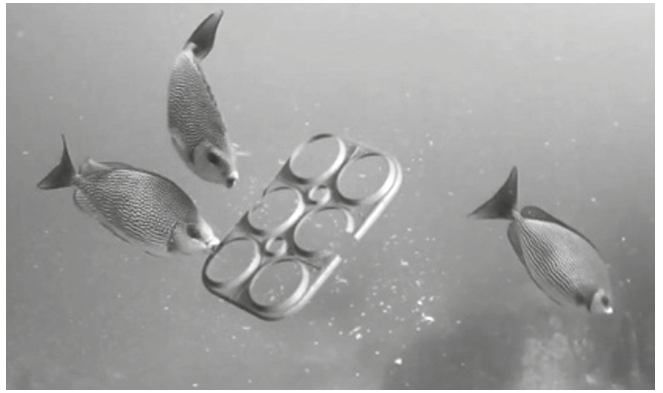
Benno is committed to innovation and corporate social responsibility (CSR). Its research and development division has recently invented a new biodegradable drink pack ring that starts to break down within two hours of contact with sea water. It dissolves fully in 48 hours. Currently, 98 % of pack rings are made of plastic and when dumped in the sea are responsible for the death of many sea creatures.

A focus group of loyal customers used regularly by Benno's marketing department is wholeheartedly in favour of the new drink rings. However, the marketing director has read recent studies that suggest:
- purchases of green products are not increasing, despite the positive attitude of many consumers towards sustainability and biodegradable products
- consumers continue to prioritize price when purchasing soft drinks.

To manufacture the new drink rings, machinery costing $ 5 million would be needed. Drink ring production unit costs would rise from 10 cents to 15 cents and prices of a six-pack of Benno soft drinks would have to increase by 5 %. Benno's net profit margin on a six-pack is 10 %.

Benno's director of corporate social responsibility favours the change to the new drink rings but is opposed by both the finance director and marketing directors.

Question 5(a)

(a)

Define the term innovation.

[ 2 ]

Question 6

[Maximum number: 20]

With reference to an organization of your choice, examine the impact of innovation on operations management strategy.

Question 6

[Maximum number: 20]

With reference to an organization of your choice, discuss the ways in which ethics can influence innovation in an organization.

Question 7

[Maximum number: 20]

With reference to an organization of your choice, discuss the ways in which innovation can influence organizational change.

0 selected