
Question 2(b)
[Maximum number: 6]
Explain how M M could reduce stakeholder conflict in relation to its gold mine in Egypt. (lines 103-107)
 EduNinja
Students practise identifying, comparing and resolving stakeholder interests—especially internal (employees, shareholders) and external (government, community)—using…
Explain how M M could reduce stakeholder conflict in relation to its gold mine in Egypt. (lines 103-107)
Describe two external stakeholders of A F A, other than customers.
Explain the interests of one of TM's internal stakeholders.
3. Starvation Peak Running Shoes (SP)
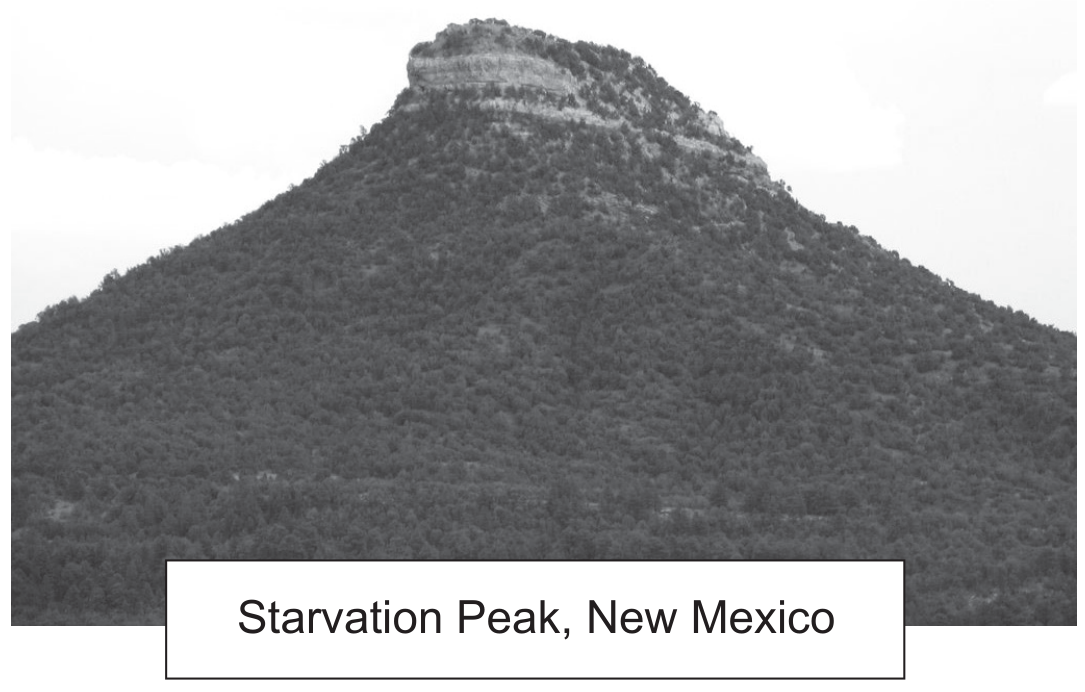
Starvation Peak Running Shoes (SP) is a shop that sells running shoes in Santa Fe, New Mexico, United States (US). Its name comes from the local mountain called "Starvation Peak".
SP customers can buy running shoes at a lower price online, but S P has a unique selling point (USP) concerning its vision and its local reputation. SP's vision statement is: "Running sustains life, locally and globally".
SP is very well known locally, as they
support the local running community in the Santa Fe area. They do so in several ways by:
- sponsoring "running days" at schools
- giving discounts to children and students
- offering "running clinics", where SP employees help people improve their running techniques
- organizing races and other local events.
The biggest event organized by S P is its annual "Race to the Top" on Starvation Peak. According to a local legend, a tribe of Native Americans forced enemies up to the peak, where they died of hunger (starvation). SP promotes the event with the slogan: "Running sustains life, even on Starvation Peak". "Race to the Top" has been popular for ten years. However, there are now conflicts between stakeholders. Local businesses like the event, as it attracts tourists to the area. One pressure group, however, argues that it portrays Native Americans in a negative way. Another pressure group argues that the event damages the natural environment of the mountain. The local authorities managing Starvation Peak have been asked to refuse permission for SP's "Race to the Top".
Advise the local authorities as to whether permission for SP's "Race to the Top" should be refused.
4. Red Squirrel Apple Juice (RS)
Red Squirrel Apple Juice ( RS) is a cooperative of apple farmers. RS was named after the red squirrel, whose population is declining because of growing numbers of grey squirrels. Originally from North America, grey squirrels are aggressive and take over red squirrels' habitats. RS's founders thought that the red squirrel would be a good symbol to reverse the declining popularity of traditional apple juice due to consumer preference for high-sugar American-style beverages. With the symbol, R S aimed to appeal

to environmentally aware and health-conscious consumers.
Originally, R S only sold apple juice in bulk to beverage companies. These companies bottle the juice and sell it under their own labels. R S requires these companies to place R S 's logo of a red squirrel on their labels. Although R S only sells to a small number of beverage companies, its logo is on juice bottles in stores across the country.
Awareness of the R S brand grew. The cooperative's managers recently opened another channel of distribution: direct sales of bottled juice to consumers at the cooperative's processing plant. R S charges lower prices than stores. The new channel of distribution required capital expenditure for bottling equipment and additional revenue expenditure. R S experienced increased labour and promotion costs, which some farmers complained about.
In recent decades, R S 's home country has experienced rising anti-immigrant sentiment. Some politically motivated organizations have begun to use images of red squirrels to symbolize this sentiment, so some beverage companies no longer want to use R S's logo on their labels.
Some of RS's stakeholders are concerned.
Discuss two possible areas of conflict between the interests of RS's stakeholders.
4. Mergers in the airline industry
Recently, British Airways merged with Iberia, and Air France merged with KLM. Both mergers resulted in some significant benefits.
Ryanair plans a £ 560 million takeover of the Irish airline, Aer Lingus, which has failed to deliver shareholder dividends. One shareholder, the Irish government, owns 25 % of the shares of Aer Lingus.
Ryanair's chief executive officer (CEO) said that the proposed takeover could:
- create revenue and a positive return for the Irish government by selling its shares
- create a strong Irish airline capable of competing with major European airlines.
This form of external growth is also occurring in the United States (US). American Airlines and US Airways will merge, forming the nation's biggest airline, to be called American.
Airline analysts argue that mergers are necessary to reduce financial uncertainty and restore stability to a business that lost about $ 60 billion in 10 years. Large airlines with big networks can invest in new airplanes, new routes and better facilities, and provide passengers with more travel options. Mergers are likely to increase operational and financial efficiencies and create economies of scale. Airline analysts, favouring airline mergers, emphasize that each merger must be approved by appropriate national and international regulatory agencies to ensure that the competitive nature of the industry is maintained.
Other analysts, however, argue that:
- large airlines make it difficult for smaller rivals to compete, and in the long run reduce competition. This situation may lead to higher fares and a poorer service.
- being larger may not make airlines globally competitive. Some national governments restrict operation of foreign airlines within their countries, which allows a local airline monopoly* to exist.
- strategic decisions are difficult to implement as companies grow in size.
- larger is not always better. http://www.guardian.co.uk; http://www.nytimes.com]
* monopoly: an industry where there may be only one seller/producer of a particular good or service
Examine the Irish government's decision to own 25 % of the shares of Aer Lingus.
With reference to one internal stakeholder and one external stakeholder, discuss the statement that "larger is not always better" from the perspective of the airline industry.
5. Chips to Go (C2G)
Chips to Go (C2G) produce potato chips for the British market. C2G's Chief Executive Officer (CEO) is Charles Chip who is a dynamic entrepreneur famous for taking risks with chip flavours such as "banana and sour cream" and "chocolate fudge" and promoting them with humour especially appealing to British culture. C2G has created a number of successful snack products under the C2G family brand. Charles uses intuitive rather than scientific decision-making. He rarely consults with senior managers or considers financial data.
C2G's value as a company in terms of goodwill, brand value and other intangible assets is tied very closely to the personality and lifestyle of Charles. He is the company's most valuable intangible asset and is very popular among the younger generation. He is constantly in the news trying to travel around the world in a canoe, or taking risks by parachuting off high buildings to gain free publicity and word-of-mouth promotion. Current and potential investors have contacted the finance department as to what may happen to the value of these intangible assets if Charles were to have a serious accident.
C2G is looking for ways to increase market share in an increasingly competitive domestic snack market. One long-time aim for Charles has been the creation of a potato chip with all the taste of regular chips but without any fat. The marketing department of C 2 G is very excited with this idea but the Production Manager has indicated to Charles that it cannot be produced. Charles has been told and was furious.
A second strategic option could be to launch the potato chips into a new international market. One of Charles's closest advisers has argued that C2G would need to be careful with its product and promotion, as overseas customers may not share British tastes in potato chips, or British humour in promotion. He urges Charles to take time to carry out extensive market research of the new international market.
Describe two stakeholder conflicts at C2G.