
Question 4(a)
A group of students prepared methyl 3-nitrobenzoate by the nitration of methyl benzoate.
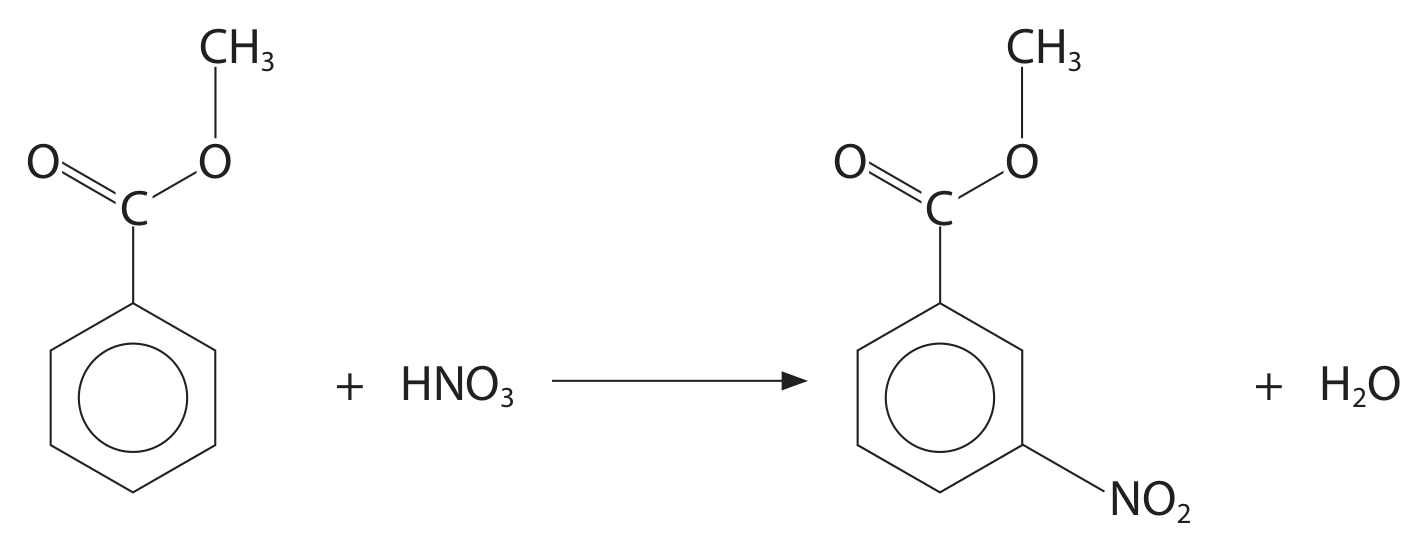
Procedure
Step 1 Measure of concentrated sulfuric acid into a small, dry conical flask. Label the flask A and place it in an ice bath.
Step 2 Add of methyl benzoate to flask A.
Gently swirl the flask.
Step 3 Mix of concentrated nitric acid and of concentrated sulfuric acid in a test tube to form the nitrating mixture. Place this test tube in the ice bath.
Step 4 Place a thermometer in flask A. Add the nitrating mixture very slowly to flask A using a dropping pipette.
Take care to ensure that the temperature of the flask contents does not rise above .
Step 5 Remove flask A from the ice bath and allow it to stand at room temperature for about 10 minutes.
Pour the reaction mixture into a small beaker containing crushed ice. Stir the contents of the beaker with a glass rod.
Step 6 Allow the ice to melt. Separate the solid methyl 3-nitrobenzoate by suction filtration. Wash the solid with a small amount of deionised water and then with a little ice-cold ethanol.
Step 7 Recrystallise the methyl 3-nitrobenzoate using ethanol as the solvent.
Step 8 Determine the melting temperature of the purified crystals of methyl 3-nitrobenzoate.
An ice bath is a mixture of ice and water in a beaker.
Suggest an advantage of using an ice bath in Steps 1 and 3 rather than a beaker containing only ice cubes. Justify your answer.