Question 1
This question is about copper and some of its compounds.
Question 1(c)
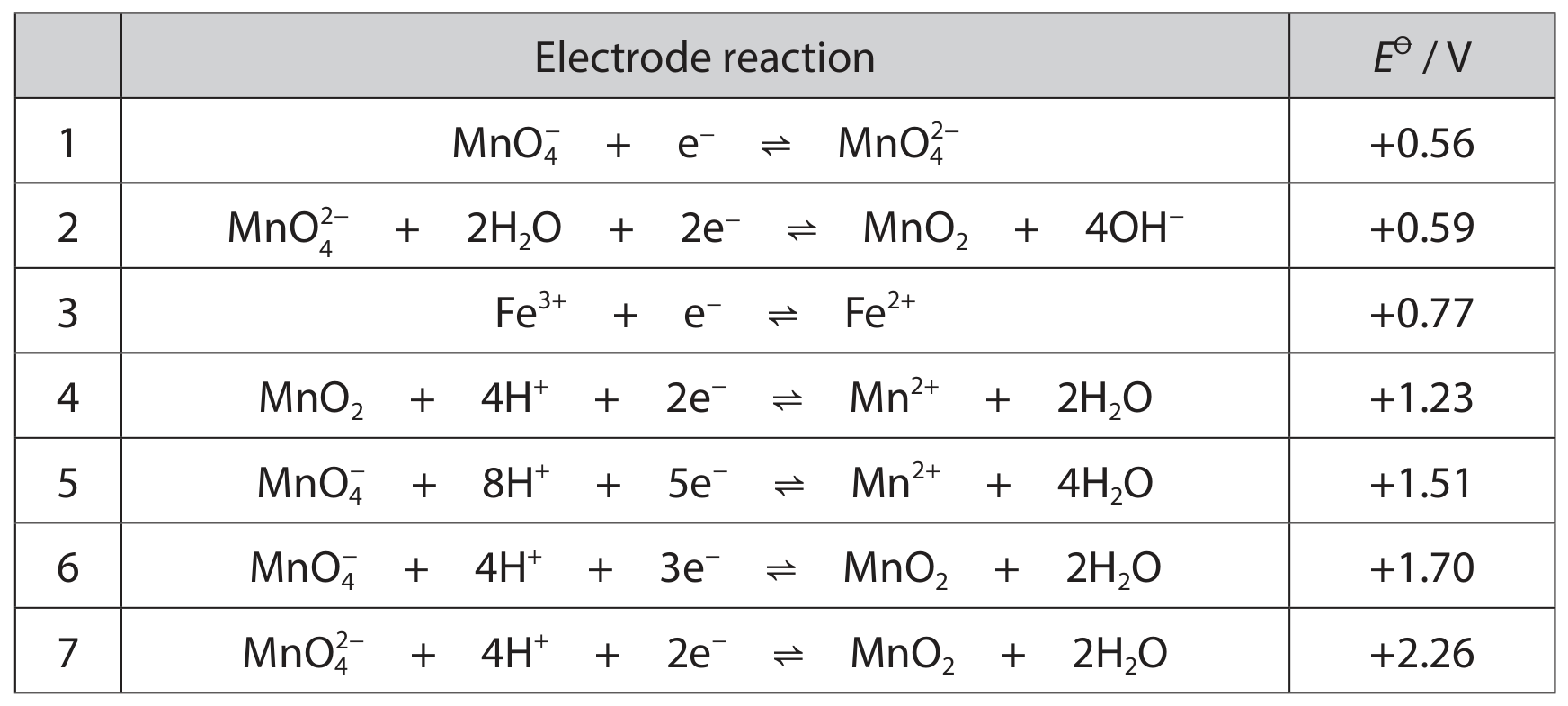
An electrochemical cell was made from the electrode systems represented by these half-equations:
Question 1(c)(i)
Calculate for the electrochemical cell.
Question 1(c)(ii)
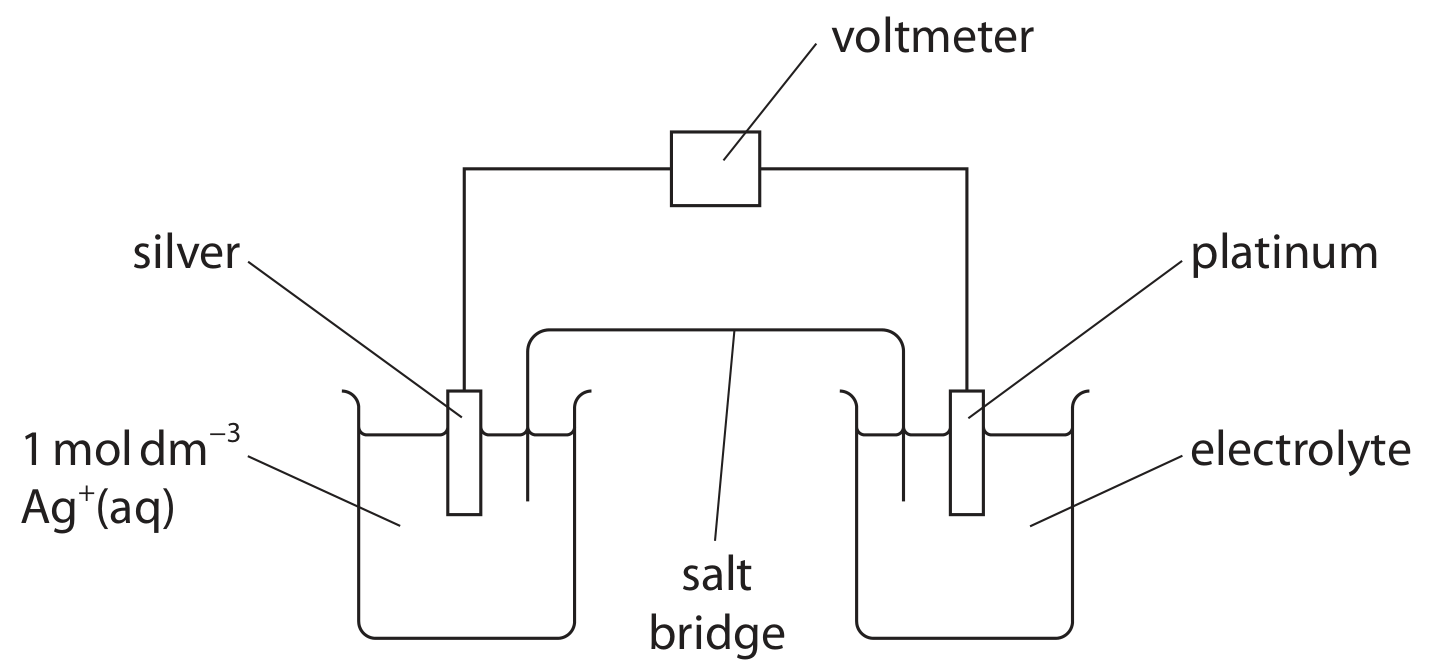
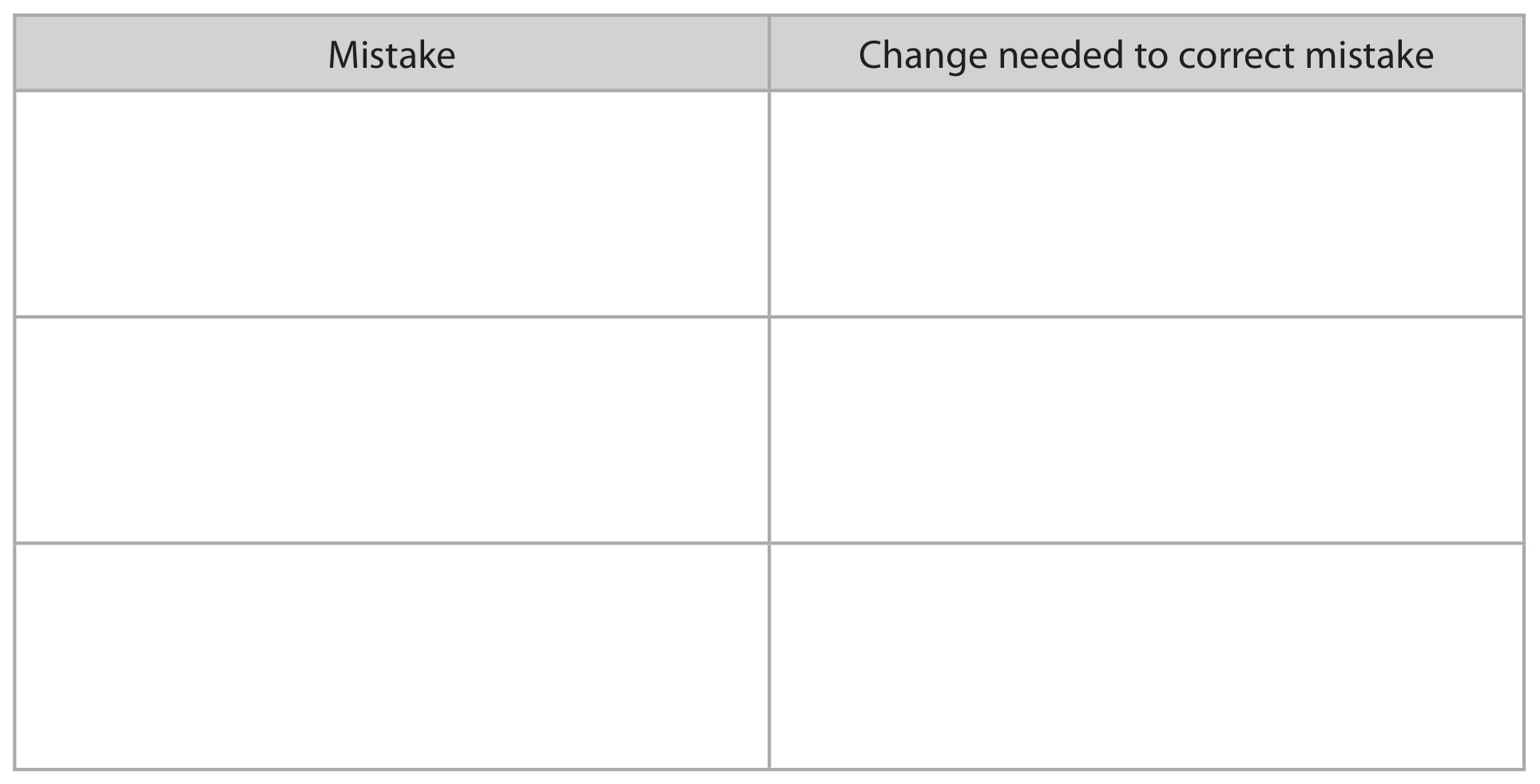
A student drew a diagram of an experiment to measure the standard emf of the cell.
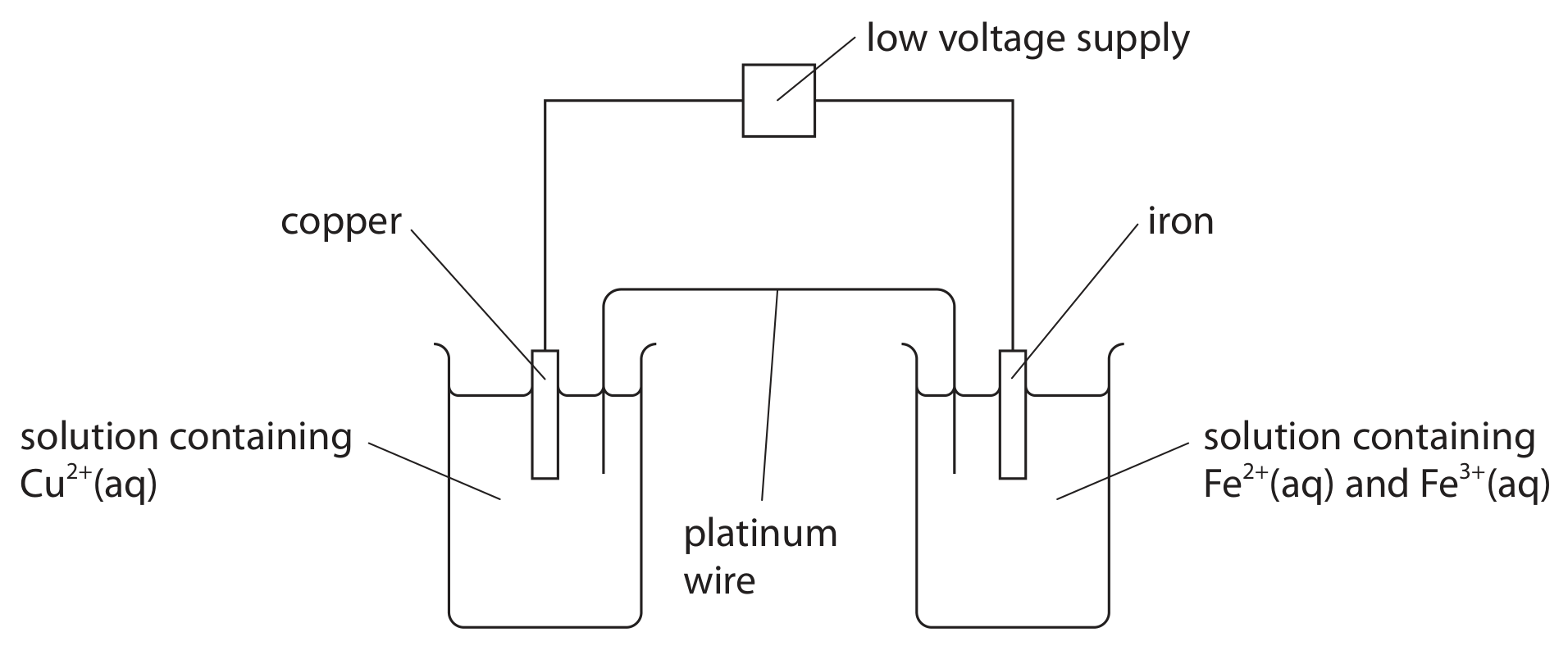
Identify three mistakes in this diagram and the changes needed to correct them.
Assume that standard conditions were used.
Question 1(d)
Brass is an alloy of copper and zinc.
A student determined the percentage of copper in a sample of brass.
Procedure
- weigh the sample of brass
- place the brass in a beaker and add concentrated nitric acid until all the brass dissolves
- transfer the solution and washings to a volumetric flask
- make the solution up to the mark with distilled water and mix well
- pipette of the solution into a conical flask
- neutralise the excess nitric acid in the solution
- add of potassium iodide solution (an excess) to the conical flask
- titrate the iodine produced with sodium thiosulfate solution using starch indicator
- repeat the titration until concordant titres are obtained.
Question 1(d)(i)
Copper and zinc both react with concentrated nitric acid to form the metal nitrates, nitrogen dioxide and water.
Write the balanced equation for the reaction of zinc with concentrated nitric acid.
State symbols are not required.
Question 1(d)(iii)
State at what point in the titration the starch solution should be added.
Question 1(d)(iv)
Only ions in the solution react with the aqueous potassium iodide.
The iodine reacts with sodium thiosulfate solution.
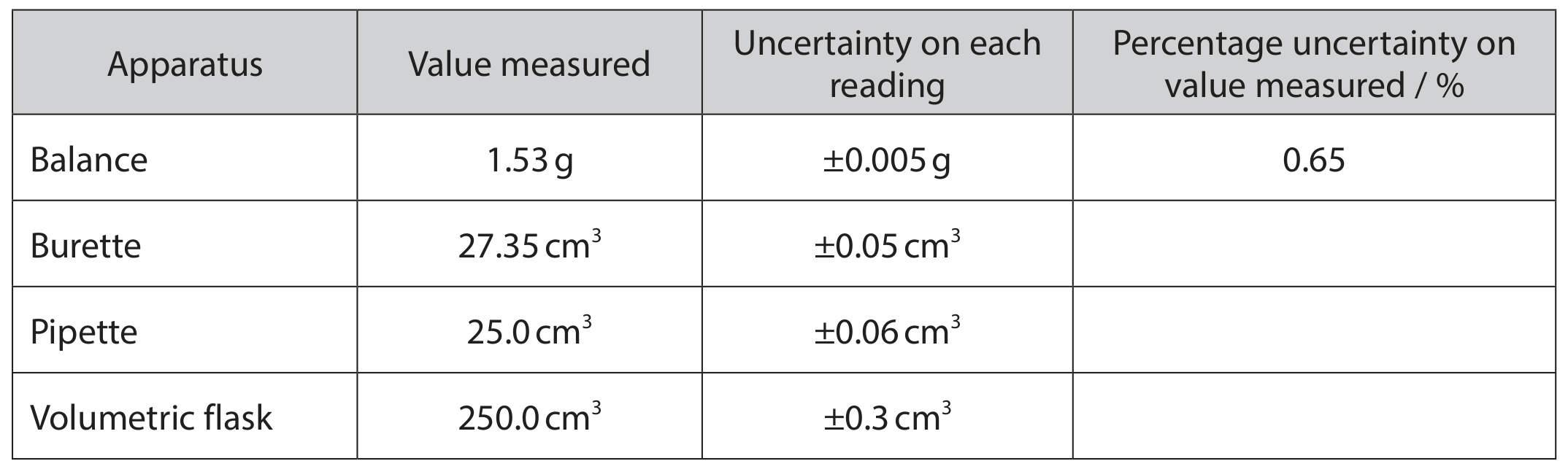
Mass of brass sample
Mean titre of sodium thiosulfate solution
Calculate the percentage, by mass, of copper in this sample of brass.
Give your answer to an appropriate number of significant figures.
\section*{Results \\ Results}
Mass of brass sample
Mean titre of sodium thiosulfate solution
Calculate the percentage, by mass, of copper in this sample of brass.
Give your answer to an appropriate number of significant figures.