
Question 11
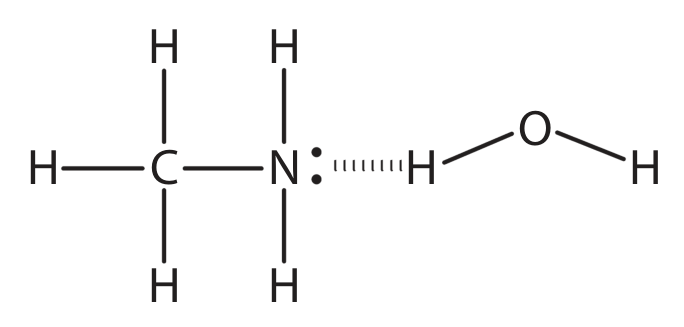
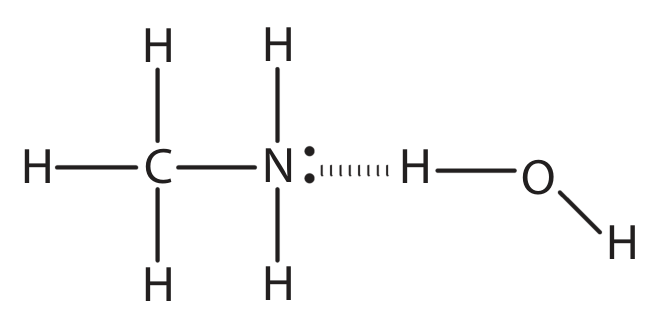
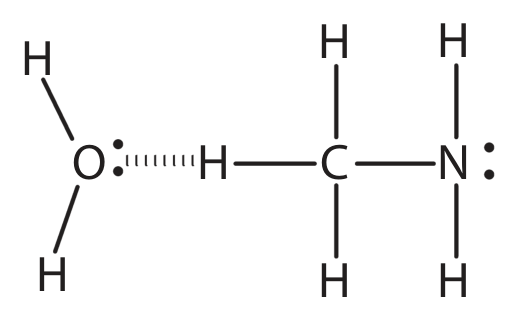
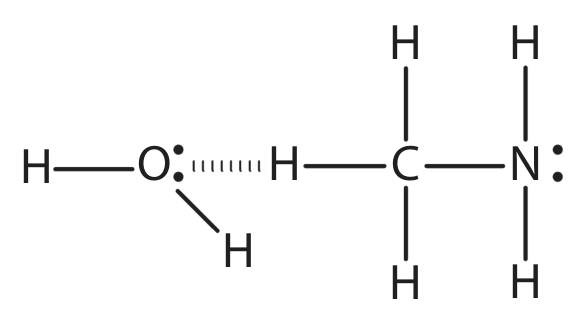
Hydrogen bonds are formed when methylamine dissolves in water.
Which structure best represents a hydrogen bond between methylamine and water?
□ A
□ B
□ C
□ D
 EduNinja
Topic 19 questions ask you to move between structures, names and reactions of amines, amides, amino acids, diazonium salts, peptides and condensation polymers.
Hydrogen bonds are formed when methylamine dissolves in water.
Which structure best represents a hydrogen bond between methylamine and water?
□ A
□ B
□ C
□ D
Which type of compound cannot be a monomer in the formation of polyamides?
amides
amino acids
diacyl chlorides
diamines
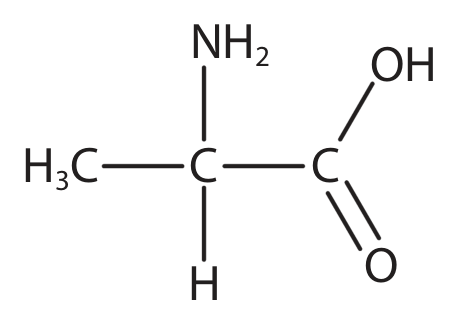
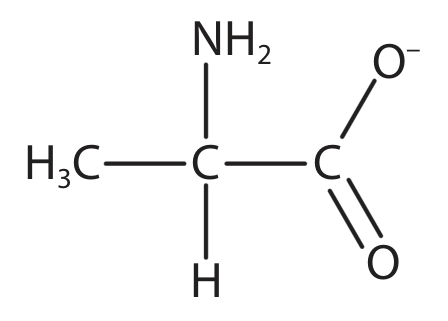
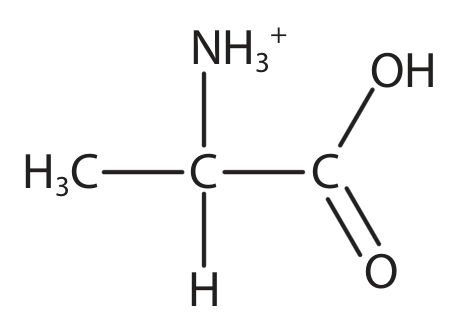
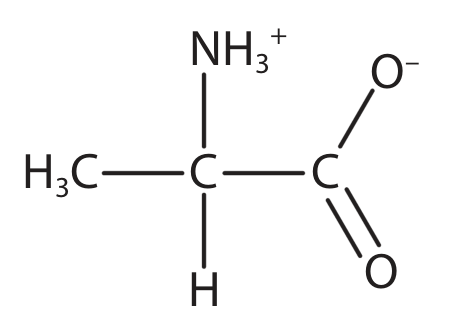
Alanine is an amino acid.
Which structure best represents alanine at high pH ?
□ A
□ B
□ C
□ D
Alanine is a crystalline solid at room temperature.
What are the main forces broken when alanine melts?
London forces
hydrogen bonds
covalent bonds
ionic bonds
Which reagent reacts at room temperature with methylamine, , to form the compound N-methylethanamide?
Chlorpheniramine is an amine used in the treatment of hayfever.
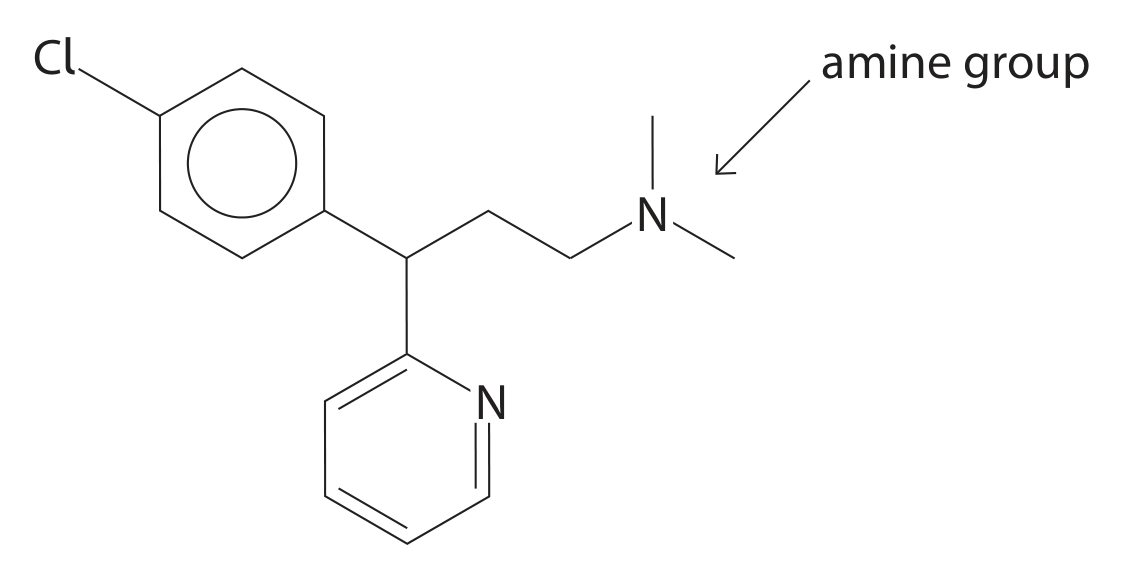
Deduce the classification of the labelled amine group.
The compound pyridine is used in the synthesis of chlorpheniramine.
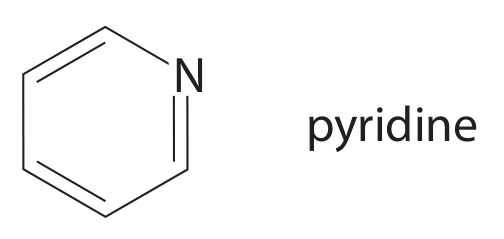
Like many amines, pyridine is miscible with water and the solution formed is alkaline.
Explain each of these properties of pyridine.
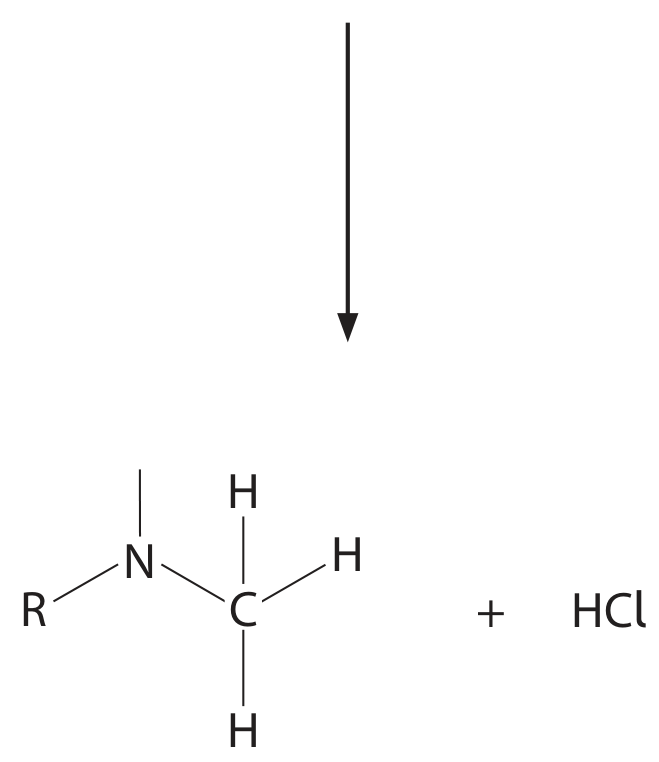
A student suggested that the final step in the synthesis of chlorpheniramine starts with the reaction between monodesmethylchlorpheniramine and chloromethane.
Assuming the reaction is similar to that between ammonia and chloromethane, complete the mechanism for this proposed reaction.
Some of the organic structures shown have been simplified.
Include curly arrows, and any relevant dipoles and lone pairs of electrons.
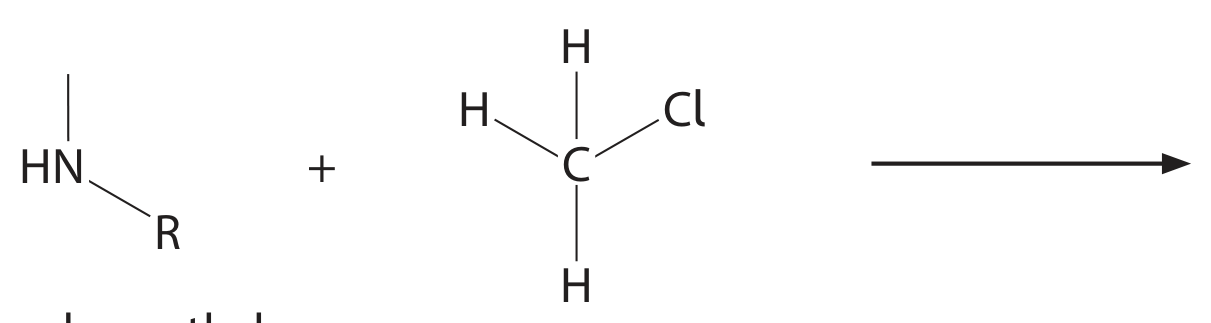
monodesmethyl
chlorpheniramine
chloromethane
This question is about polymers.
The diagram shows part of the structure of a polymer formed by a condensation reaction between two amino acids.
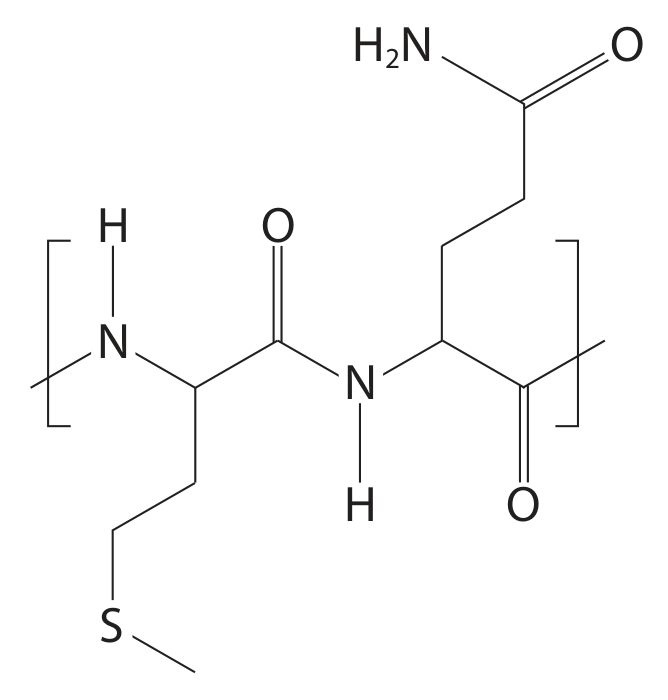
Predict the structures of the two monomers that produce this polymer.
Benzoic acid is a white crystalline solid with the structure shown.
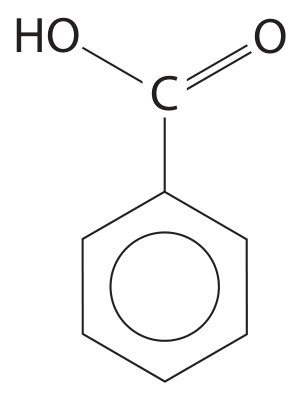
It is found in many plants as it is an important building block for the biosynthesis of a variety of compounds, such as plant hormones and attractants for pollinators.
The role of benzoic acid in the chemical industry is also widespread and approximately 500000 tonnes are produced annually. It is used in the synthesis of many compounds, including medicines, dyes and insect repellents.
Such synthetic dyes are often classified as aryl azo dyes. These dyes have a range of vivid colours and a wide range of uses in many industries, including food and textiles. Their synthesis involves the formation of a diazonium ion. This ion then reacts with a phenol in a coupling reaction, to form the dye. The relative simplicity of the reactions involved and ready availability of starting materials make azo dyes cheap to produce.
Salts of benzoic acid, such as calcium benzoate and sodium benzoate, are used in the food industry as preservatives.
Benzoic acid can be used in the synthesis of azo dyes.
In Step 2, the 3-nitrobenzoic acid reacts to form 3-aminobenzoic acid.
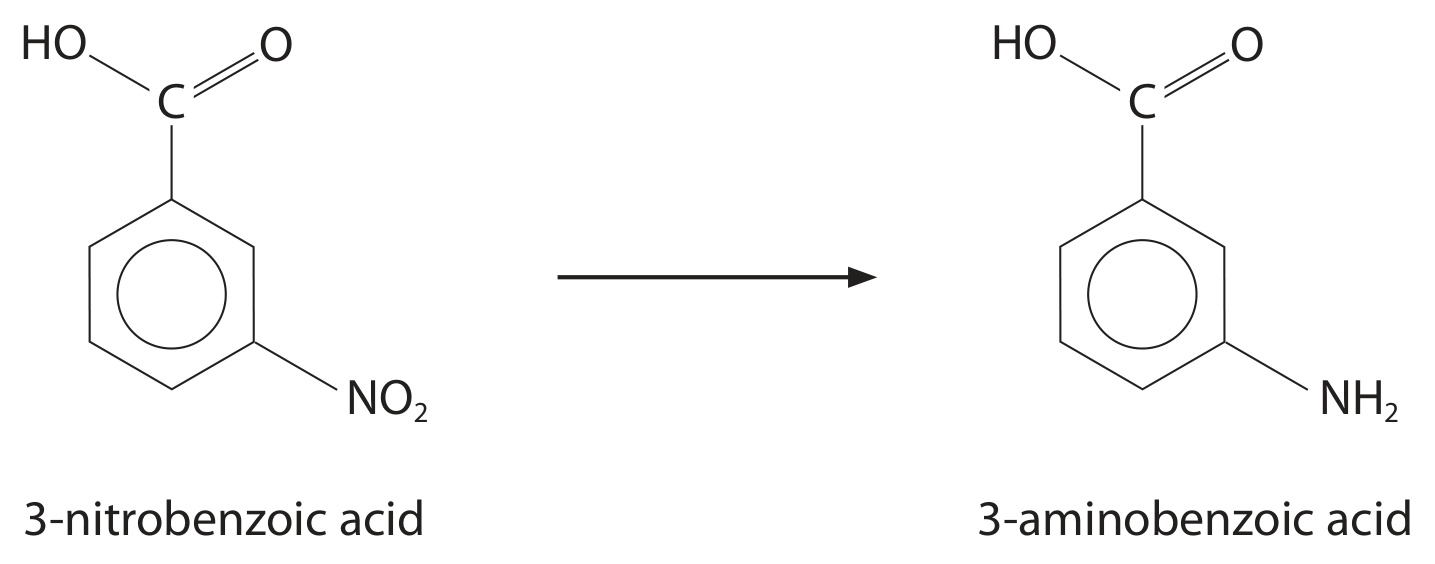
State the reagents required for this reaction.
In Step 3, the 3-aminobenzoic acid reacts with sodium nitrite and dilute hydrochloric acid, forming a diazonium ion.
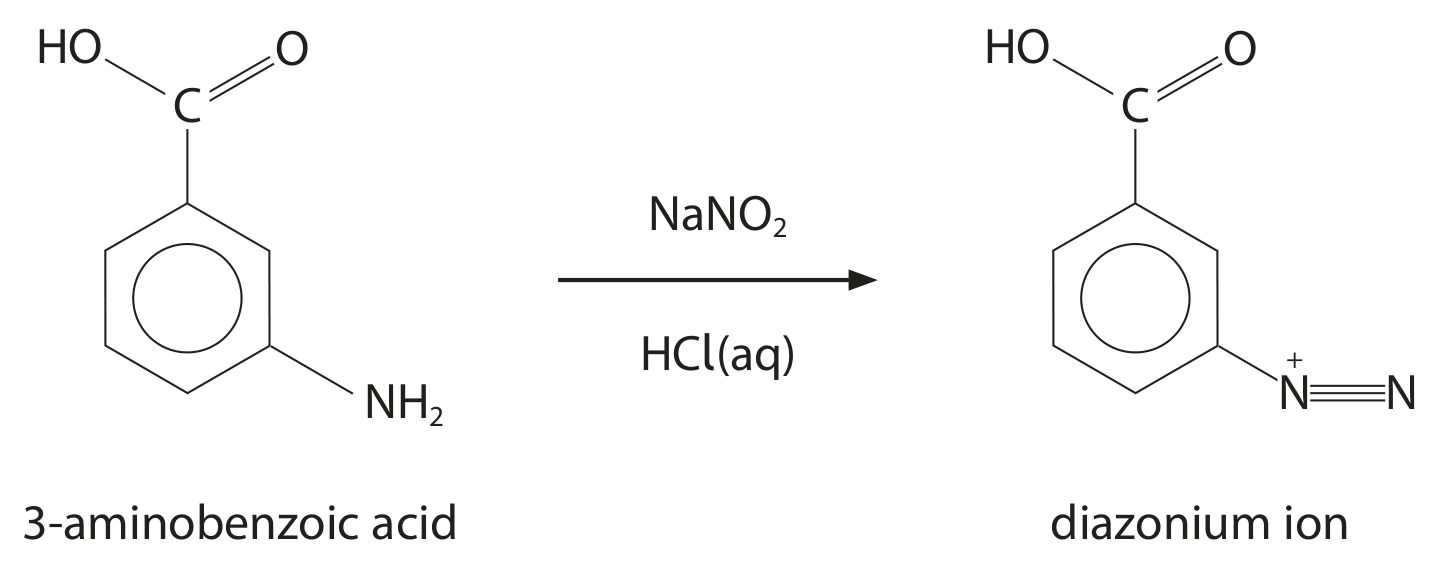
State a temperature at which this reaction should take place, giving one reason for your answer.
Draw the structure of the azo dye formed when the diazonium ion reacts with phenol.