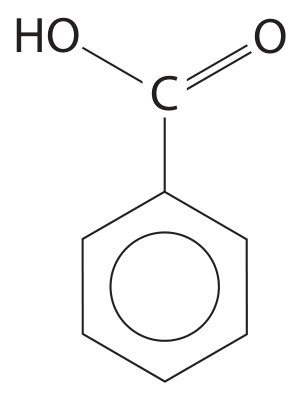
It is found in many plants as it is an important building block for the biosynthesis of a variety of compounds, such as plant hormones and attractants for pollinators.
The role of benzoic acid in the chemical industry is also widespread and approximately 500000 tonnes are produced annually. It is used in the synthesis of many compounds, including medicines, dyes and insect repellents.
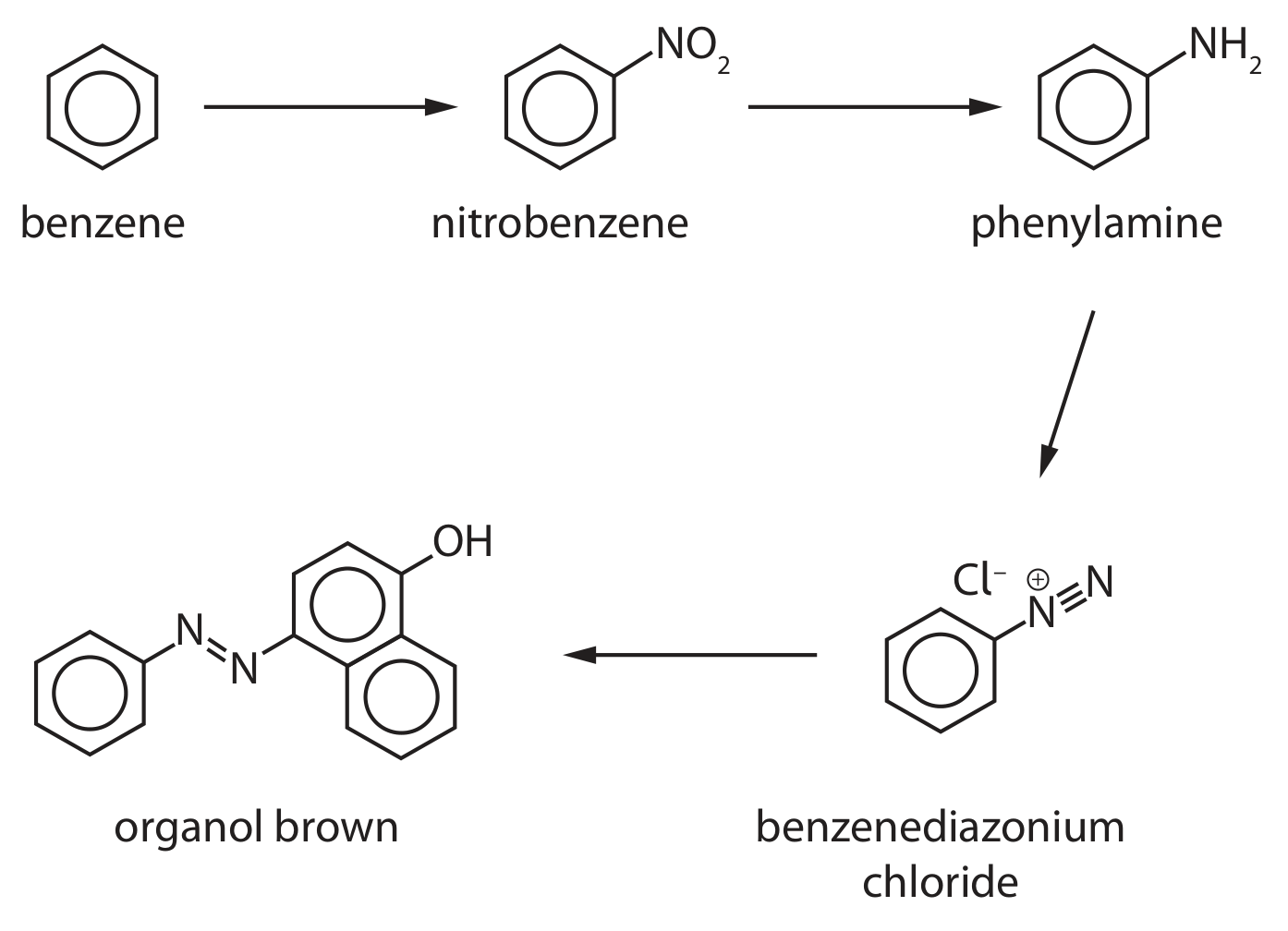
Such synthetic dyes are often classified as aryl azo dyes. These dyes have a range of vivid colours and a wide range of uses in many industries, including food and textiles. Their synthesis involves the formation of a diazonium ion. This ion then reacts with a phenol in a coupling reaction, to form the dye. The relative simplicity of the reactions involved and ready availability of starting materials make azo dyes cheap to produce.
Salts of benzoic acid, such as calcium benzoate and sodium benzoate, are used in the food industry as preservatives.