2.2.16 (HL)—Hybridization

Syllabus
First assessment 2025
Objective
2.2.16
Level
HL

Hybridization from Structure

HL only

Hybridization analysis follows a chain: Lewis formula → electron domains → geometry → hybrid orbital description. It describes mixing atomic orbitals to form hybrid orbitals used in bonding.
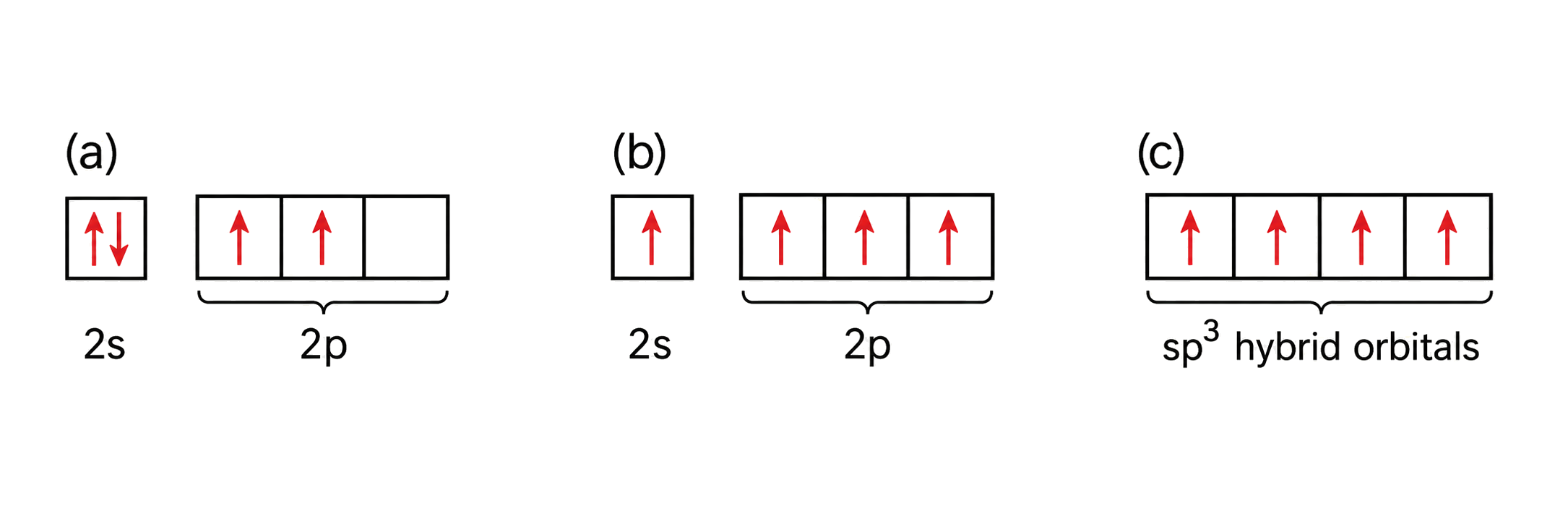
Count the electron domains around the relevant atom, identify the geometry, then assign the corresponding hybridization description for the molecule or ion.

Treat each single, double or triple bond as one electron domain. Four domains map to sp³, three to sp² and two to sp; thus methane carbon is sp³, each ethene carbon sp² and each ethyne carbon sp. Hybridization follows the Lewis/VSEPR model rather than replacing it.

Deducing Hybridization

HL only

Assessment in practice

Representative question

Question 1

[Maximum number: 2]

Deduce the hybridization of the carbon atom and the number of sigma and pi bonds that it forms.

Hybridization:
Sigma bonds:
Pi bonds:

The Covalent Model Summary

Retrieve the covalent pathway: shared pairs and bond order lead to geometry, polarity and molecular polarity; structure determines network properties, IMF behaviour and chromatography; HL representations extend to resonance, formal charge, sigma/pi bonds and hybridization.

Check the representation first, then count domains, apply geometry, identify polarity or forces, and connect the structure to the requested property or HL bonding description.